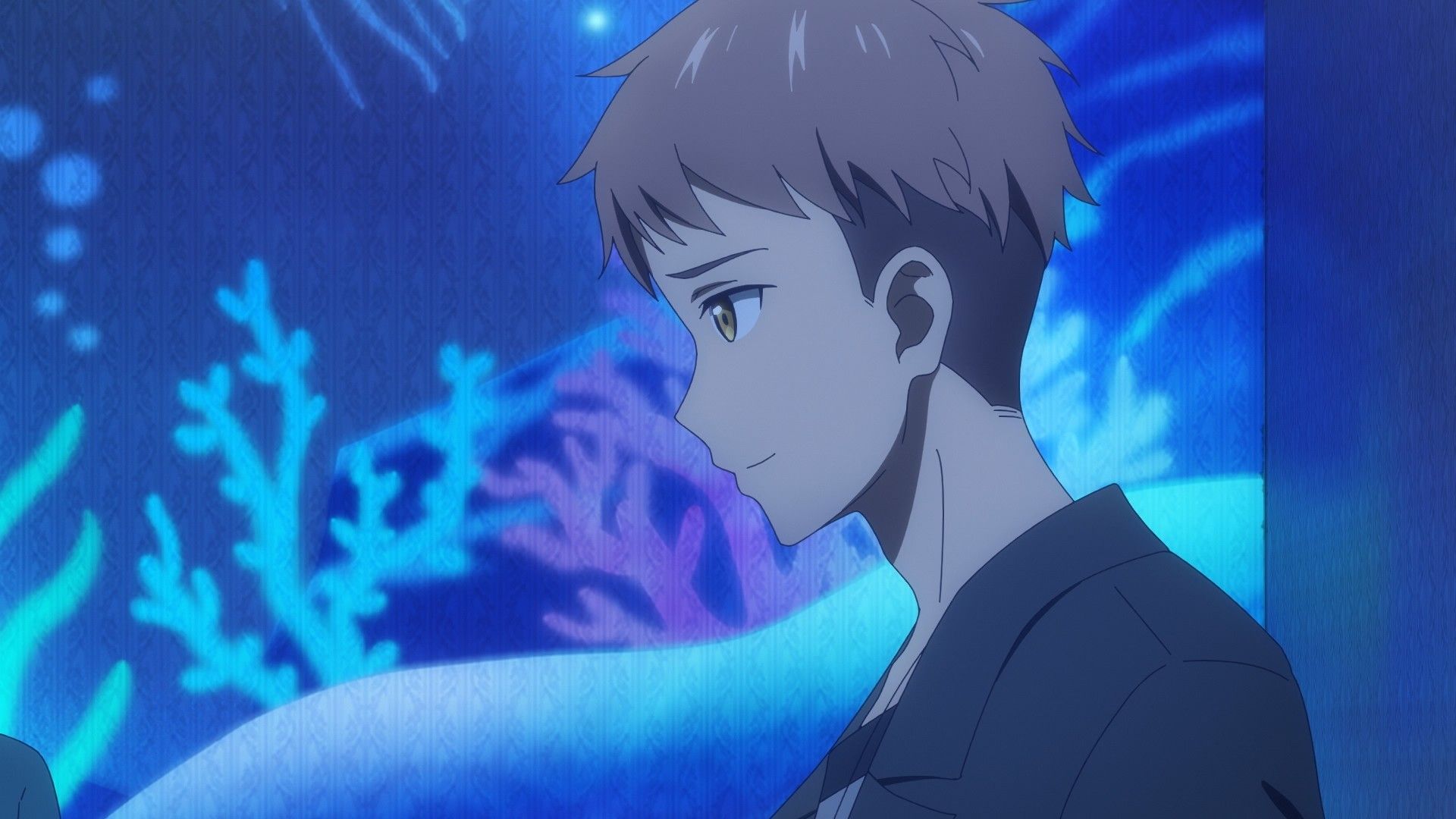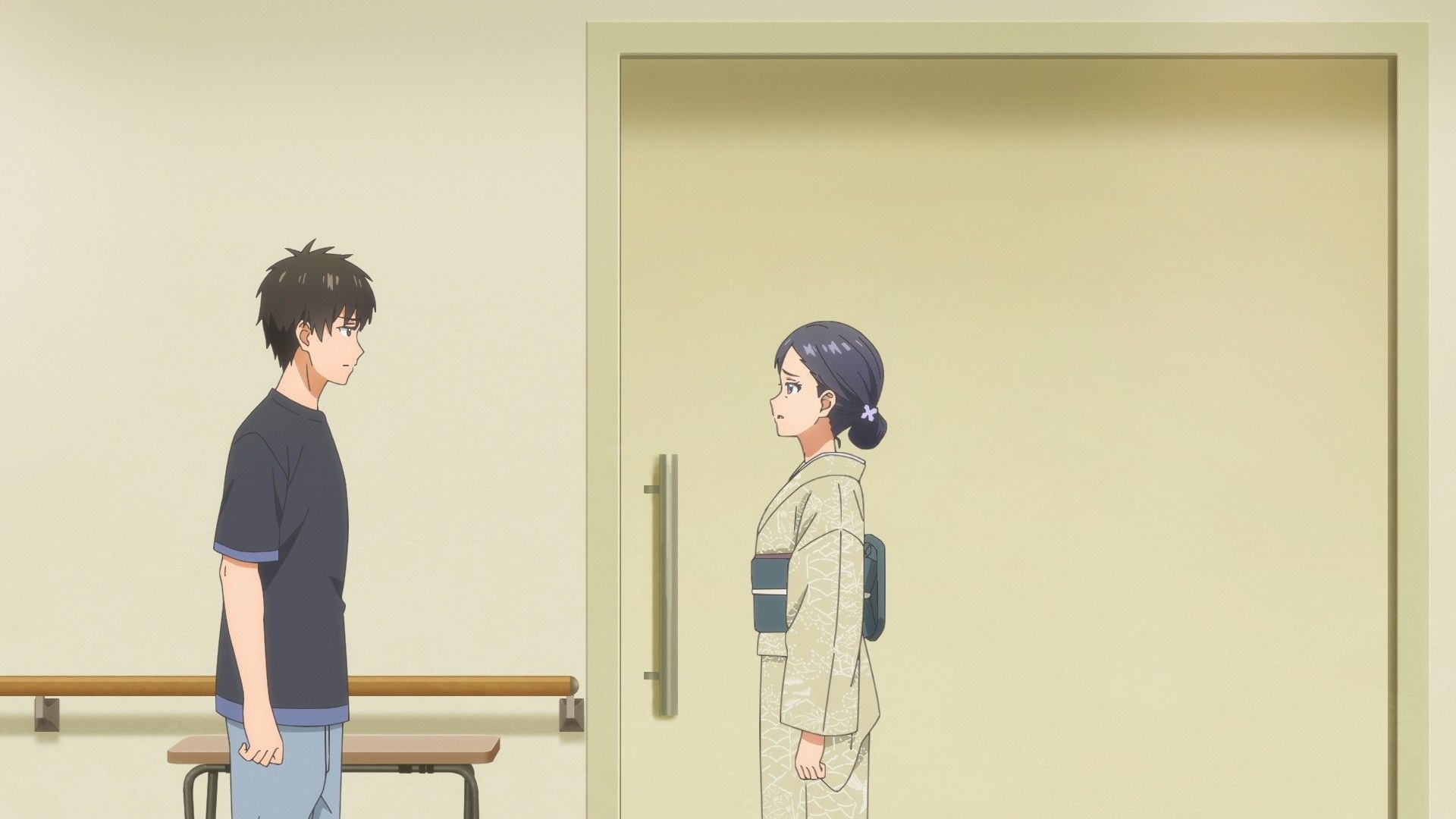
Sorano Kakeru, a first-year university student, has perfected the art of blending into the background. Raised by a single mother and accustomed to constantly moving between relatives’ homes, he learned early on that the easiest way to get by was to read the room, keep his head down, and avoid standing out. His attachment to a quiet life is put to the test, however, when his sociable dorm roommate, Narumi Ushio, drags him to a noisy university welcome party.
Disgusted by his peers’ desperate attempts to stand out at any cost, Sorano turns his attention to a quiet corner of the room. There he meets Fuyutsuki Koharu – a gentle, exceptionally polite girl who turns out to be completely blind. Left isolated after the other boys awkwardly fled upon realizing she was disabled, Fuyutsuki is accompanied only by her fiercely protective friend and volunteer student guide, Hayase Yuko.
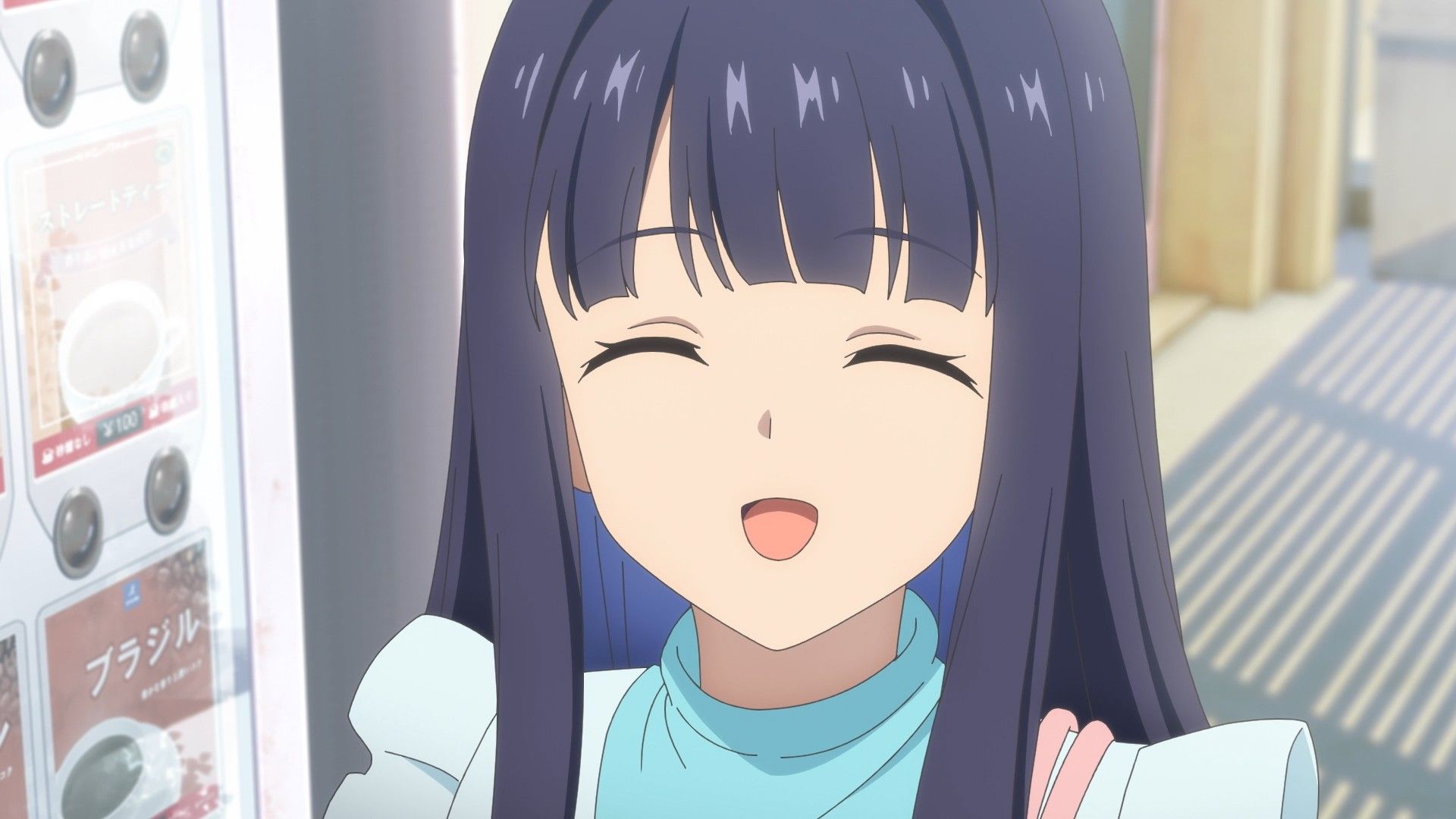
When Hayase asks Sorano to take over as Fuyutsuki’s guide during the computer science class they share, he is immediately filled with doubt. Plagued by his own insecurities, he is terrified of crossing a line, saying the wrong thing, or, worse, treating her with pity. Even so, as the two begin spending time together between lectures, Sorano slowly finds himself drawn into Fuyutsuki’s fascinating world. Whether she is explaining how efficiently she uses her smartphone with a screen reader, joking about Russian roulette when using an unfamiliar vending machine, or excitedly voicing her sincere wish to set off fireworks with friends, Fuyutsuki approaches life with a fearless optimism that Sorano completely lacks.
Toumei na Yoru ni Kakeru Kimi to, Me ni Mienai Koi wo Shita (2026) – Visual Design
Video
Visual Direction and Backgrounds
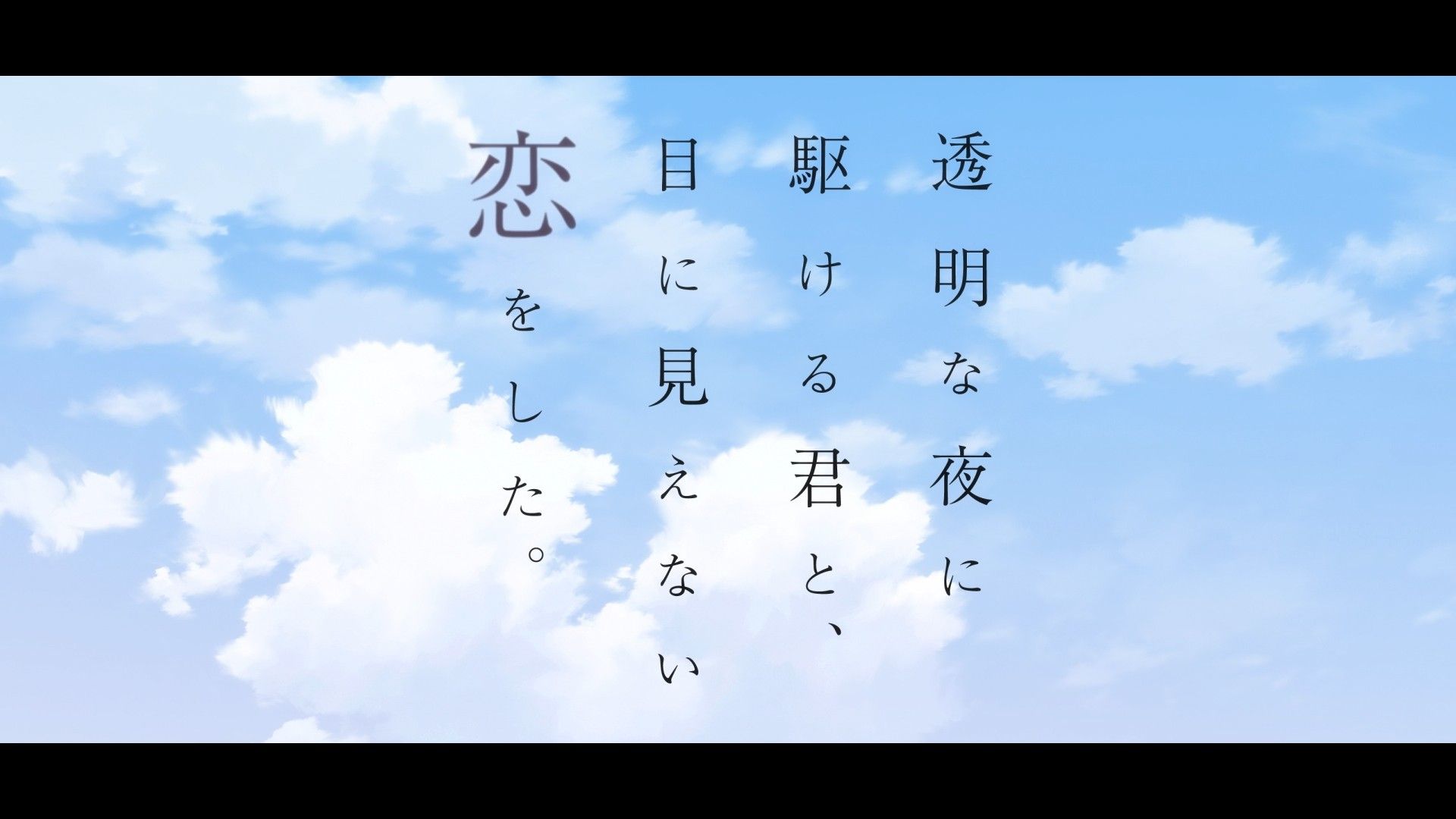
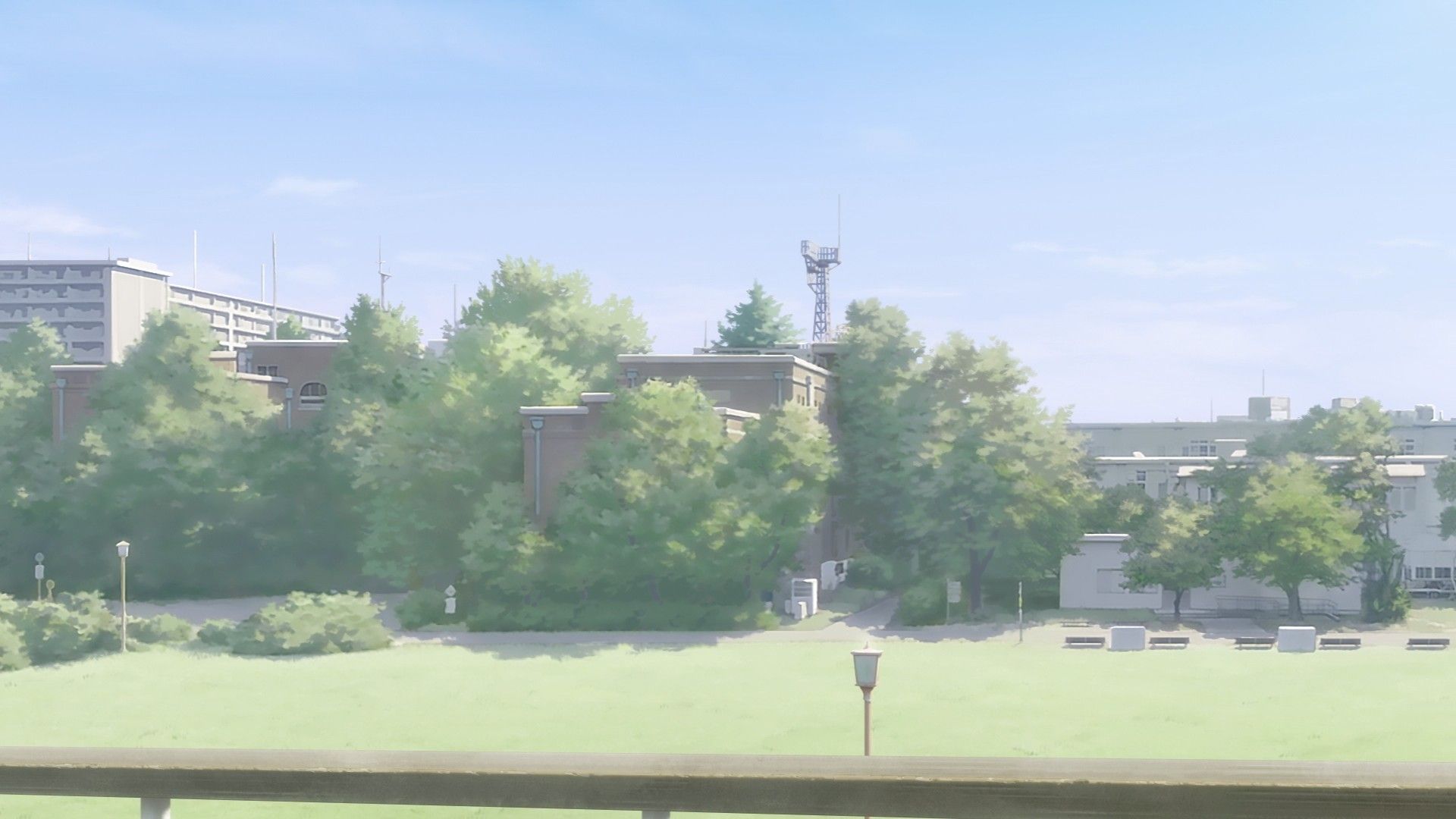
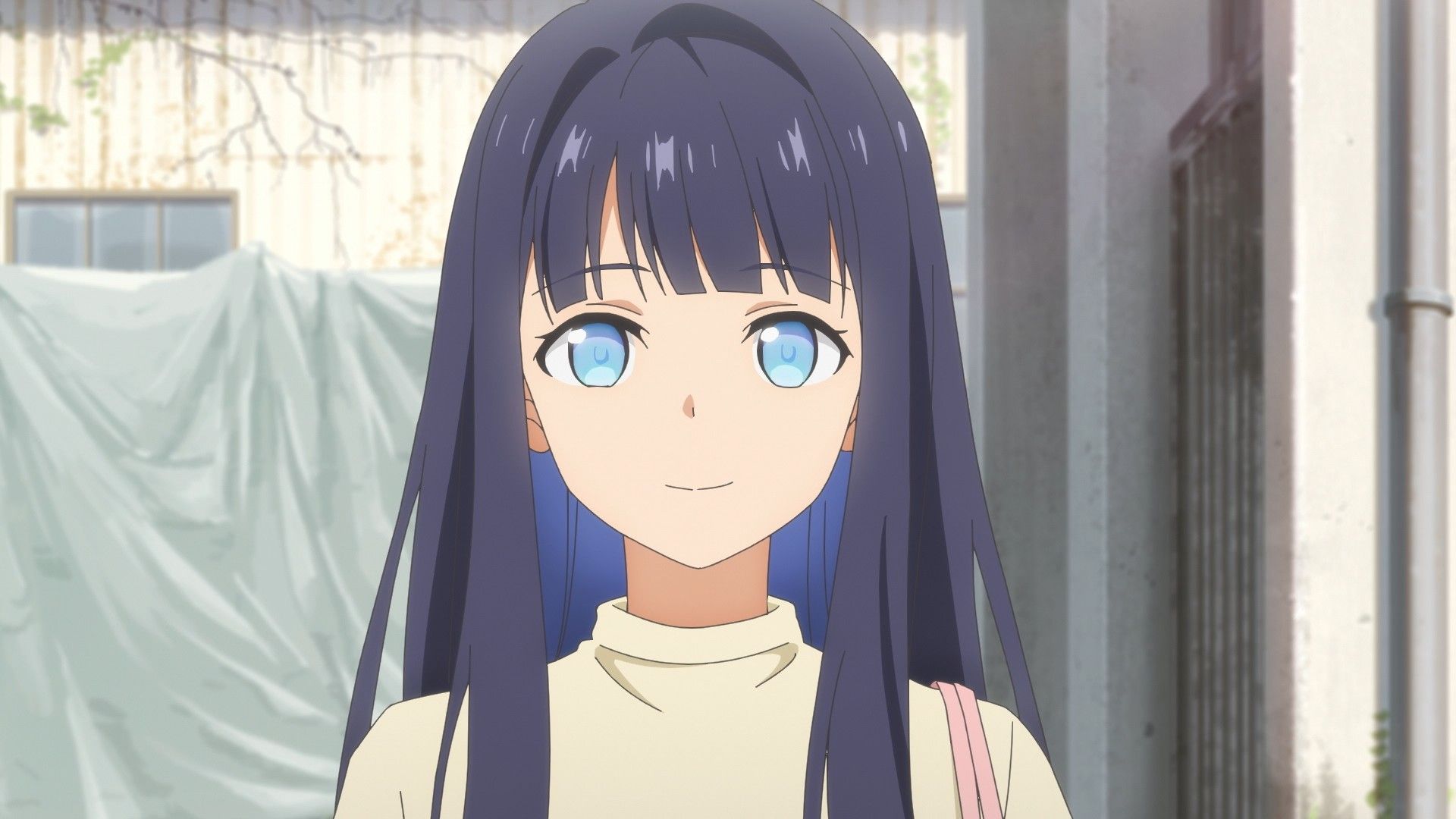
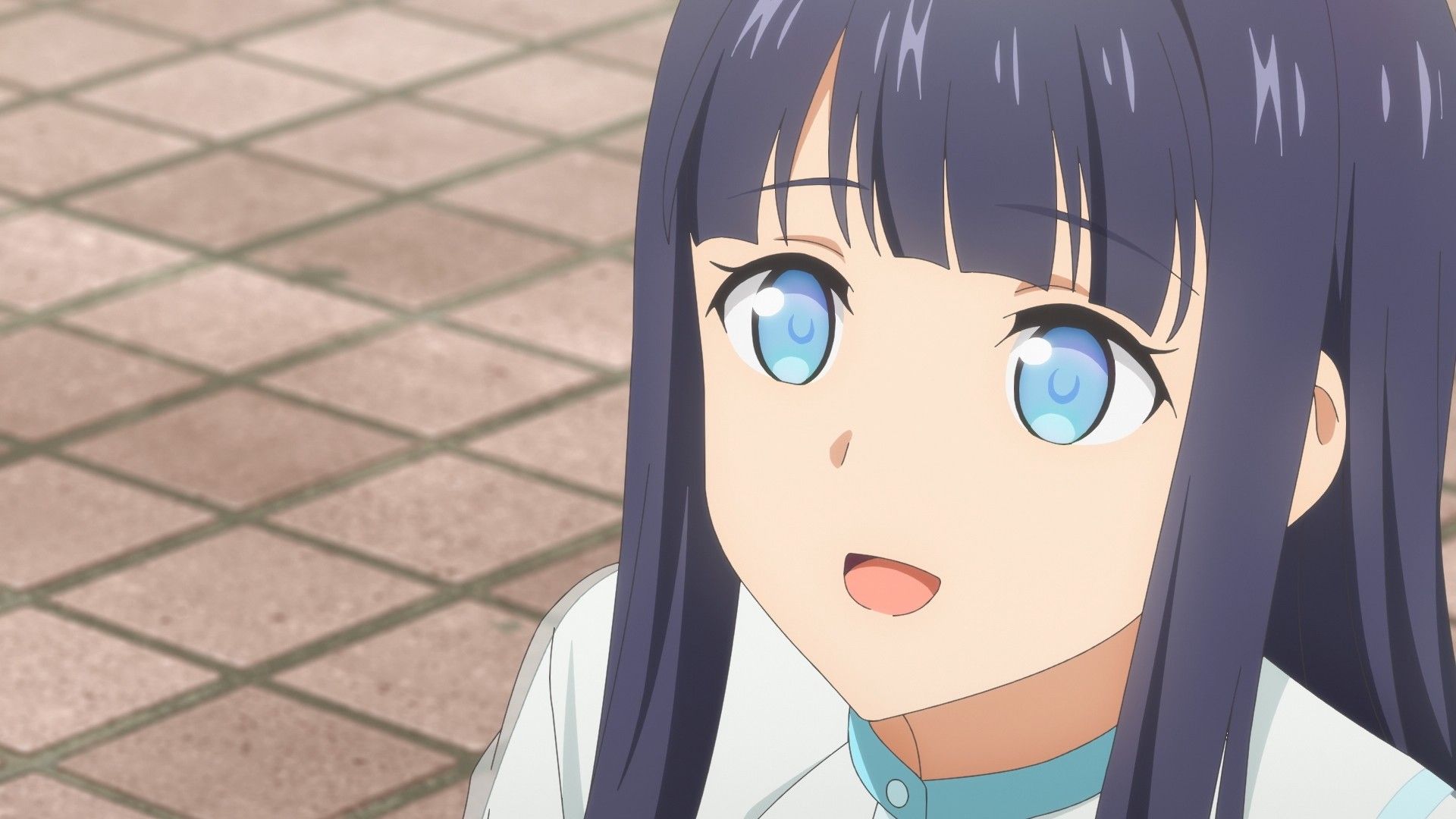
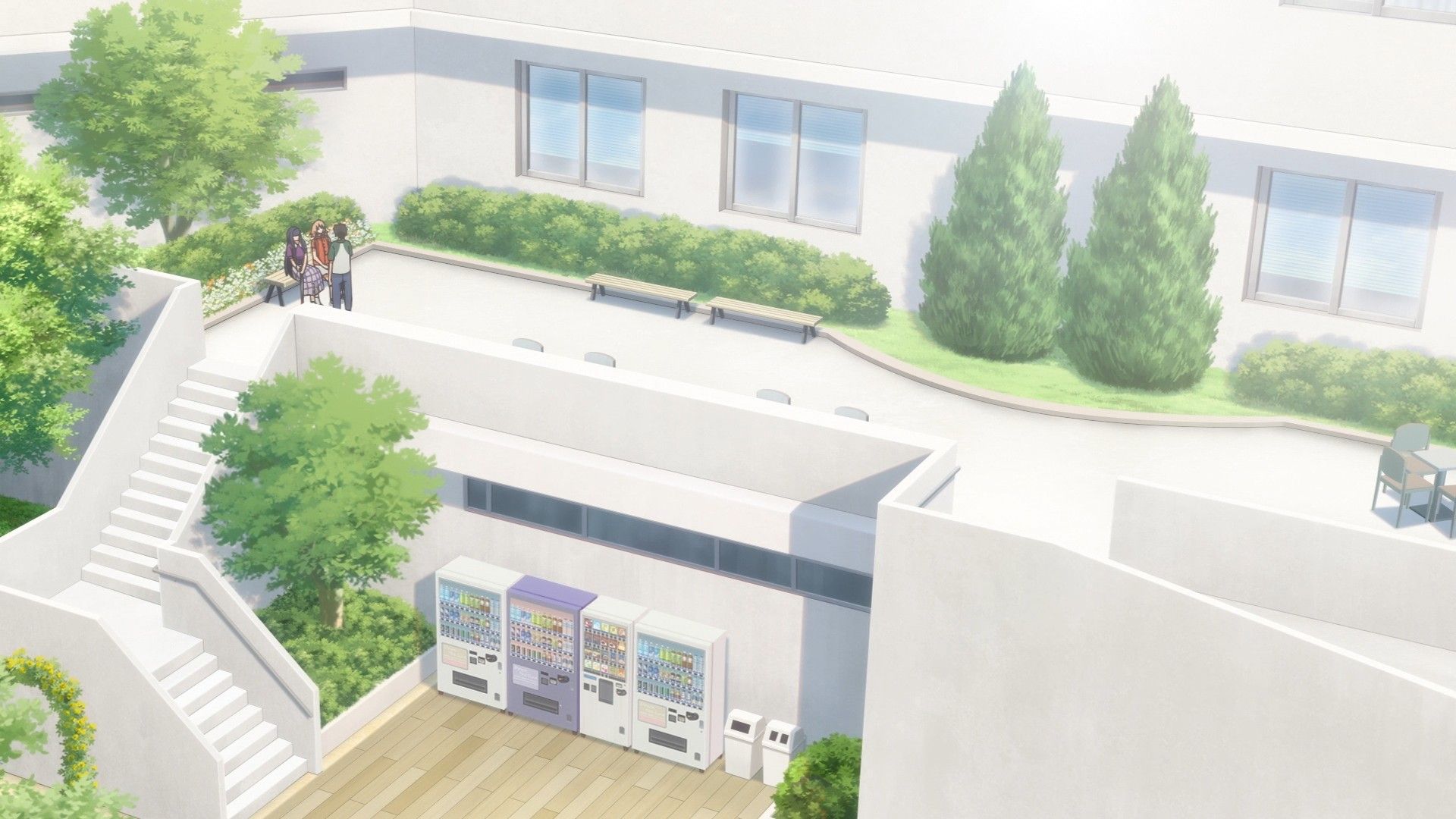
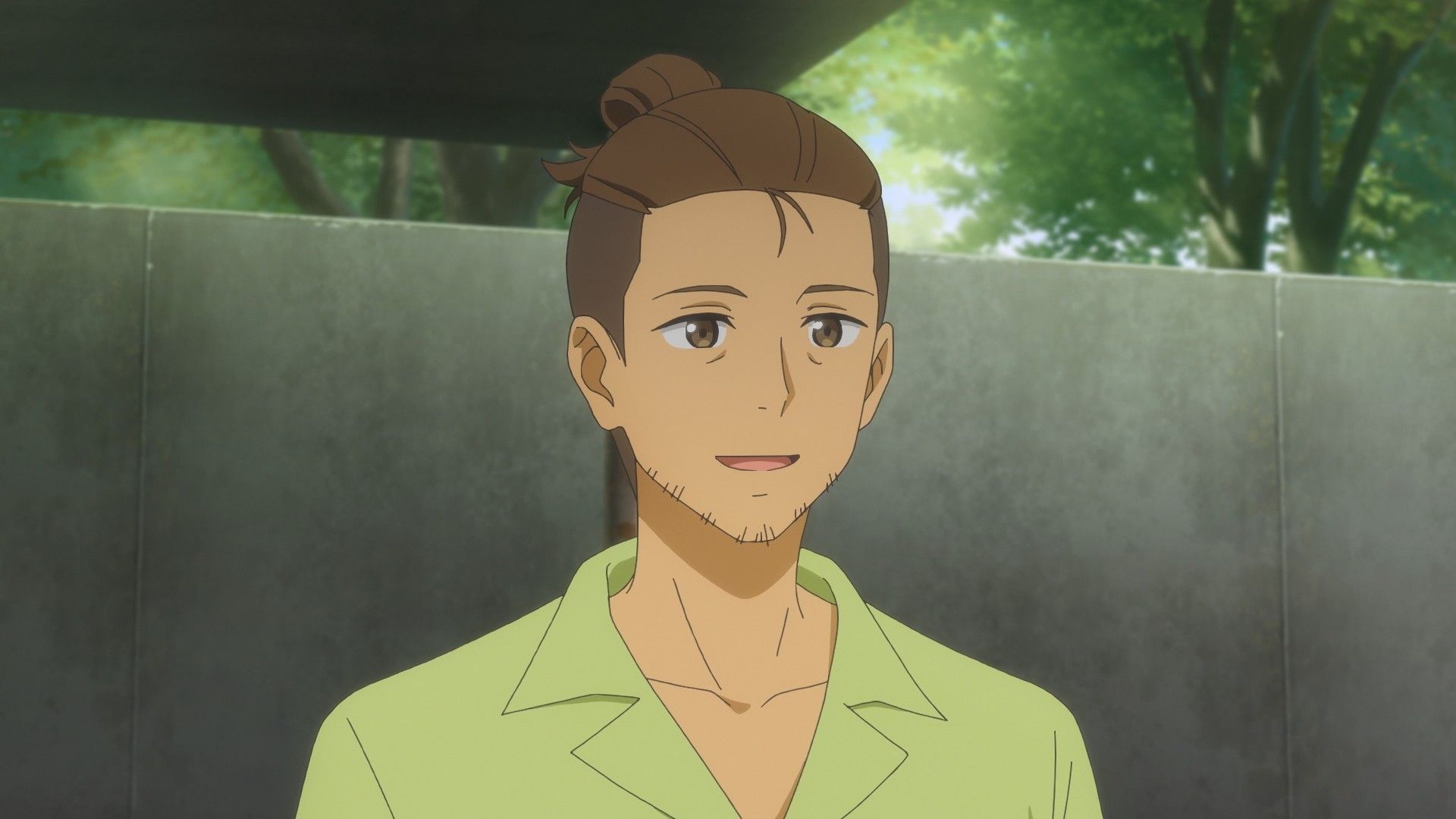
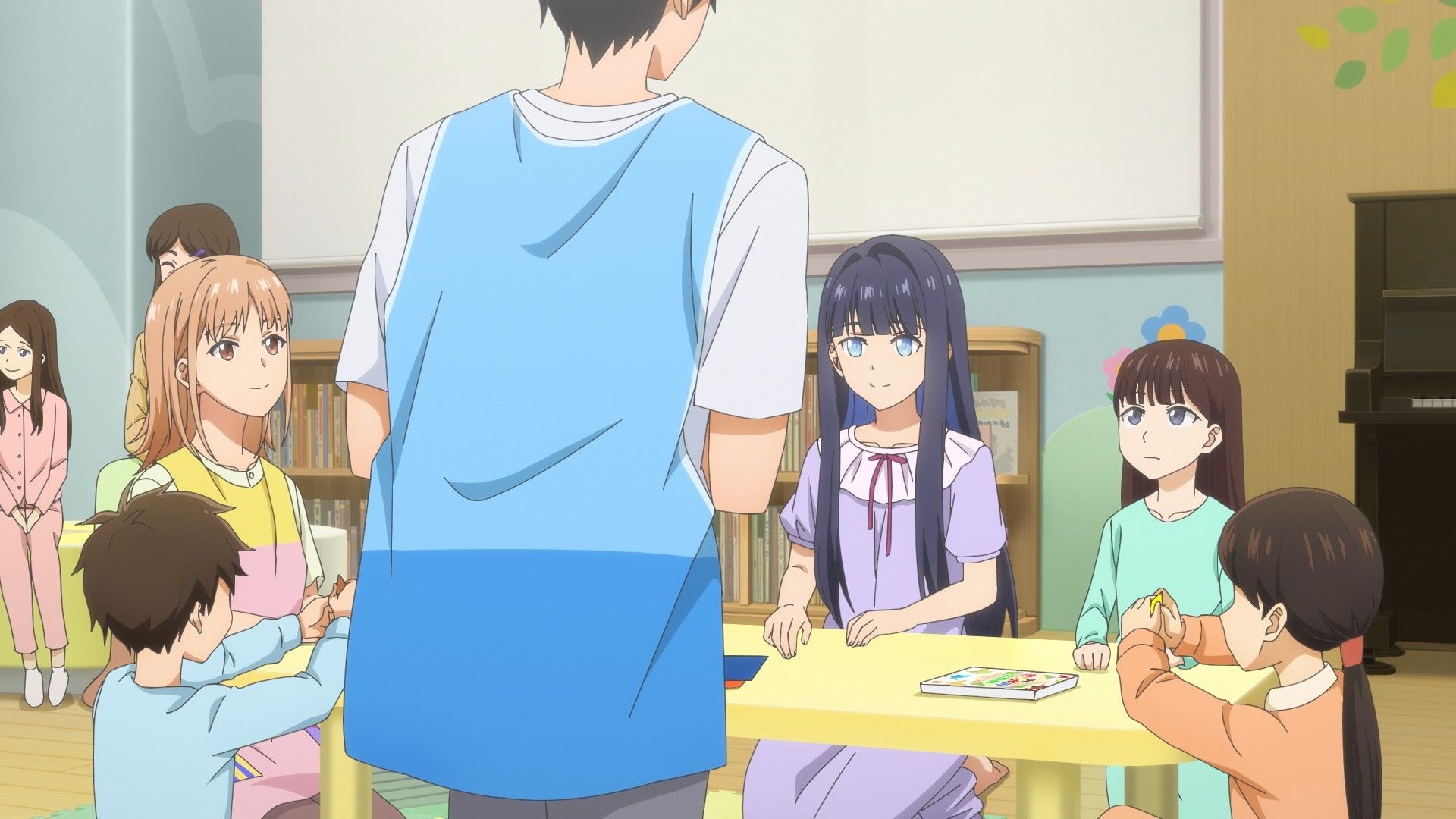
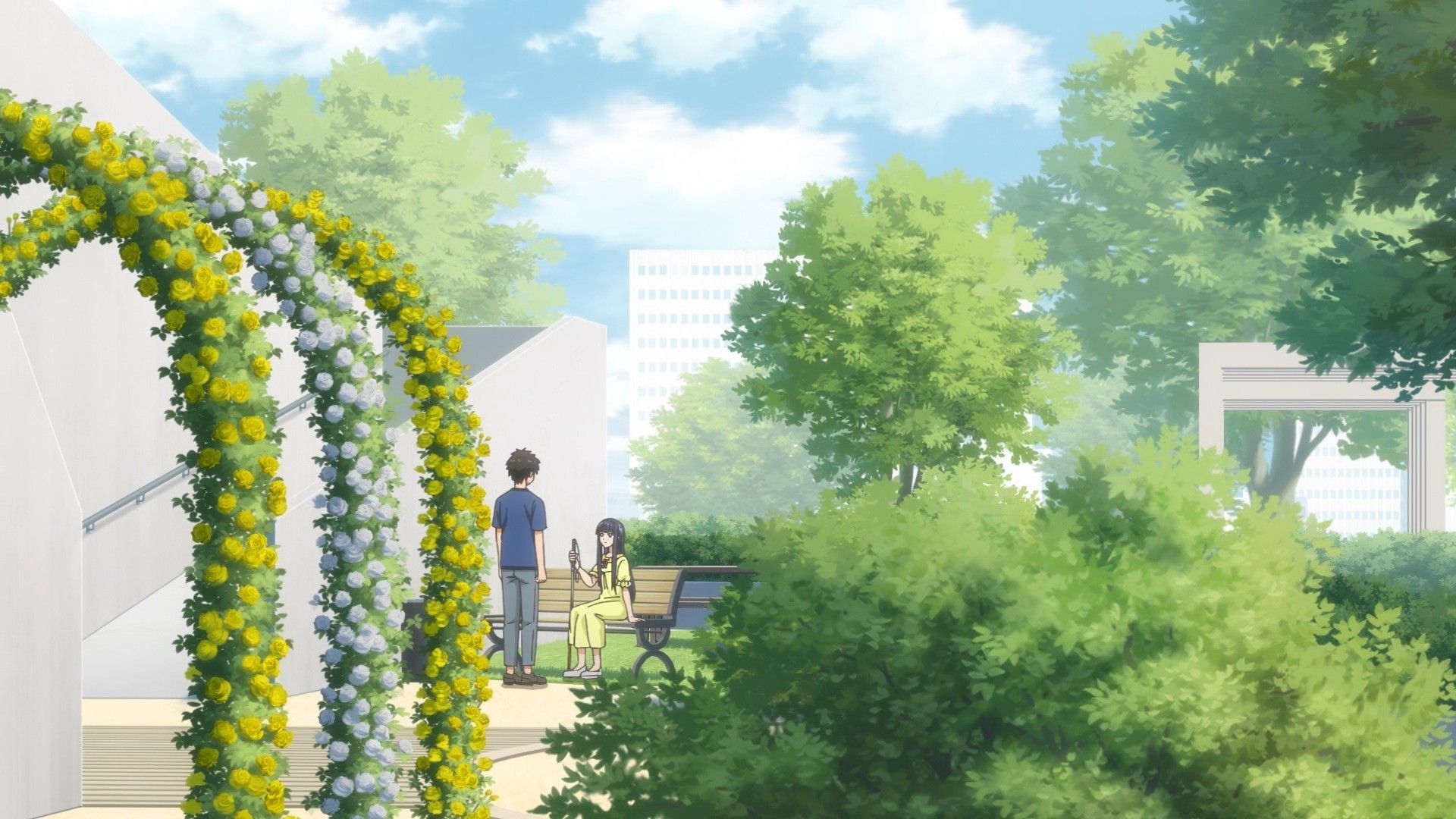
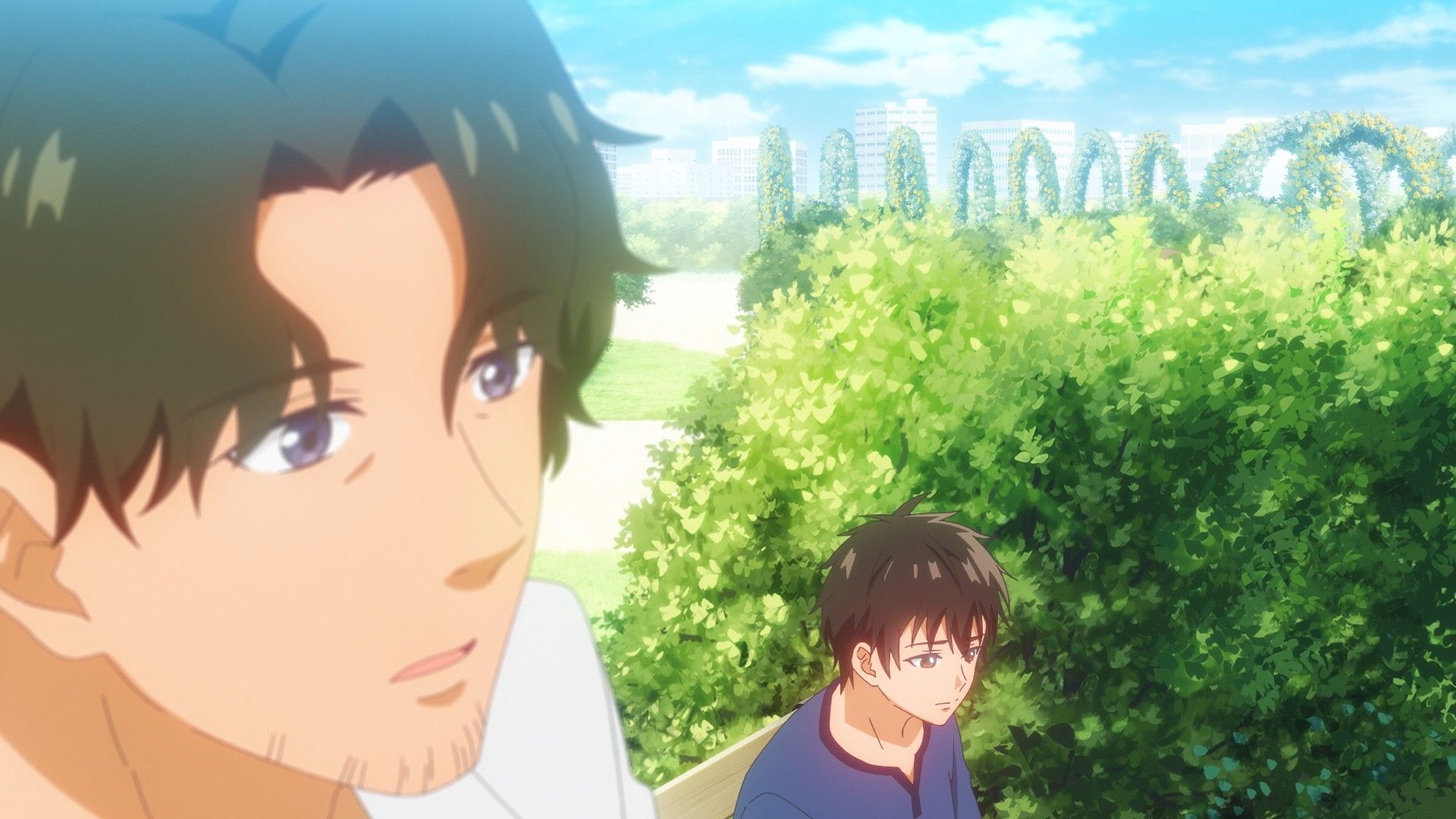
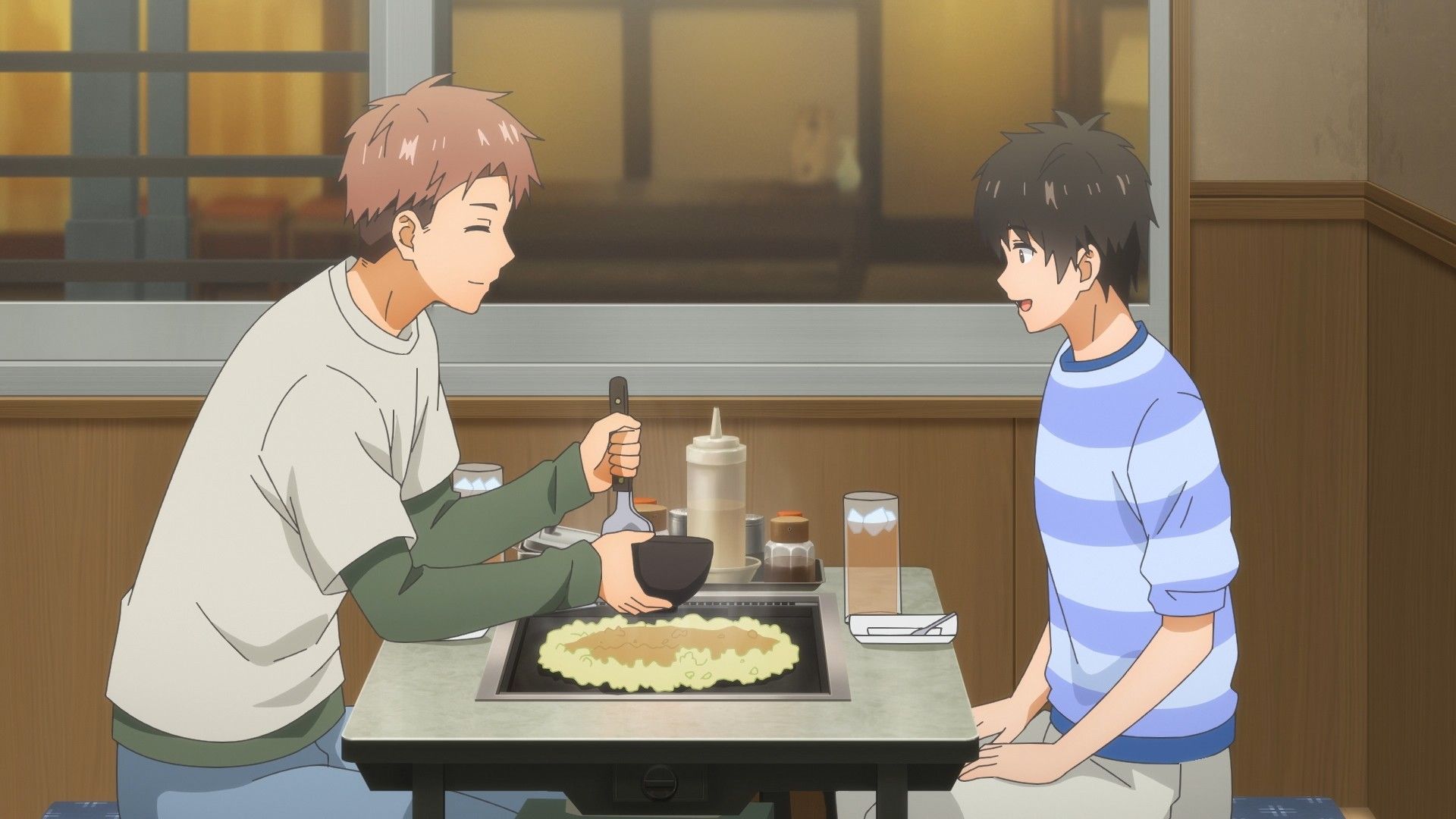
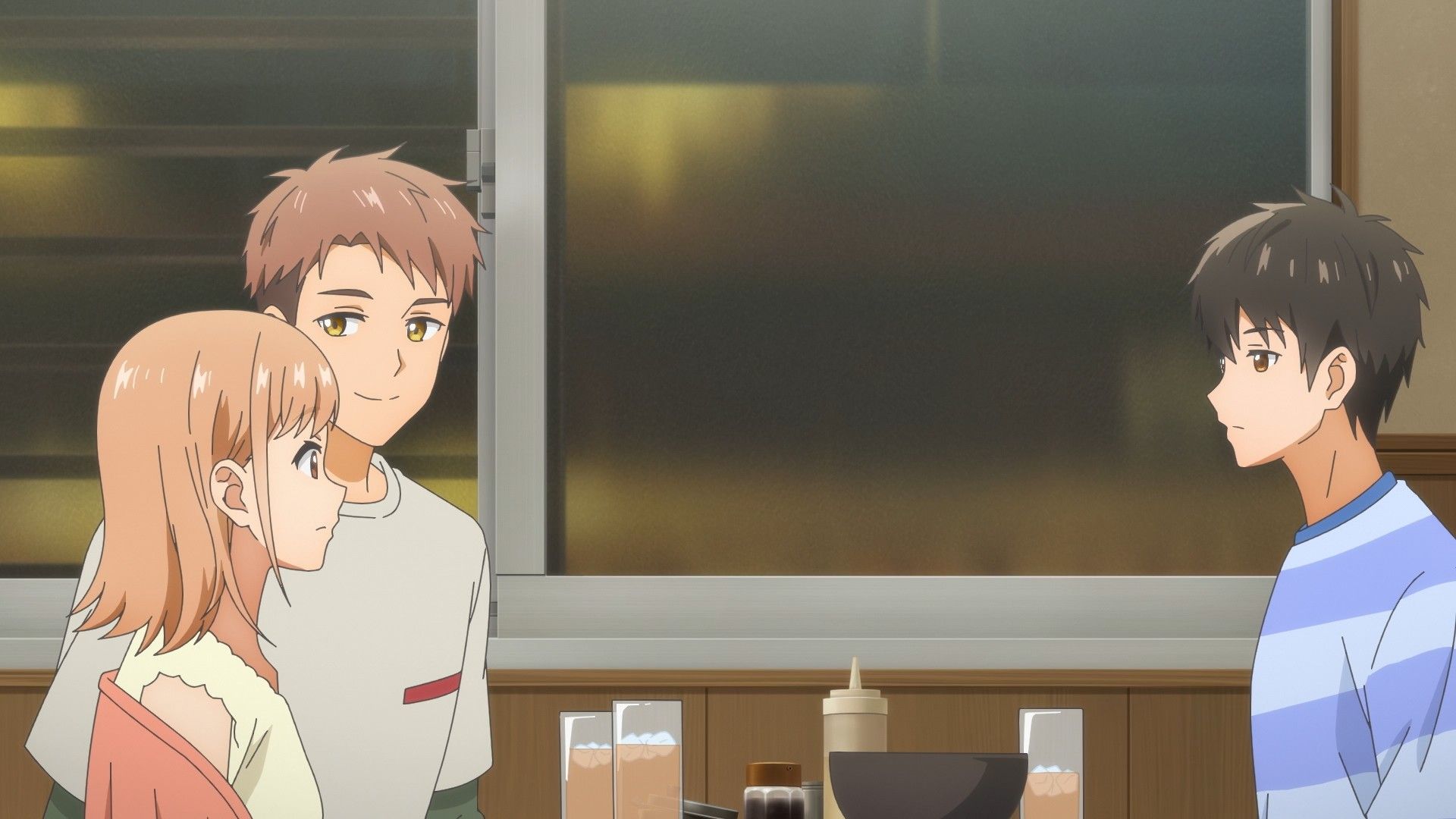
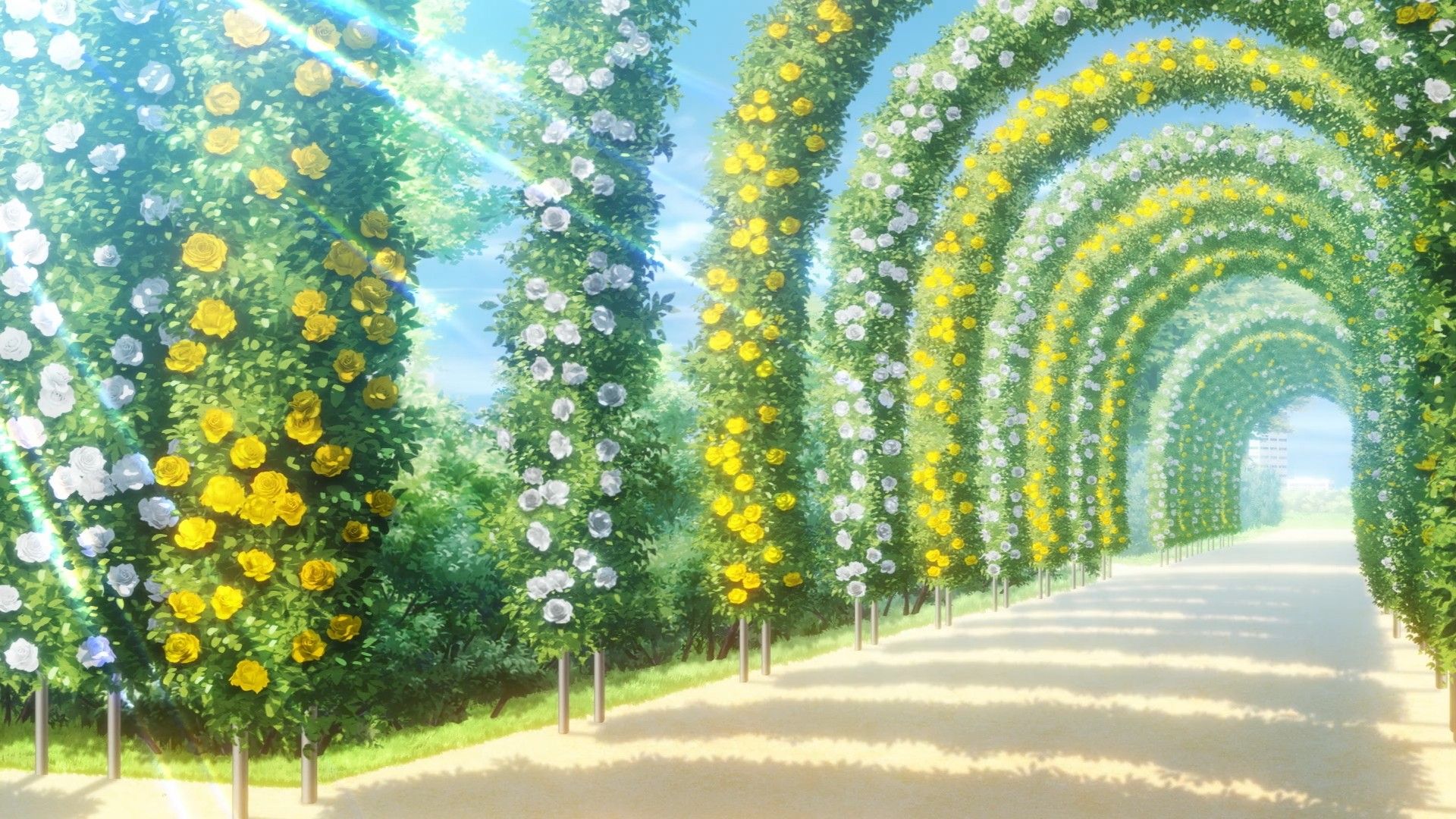
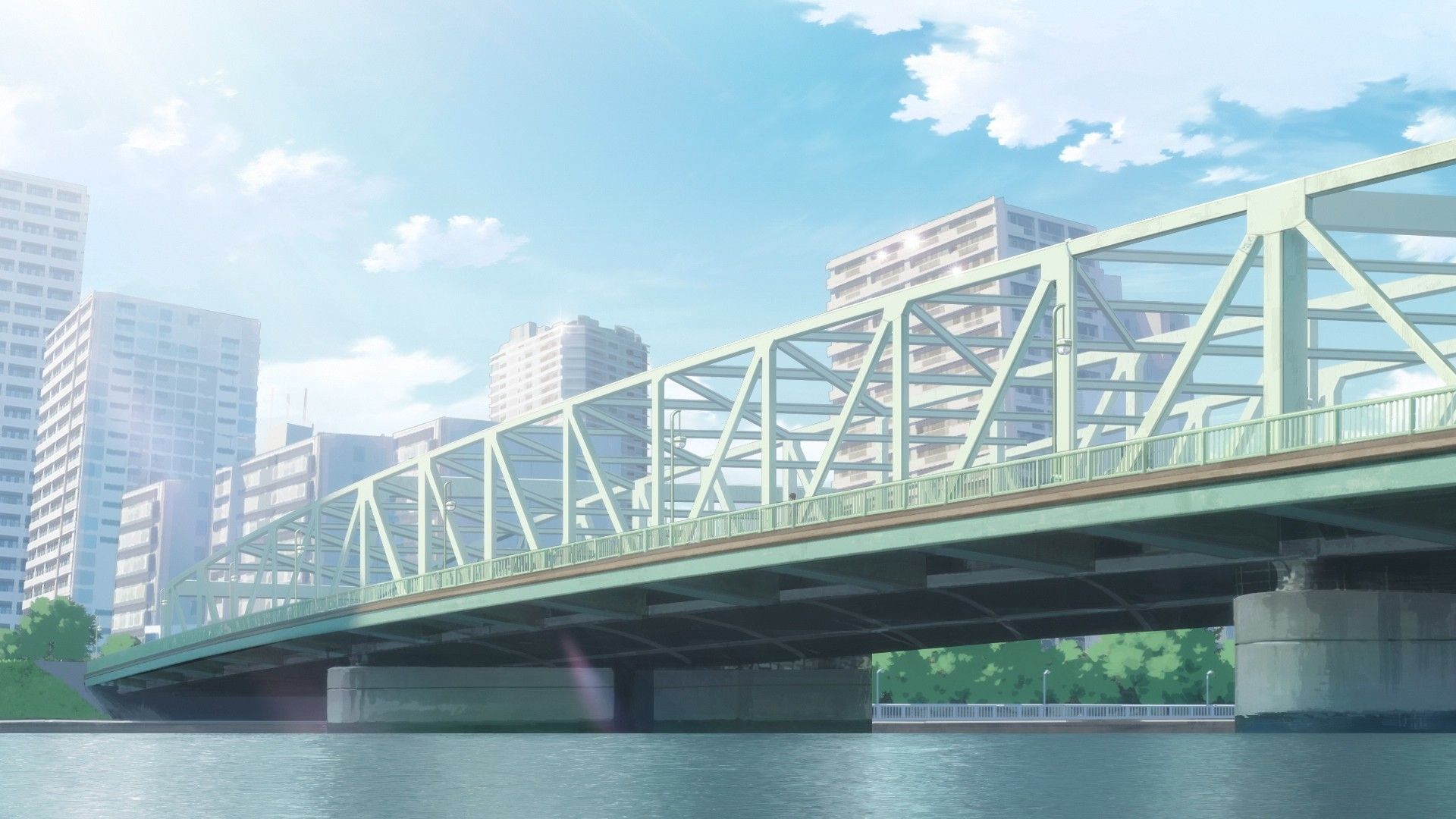
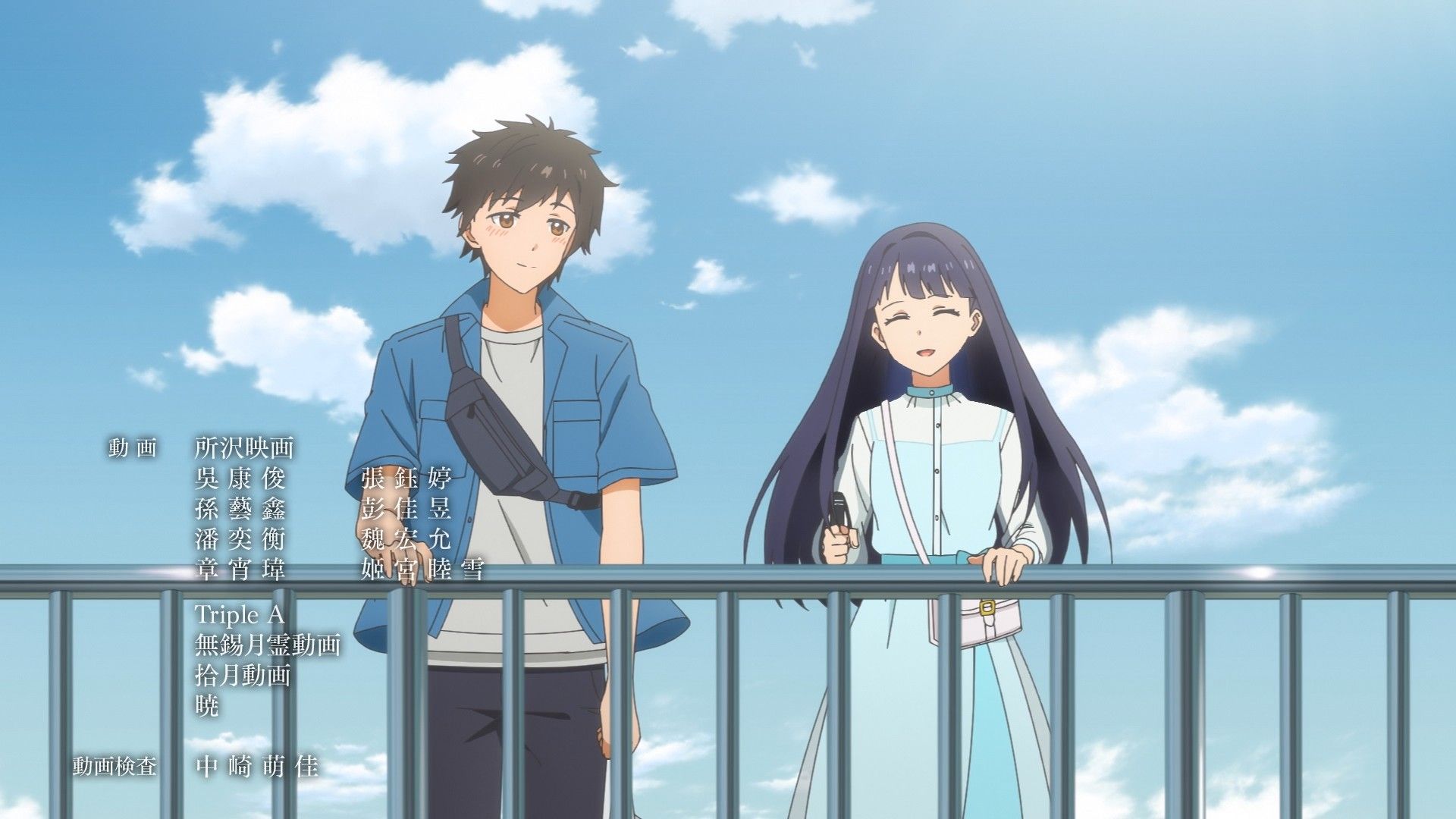
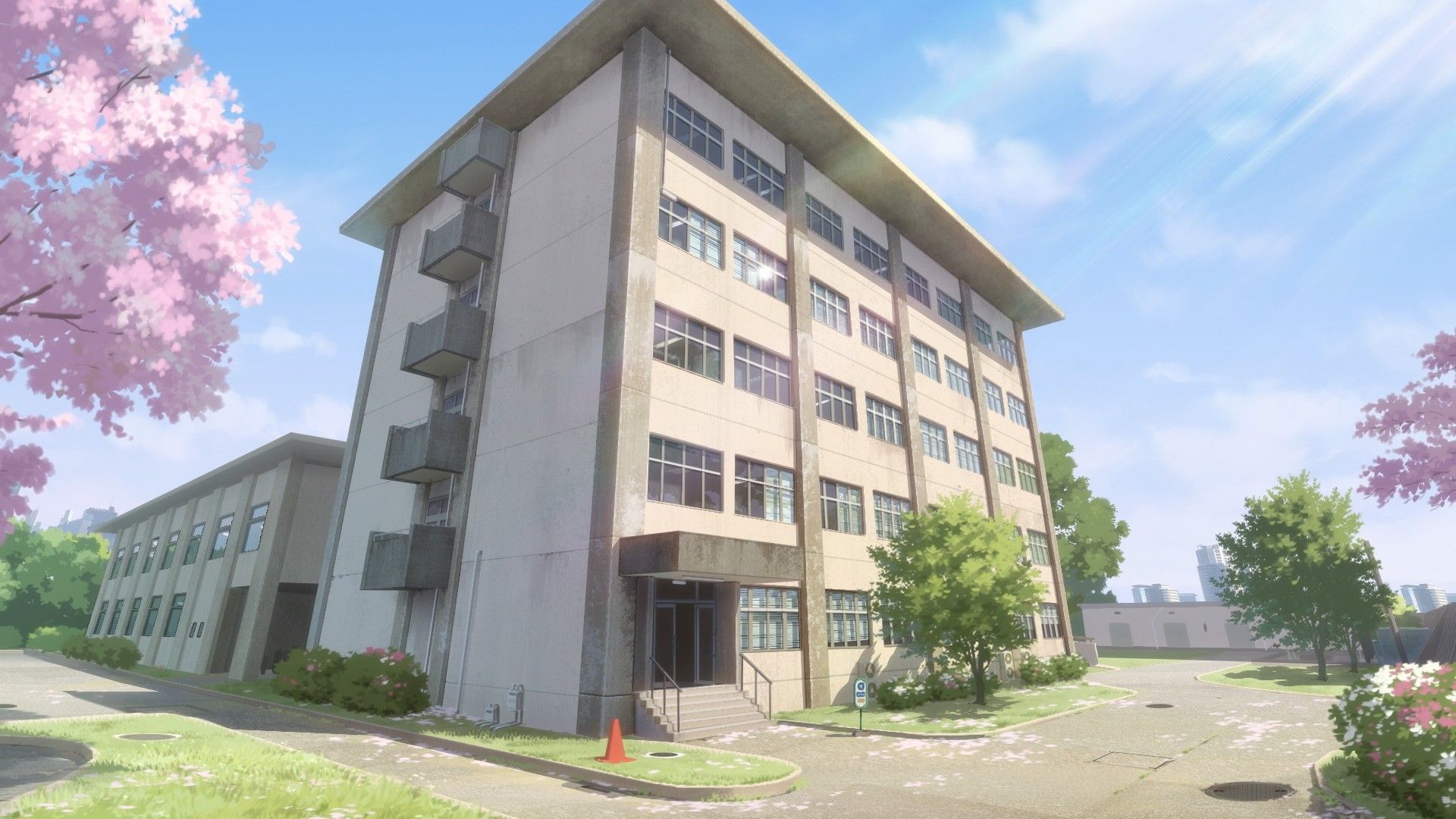
Visually, Toumei na Yoru ni Kakeru Kimi to, Me ni Mienai Koi wo Shita is genuinely pleasant to look at. This is not a production that tries to impress with fluid animation in every possible scene or constantly bombard the viewer with flashy shots. A romance like this simply did not need that. Studio Makaria focused above all on a soft color palette, attractive backgrounds, and lighting that works well with the atmosphere of each scene. Sawada Yoshihiro and Ishii Yuzuki were responsible for the character designs, while the art side of the production involved, among others, Masuyama Osamu, Nakamura Asaki, and Kawashima Miyuki.
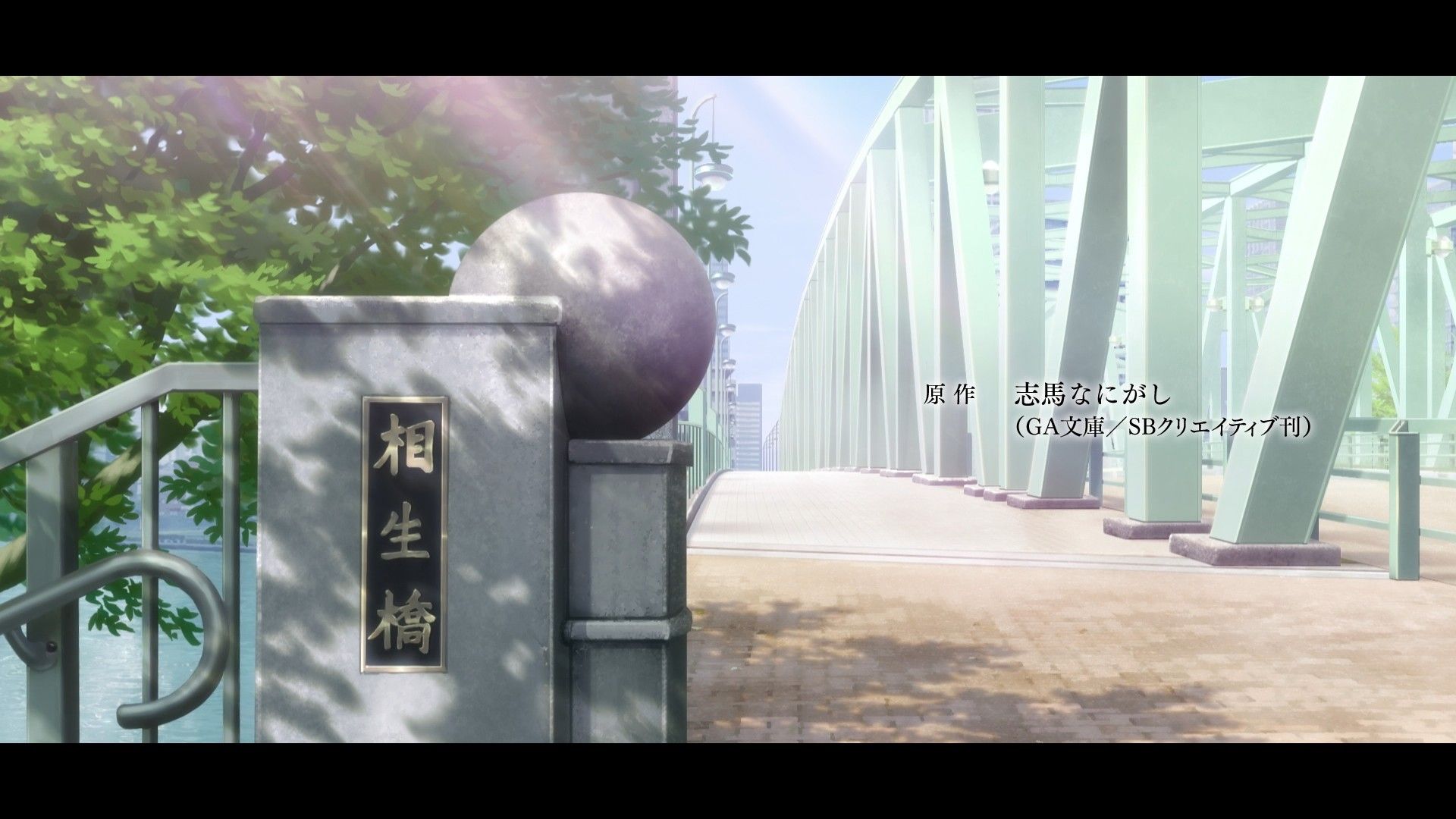
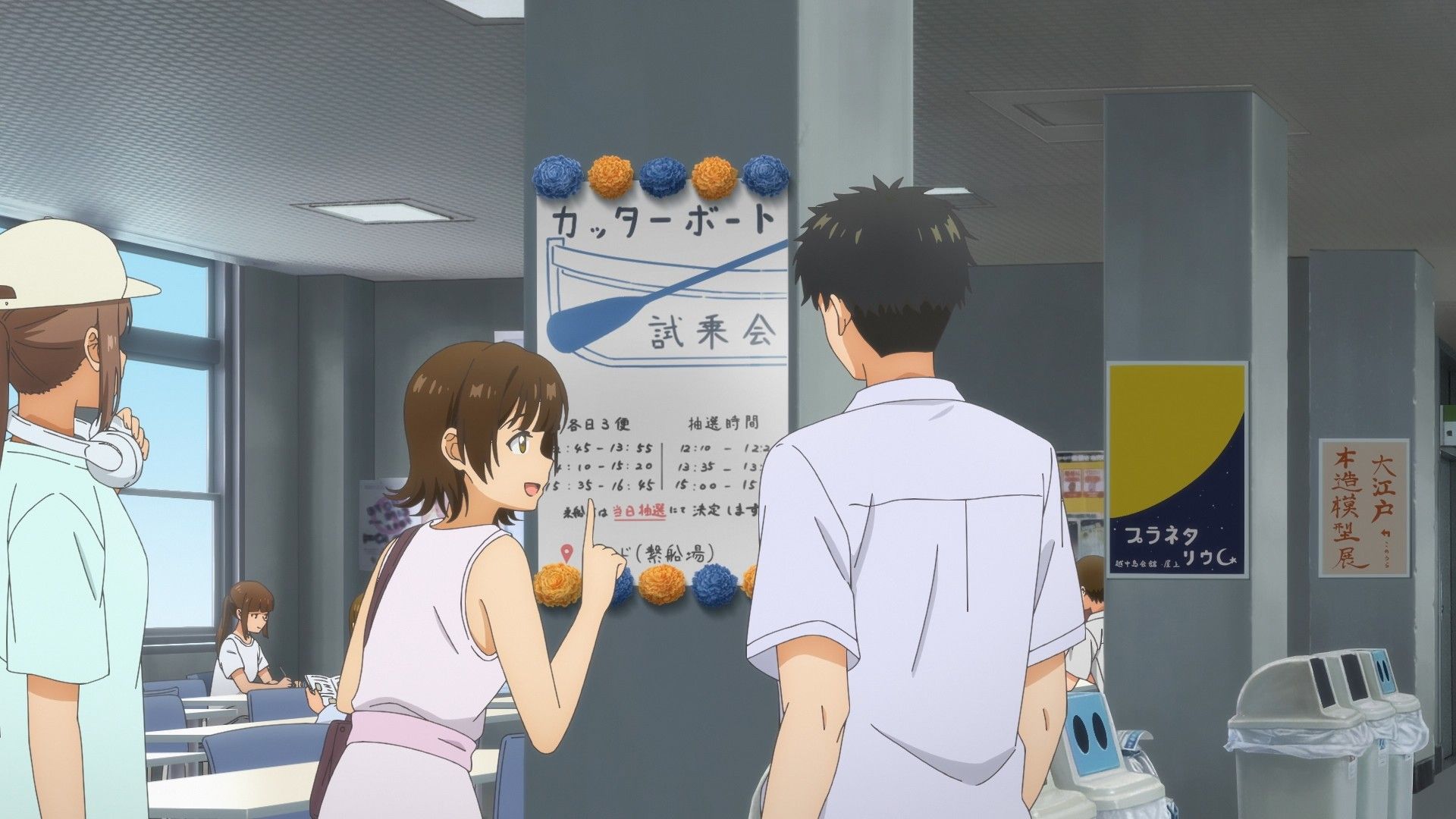
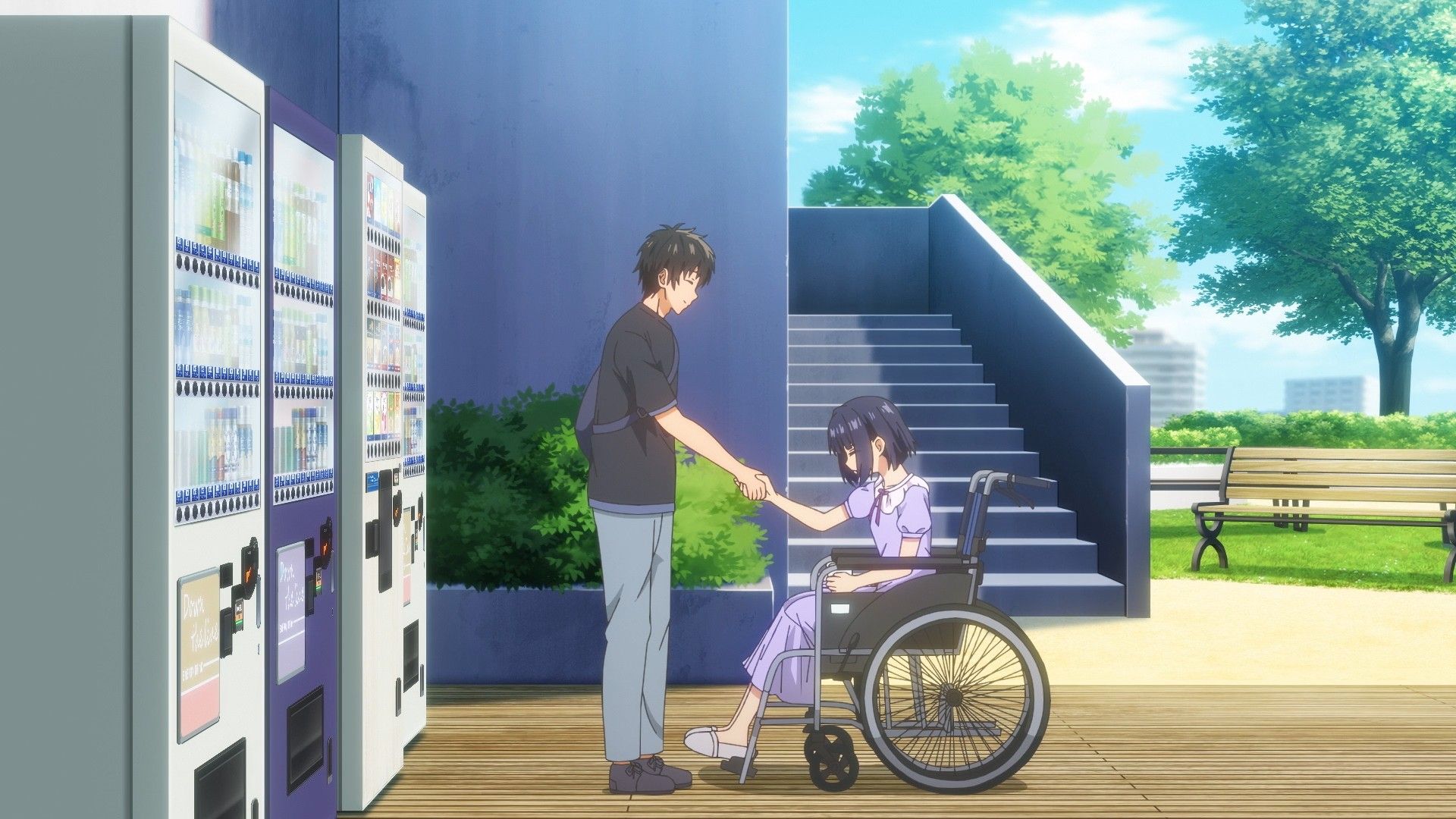
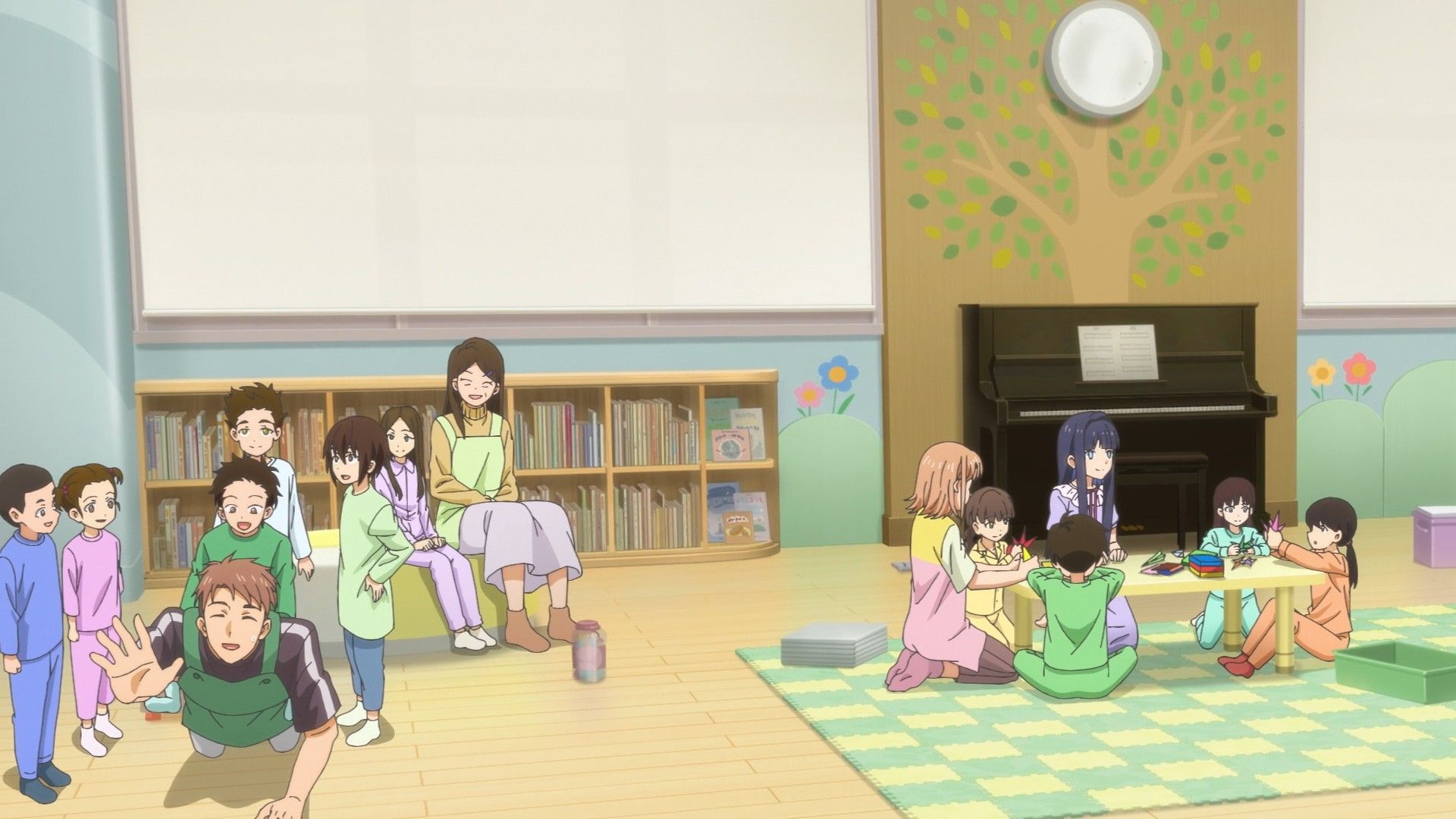
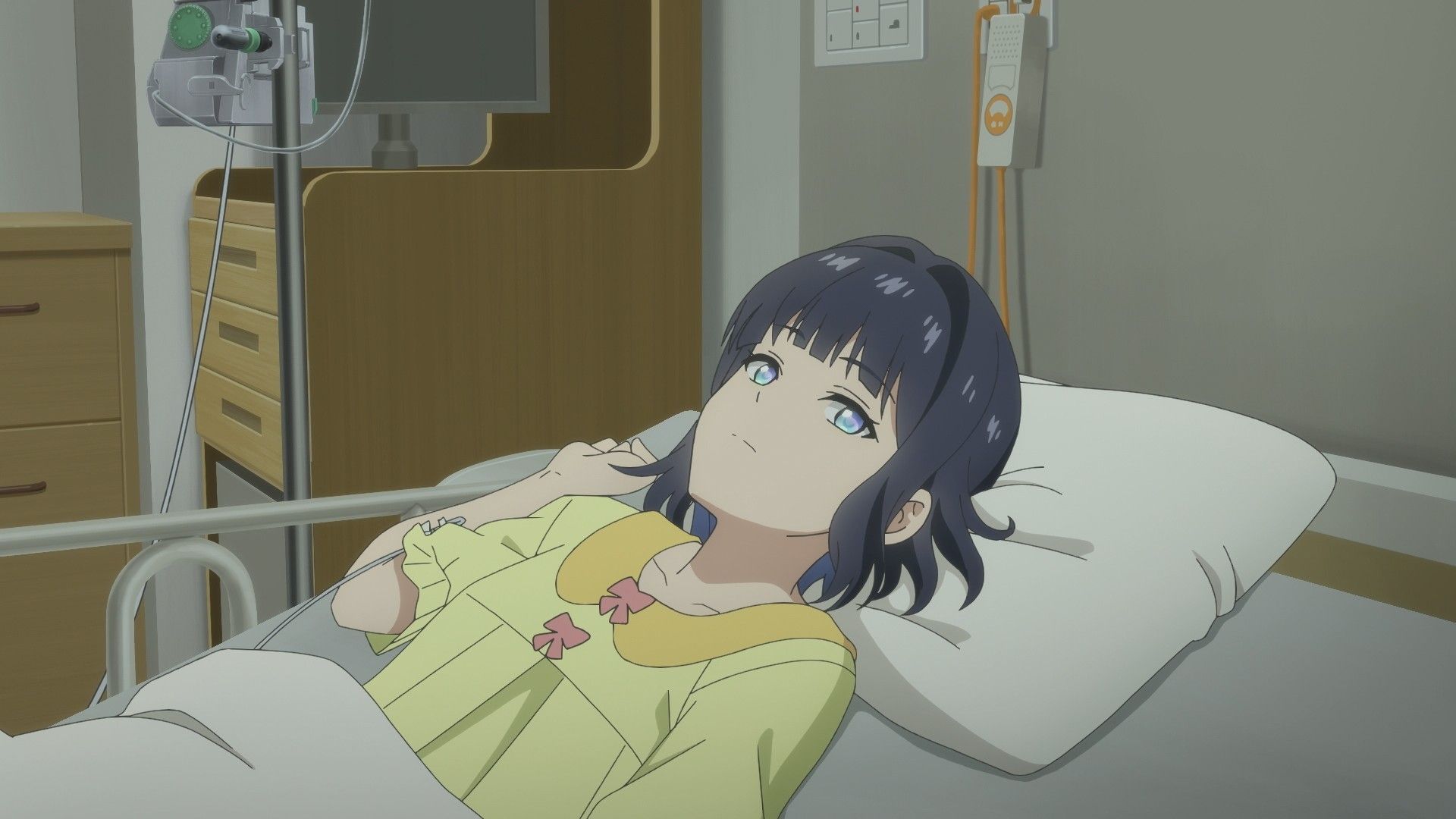
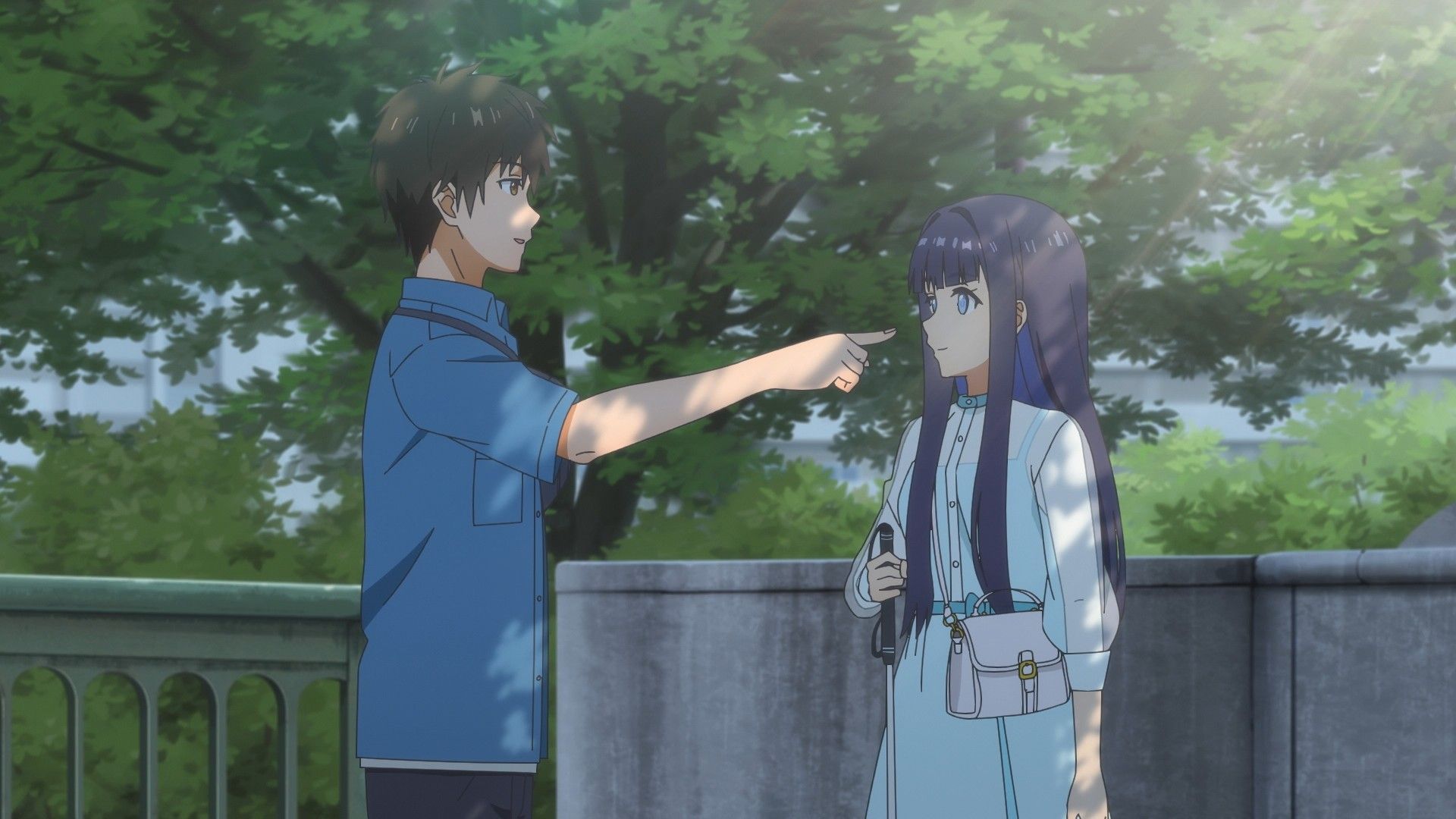
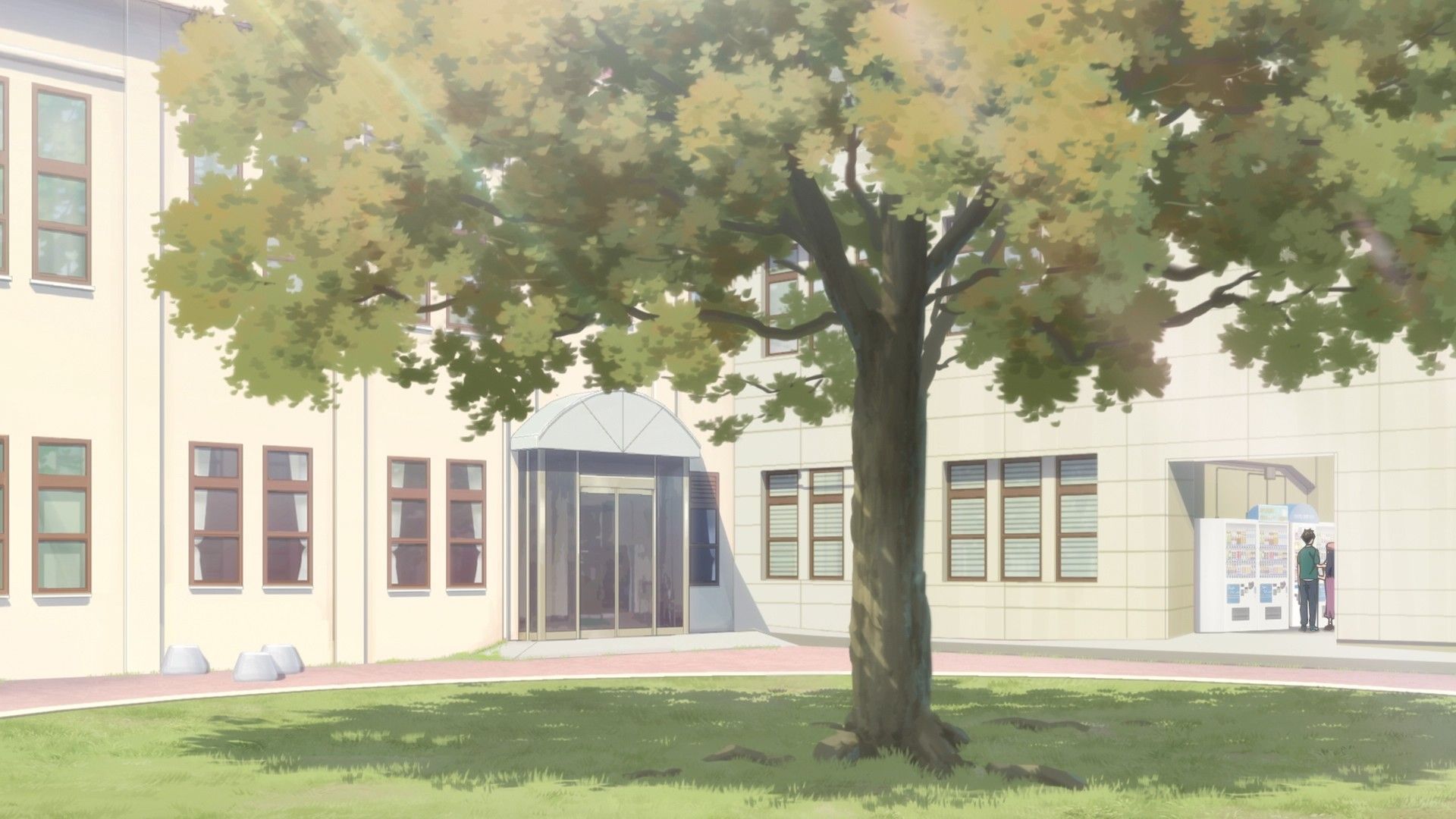
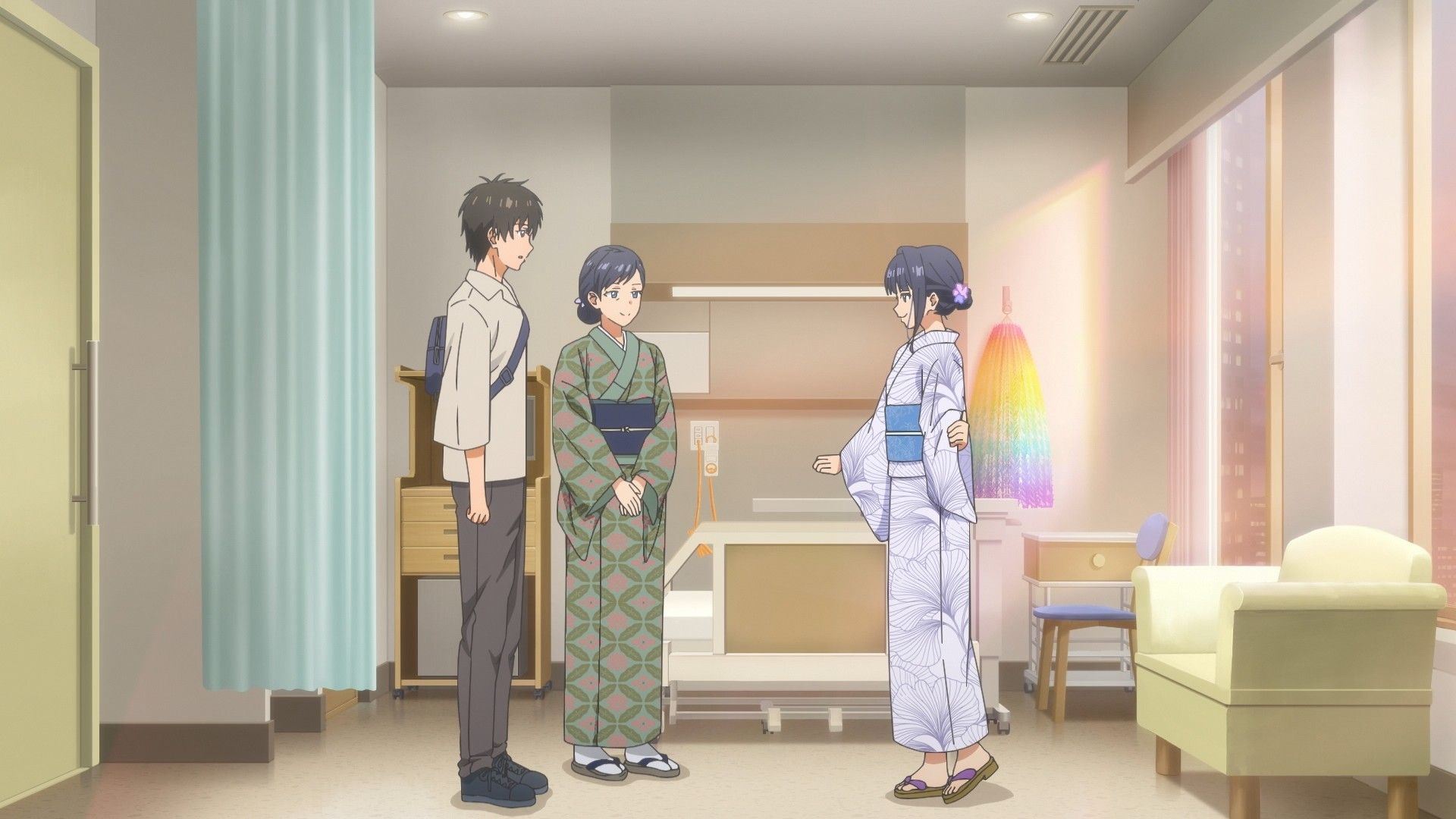
The backgrounds were probably the element I found myself paying attention to most often. The campus, the terrace where many of the main characters’ conversations take place, the interiors, the city streets, and the later hospital scenes all contain enough detail that they never feel like random backdrops thrown behind the characters. I especially liked the outdoor shots.

Character Design, Facial Expressions, and Animation
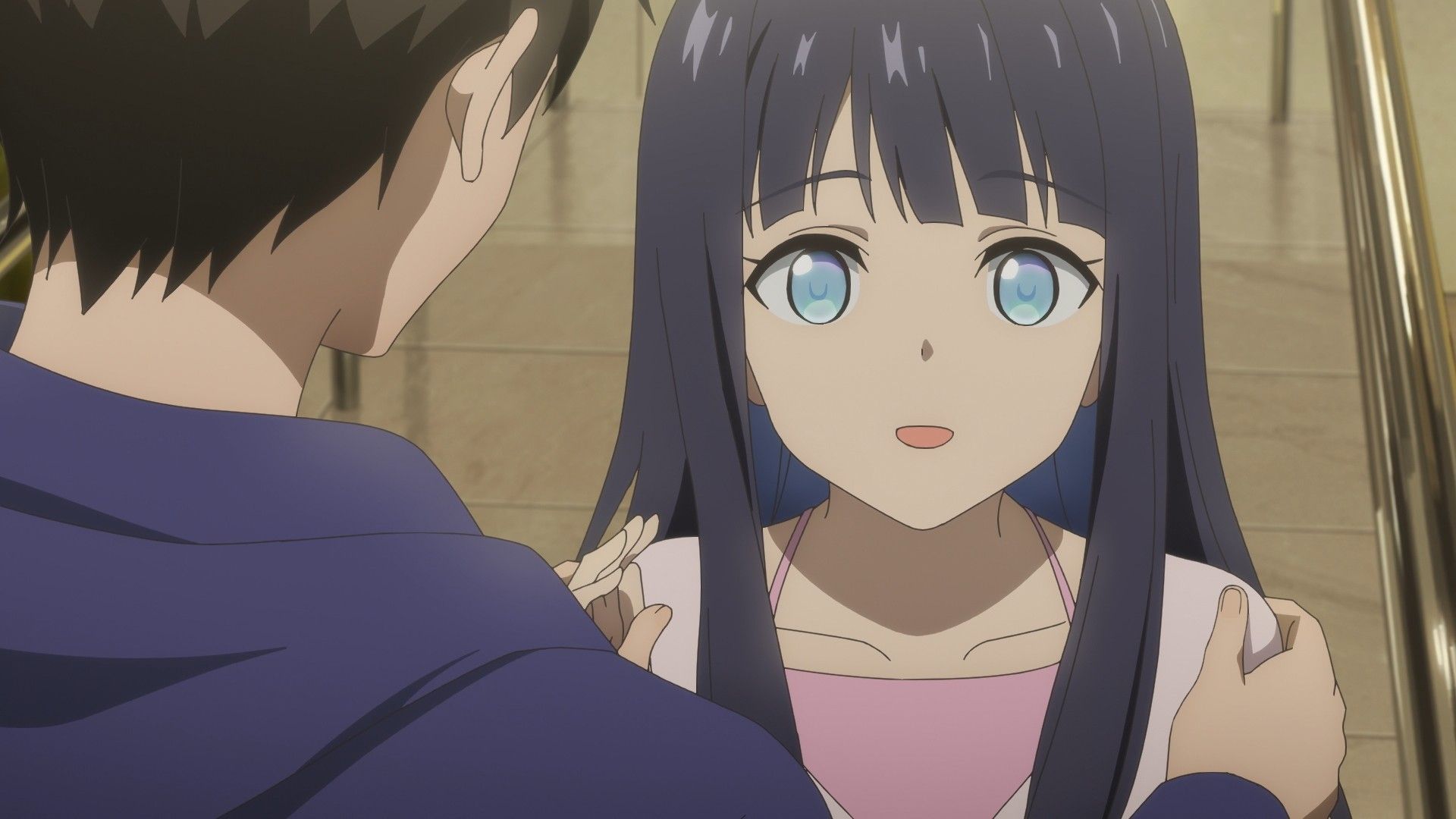
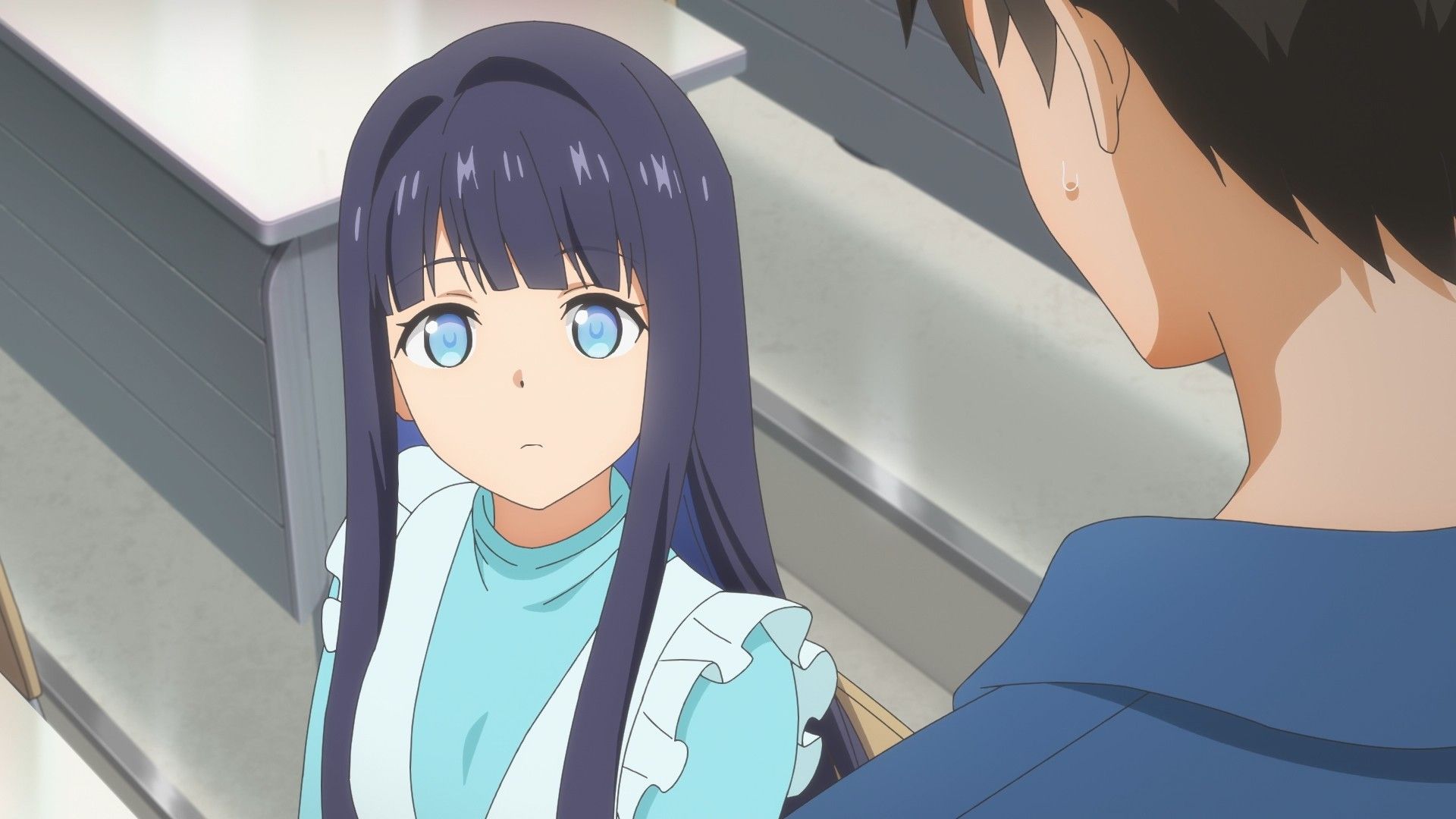
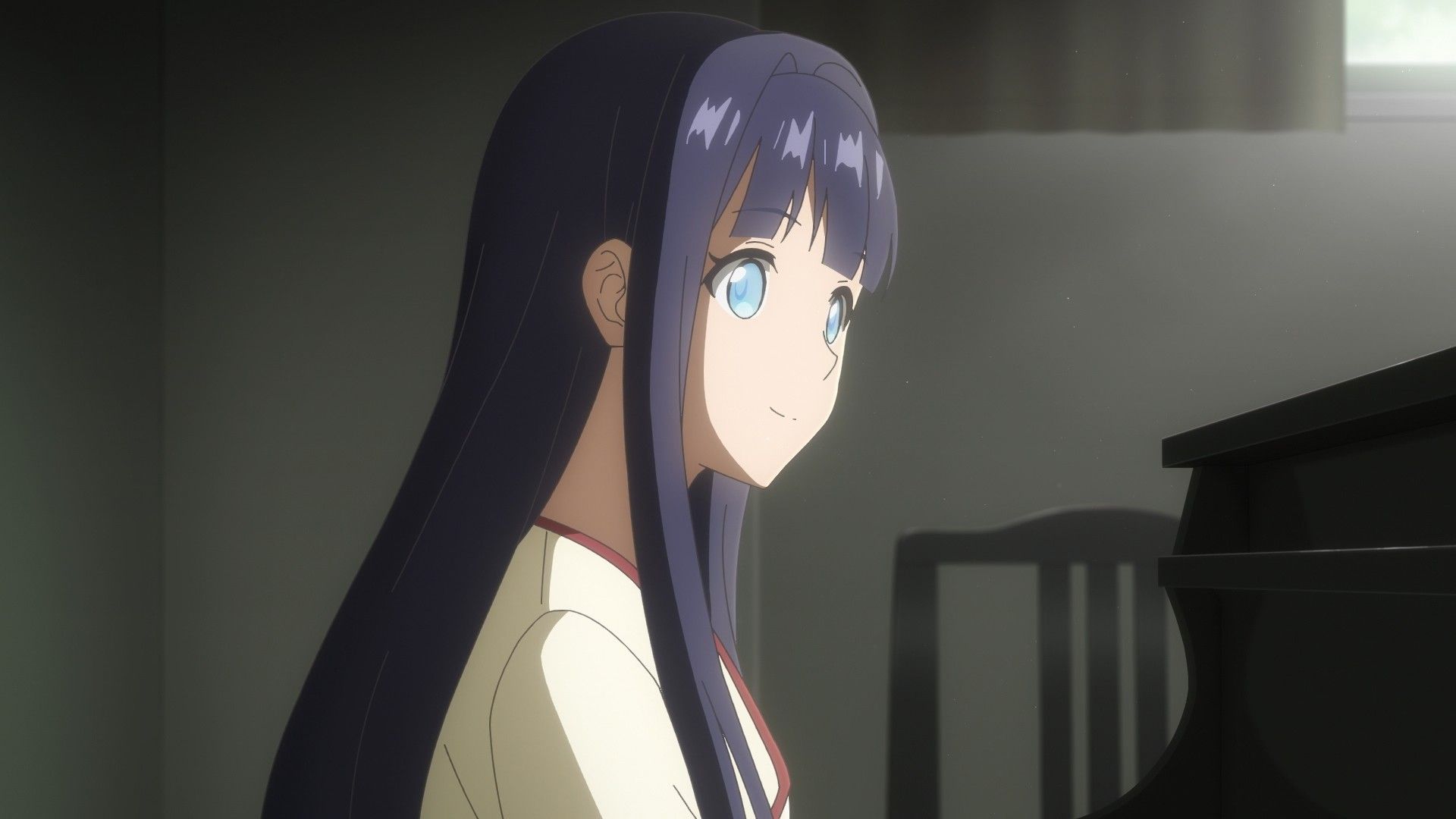
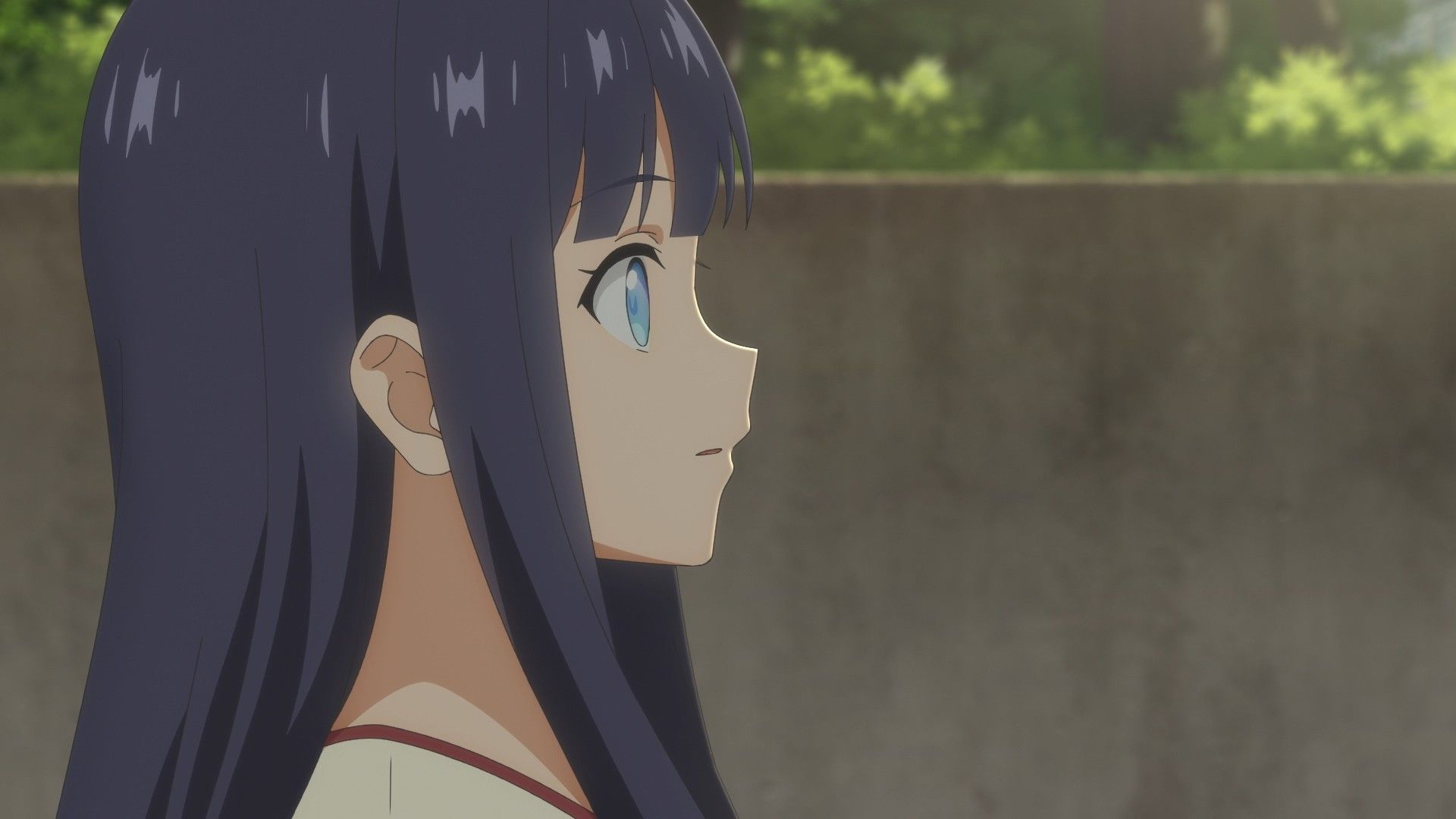
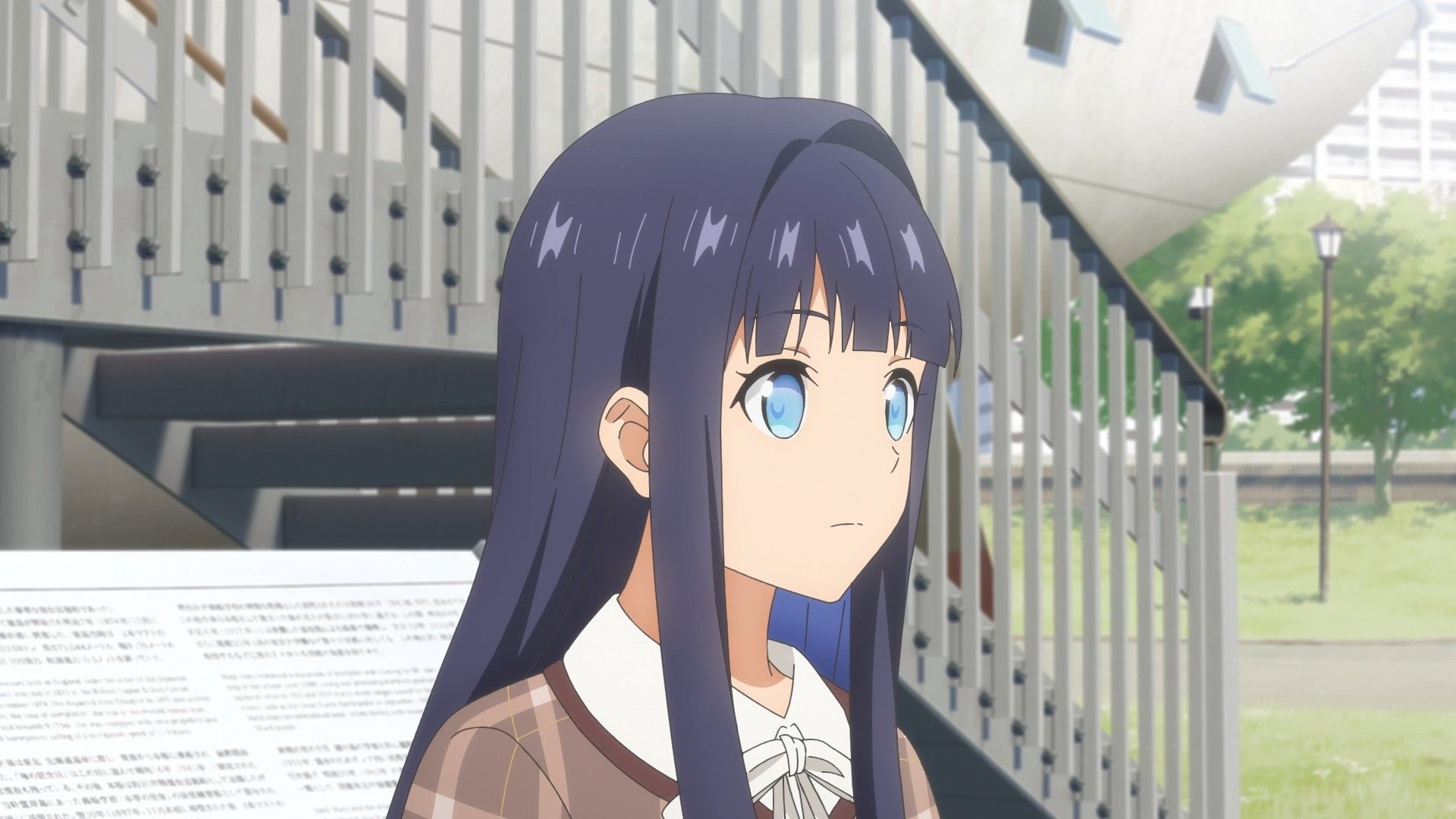
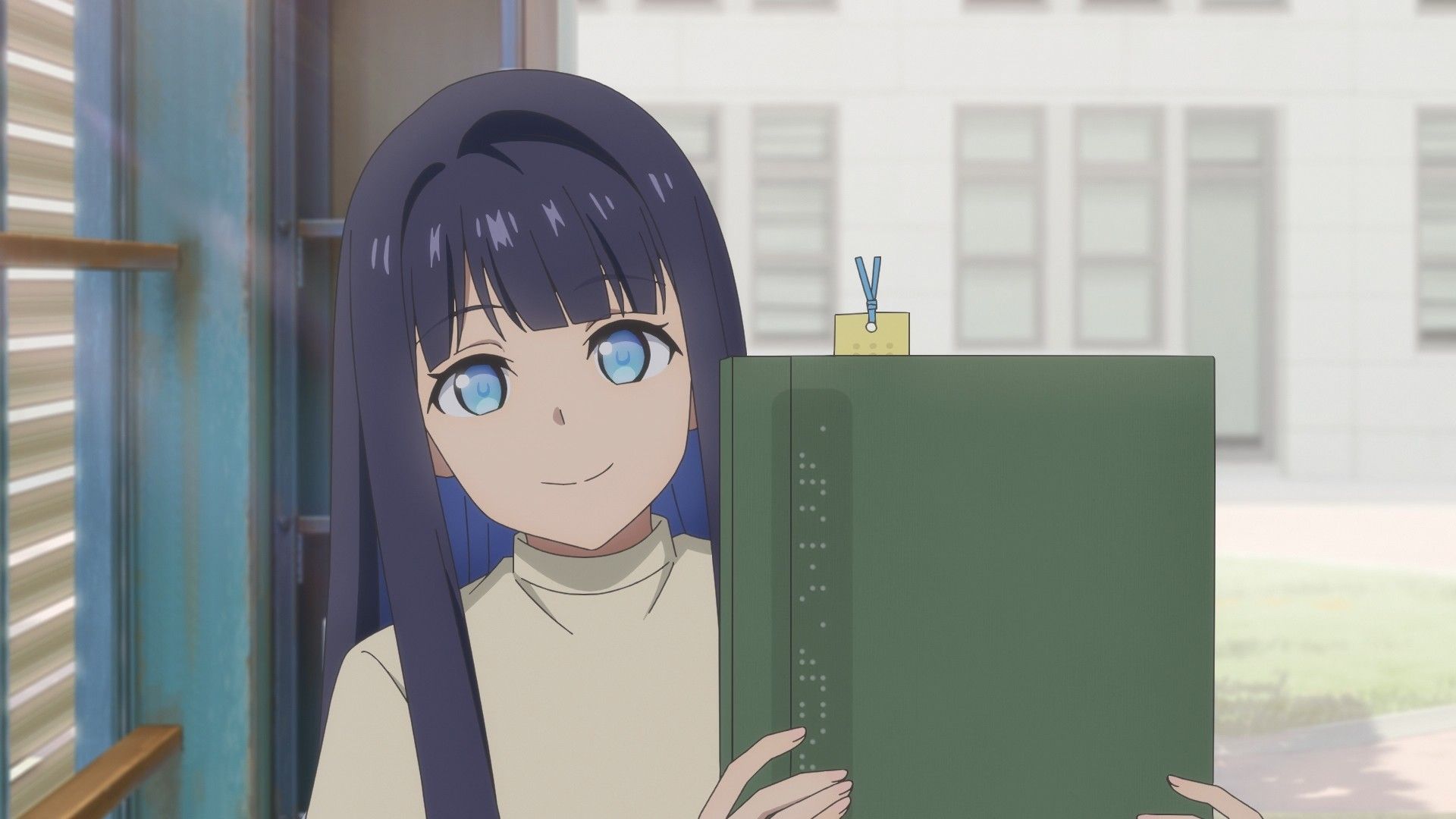
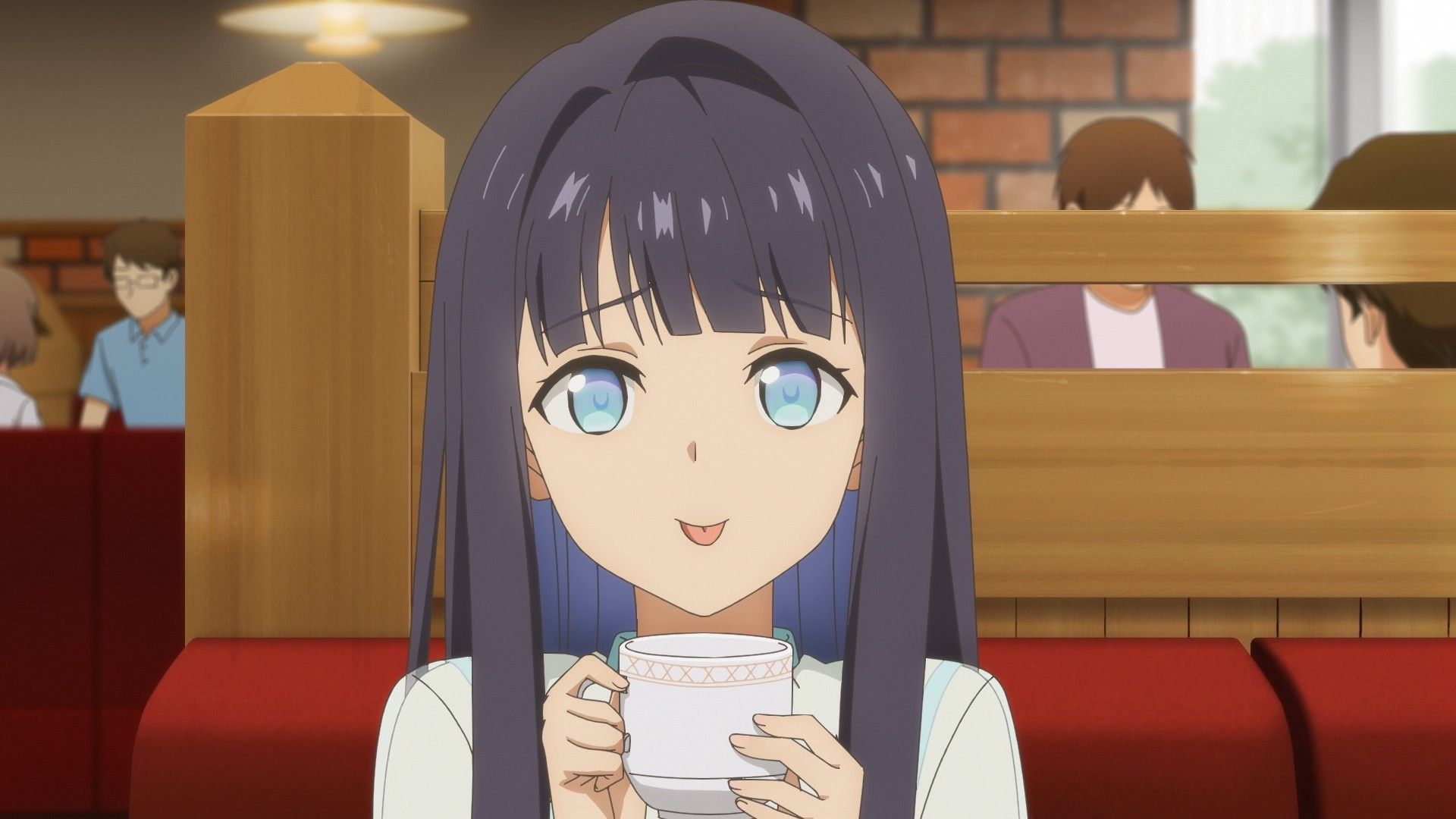
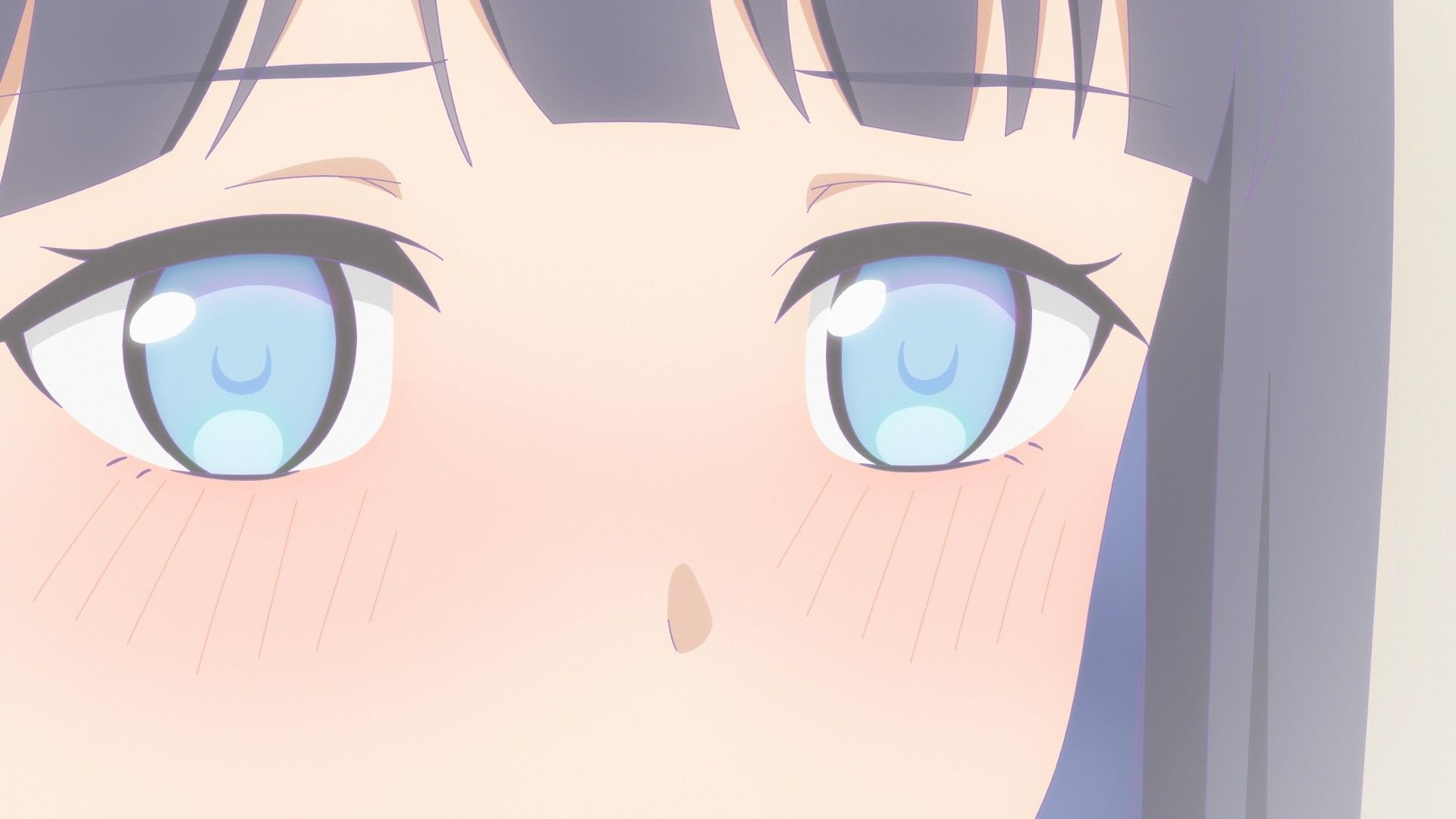
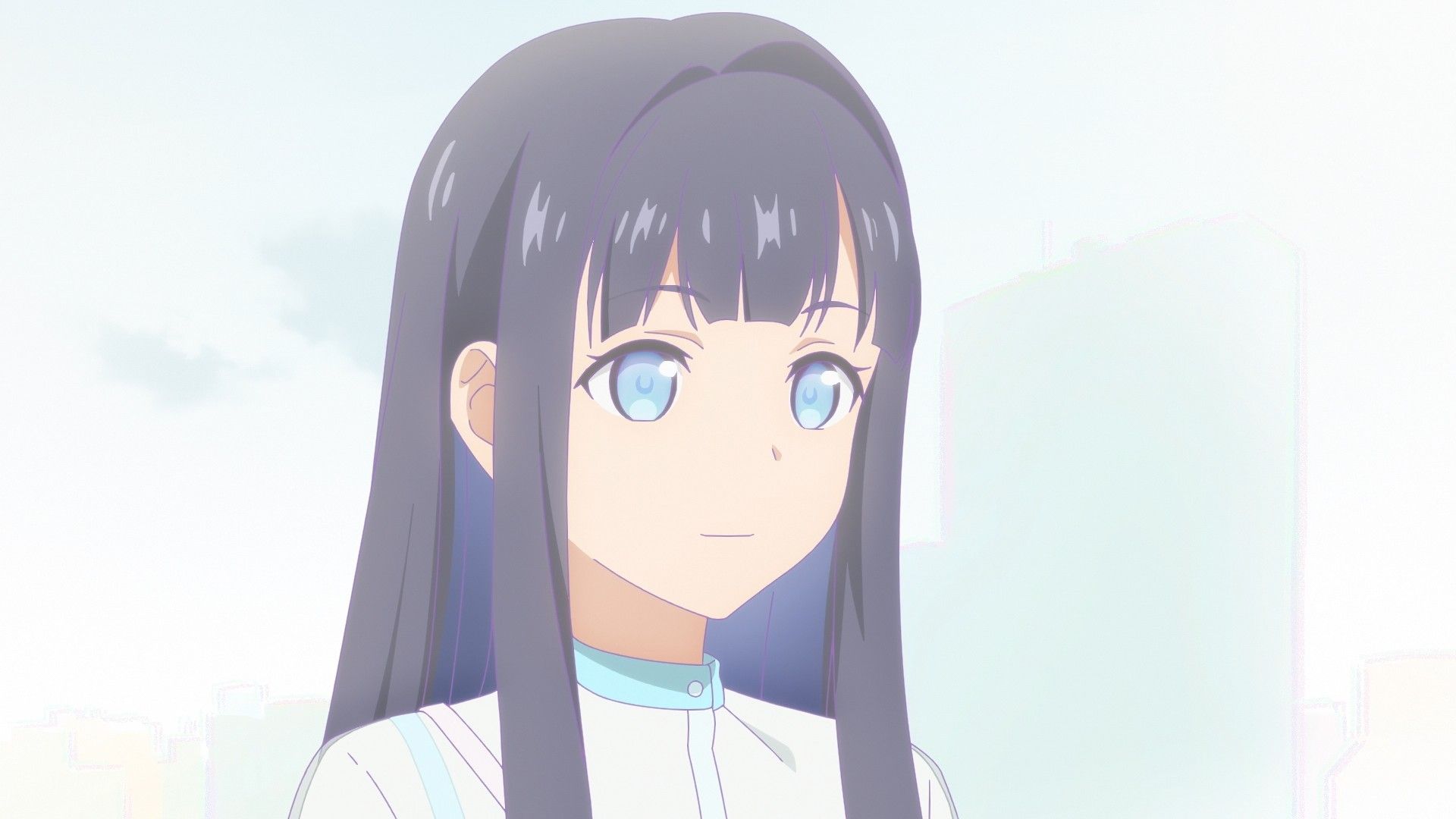
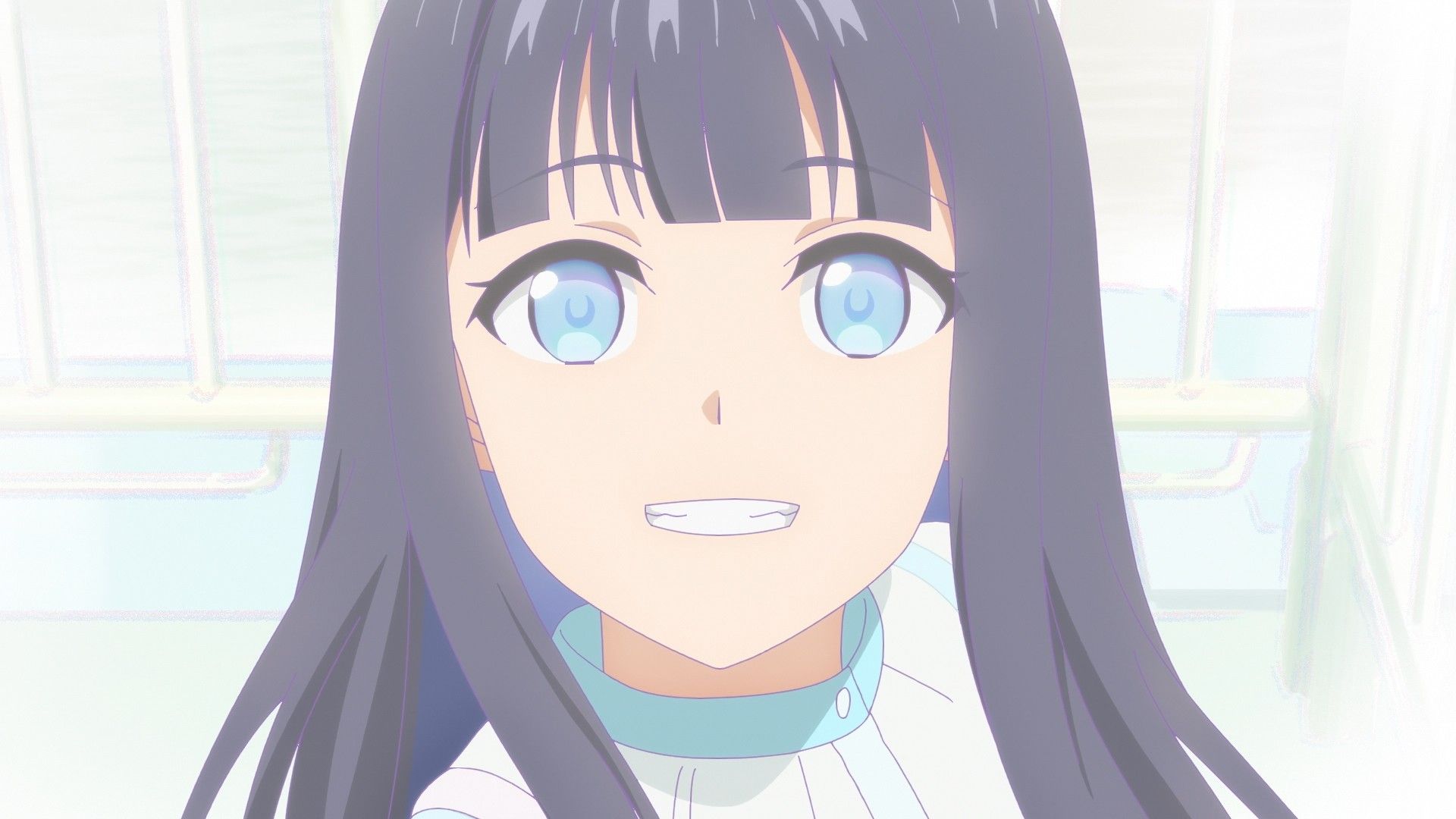
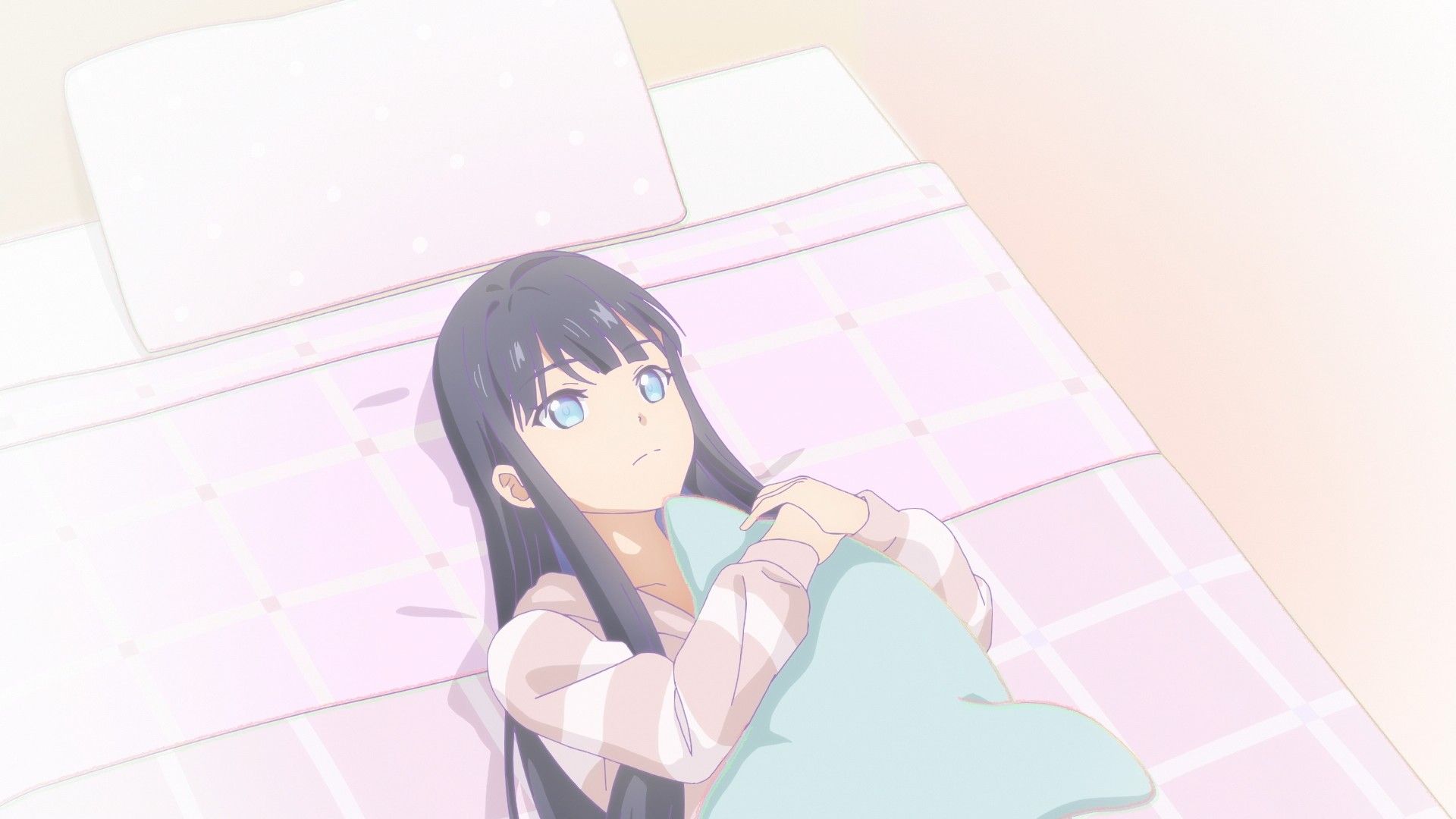
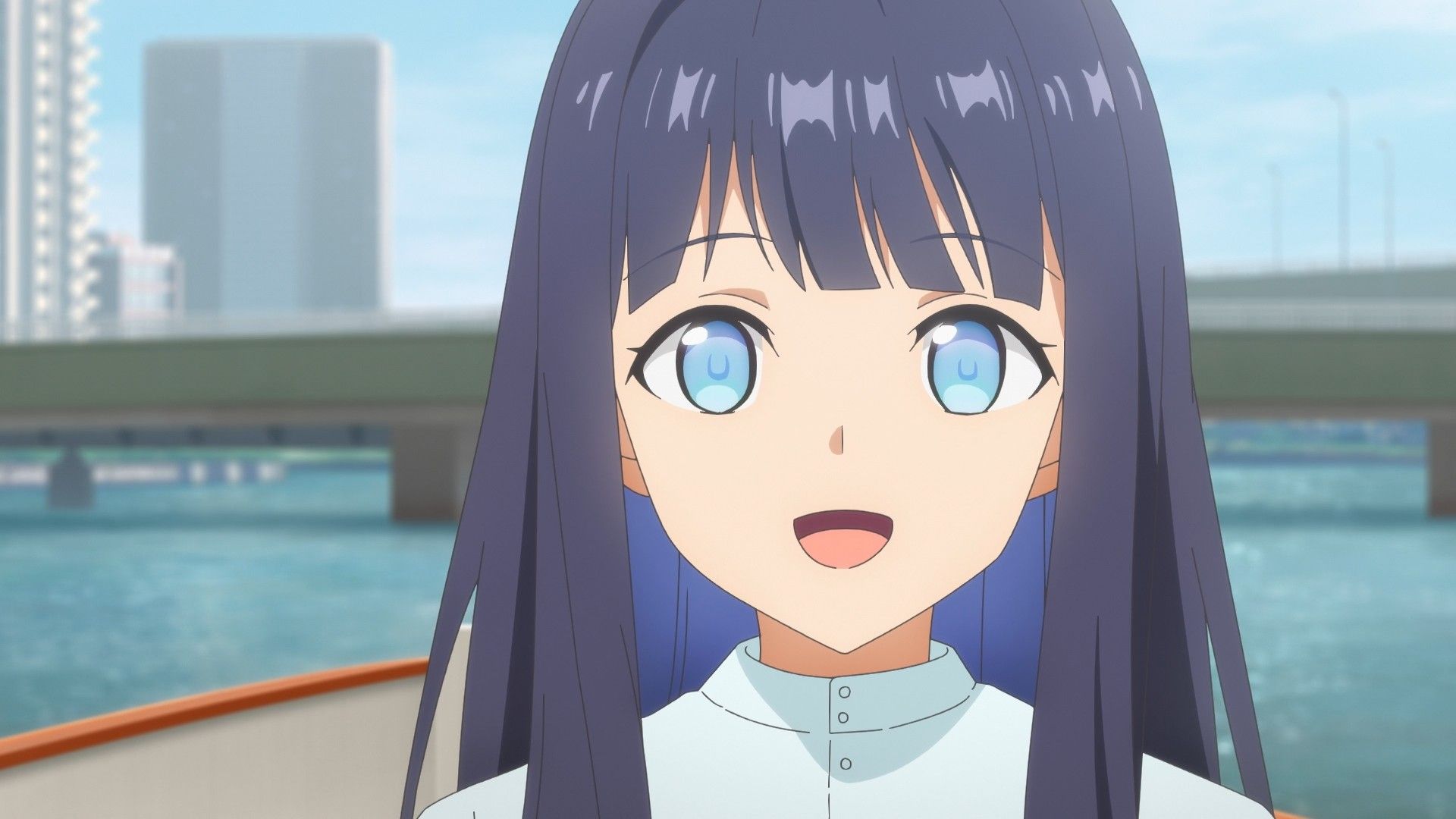
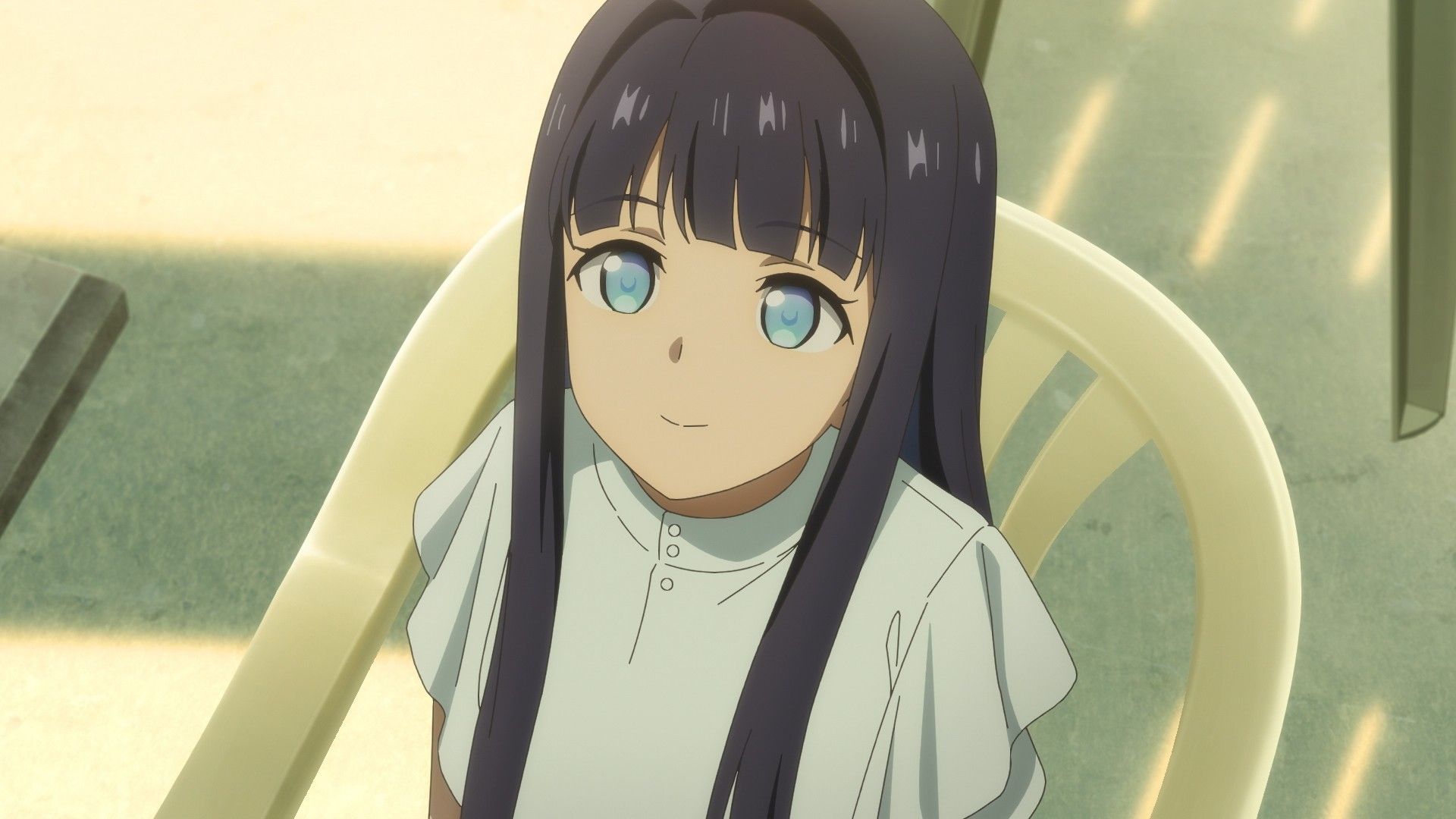
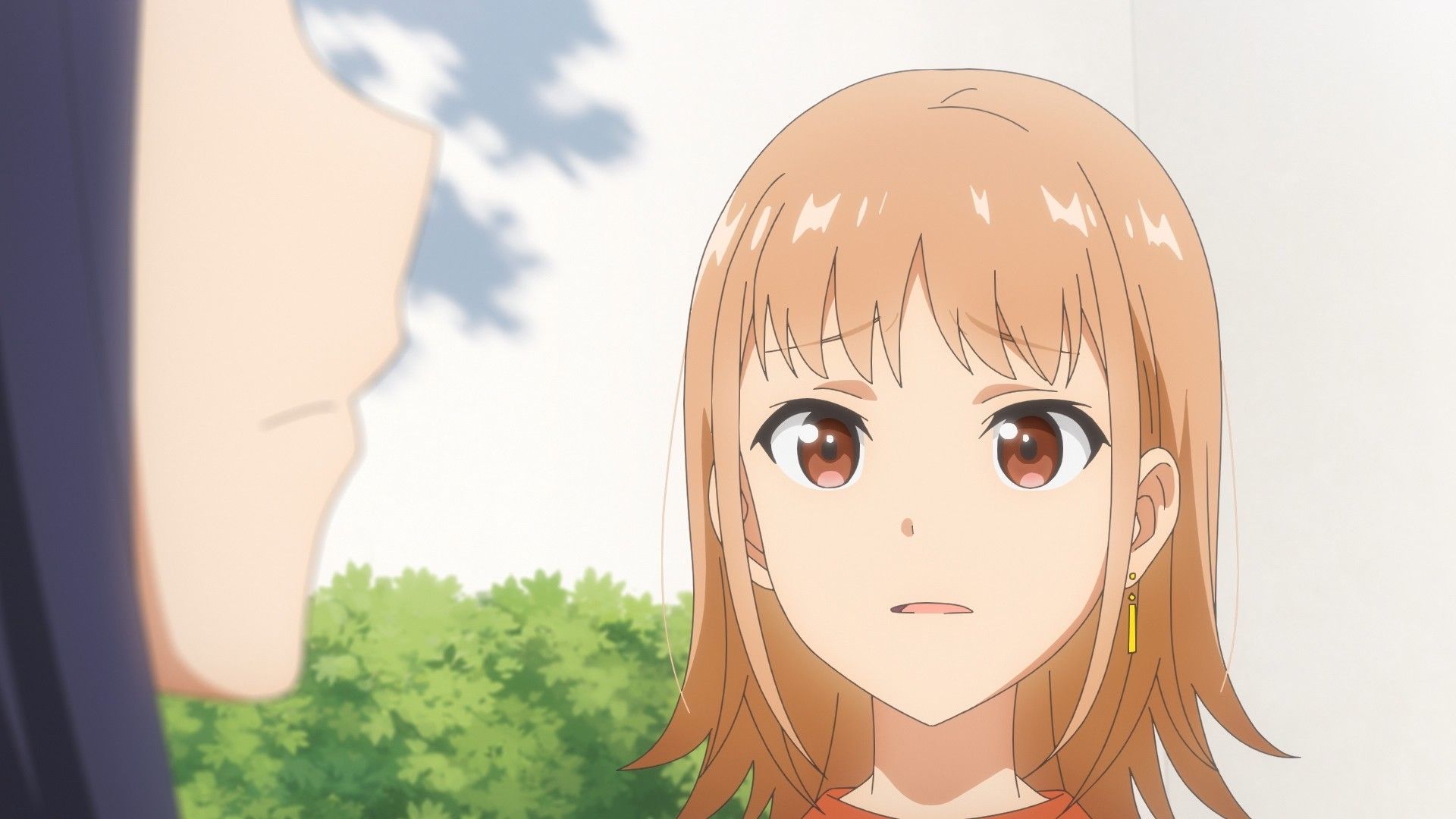
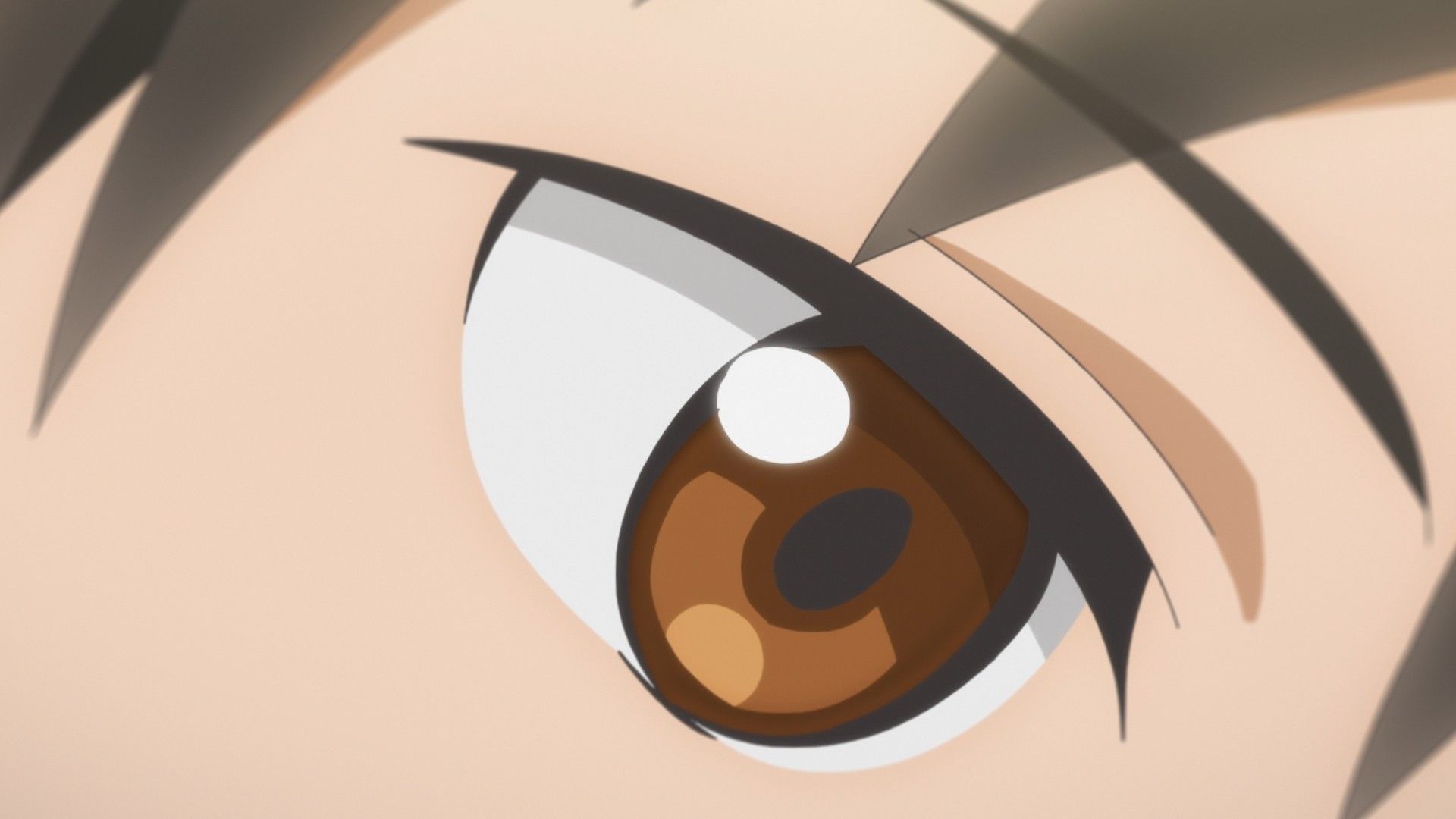
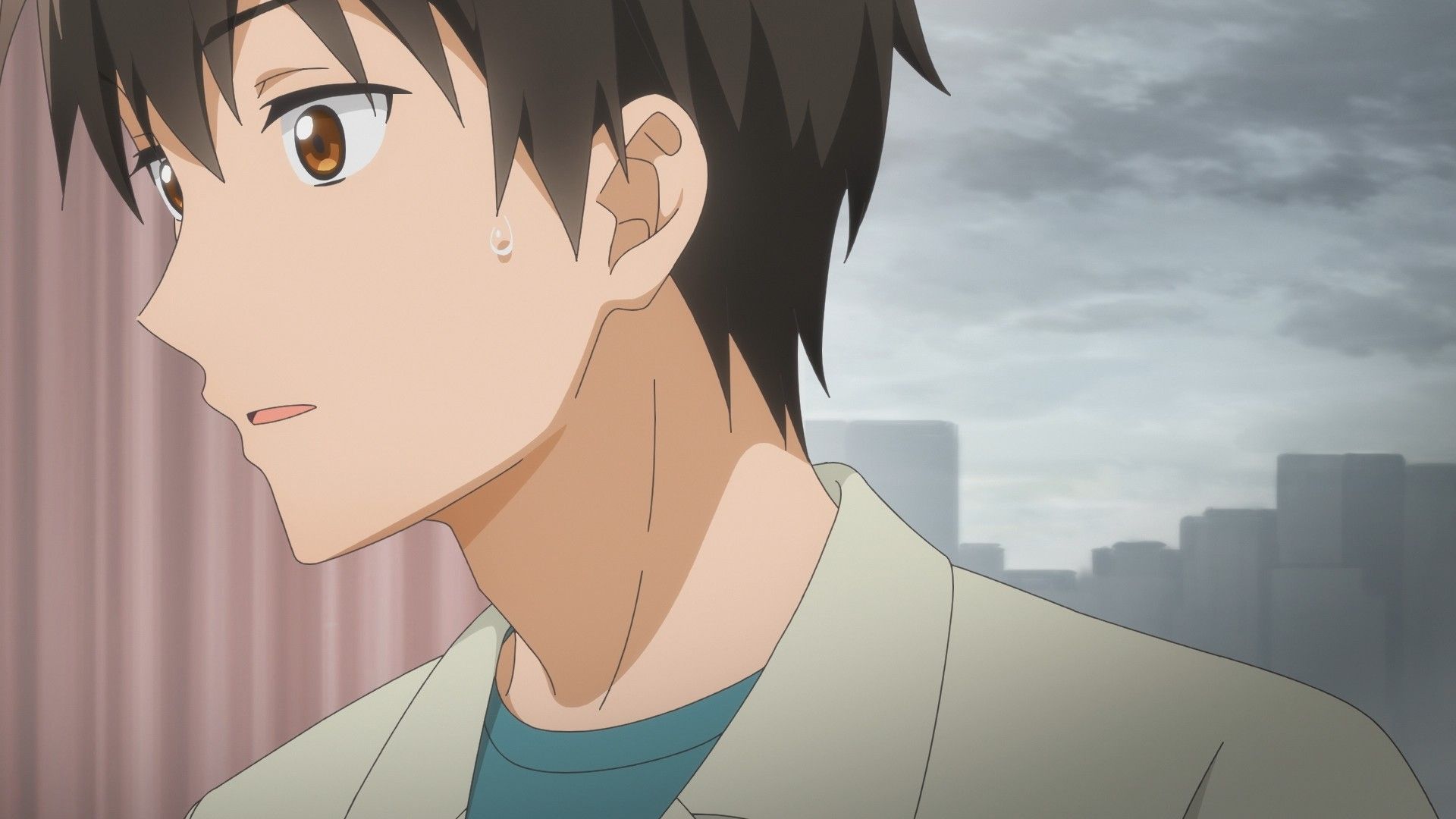
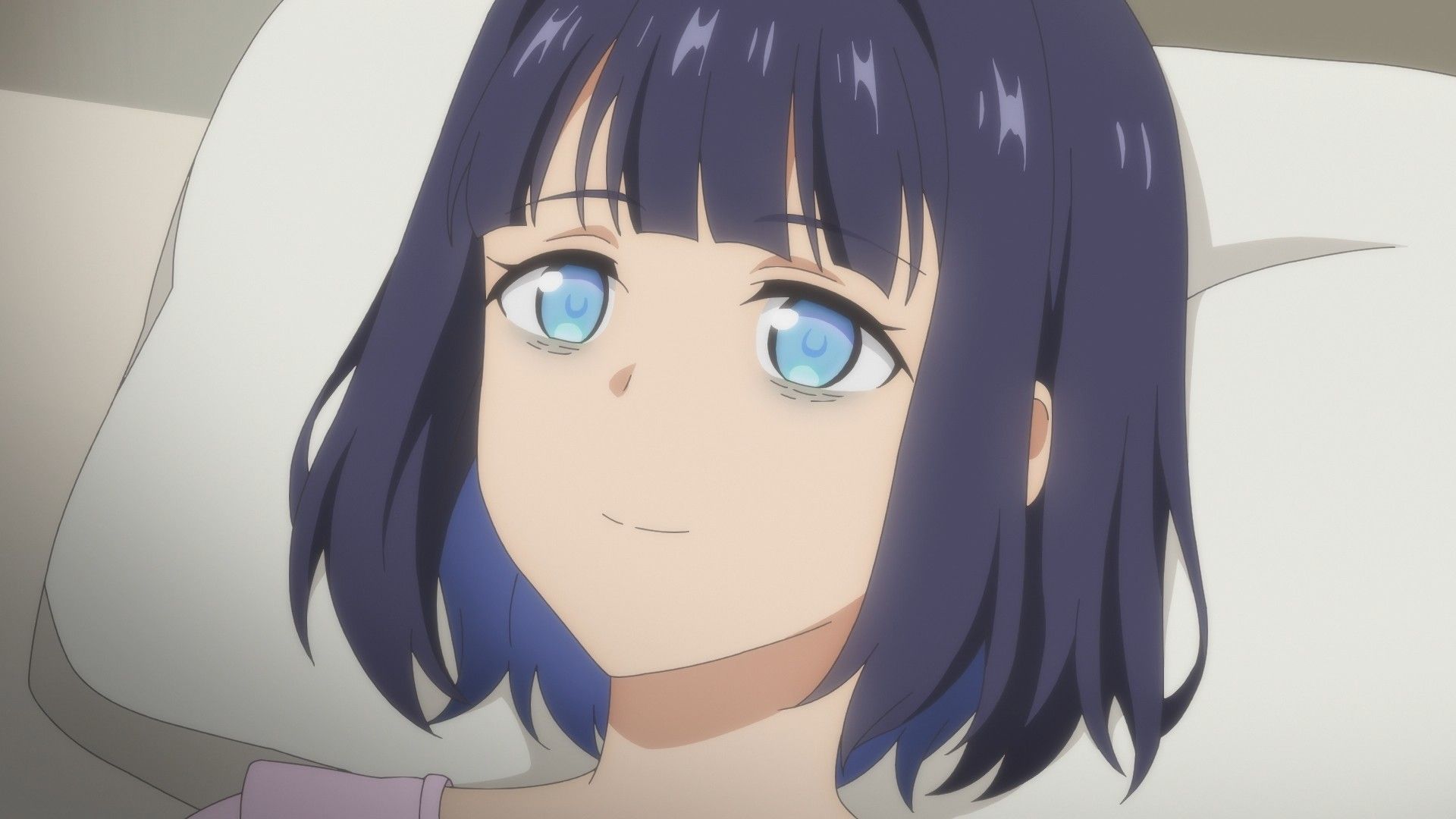
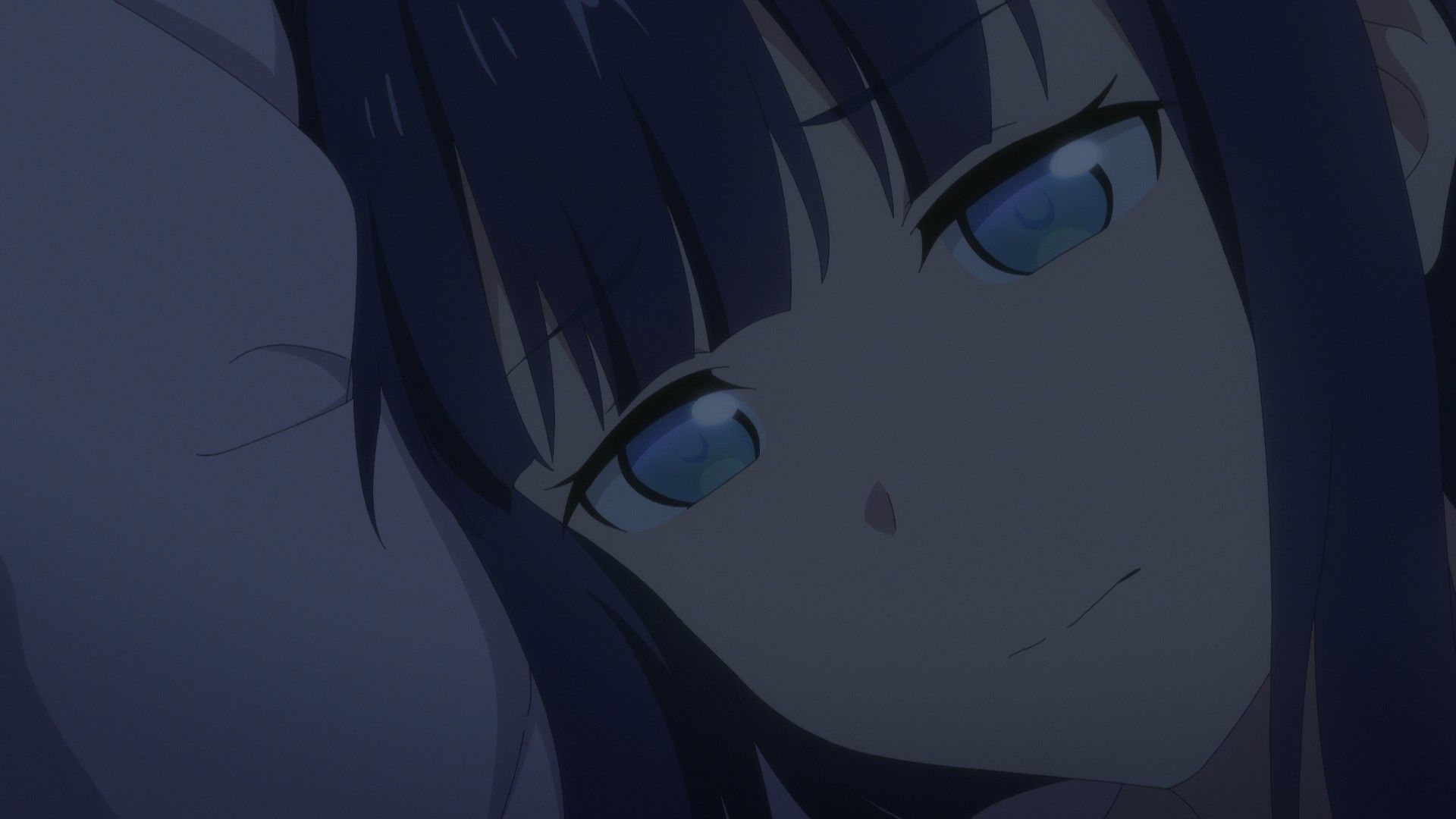
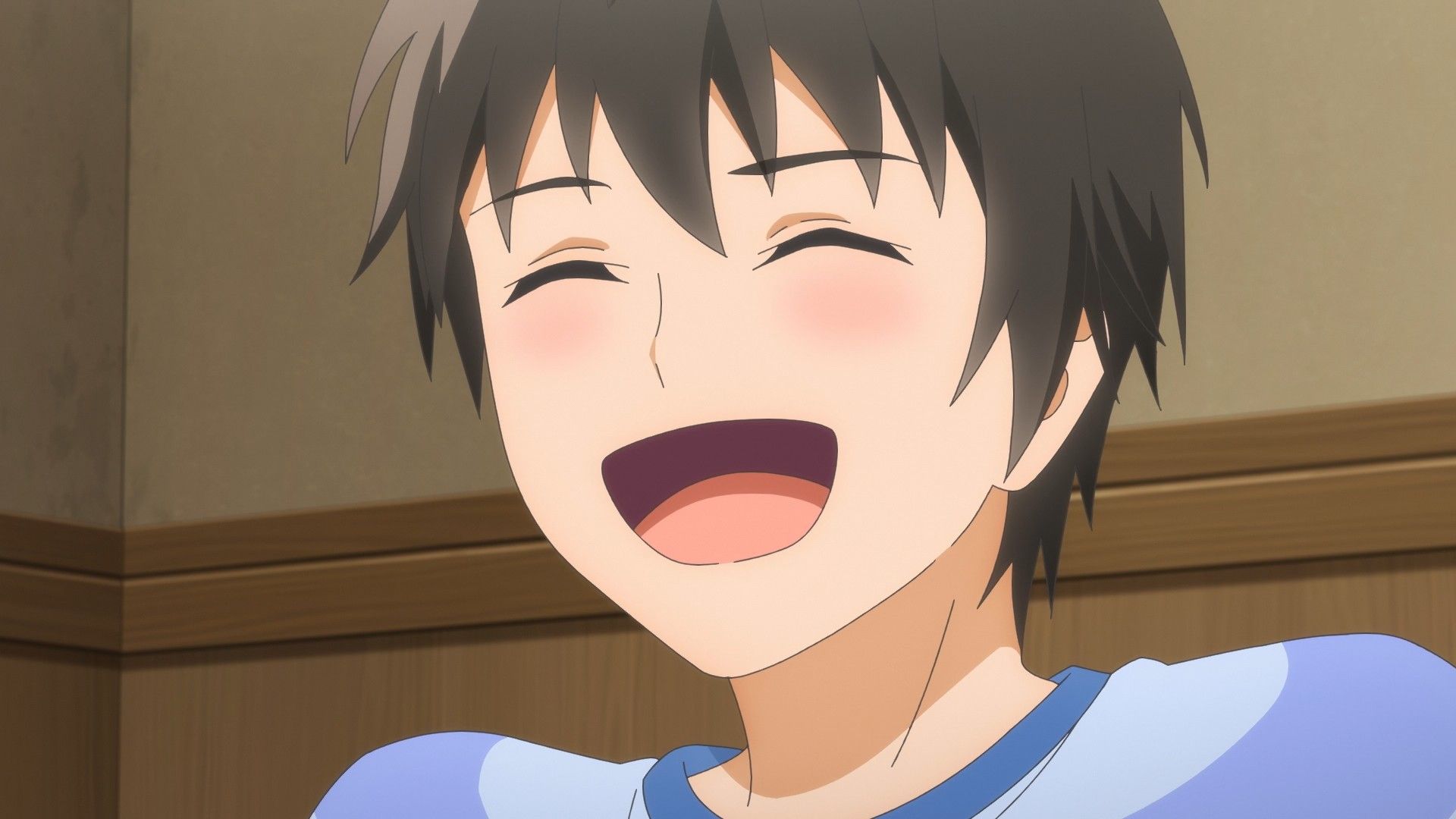
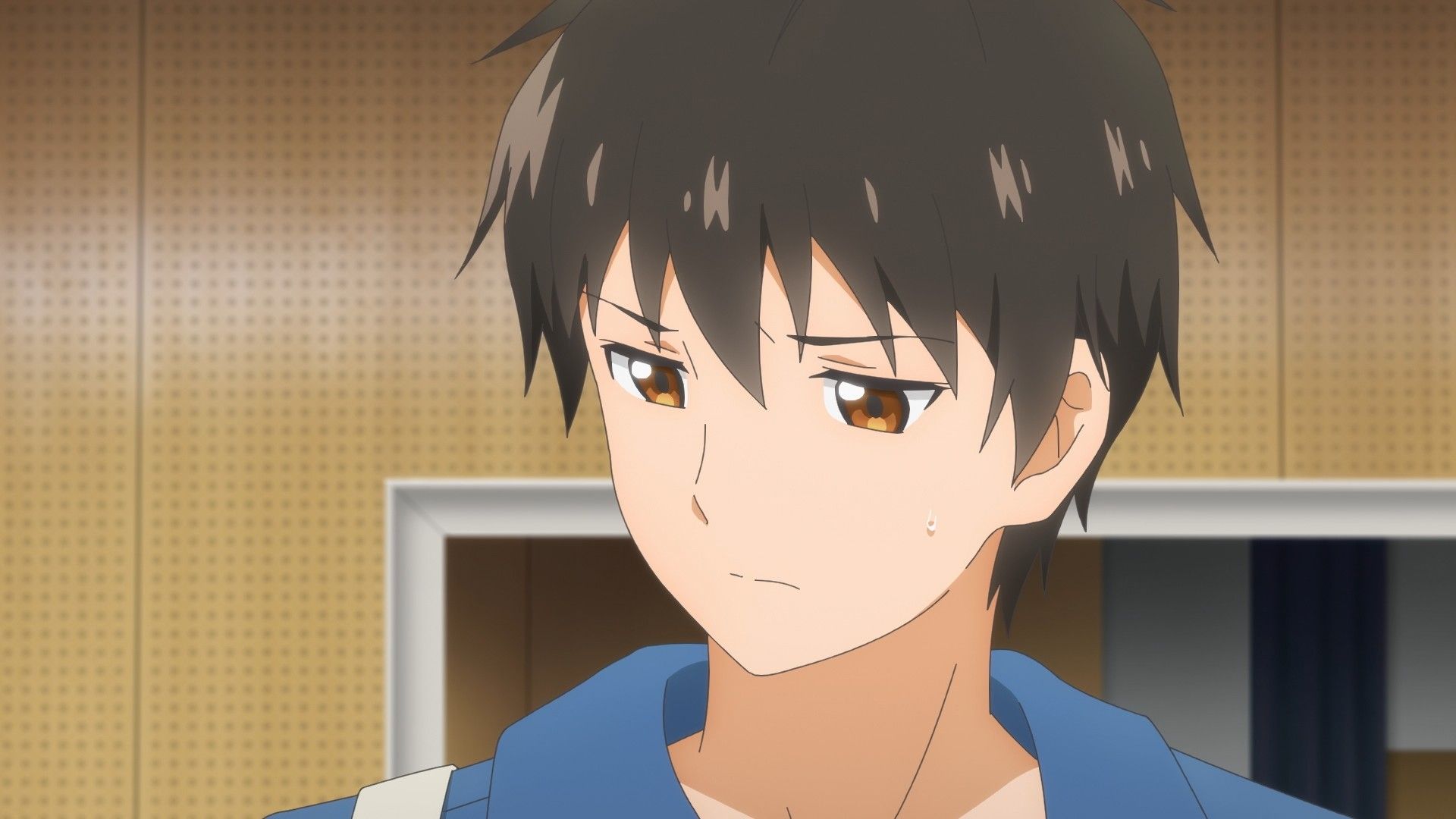
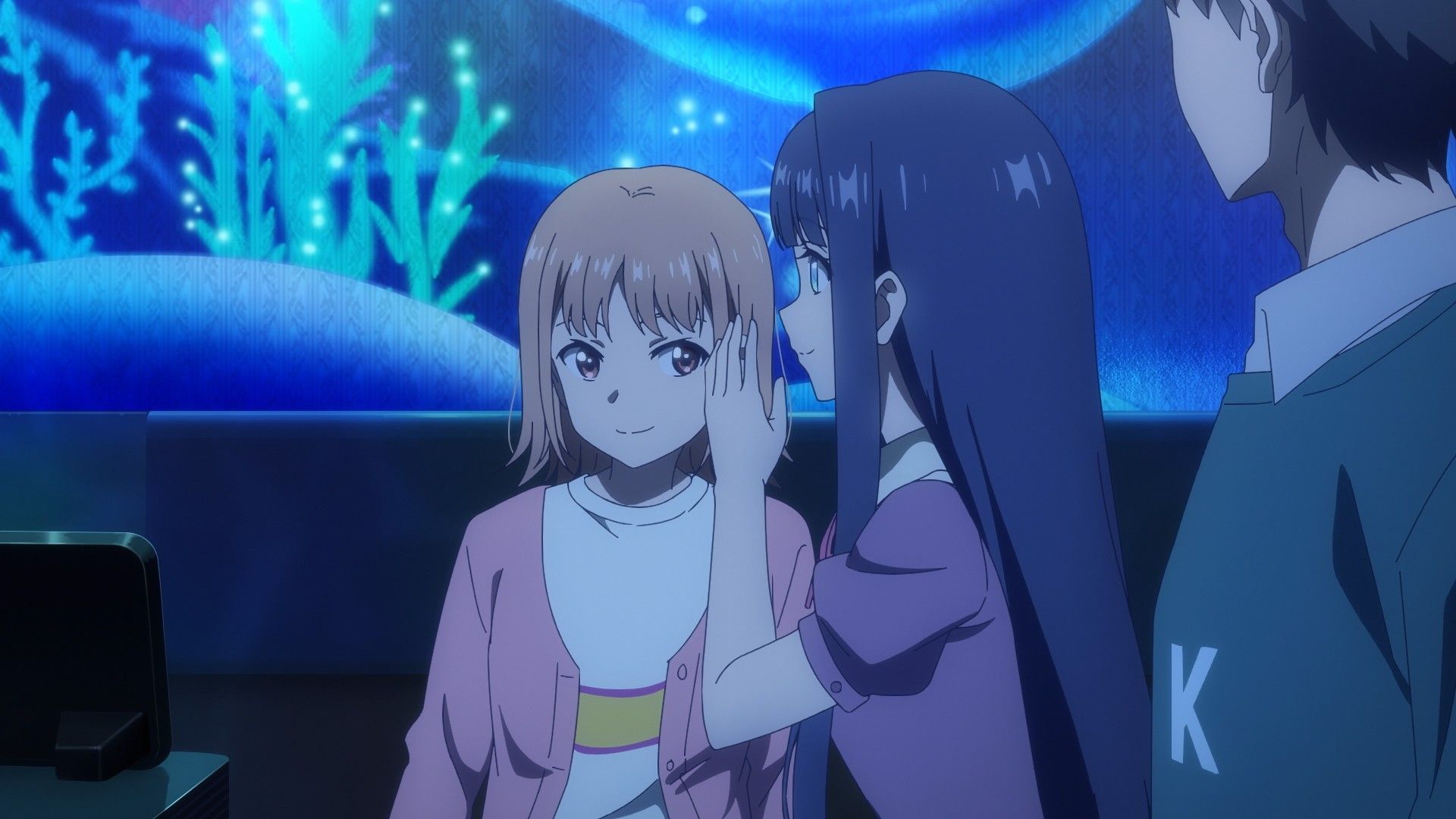
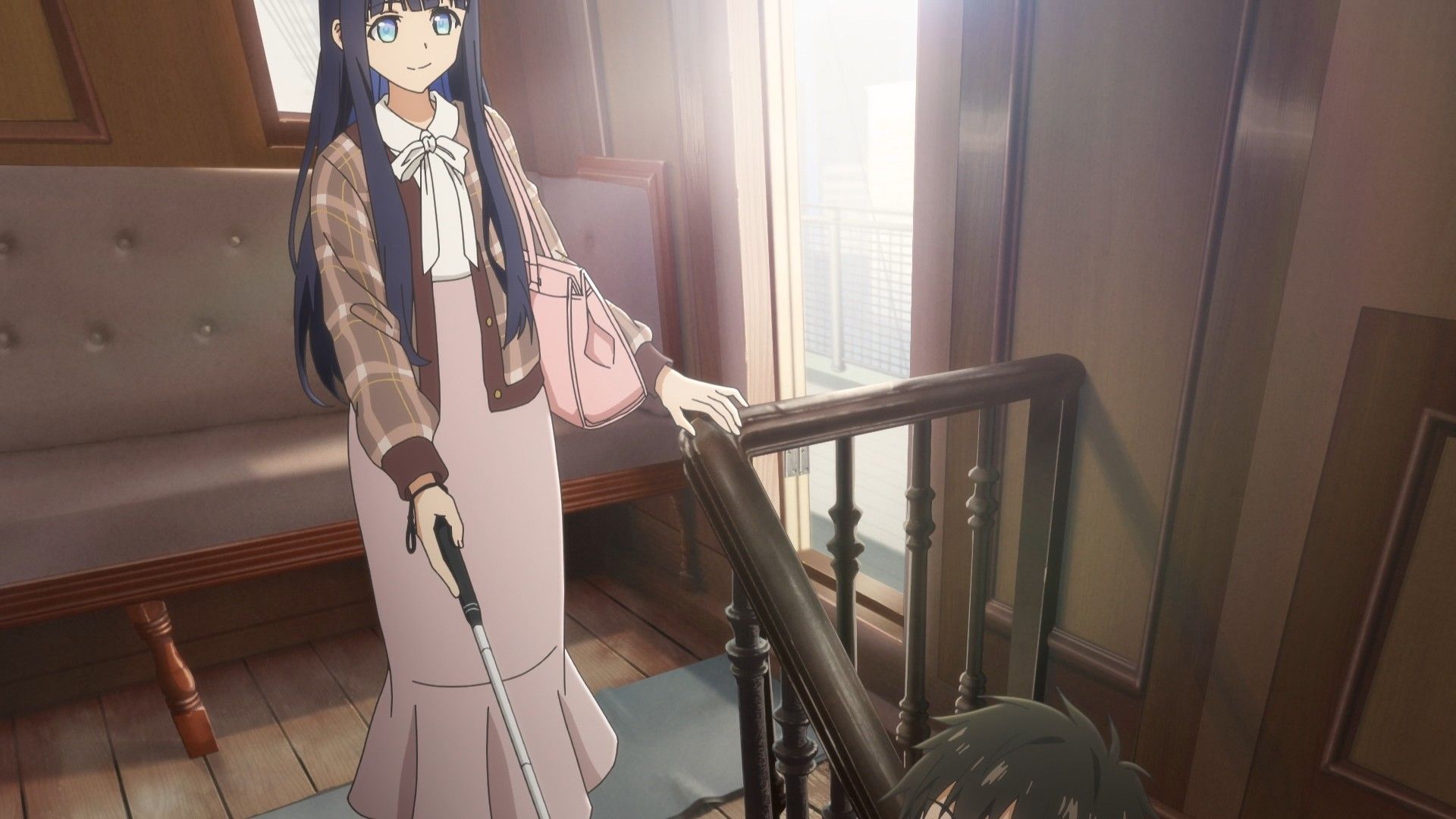
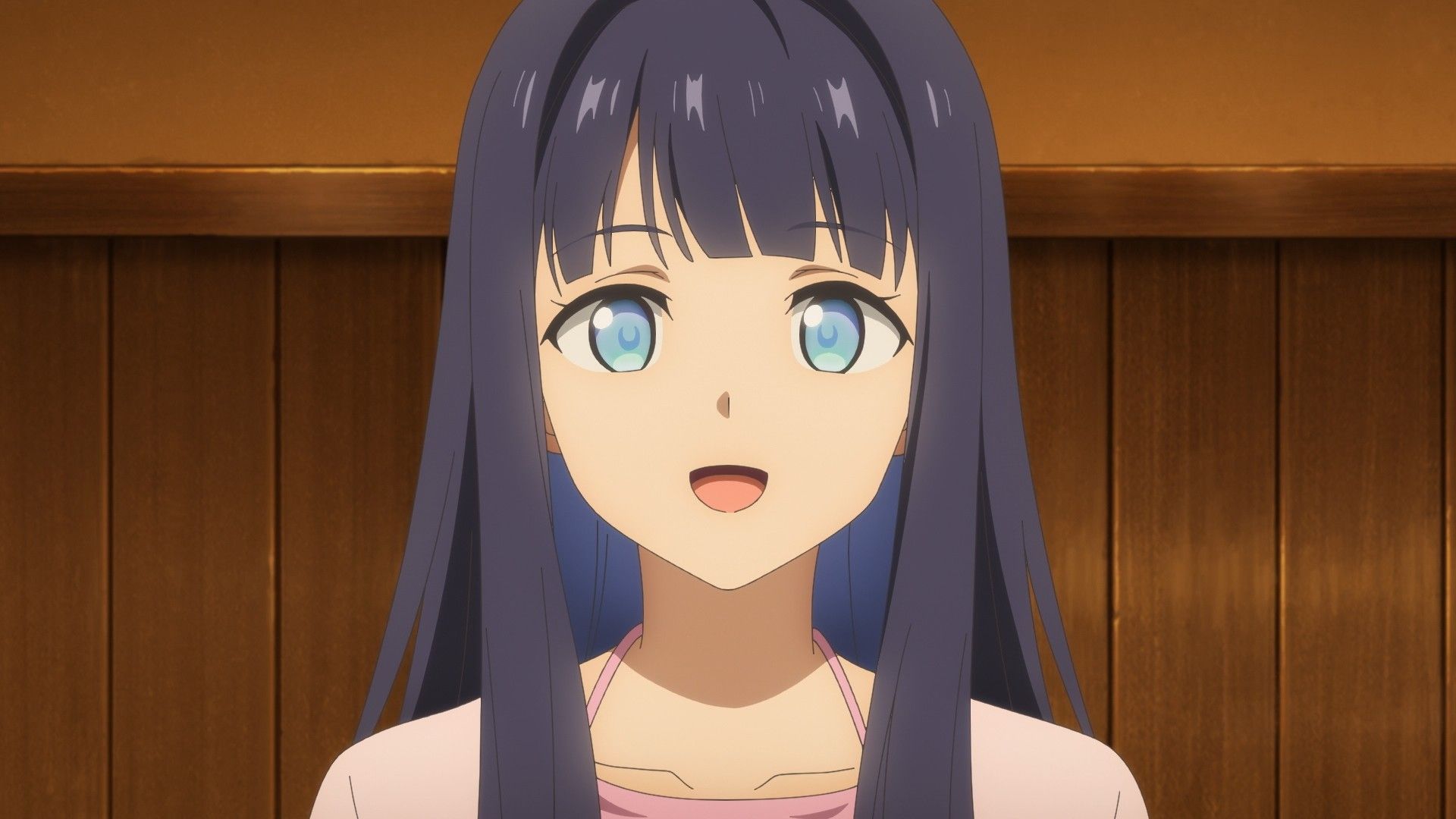
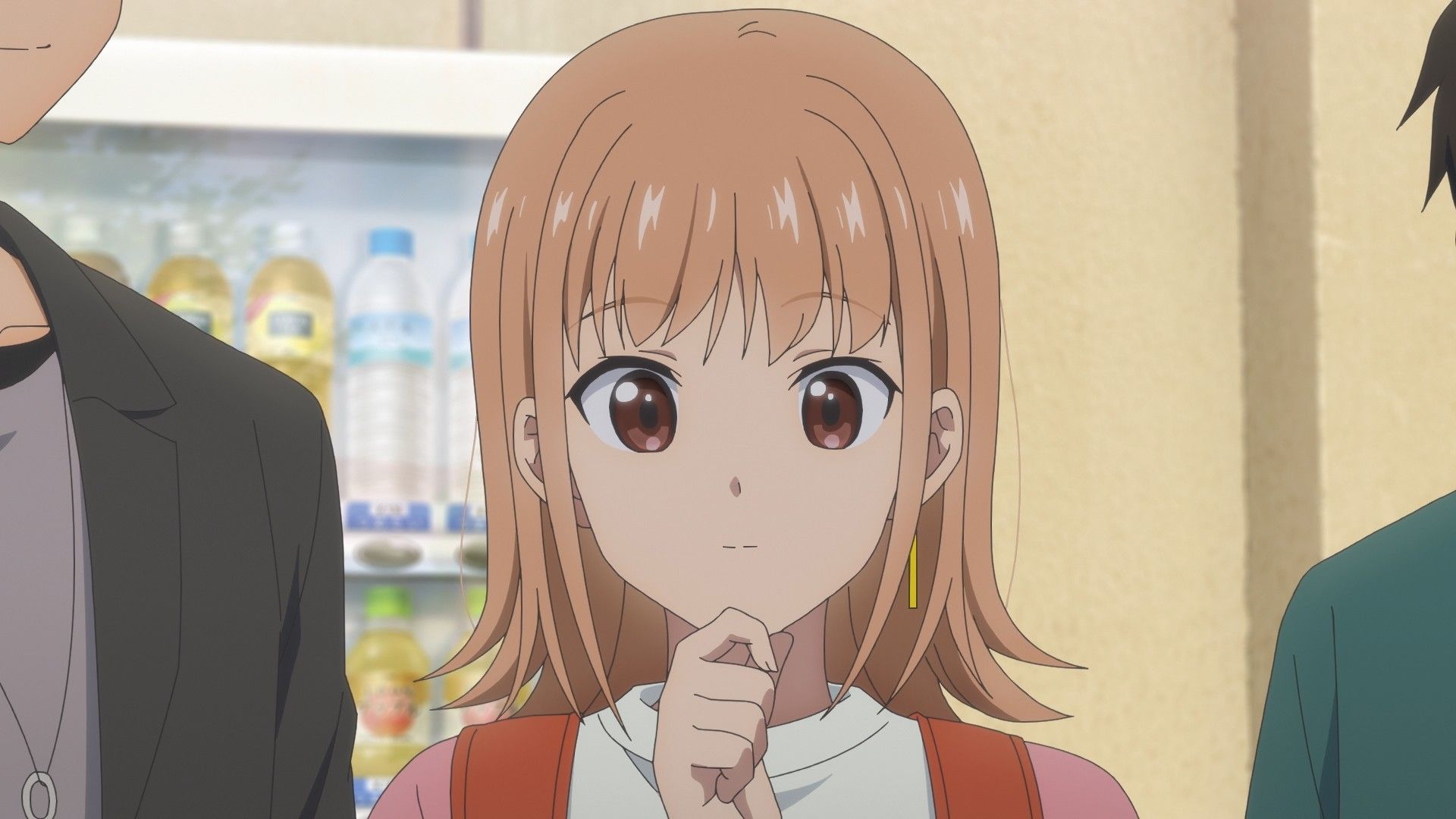
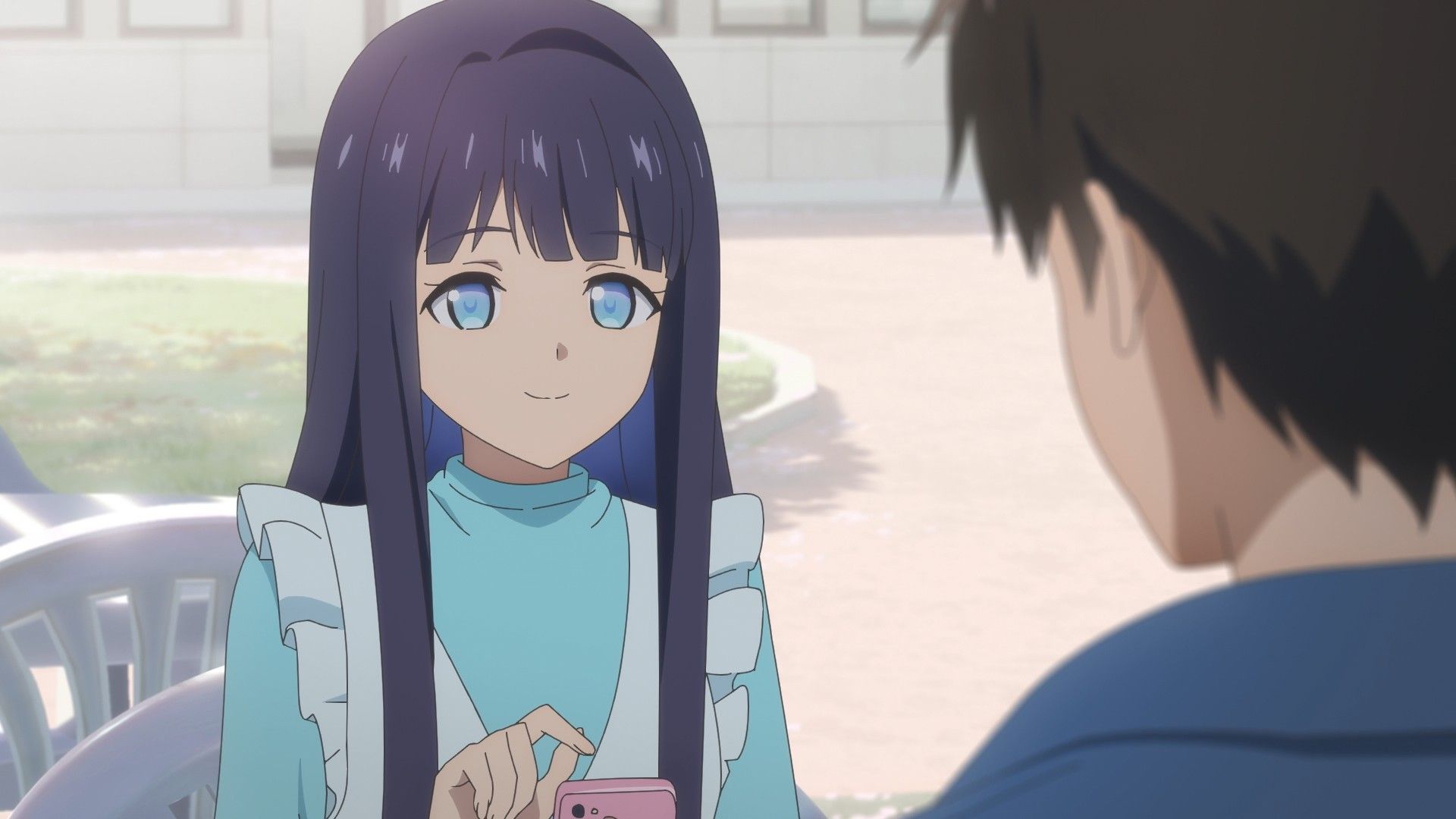
I also really liked Fuyutsuki Koharu’s design. She is simply adorable. Her eyes in particular naturally draw even more attention than usual with a character like this. The creators often rely on close-ups of faces and subtle changes in expression. Koharu conveys a great deal of emotion through a slight smile, a brief hesitation, a change in her expression, or the movement of her hands.
For most of the series, the animation itself offers no fireworks. The irony of that sentence in the case of this particular anime is, of course, intentional. This is a dialogue-heavy story about the characters, their everyday lives, and the way they gradually grow closer. A conversation on the terrace would not suddenly become better if several dozen extra frames of motion were added to it. I cared much more about whether the characters looked good, whether their expressions matched what I was hearing in the dialogue, and whether the visuals helped build the atmosphere of a given moment. For the overwhelming majority of the season, that was exactly the case.
A Problem with One of the Key Episodes
Unfortunately, there was one major exception. One of the more important episodes around the middle of the series looked as though it had suddenly been handed to an entirely different team. I do not mean a few less detailed frames, because that is genuinely not something I intend to worry about. The direction of the entire episode felt strangely chaotic. At times, the cuts came across as very rough, the pacing of some scenes did not work for me at all, and the characters’ behavior on screen could clash with the emotions I was hearing in the seiyuu performances. It bothered me all the more because the material carried considerable narrative weight at that point and gave the actors an opportunity to show a great deal. Even the dialogue direction faltered in this particular episode. Thankfully, it was an isolated case, and the episodes that followed did not continue this decline.
Apart from that, the series maintained a pleasant and fairly consistent level throughout. I am not going to pretend that Toumei na Yoru ni Kakeru Kimi to, Me ni Mienai Koi wo Shita is a technical masterpiece. That was not what I expected from this production in the first place. Attractive backgrounds, Koharu’s lovely design, sensible use of lighting, a well-chosen color palette, and sufficiently expressive characters meant that, for most of its runtime, the series was simply enjoyable to look at.
Audio
Hayami Saori as Fuyutsuki Koharu
Hayami Saori’s presence as Fuyutsuki Koharu alone significantly increased my interest in this adaptation. Having watched the entire series, I can only say once again why she is one of my favorite seiyuu. The main cast also includes Irino Miyu as Sorano Kakeru, Kohara Konomi as Hayase Yuko, and Azakami Youhei as Narumi Ushio.
Hayami Saori’s performance here is an absolute masterclass for me. At first, Koharu is cheerful, laughs very often, playfully teases Kakeru, and reacts with enormous excitement to things that are completely ordinary for the other characters. Even then, however, you can hear small moments of hesitation suggesting that there is much more beneath that cheerful surface.
What impressed me most was that even in the heaviest scenes, Koharu still sounds like the same girl I met several episodes earlier. Hayami Saori does not suddenly start playing a completely different character when the story’s tone changes. Beneath the cooler, more distant voice, the familiar Koharu is still audible. Sometimes the slightest shift in intonation or a brief hesitation is enough to make it obvious that the words she says and the emotions she actually feels are sharply at odds. When she finally becomes unable to suppress everything any longer, the effect is devastating.
The Rest of the Main Cast
Irino Miyu also did a very good job as Sorano Kakeru. At first, he speaks in an appropriately subdued voice. Kakeru spends a lot of time thinking and observing. He is not someone who loudly displays every emotion. Later, his voice gradually gains more ease and involvement. There is no single moment when he suddenly starts sounding like a different person. The successive layers of distance fall away as Kakeru himself becomes increasingly involved in Koharu’s life and in the lives of the other people around him.
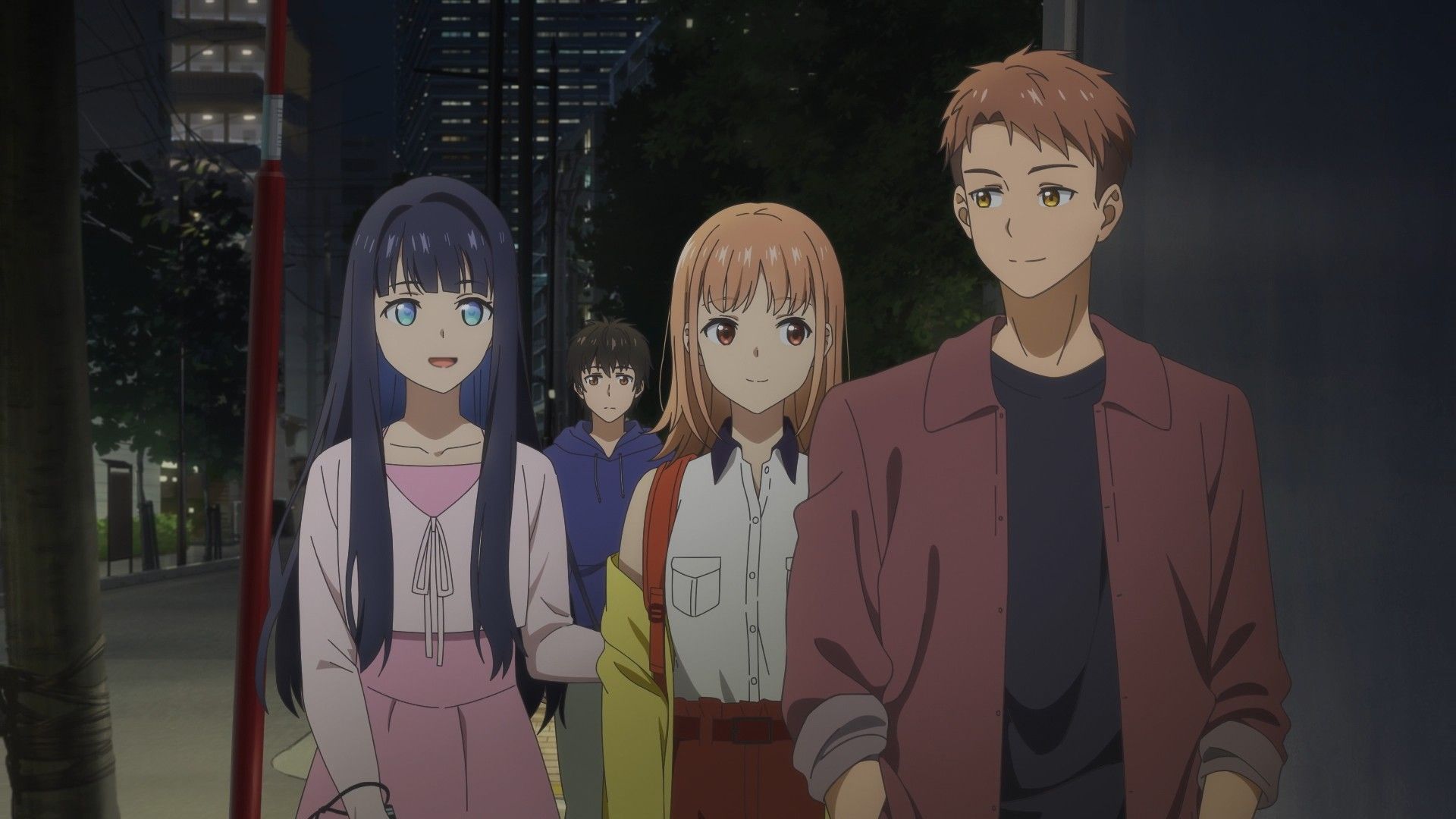
Kohara Konomi as Hayase Yuko and Azakami Youhei as Narumi Ushio complement the central pair very well. Narumi needed an actor capable of preserving his energetic, comedic personality and then, a moment later, becoming completely serious and sounding like a genuine friend to Kakeru once the situation stops being suitable for jokes. Hayase is much more direct than the protagonist and often drives events herself, so her dialogue moves smoothly from light teasing to much heavier emotional material in the later part of the season. The four of them share very natural vocal chemistry, which is especially easy to hear in scenes where they are simply spending time together.
Music, Opening, and Ending
The series’ music was composed by Fuki Harumi. The opening is ひとひら (Hitohira), performed by Hata Motohiro, while the ending is 光 (Hikari), sung by Sakurai Yui. The ending was the piece that stuck with me most strongly and the part of the musical presentation I most wanted to return to after finishing each episode. A special version of 光 (Hikari) was also created and sung by Fuyutsuki Koharu, meaning Hayami Saori. The soundtrack itself supports the quieter conversations and the later dramatic scenes well, but none of the background pieces stayed with me as strongly as the ending.
Toumei na Yoru ni Kakeru Kimi to, Me ni Mienai Koi wo Shita (2026) – Plot and Characters
Introduction
Toumei na Yoru ni Kakeru Kimi to, Me ni Mienai Koi wo Shita was one of my favorite series of the Summer 2026 season. After the first few episodes, I expected above all a warm college romance with a more dramatic thread somewhere in the background. Fairly early on, you can sense that not everything will remain as carefree as it initially appears. For a large part of the season, however, the story simply lets you enjoy the characters’ everyday lives. That became enormously important to me later, when those ordinary meetings and conversations stopped being something that could be taken for granted.
A Brief Overview of the Toumei na Yoru ni Kakeru Kimi to, Me ni Mienai Koi wo Shita (2026) Plot
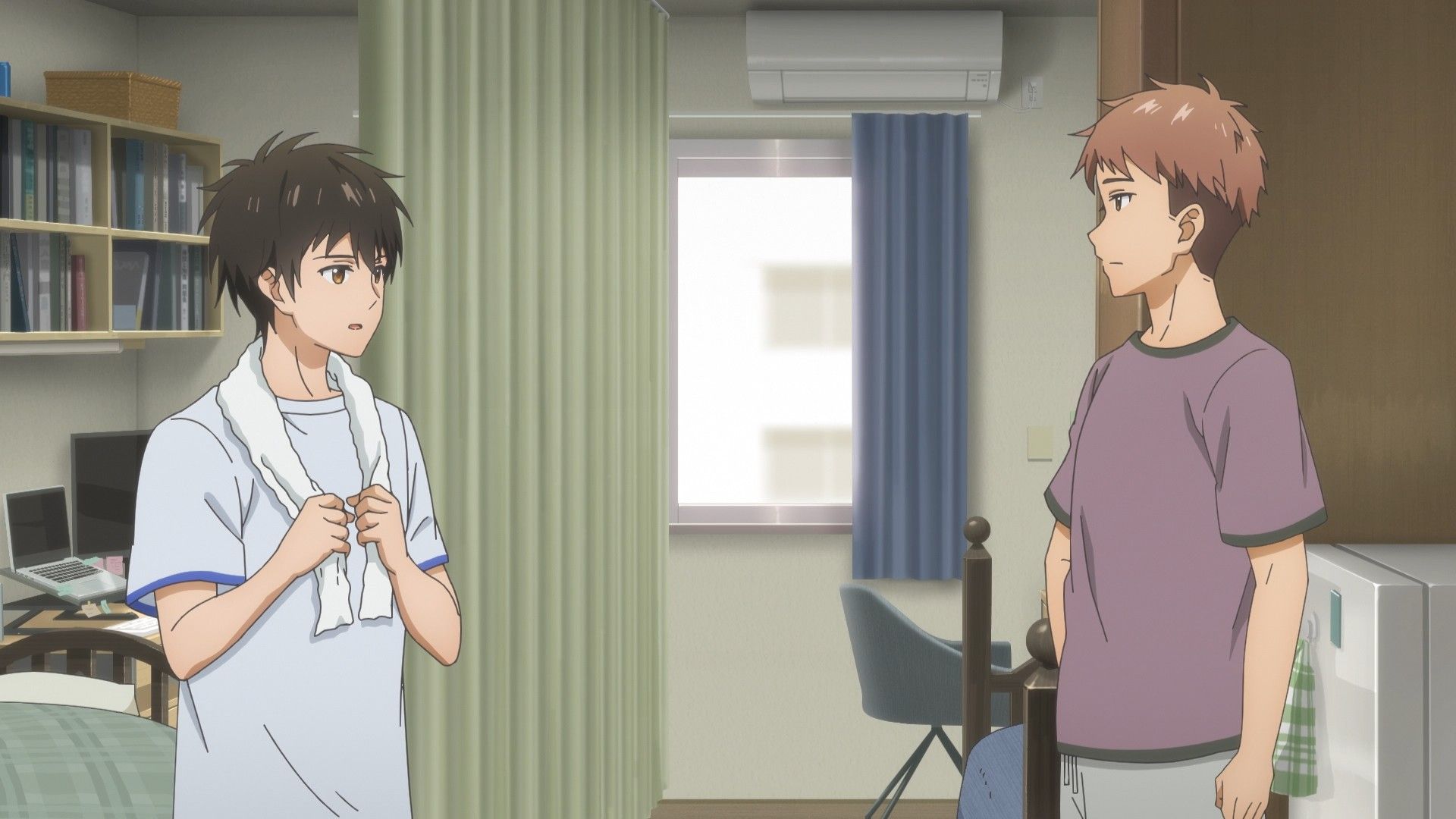
Sorano Kakeru is a first-year university student and definitely not the kind of person who likes drawing attention to himself. He would much rather stay somewhere off to the side, keeping his relationships with others at a safe level. His roommate Narumi Ushio approaches life completely differently and one evening practically drags him to a welcome gathering for new students. There, Kakeru meets Hayase Yuko and the blind Fuyutsuki Koharu. Not long afterward, Hayase gets him involved in helping Koharu during class. At first, he treats it as just another obligation dumped on him by someone more proactive. He quickly discovers, however, that he simply enjoys spending time with Fuyutsuki.
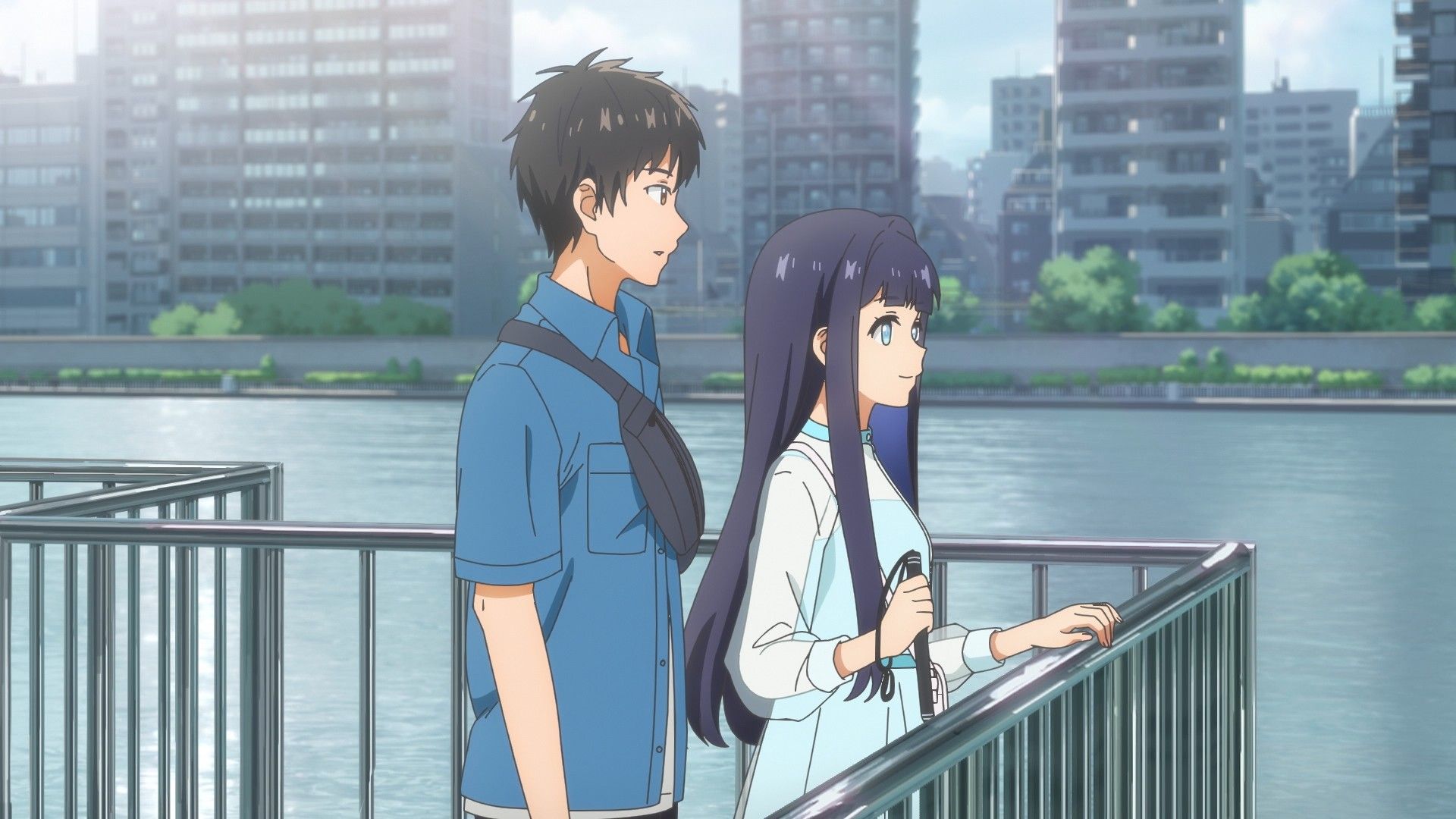
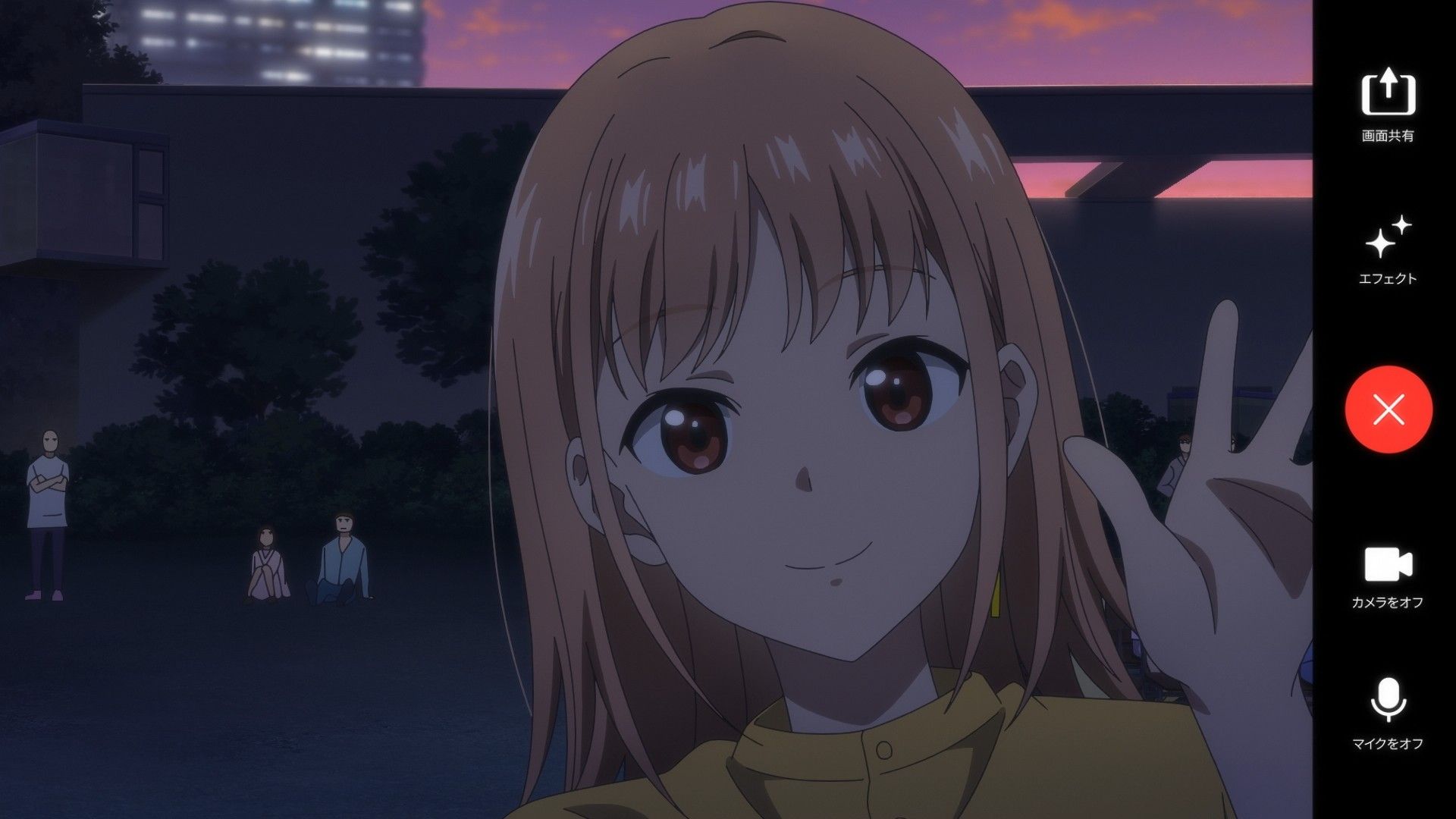
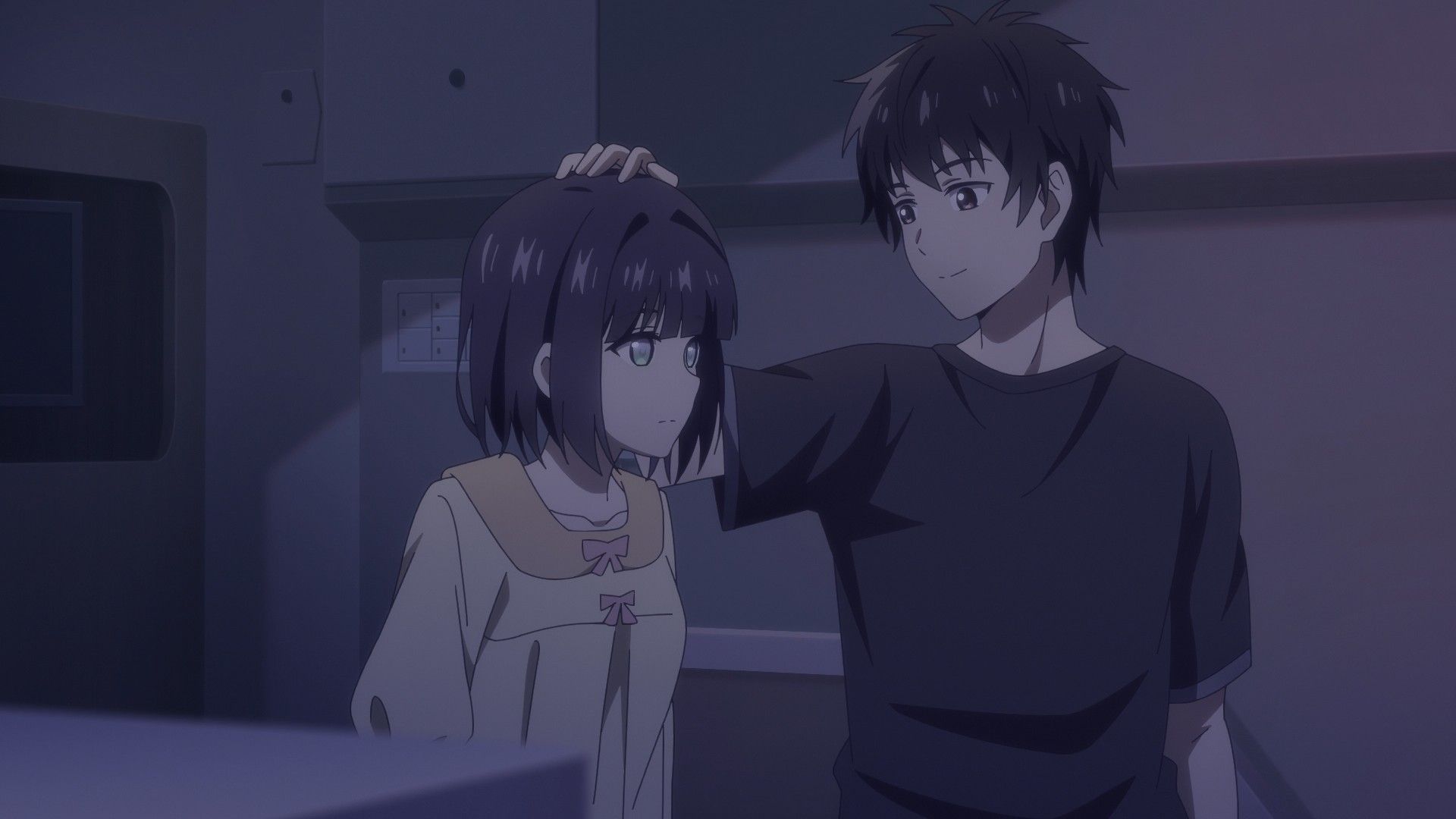
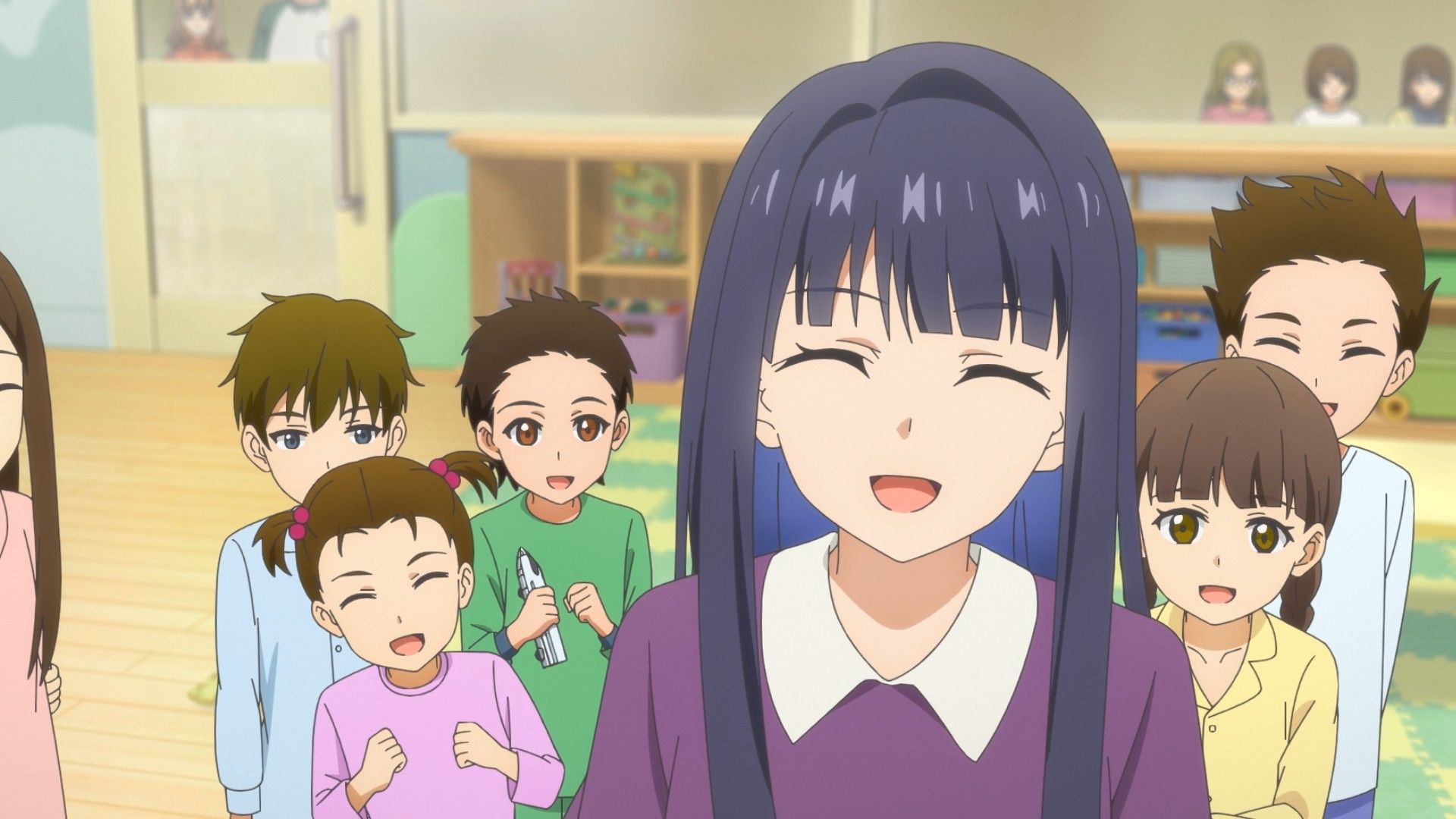
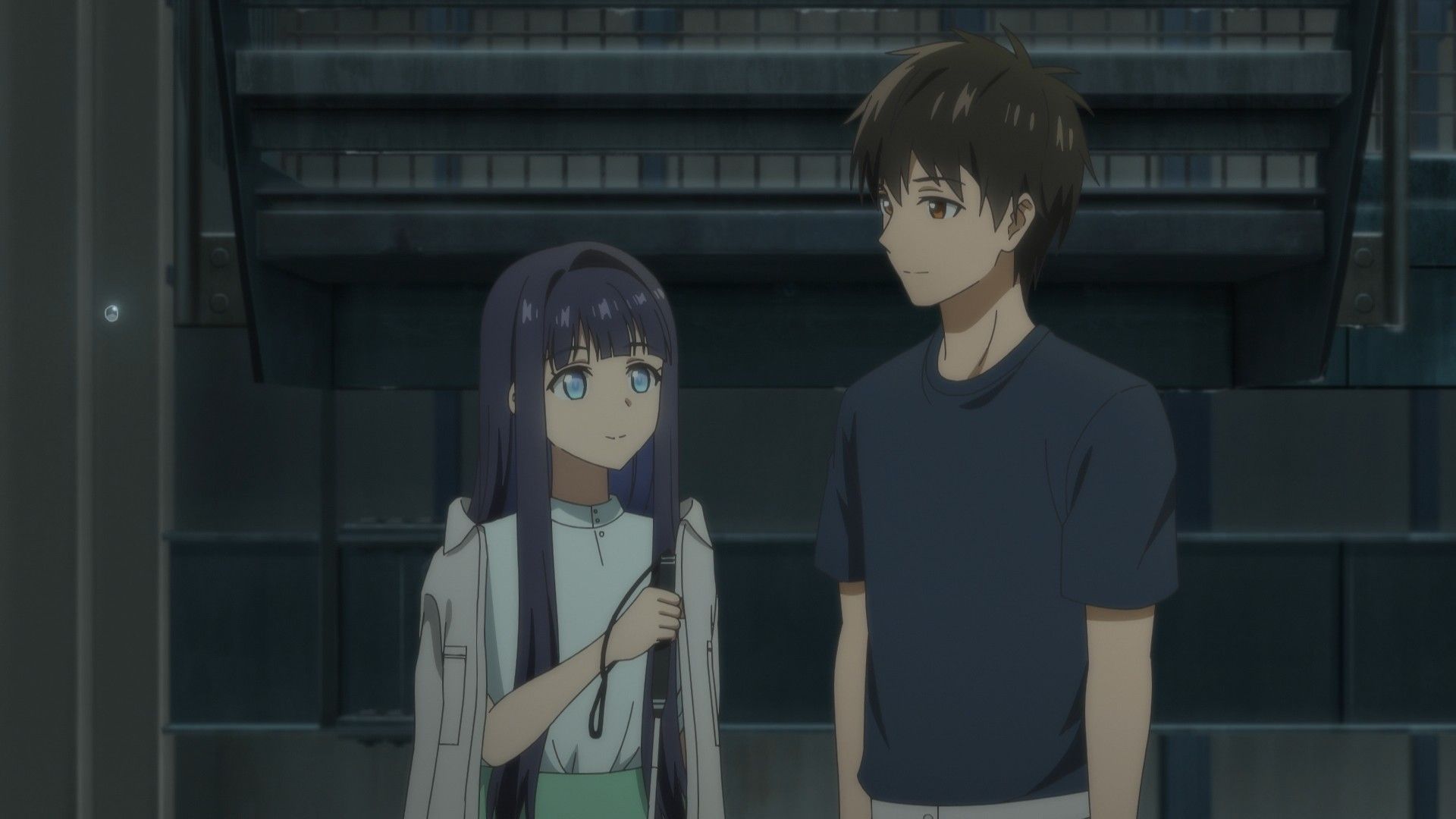
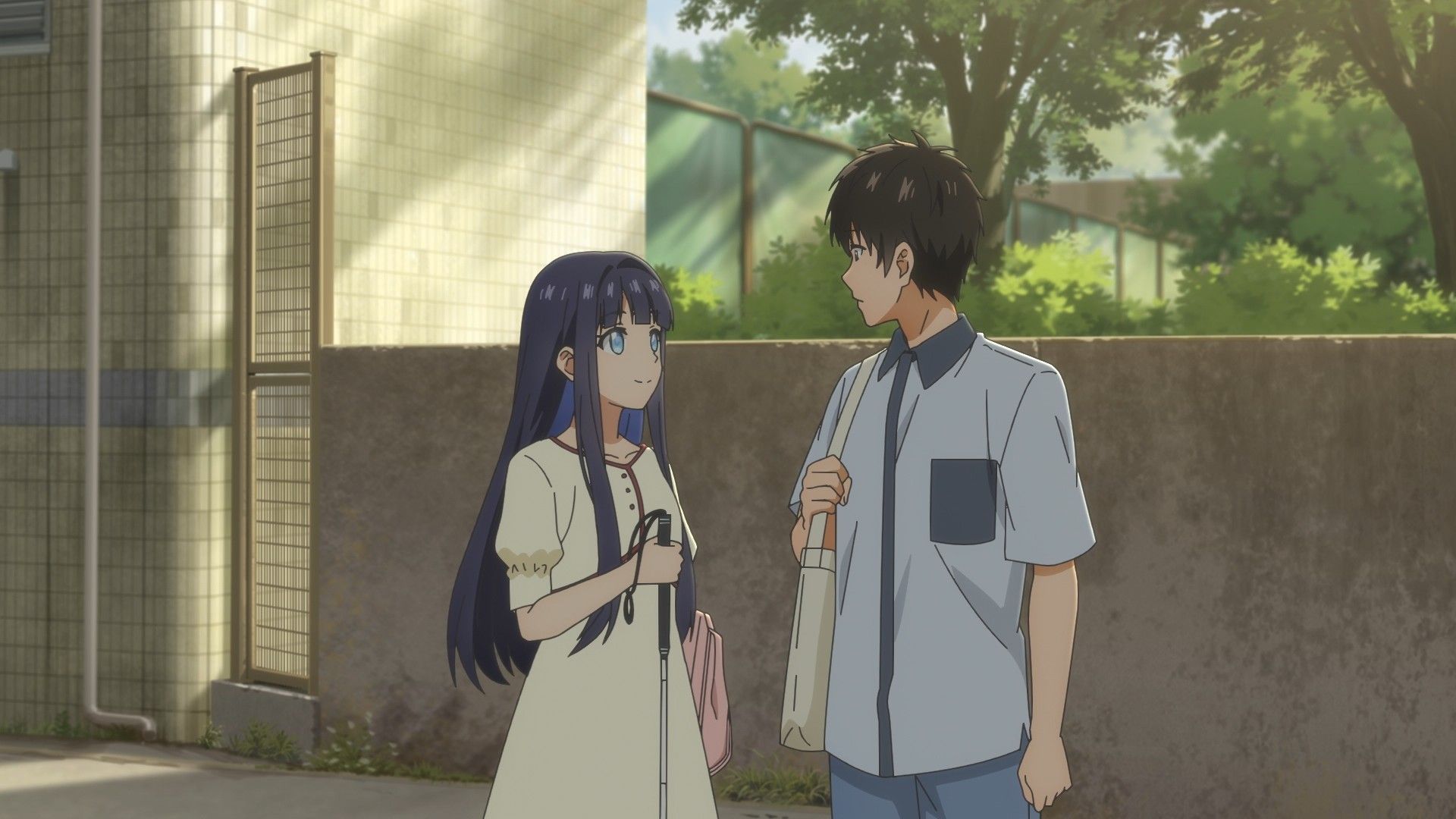
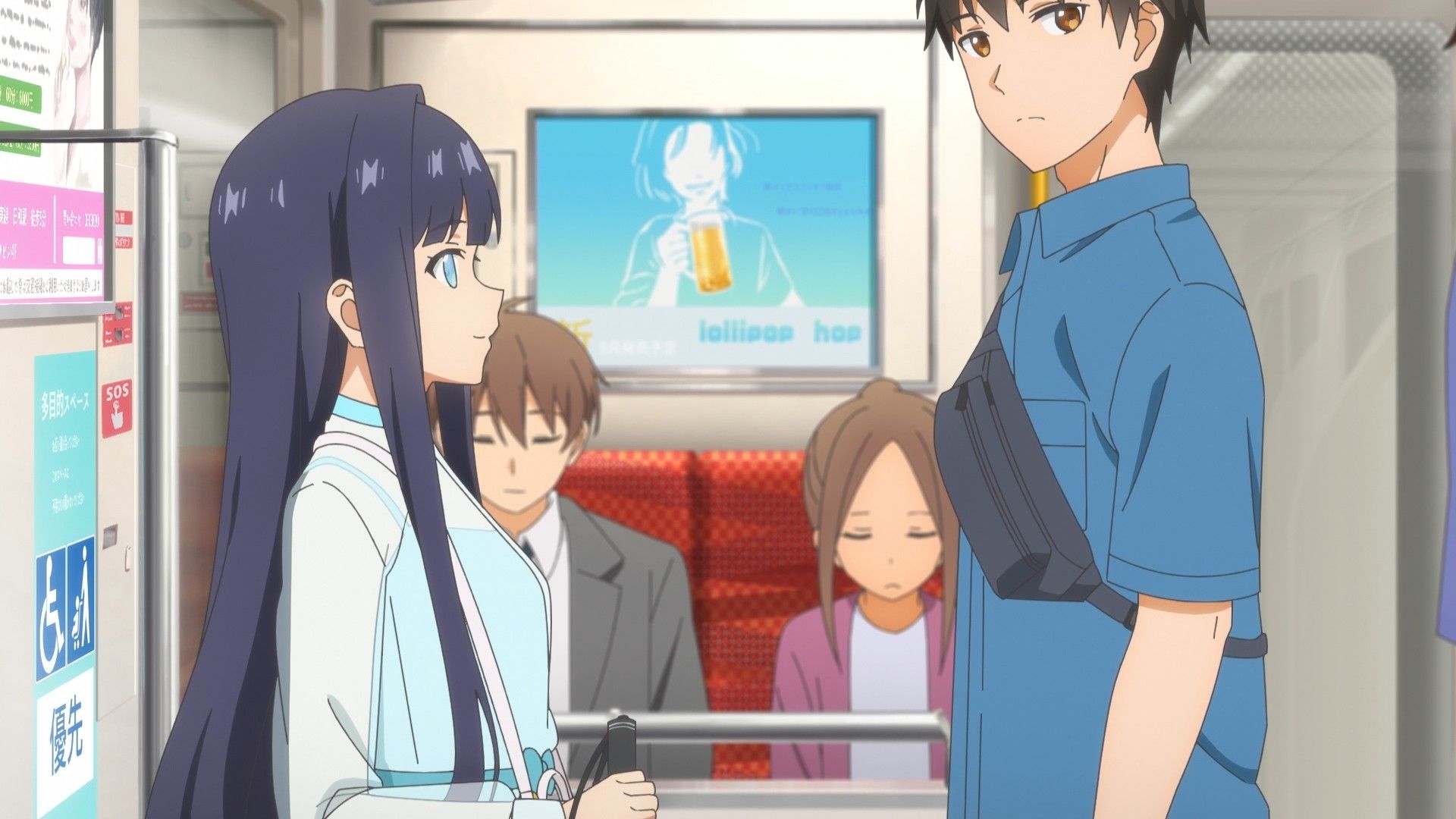
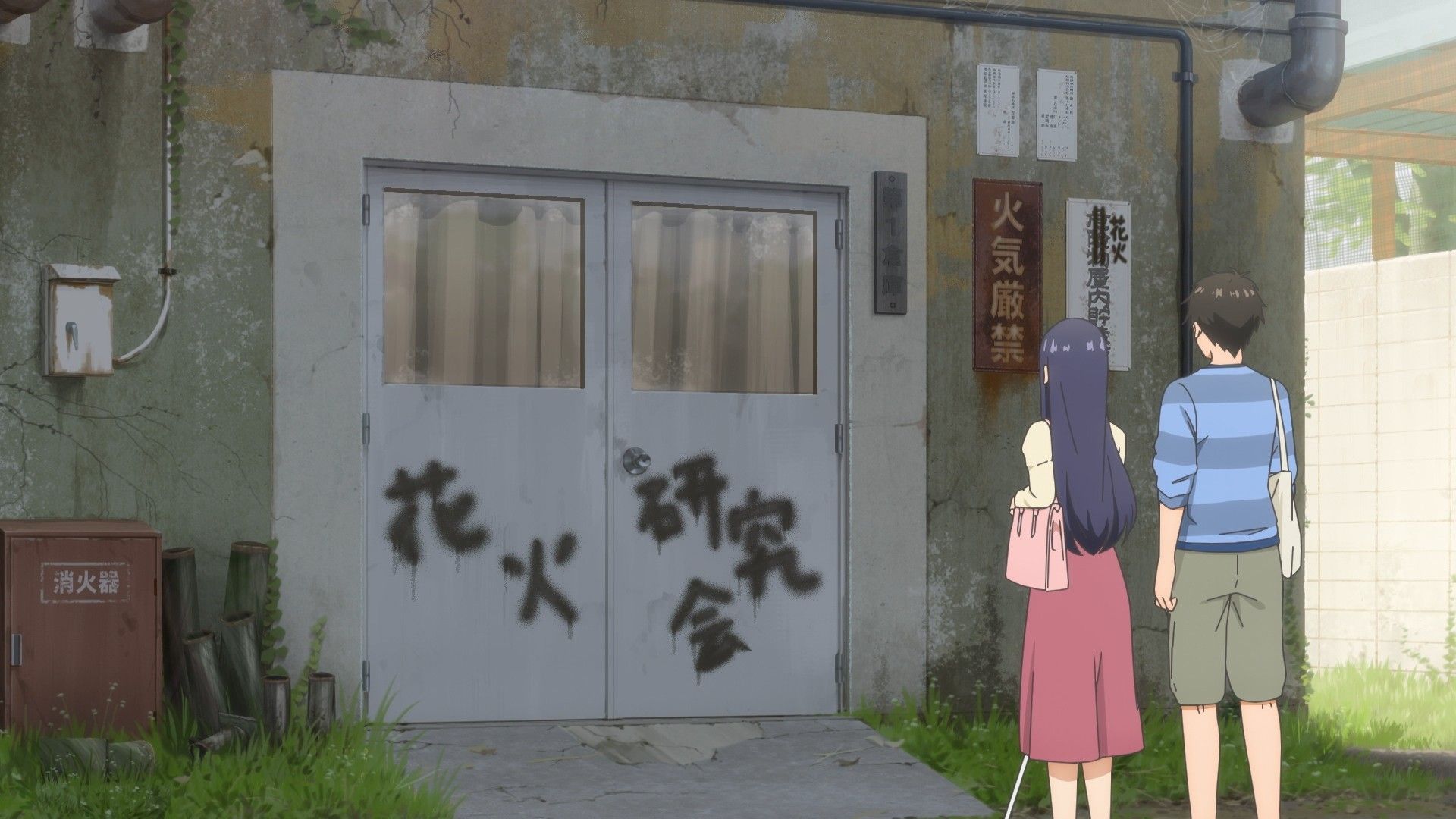
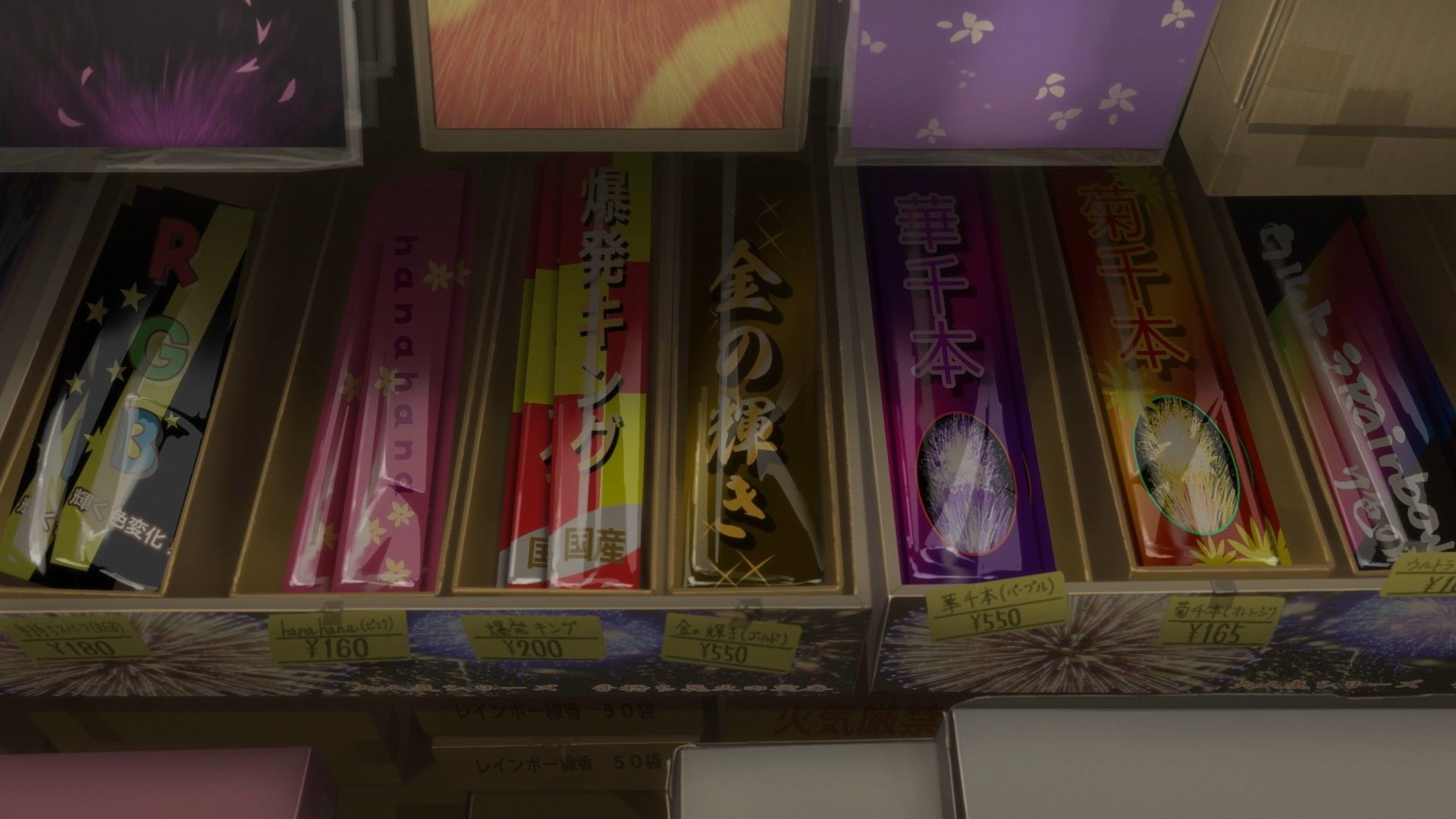
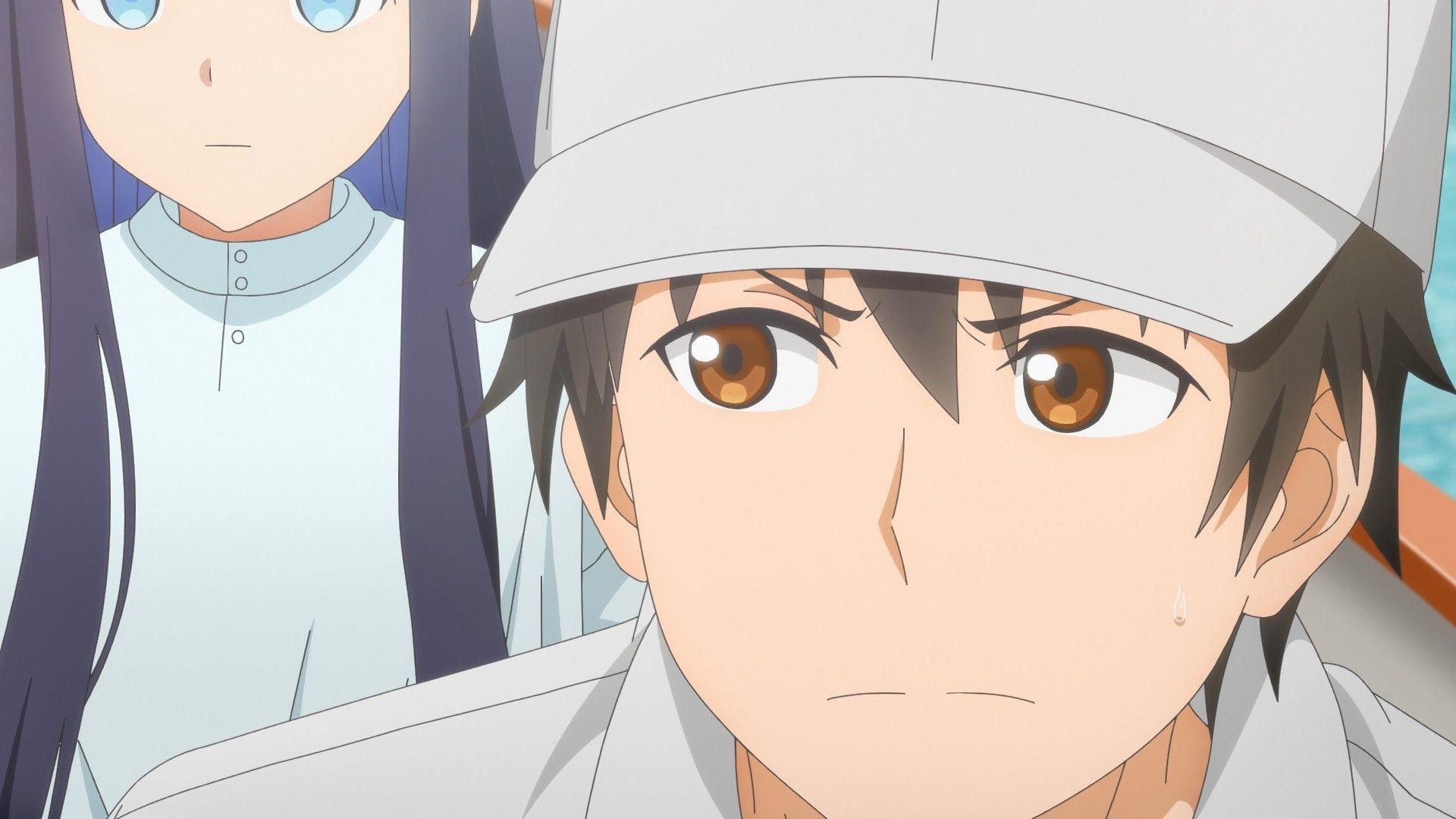
There are regular conversations on the terrace, outings together, karaoke, a visit to Meiji Maru, a trip to buy fireworks, and a boat cruise. Kakeru increasingly stops ending up at these meetings purely by chance or because someone else initiated them. He starts seeking them out himself. Fuyutsuki also has one particularly important dream: someday, she wants to set off real fireworks together with her friends. At first, it sounds like just another one of her spontaneous ideas. Later, that motif begins to connect more and more events, characters, and stages of her relationship with Kakeru.
What is the series about
Everyday Life as the Foundation of Their Relationship
The first part of Toumei na Yoru ni Kakeru Kimi to, Me ni Mienai Koi wo Shita leans heavily on everyday life, and those are exactly the kinds of scenes this series needed. Koharu and Kakeru sit on the terrace, talk about ordinary things, go places together, or try something the girl has never had the chance to experience before. At first, Kakeru simply helps her get around the campus. After a while, he starts looking forward to their next meeting and actively seeking out her company.
I especially enjoyed the situations in which Fuyutsuki tries things that are completely normal for the rest of the group. Her first karaoke outing, buying fireworks, the cruise, the festival, or even playing around with a vending machine never feel like interludes between the real events. They let us get to know Koharu and see how much experiences mean to her when the others would not even stop to think about them. She wants to take part in student life on her own terms. If there is something she has not tried yet, she usually responds with curiosity and excitement rather than looking for reasons to give it up.
Koharu’s Blindness in Everyday Life
I also liked the way her blindness is portrayed. It is an important part of Koharu’s life and affects practically every everyday activity, but it never becomes the only thing that defines her. She uses a white cane, Braille, and appropriate technology, knows her own capabilities well, and often decides for herself when she actually needs help. More than once, she wants to do something on her own even when it would be easier to ask the person standing beside her. On top of that, she plays the piano, sings beautifully, has her own interests and sense of humor, loves teasing Kakeru, and can become delighted by a new experience like a little child. Her blindness affects the way she experiences the world, but it does not replace her personality.
This aspect also develops in a very interesting way from Kakeru’s perspective. At first, he does not know how he should behave around a blind girl. He wonders whether he should help more often, or whether doing so would mean treating her as someone completely incapable of managing on her own. With each meeting, he analyzes every gesture less because he is simply getting to know Koharu. He already knows when to offer a hand, when to describe something to her, and when to let her handle the situation herself. Simply spending time together teaches him more than any list of rules about how to behave around a blind person ever could. Fuyutsuki quickly notices that he is genuinely trying to understand her needs instead of treating her as fragile just to be safe.
A Romance Developed Through Small Things
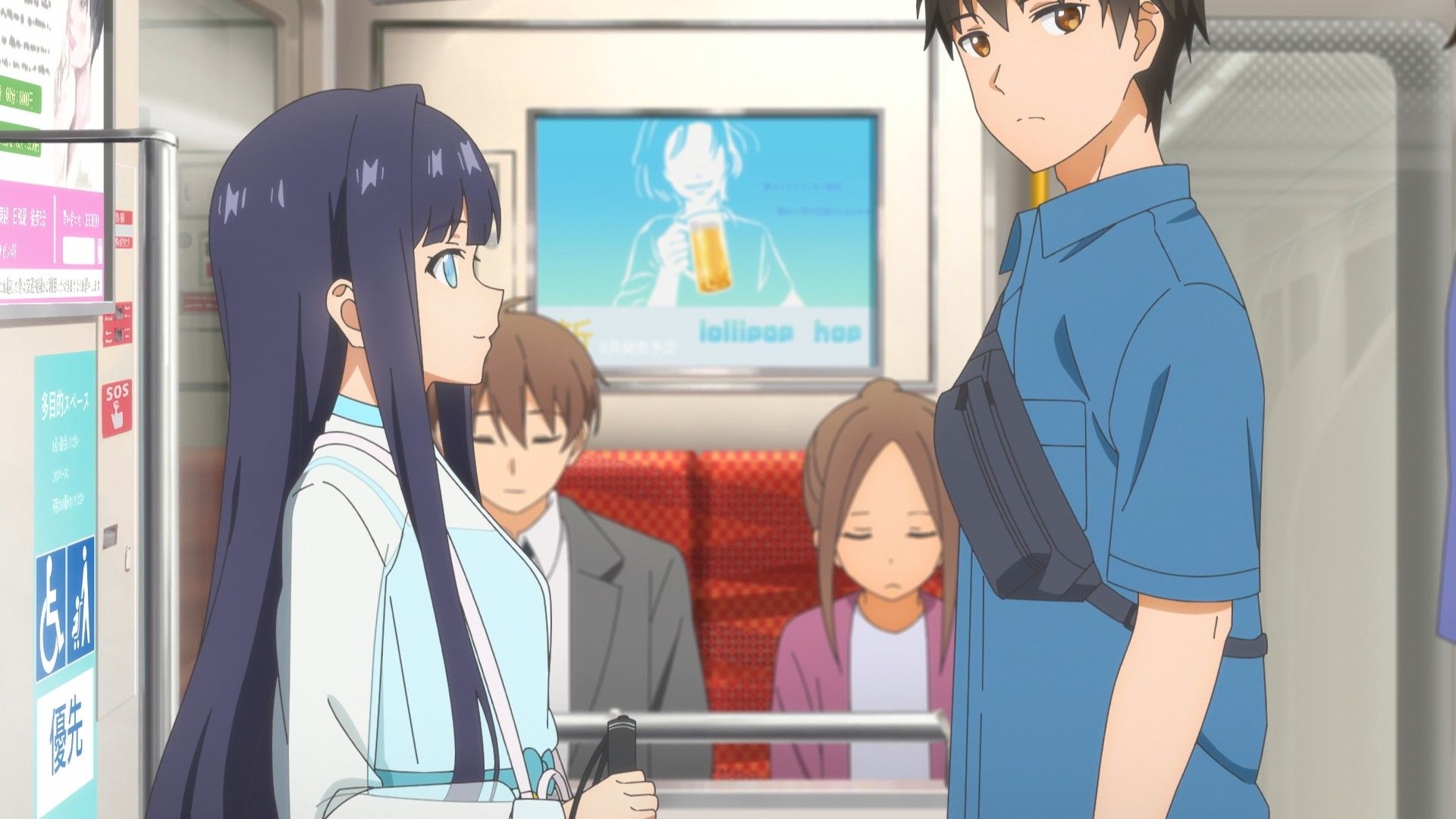
A good example is their trip to buy fireworks. Koharu calls it a date without much hesitation and immediately throws Kakeru off balance. Later, she teases him on the train, and during the cruise she asks him to describe what is around them. At that point, their interactions no longer resemble a relationship between someone helping and someone who needs help. Fuyutsuki simply wants to spend time with him. Kakeru, meanwhile, begins for the first time in a long while to enjoy the fact that someone so clearly chooses his company in particular.
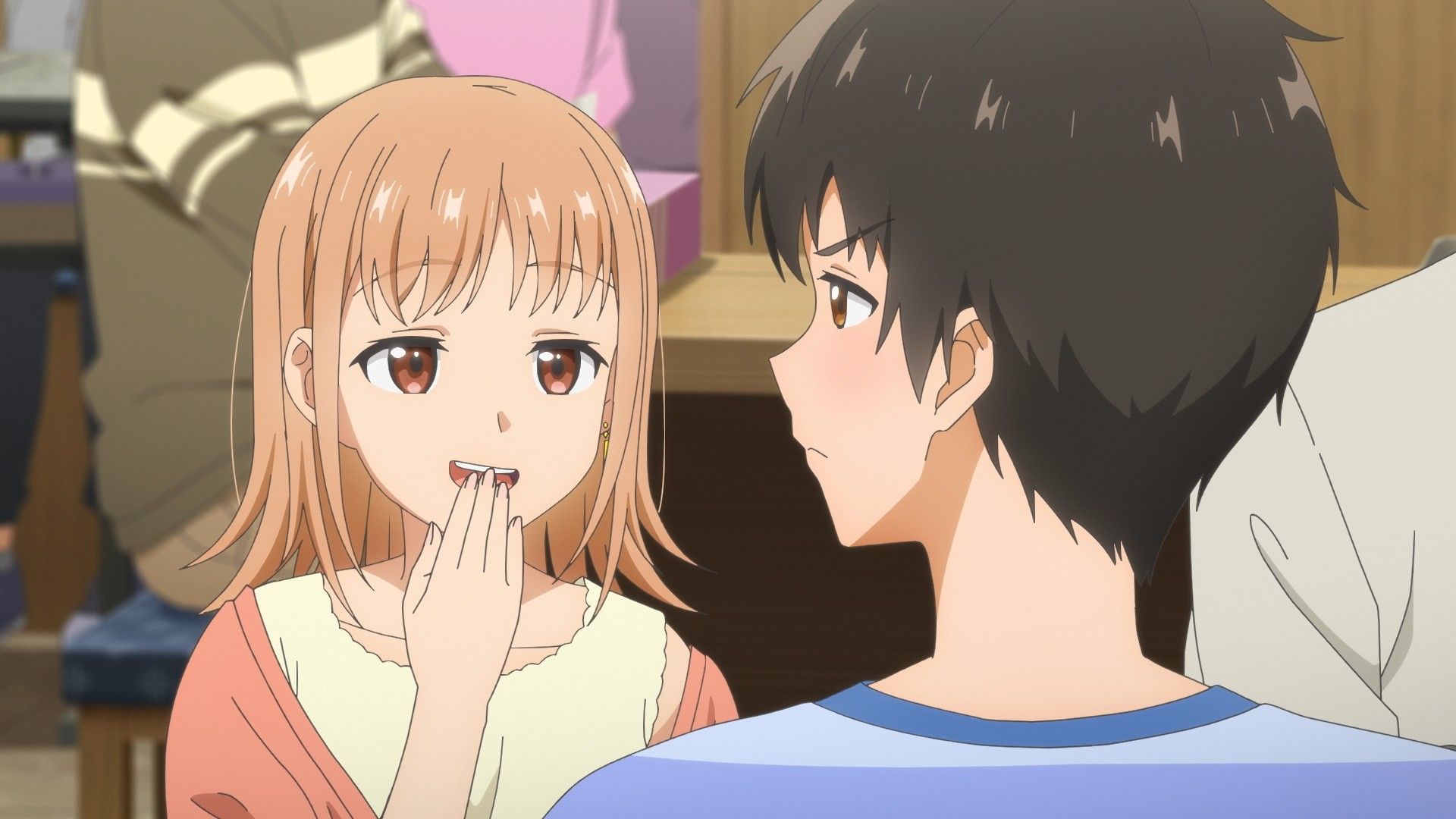
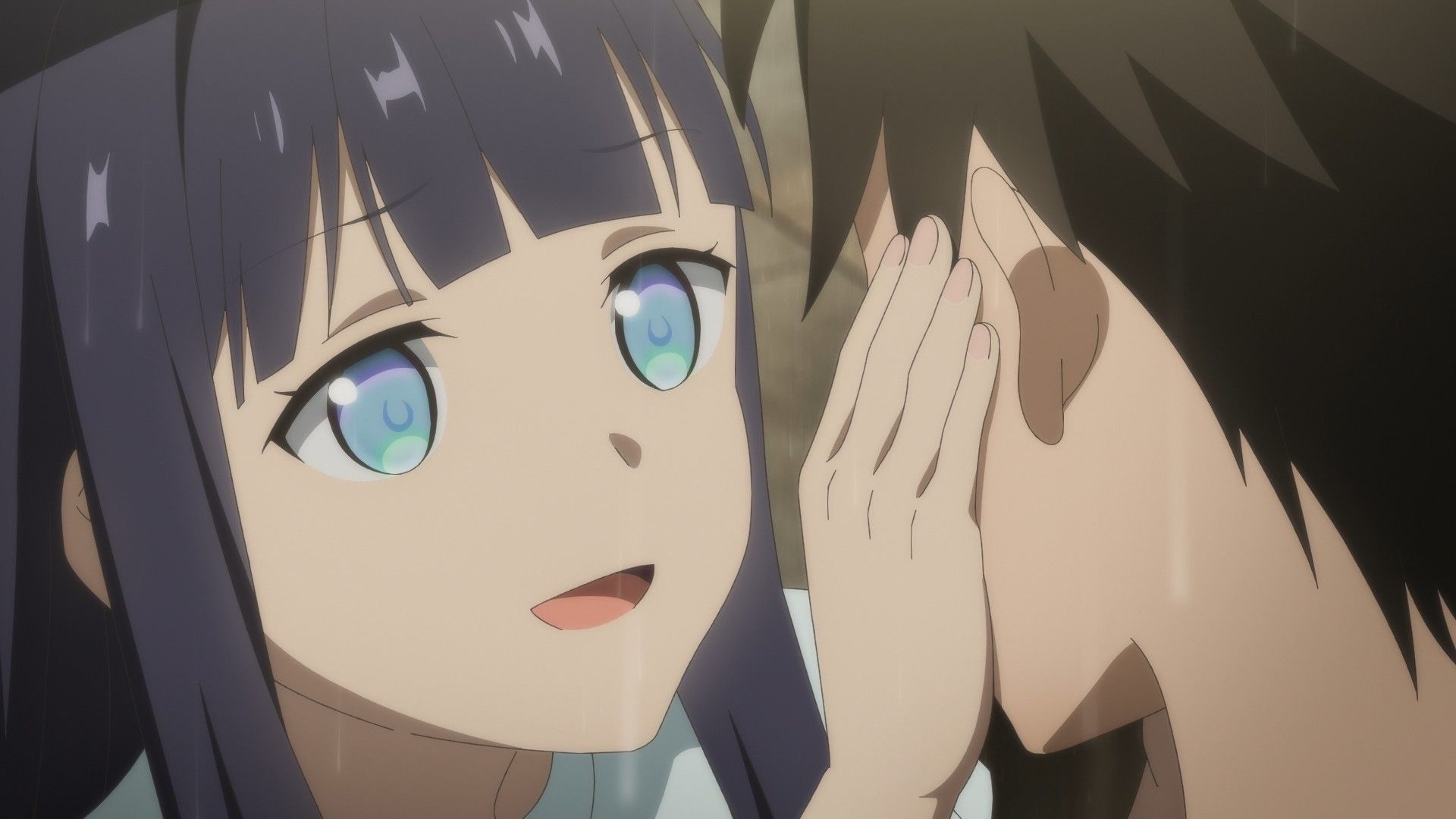
The romance develops mainly through small things like these. The way they address one another changes, Koharu teases him more and more often, there is a conversation about whether he has a girlfriend, Kakeru’s reaction to Fuyutsuki in a yukata, and increasingly natural physical contact. One of my favorite scenes remains the moment when Koharu asks if she can touch his face so she can see him in the way available to her. At first, there is plenty of uncertainty and delicacy in the moment, but what happens at the end of that conversation leaves Kakeru very little room to keep pretending to himself that Fuyutsuki is just an ordinary friend.
Around then, the tone of the story begins to change. All the lighthearted scenes from the earlier episodes remain important, however. If I had not already grown fond of the terrace conversations, Narumi’s stupid jokes, Hayase’s teasing, and Koharu and Kakeru simply sitting beside each other, it would have been much harder for me to care about what happens later. Those seemingly insignificant moments in the first half of the season build attachment both between the characters themselves and between them and the viewer.
The Bookmark, the Wish List, and the Fireworks
Koharu’s Braille bookmark is also used very effectively. At first, it is just a small object that Kakeru accidentally loses. When he later learns about the list of things Fuyutsuki wants to do that is written on it, earlier events take on a slightly different meaning.
The fireworks motif develops in a similar way. Fuyutsuki cannot see them, but she can still experience the boom, the smell, the vibrations in the air, and the presence of other people. Kakeru can also describe what she cannot see for herself. Fireworks appear at successive stages of their relationship and gradually stop being merely one of the girl’s interests. They become a shared goal for several people who otherwise might never have met at all. This works especially well toward the end, when different elements from earlier episodes finally come together around a single event.
Kakeru’s Past and the Change in His Outlook
The protagonist’s change is just as important. At the beginning, he lives by a very simple rule – it is best not to make even the smallest ripple around himself. His past explains that attitude well enough. His parents’ divorce, his father leaving, and later moving between relatives taught him that it was safer not to become too attached to other people. If no one ever became truly important, their departure would not hurt later. Kakeru does not necessarily formulate it quite so directly himself, but his entire behavior grows out of precisely that fear.
Fuyutsuki dismantles that system step by step. At first, Kakeru reluctantly agrees to help her. Later, he goes shopping with her, gets involved in her ideas, starts taking an interest in the things that make her happy, and increasingly does things he would simply have avoided not long before. The clearest sign of his development, however, comes when he once again faces the possibility of losing someone to whom he has become deeply attached. This time, he does not run away or try to convince himself that keeping his distance would be easier. He chooses to stay despite knowing how much it may cost him.
Kakeru’s Past and the Change in His Outlook
Koharu also turns out to be much more complicated than her initial cheerfulness suggests. Her smile is genuine, as is her joy at karaoke, the date, her conversations with Kakeru, or playing with fireworks. Beneath all of that, however, there has long been fear of the future, of becoming dependent on others again, and of turning into a burden for the people she has come to love. The later episodes show how much conscious effort it takes for her to maintain that optimism and how easily a moment may come when she simply no longer has the strength.
Some of her decisions later in the story genuinely hurt, but I understood where they came from. Koharu tries to decide for herself what will be best for the people around her. She believes that pushing them away earlier will be gentler than losing them later. Kakeru sees things completely differently. He has only just learned to let someone into his life and has no intention of accepting a situation in which the other person decides on his behalf whether their shared memories are worth the future pain. This conflict was one of the more interesting parts of their romance for me because it grows directly out of both characters’ personalities and past experiences.
Kakeru’s Past and the Change in His Outlook
I do not want to describe the ending in detail because it is one of those things that is much better experienced without knowing where everything is heading. I was, however, very positively surprised by it. In the final episodes, I became increasingly worried that the story would take the most obvious route and end with something similar to Shigatsu wa Kimi no Uso, trying to squeeze out as many tears as possible with an overdramatized finale. What I got was far more satisfying. Still sad, but leaving behind a surprising amount of warmth.
At the same time, I have a strong impression that the adaptation’s final episode was cut down very aggressively. Events move exceptionally quickly, and an enormous amount of information is packed into a surprisingly short stretch. In most series, I would complain about something like this much more strongly. Here, the finale still worked for me emotionally. I would still have liked a calmer, fuller progression through the final part of the story, because several things were practically begging for more screen time. What I was left with above all, however, was a sense of wanting to see more rather than irritation with what I actually got. The final minutes turned out to be one of the biggest positive surprises of the entire season.
Characters
Fuyutsuki Koharu
Fuyutsuki Koharu is definitely my favorite character in Toumei na Yoru ni Kakeru Kimi to, Me ni Mienai Koi wo Shita. A large part of the credit goes both to the way she is written and to Hayami Saori. At first meeting, it is easy to describe her simply as a very cheerful girl who serves as the opposite of the withdrawn Kakeru. With every subsequent episode, that description becomes less and less adequate to who she really is.
Koharu is energetic and curious about the world. She likes teasing Kakeru and is especially eager to take advantage of any opportunity to make him embarrassed. Whenever a chance appears to try something new, she usually responds with enthusiasm. This does not come from ignoring her own limitations. Fuyutsuki understands them perfectly well; she simply does not want other people to use them as the basis for deciding what she should be afraid of or what she should give up.
I also liked her need for independence. She can accept help and is grateful for it, but she does not expect everyone around her to constantly focus only on her. Sometimes she herself has to learn that allowing someone to help does not mean losing her independence. Kakeru initially thinks through every tiny detail, but after some time his reactions become natural. He does not rush to help with every single task; instead, he pays attention to the situation and steps in when it actually makes sense. Koharu quickly recognizes the difference between that kind of behavior and treating her as a completely helpless person.
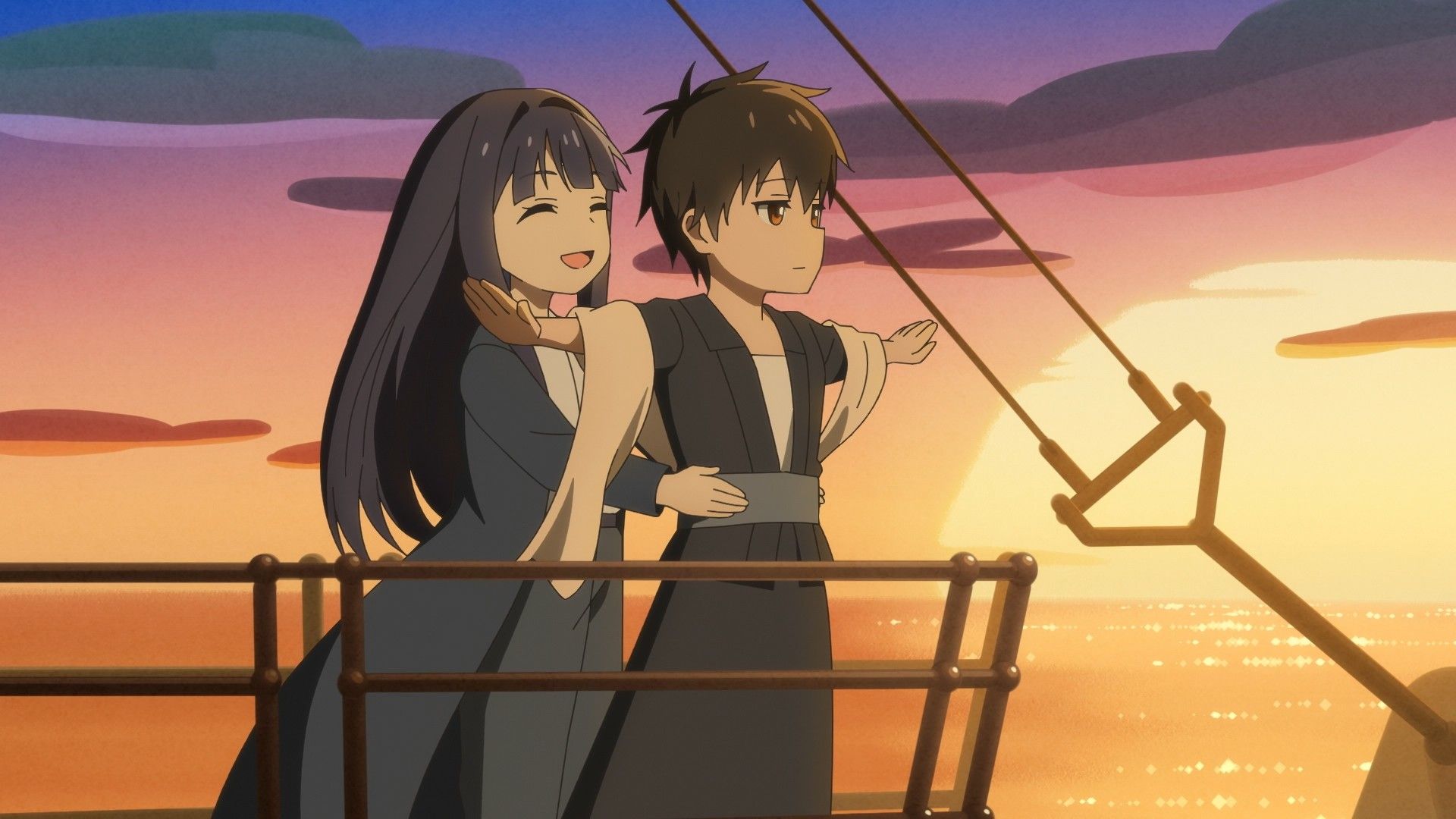
Her interest in fireworks also suits her perfectly. She cannot admire them visually, but the sound, smell, vibrations, and atmosphere of watching them together are enough for them to remain something special to her. A similar attitude can be seen during the visit to Meiji Maru. Kakeru describes their surroundings, Koharu listens and builds an image of the place in her imagination, then very seriously proposes recreating the scene from Titanic. It is a brief moment, but whenever I think of her, this is exactly the kind of behavior that comes to mind first. Blindness changes the way she experiences the world, but it does not take away her curiosity or her sense of humor.
Koharu is also very romantic, although she often hides it behind jokes. She herself calls their outing a date, grows increasingly bold about getting closer to Kakeru, and makes one of the first completely unambiguous moves in their relationship. The funniest part is that her confidence often disappears at exactly the moment she realizes what she has just done or said. Then comes the embarrassment and an attempt to walk her own words back. Small shifts like these made their scenes together especially enjoyable for me to watch.
Fuyutsuki’s cheerfulness does not mean an absence of fear. The later episodes make it clear that she has long carried things inside her that she does not want to talk about. She has already gone through a serious illness, lost her sight, and experienced treatment side effects that also affected her memory. When she once again finds herself in a situation she cannot control, she tries to regain at least a little of that control through her own relationships with other people.
The most emotional scenes involving her hit me so hard precisely because of everything I had seen beforehand. When all the fear and pain hidden beneath that behavior finally come to the surface, I never felt as though the script had suddenly given her a dramatic second personality. Both sides are part of the same Koharu. Her joy in ordinary things is so sincere precisely because she knows how easily she could lose the ability to experience them.
Sorano Kakeru
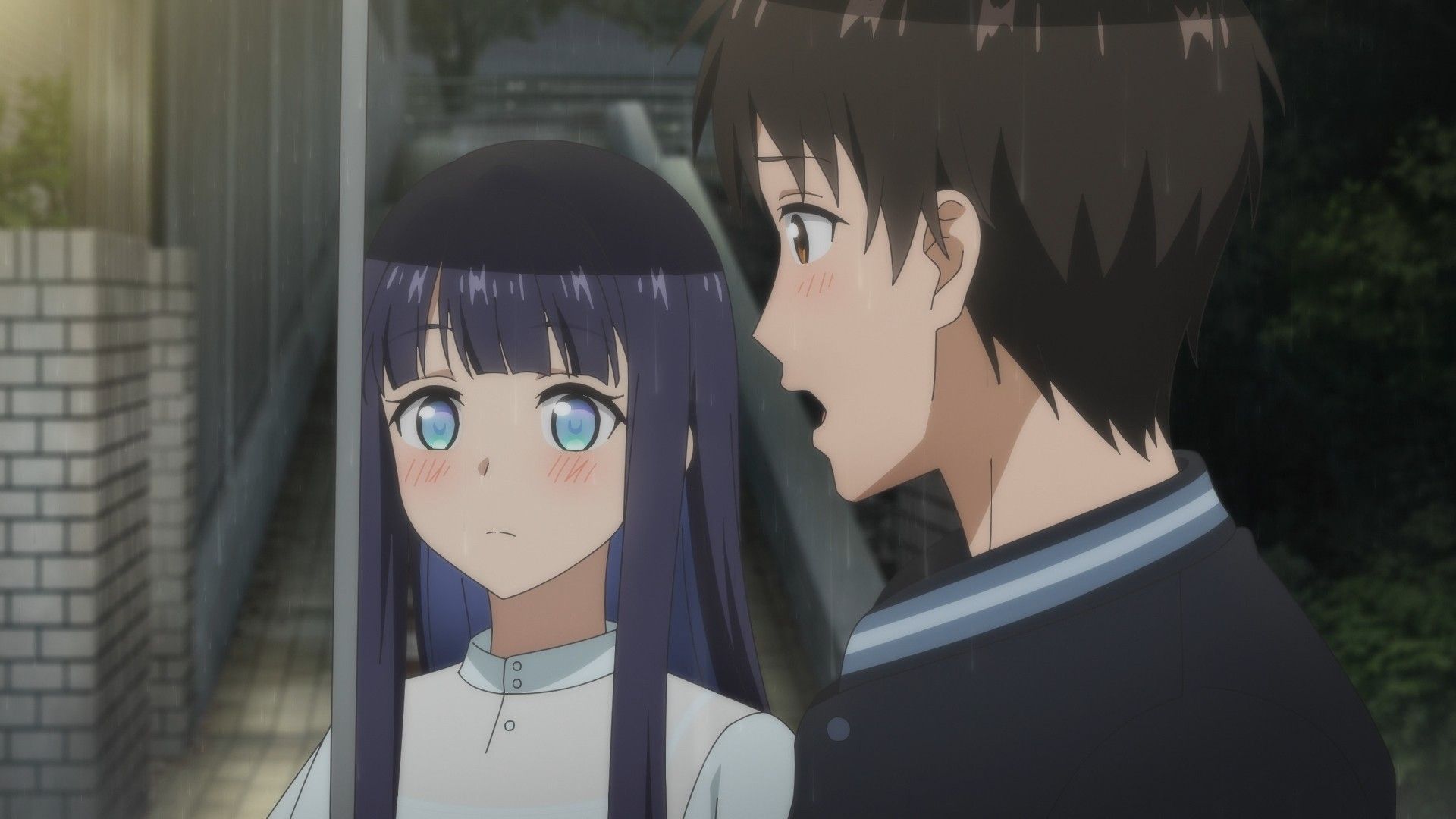
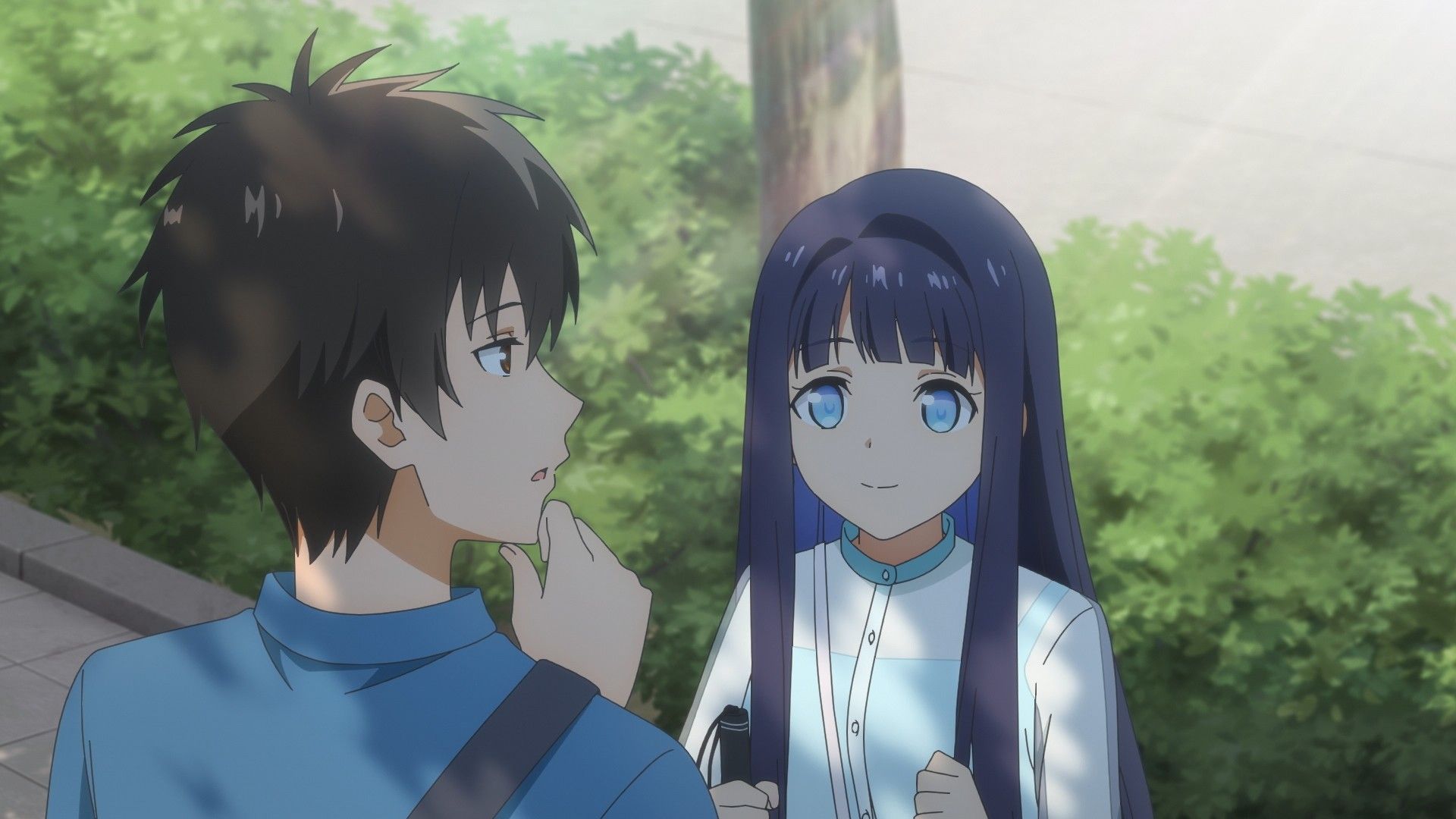
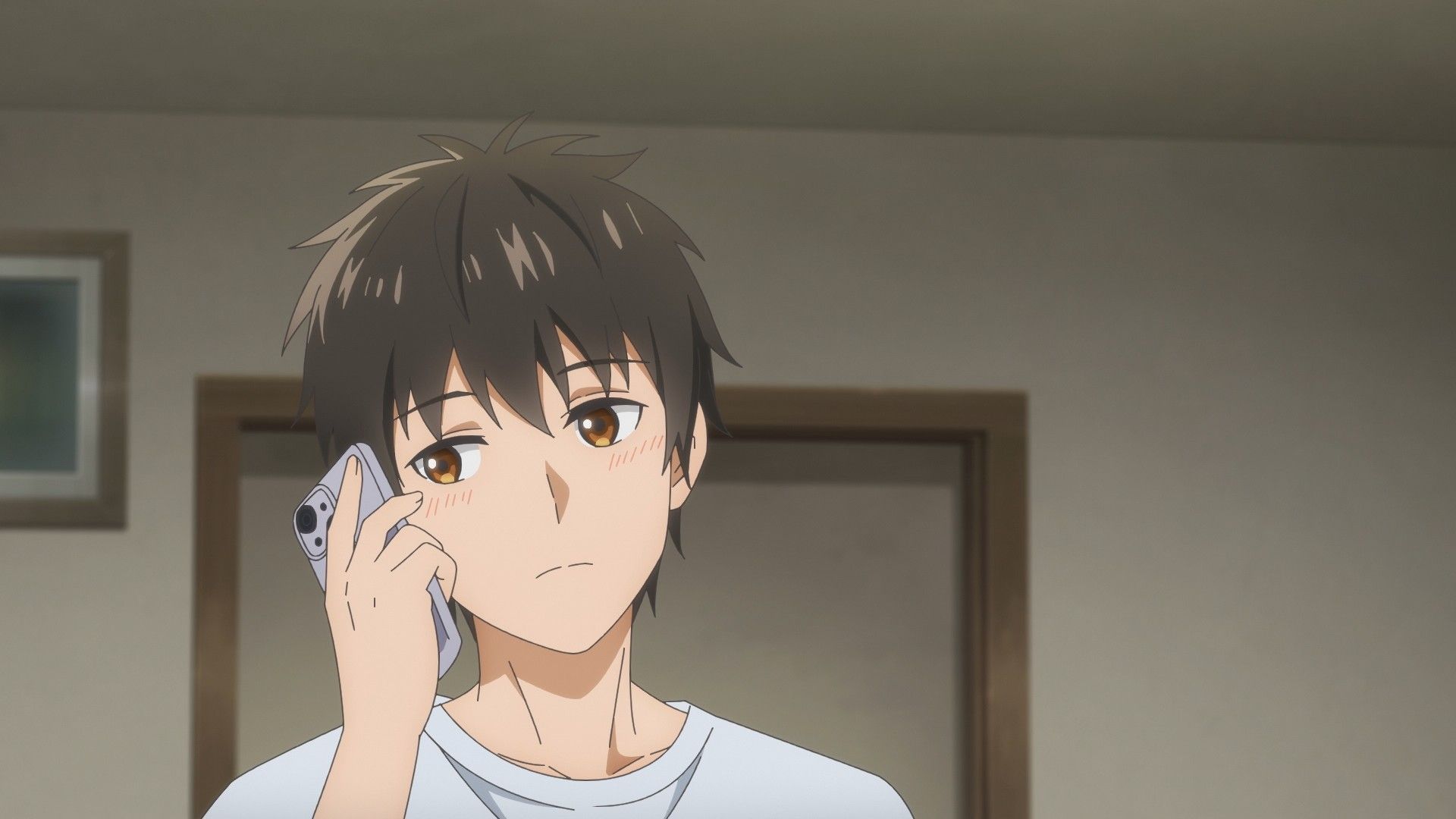
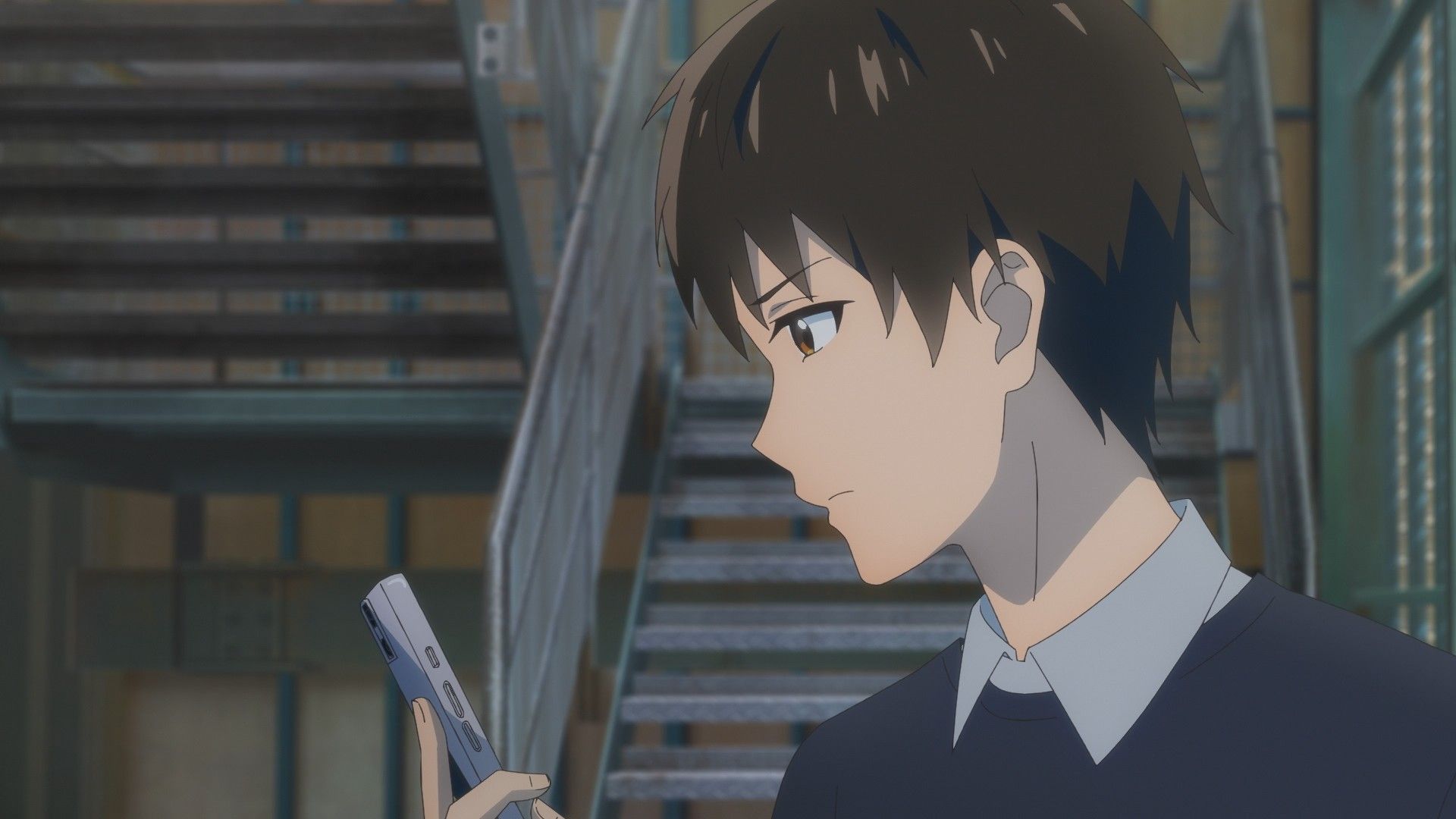
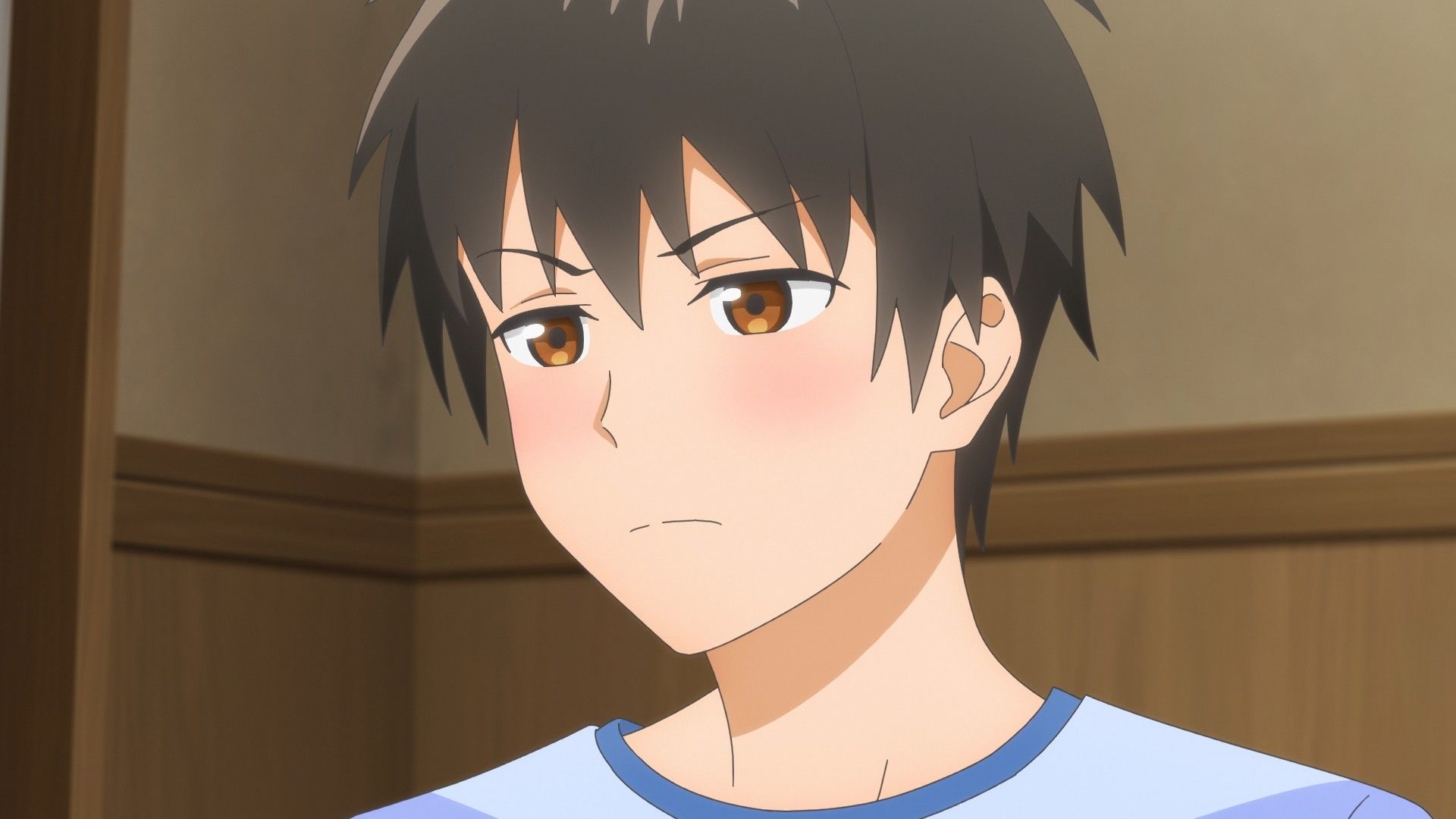
At first, he seems like yet another introverted romance protagonist whom an energetic girl will have to pull out of his shell. His behavior, however, has much firmer foundations. Since childhood, he has grown accustomed to the idea that the less space he occupies in other people’s lives, the lower the risk of problems later on.
His father’s departure and life spent moving between relatives taught him to take a very cautious approach to relationships. Kakeru is not socially inept, either. He can talk to people normally and has a genuinely good friend in Narumi Ushio. What he rarely does is initiate closer contact himself. He prefers to watch everything from slightly off to the side, comment on other people’s behavior with his characteristic dry humor, and maintain a safe distance.
Koharu disrupts that balance without any deliberate plan whatsoever. Kakeru has every opportunity to take part in student life, yet would rather hide somewhere out of the way. Fuyutsuki faces problems most of his friends will never experience, and still tries to take advantage of every opportunity that comes her way. Her influence later becomes visible in Kakeru’s concrete decisions. He does not need a sudden personality transformation. He simply starts saying yes more and more often to things he would previously have avoided on instinct.
Kakeru often makes mistakes. Sometimes his words sound much harsher than he intended. At other times, he analyzes his own feelings for so long that everyone around him has already figured out what he feels for her. The old Kakeru would have tried to limit his own involvement before the situation had a chance to hurt him. The later Kakeru consciously chooses exactly what he used to fear most.
Hayase Yuko
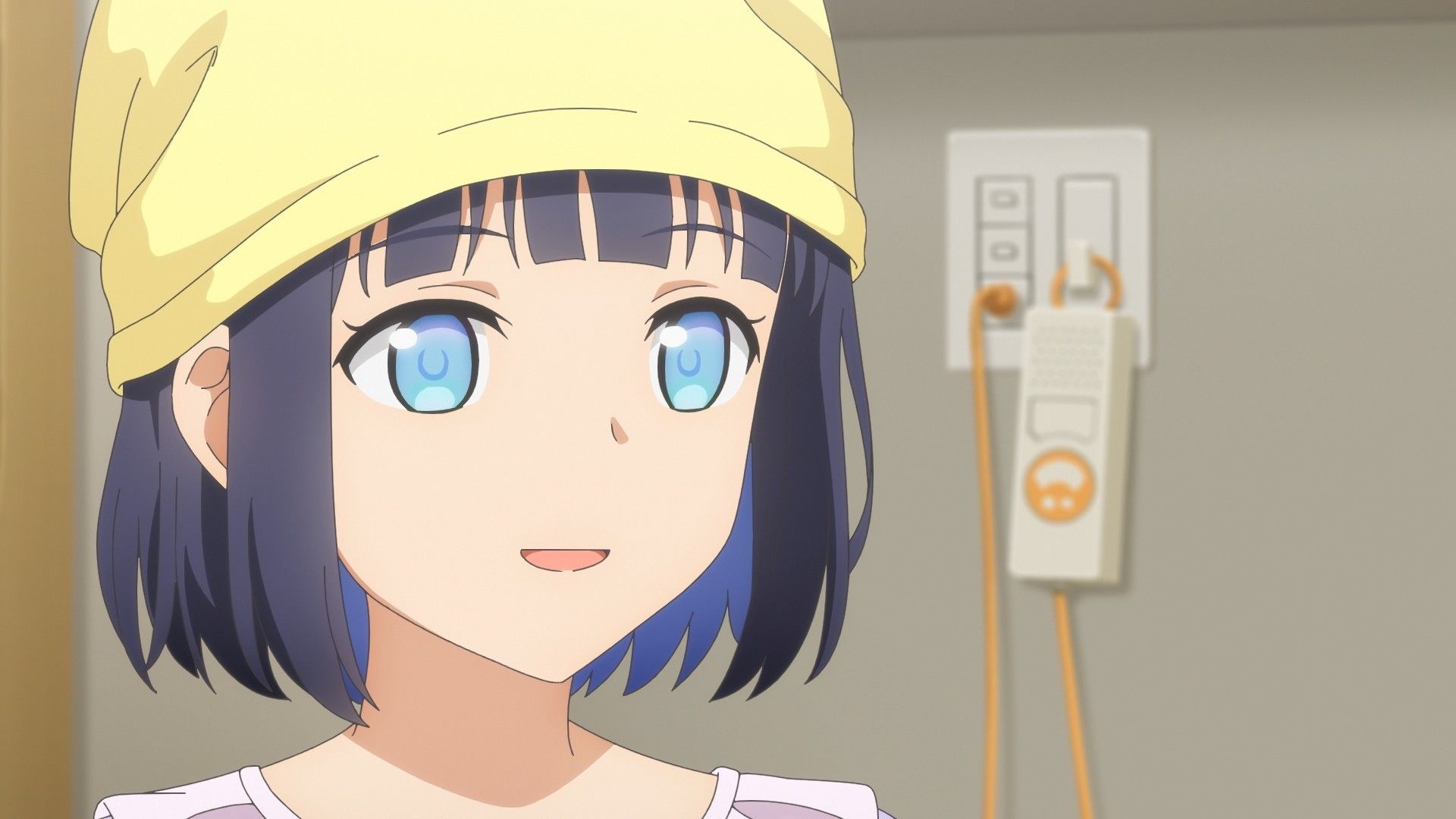
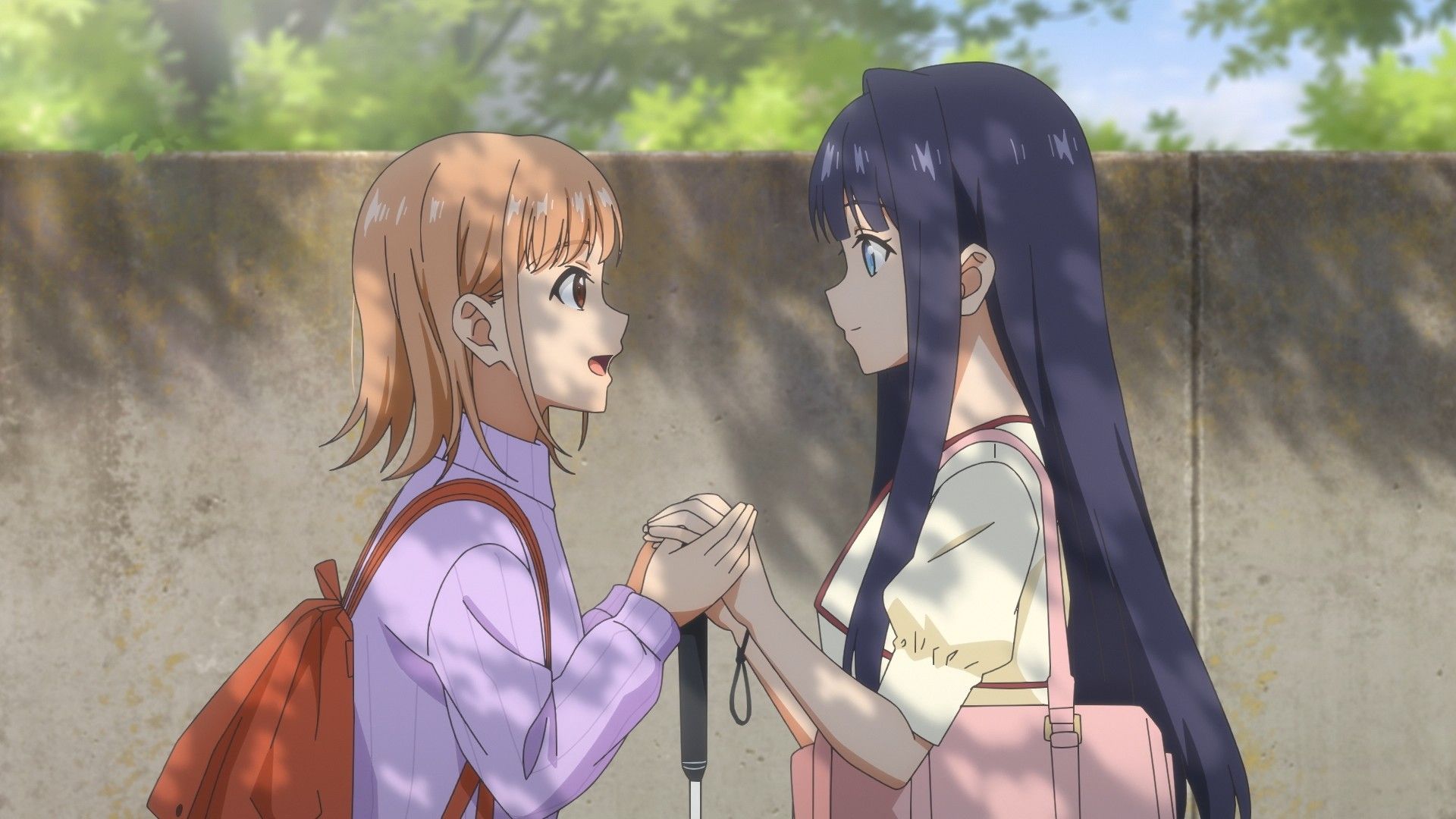
Hayase Yuko is a good example of a supporting character who does not need a huge separate storyline to have a clear impact on the story. She is one of the first people to become friends with Koharu, and she is the one who gets Kakeru involved in helping the girl at university. Without Yuko’s initiative, the central pair would probably have needed much more time before they started talking regularly.
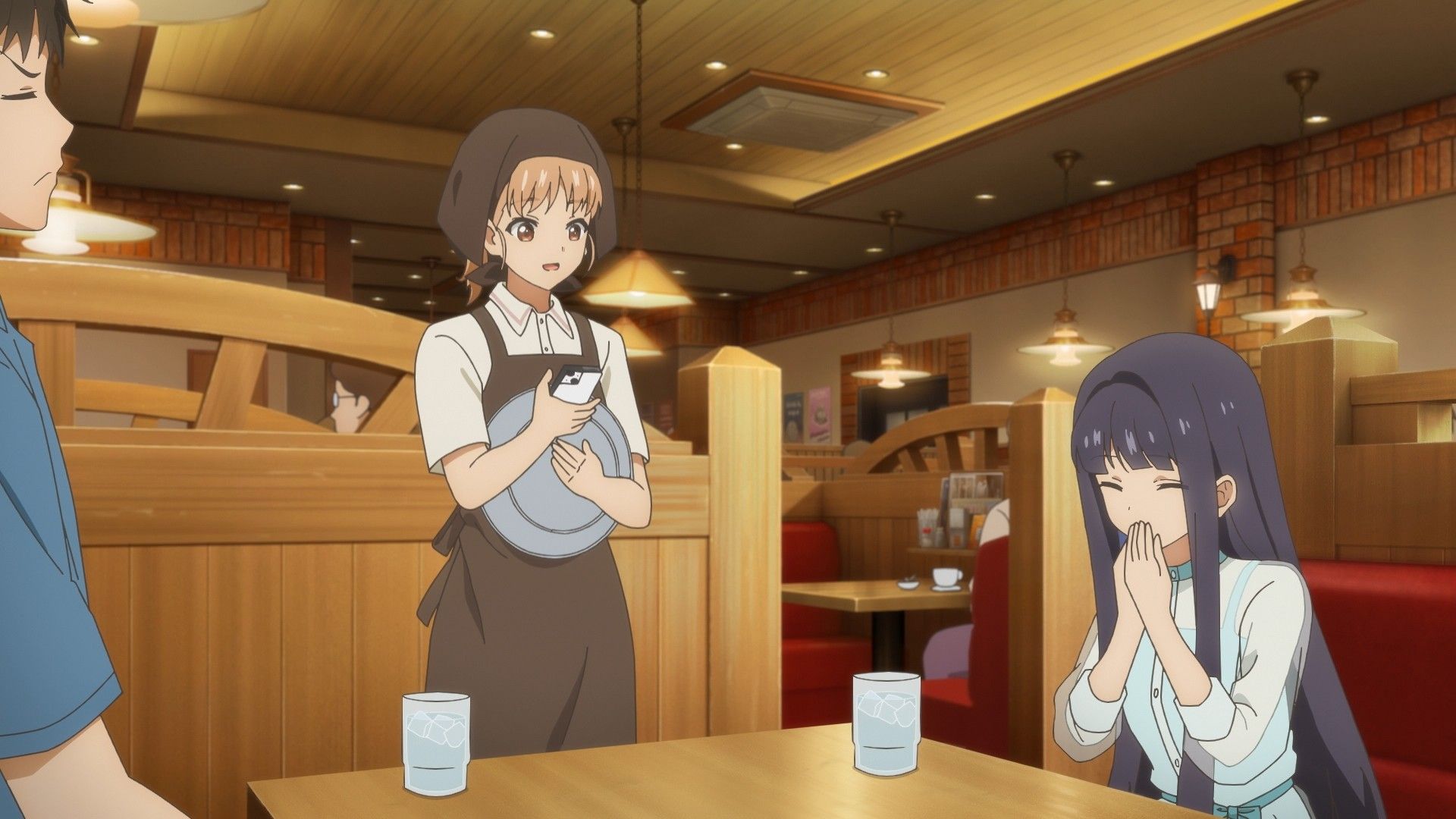
Yuko is active, organized, and much more direct than Kakeru. She works as a student guide, has a job, helps organize the festival, and almost automatically takes the initiative whenever the group needs to get something done. Her concern for Fuyutsuki regularly translates into concrete action. When the situation starts becoming genuinely difficult, Hayase looks for things she can still do even if she cannot solve the actual problem. Emotionally, she also reacts very differently from Sorano. She does not try to bottle everything up and pretend that nothing affects her. As a result, the later events do not reduce the entire group to several people all reacting in exactly the same way.
Narumi Ushio
At first meeting, Narumi Ushio looks like the classic energetic roommate whose job is to drag the protagonist out of his room and provide comedic situations. He does indeed do both. It is because of him that Kakeru attends the gathering where he meets Koharu. Narumi also quickly notices what is happening between the central pair and takes great pleasure in teasing his friend about it.
It quickly becomes clear, however, that beneath all that energy is someone you can genuinely rely on. Narumi can tell the difference between a moment suited to a stupid joke and a situation in which Kakeru simply needs someone to be there. His advice is not particularly complicated, which is exactly why it often lands where it should. Sorano has a tendency to break everything down into dozens of possible scenarios, while Narumi can reduce the problem to one simple question.
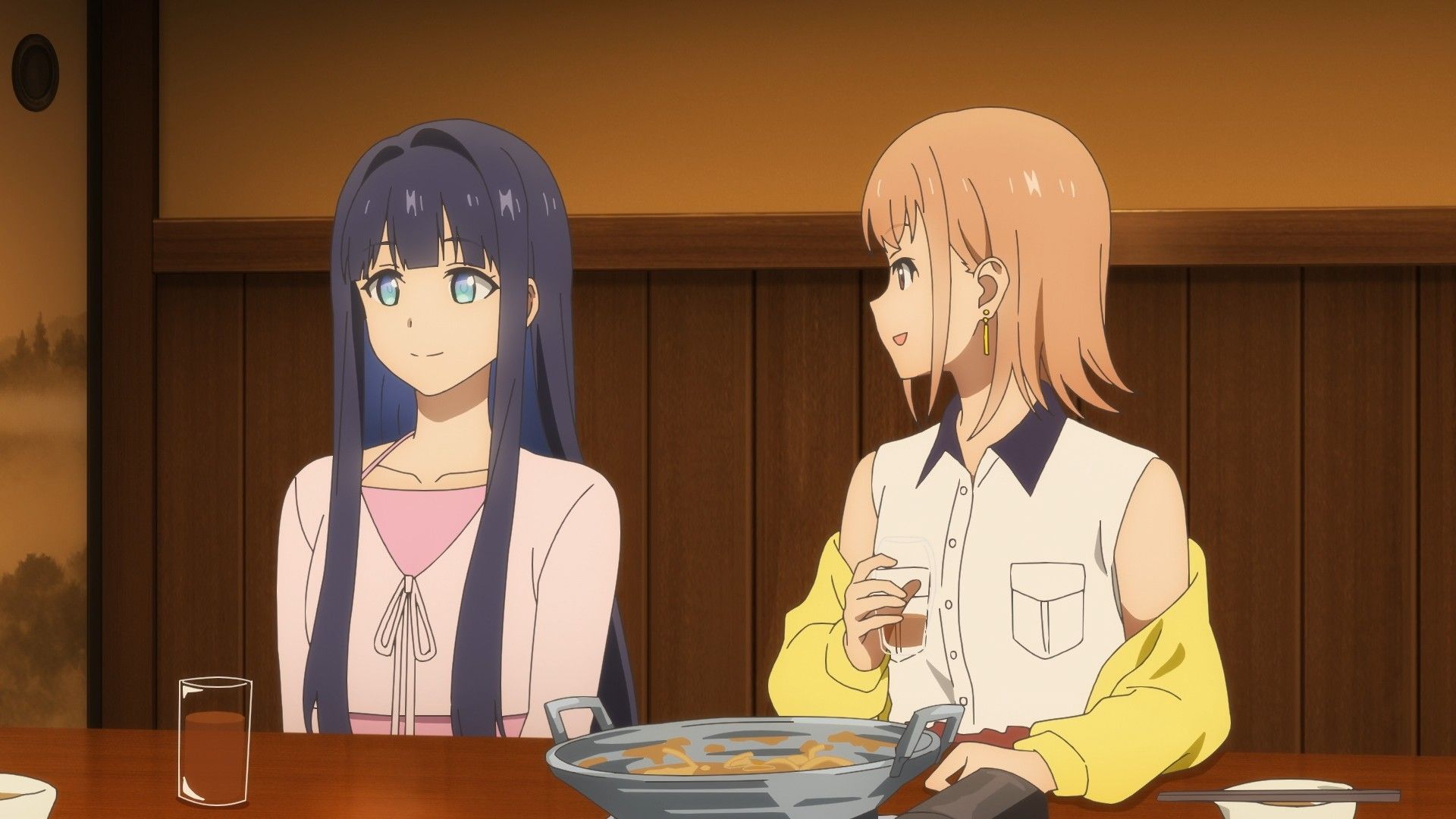
Everyday Life, Characters, and Romance
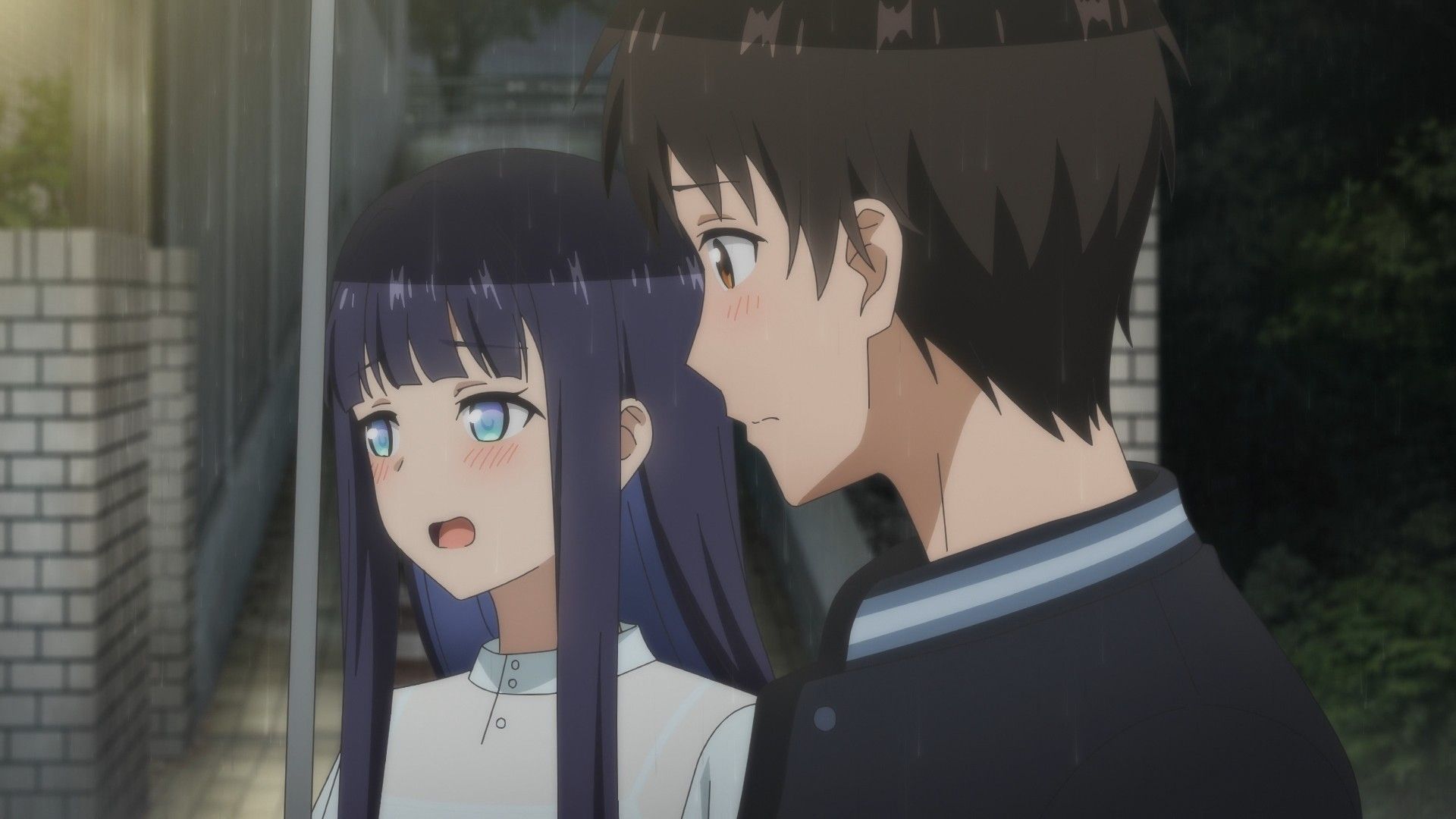
What I liked most was how naturally Toumei na Yoru ni Kakeru Kimi to, Me ni Mienai Koi wo Shita moves from an exceptionally warm romance into a story capable of genuinely hurting when the right moment comes. The first part of the season gives the characters time for karaoke, shopping, terrace conversations, outings together, and awkward romantic situations. Not every meeting needs to push the main plot toward another major twist. It is enough to watch Koharu and Kakeru grow increasingly comfortable around one another. Because of that, the heavier events later carry real weight, since I had already seen what the characters stood to lose.
Fuyutsuki Koharu is an enormous strength of this story. I found her easy to like from her very first scenes, but each episode added something that gave another layer to her personality. Hayami Saori elevates her even further. I genuinely struggled to find a scene in which her voice did not fit perfectly with what Koharu was experiencing at that moment.
Sorano Kakeru also turned out to be much more interesting than my first impression suggested. His development is clear, but by the end I can still recognize the same boy I met at the beginning. He does not suddenly become a bold extrovert or someone completely free of fear. He simply starts making decisions despite that fear.
The relationship between the central pair is another major strength. I did not need constant melodrama or obvious misunderstandings being dragged out artificially. Small gestures were enough: growing more comfortable around one another, changes in the way they address each other, Koharu’s teasing, Kakeru’s reactions, and the simple desire to meet again. When much more serious problems appear, I no longer need to be convinced that these people matter to each other. I had already seen it in dozens of small situations.
Toumei na Yoru ni Kakeru Kimi to, Me ni Mienai Koi wo Shita (2026) – Evaluation and Summary
Toumei na Yoru ni Kakeru Kimi to, Me ni Mienai Koi wo Shita was one of the most pleasant surprises of Summer 2026 for me and one of my favorite series of the season. The starting point is very simple – a withdrawn boy meets a girl who is, in many respects, his opposite. The story only truly gains its own character thanks to how much time is later devoted to their ordinary meetings, their behavior, and the gradual changes in how they begin to treat one another.
What I will remember most strongly, of course, is Fuyutsuki Koharu. She is visually adorable, extremely likable as a character, and Hayami Saori gives one of those performances that once again makes me wonder how much more the actress can still draw out of her voice alone. The lightly teasing way she talks to Kakeru, her cheerful tone in everyday situations, the small moments of uncertainty, and the later scenes filled with genuinely heavy emotions all come together wonderfully.
I will remember Koharu and Kakeru’s relationship just as fondly. We got enough ordinary time with them simply being together for the later drama to genuinely mean something. In a romance built primarily around their everyday lives, that matters far more to me than even the most spectacular declaration of love appearing without proper buildup.
The fireworks running throughout the story tie its most important elements together well. At first, they are simply Koharu’s dream; later, they become one of the reasons for her subsequent meetings with Kakeru, draw the other characters in, and lead to an event that brings many earlier threads together.
On top of that, there is the pleasant visual presentation, the very attractive backgrounds, the lovely design of the heroine, 光 (Hikari) regularly staying in my head after the ending credits, and phenomenal voice acting.
Finalny werdykt
Final evaluation

Which translation do I recommend to watch Toumei na Yoru ni Kakeru Kimi to, Me ni Mienai Koi wo Shita (2026)?
- Crunchyroll (official) – an excellent translation that I would genuinely struggle to find fault with even if I tried hard.
Gallery