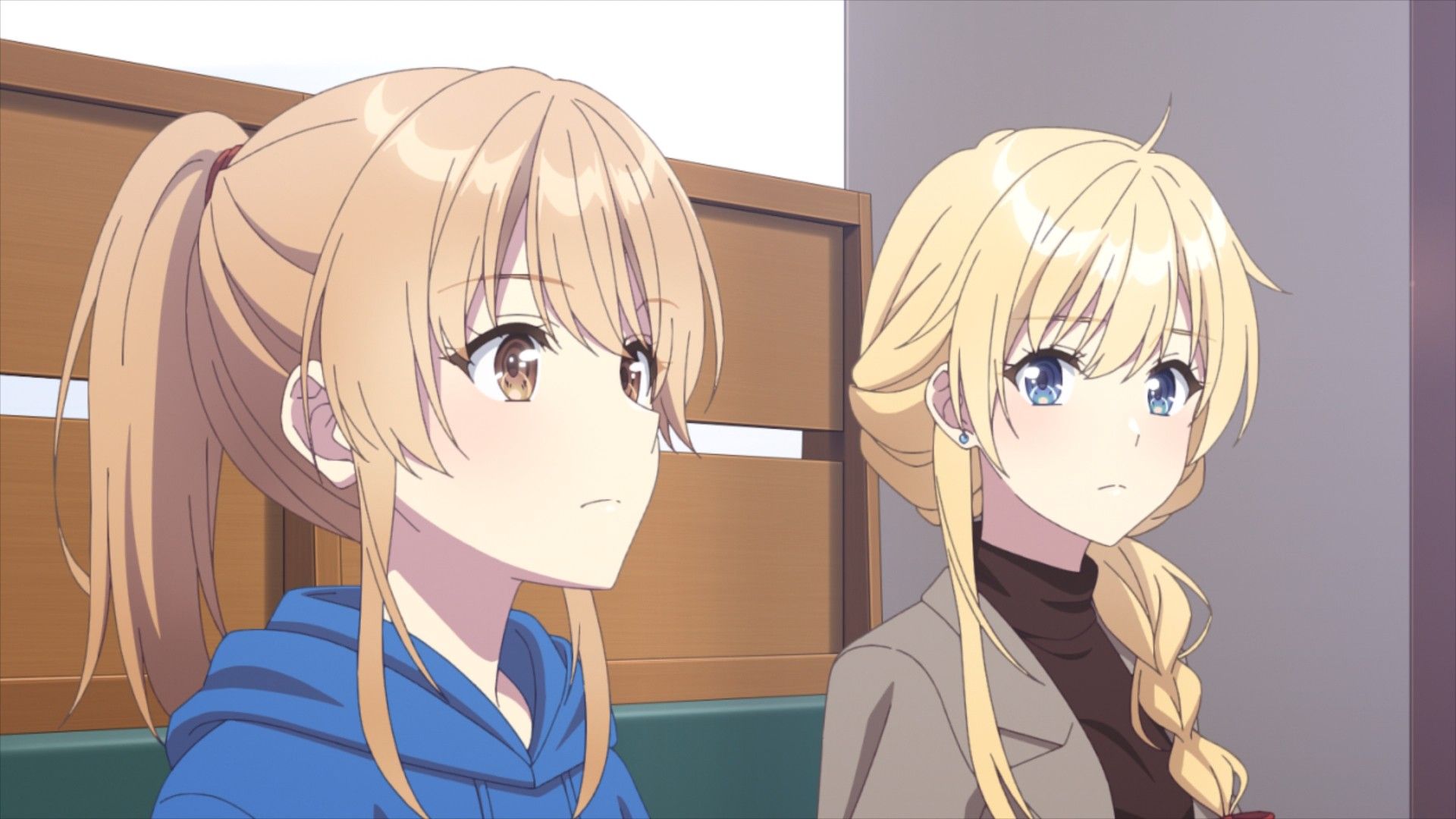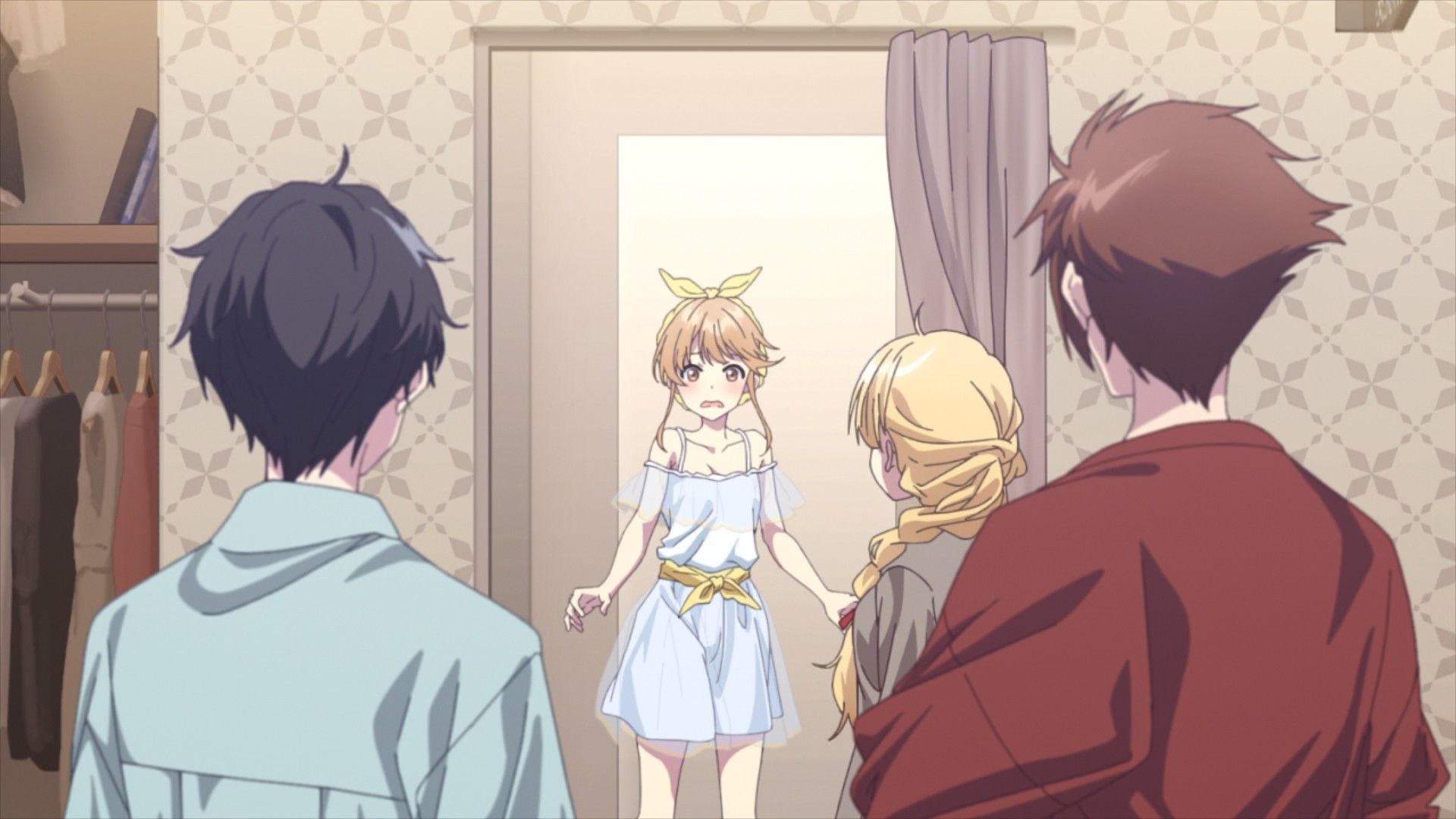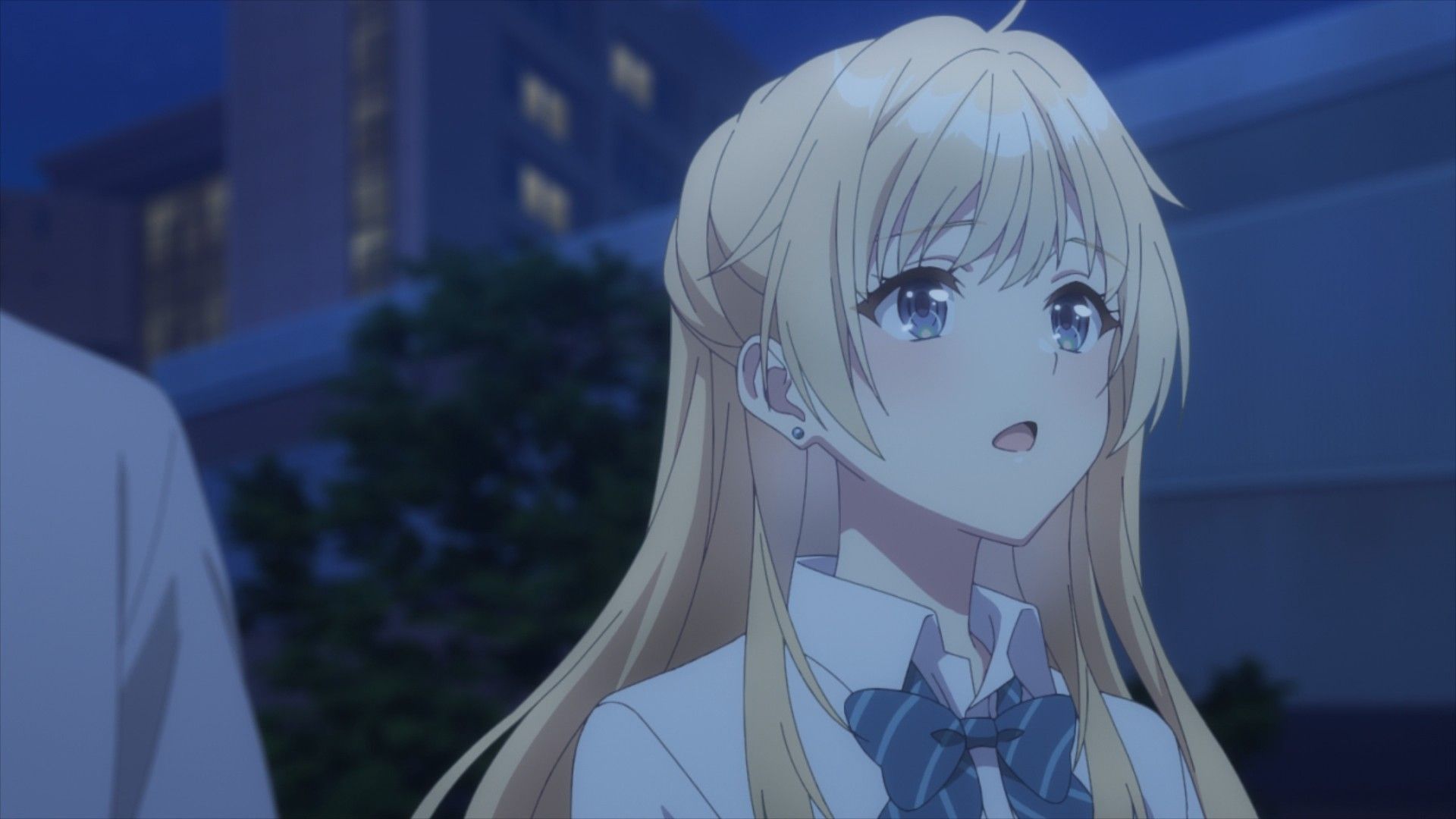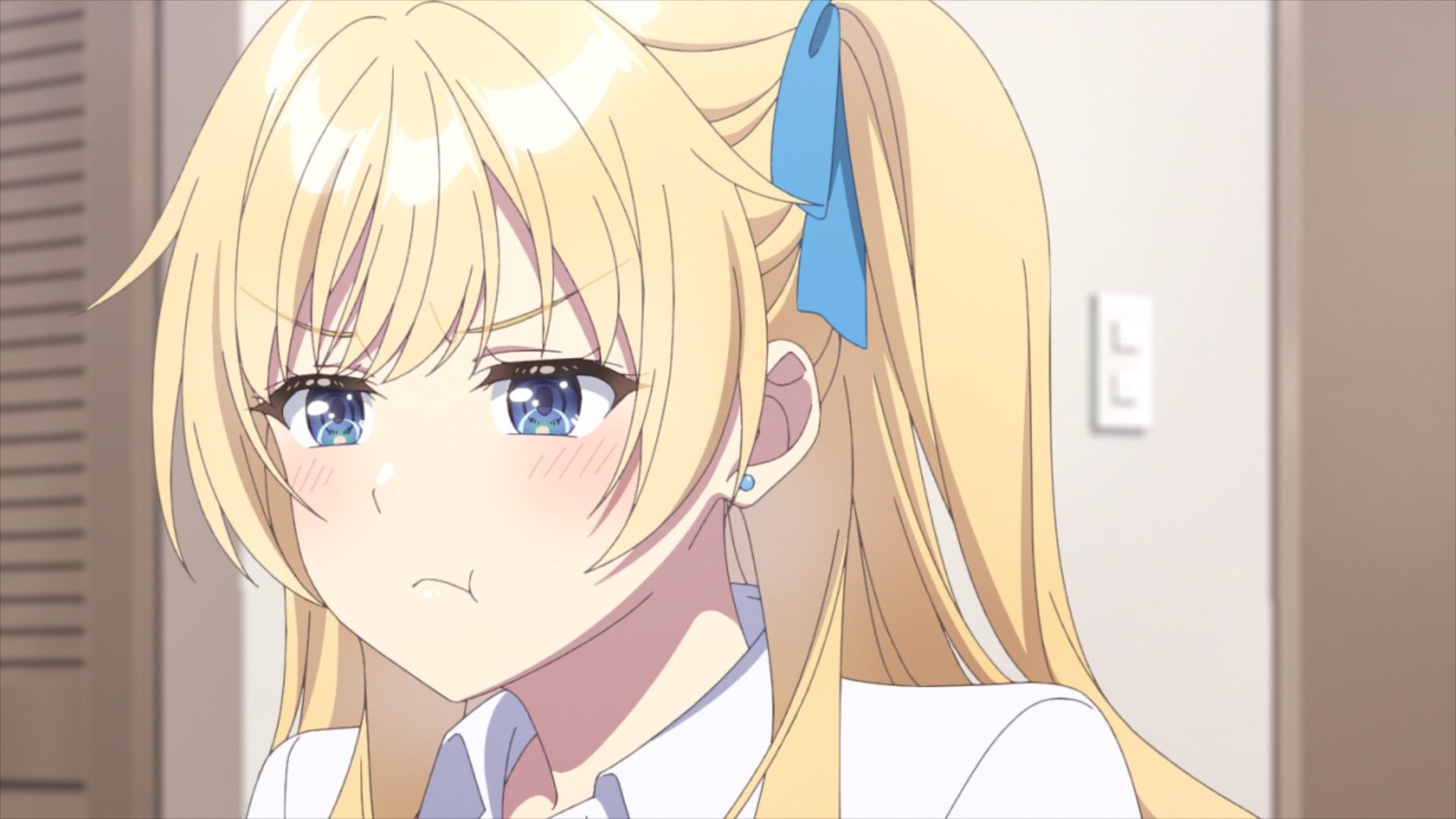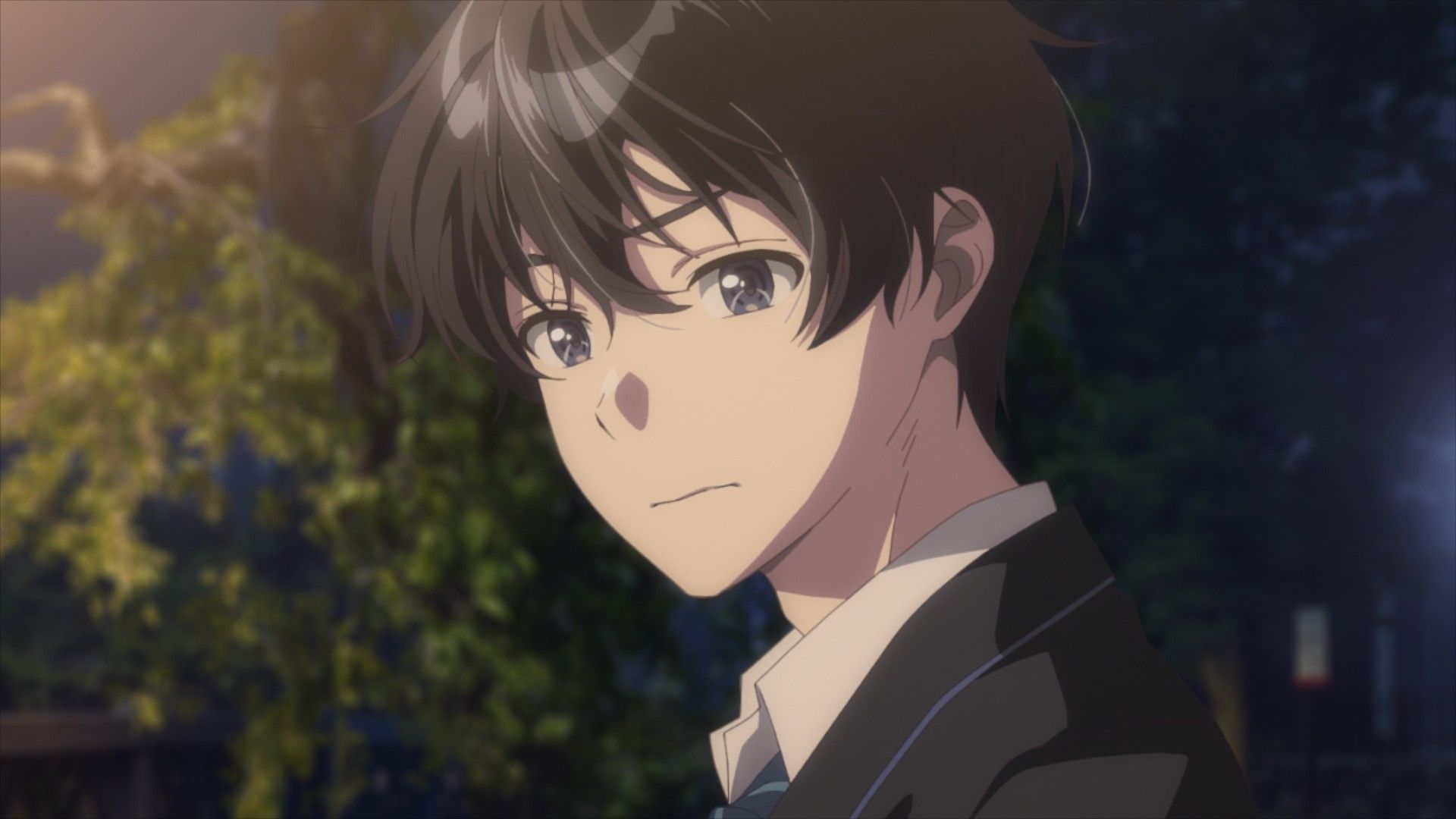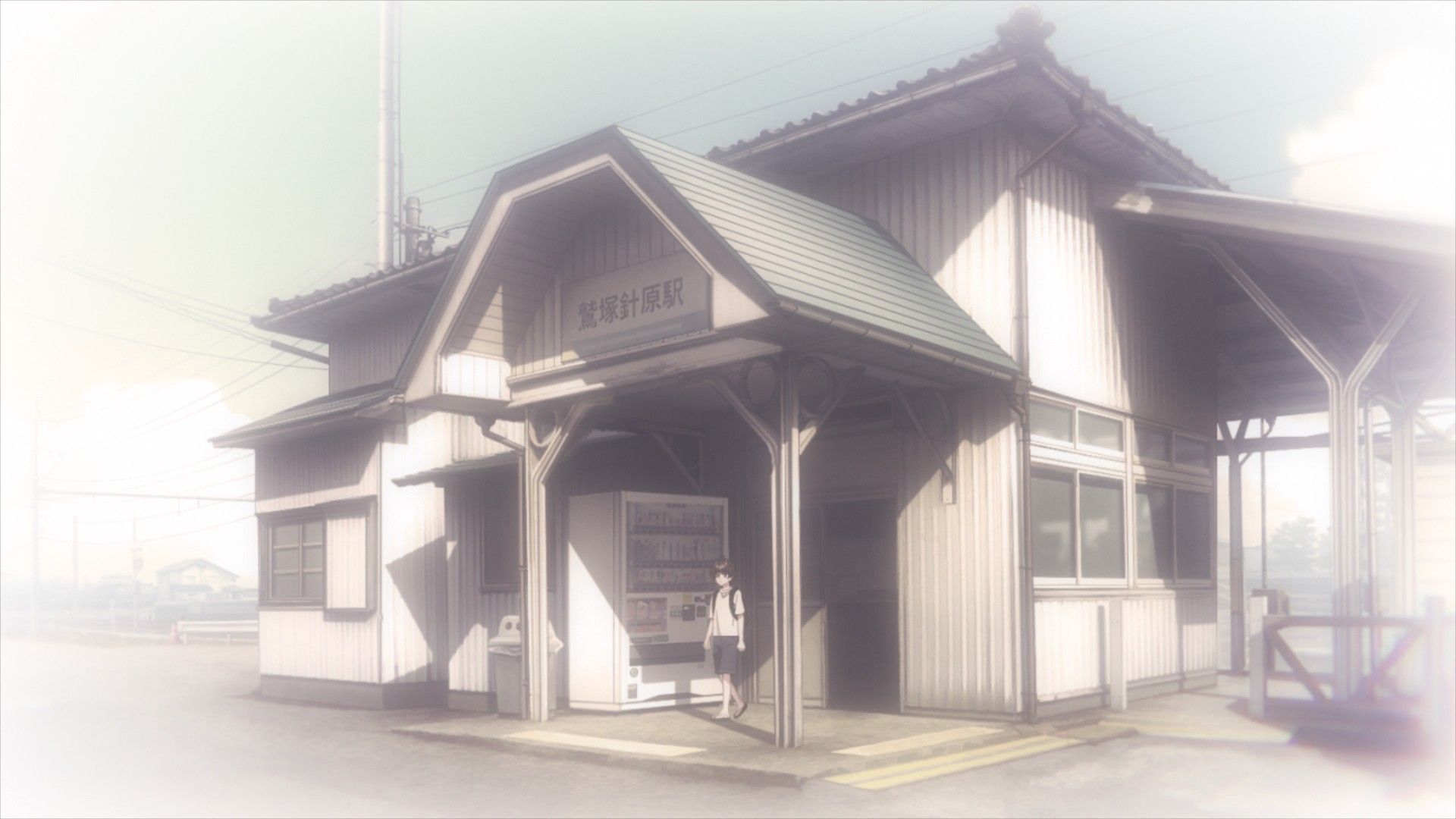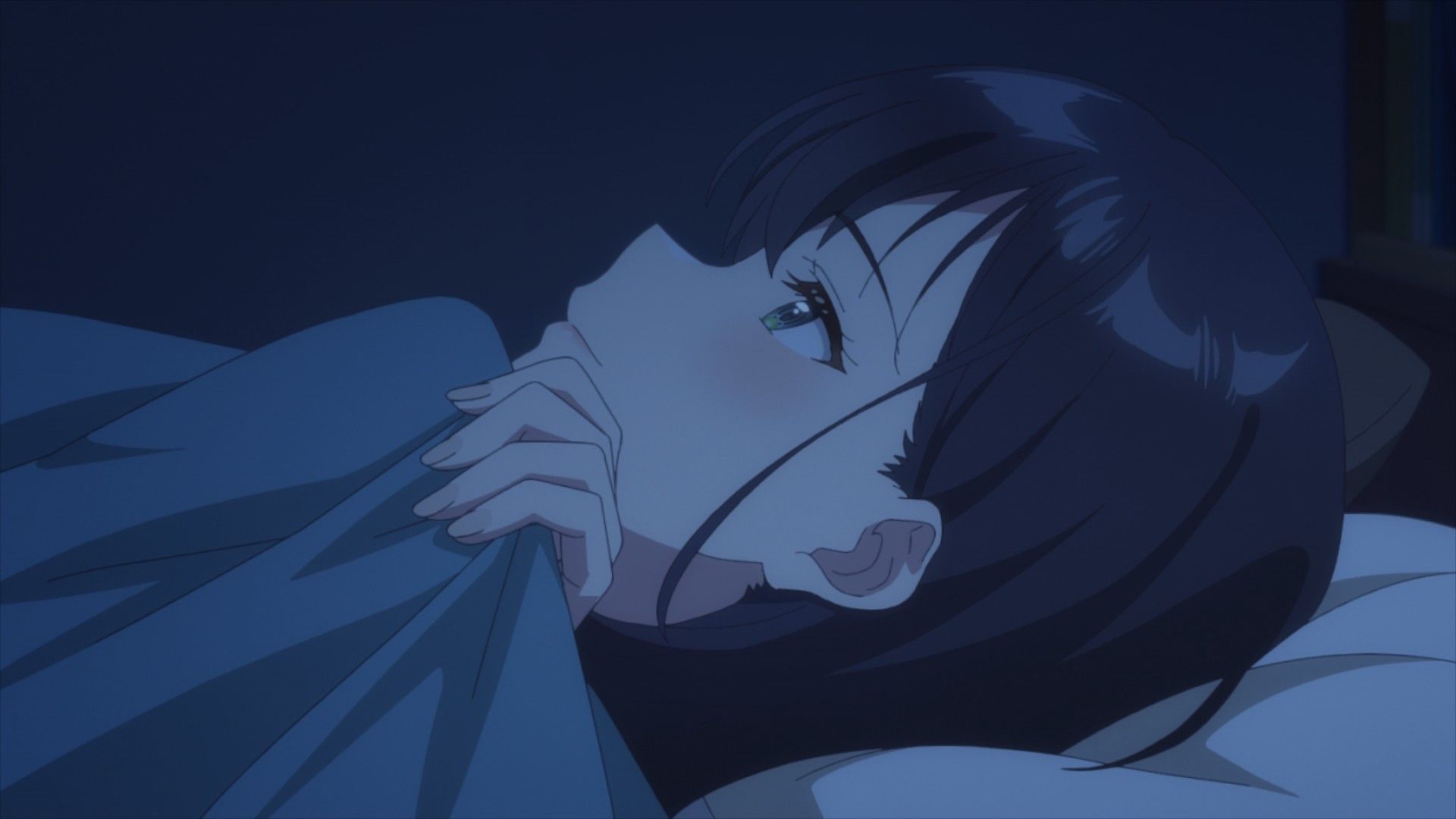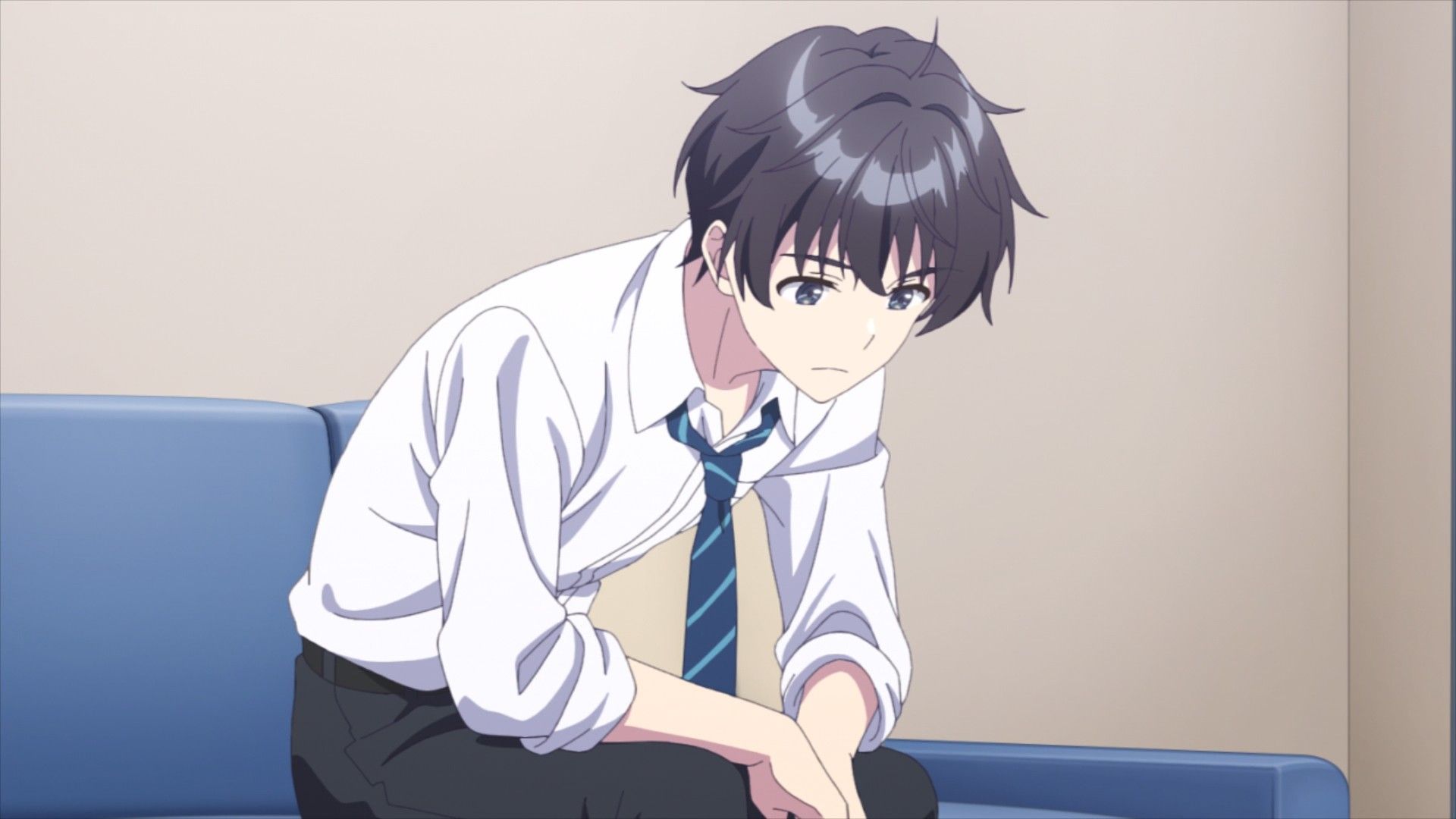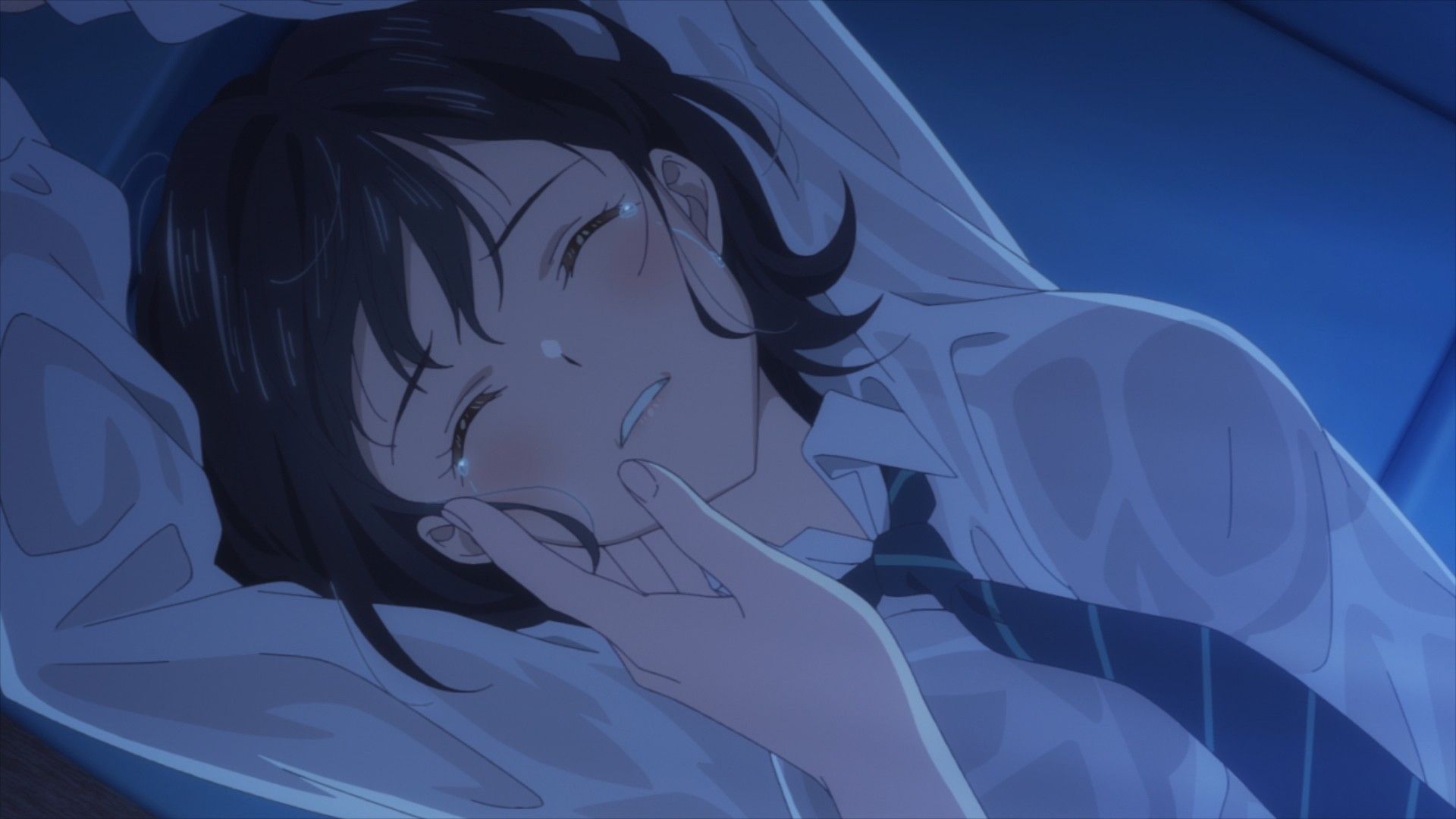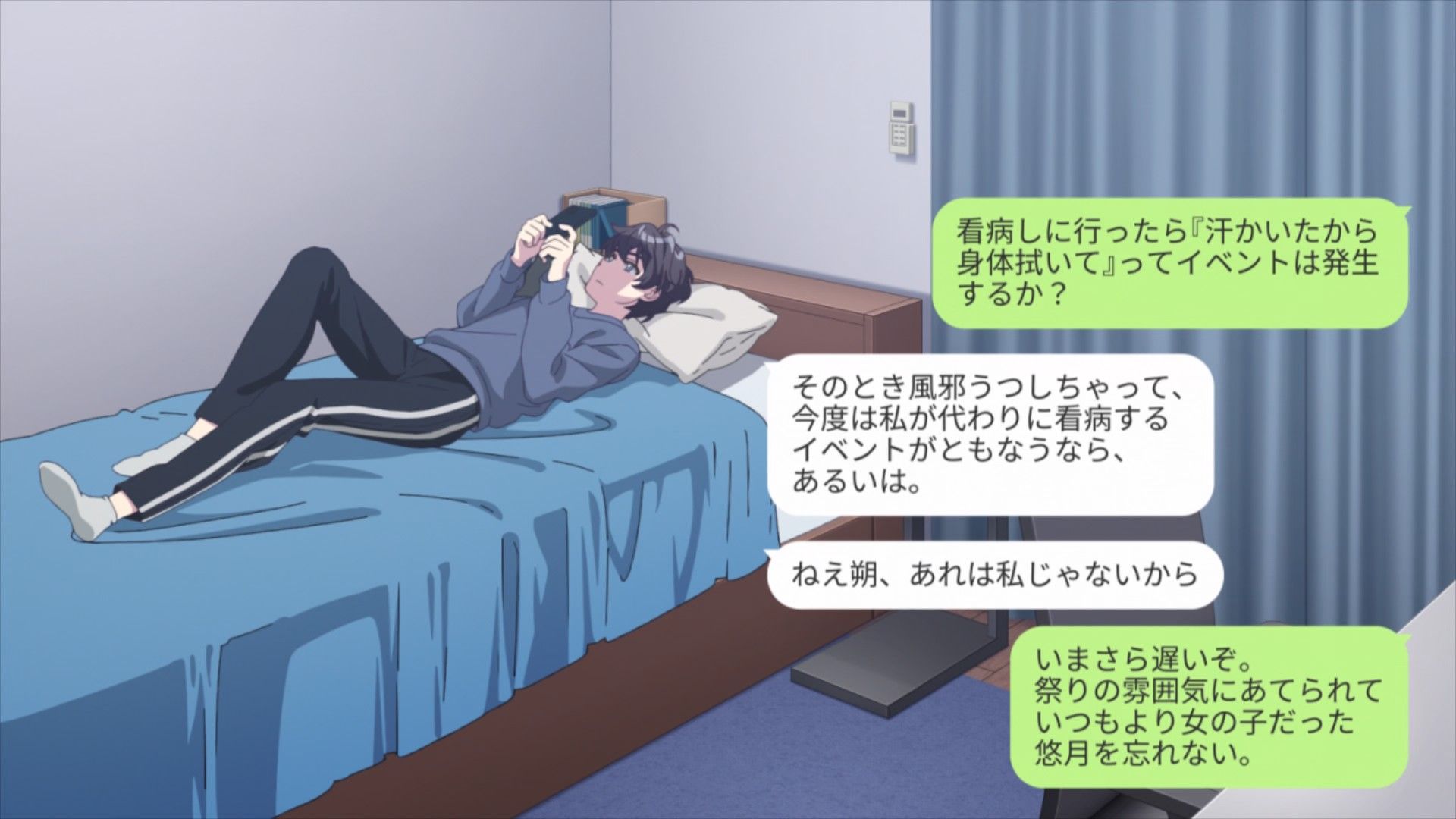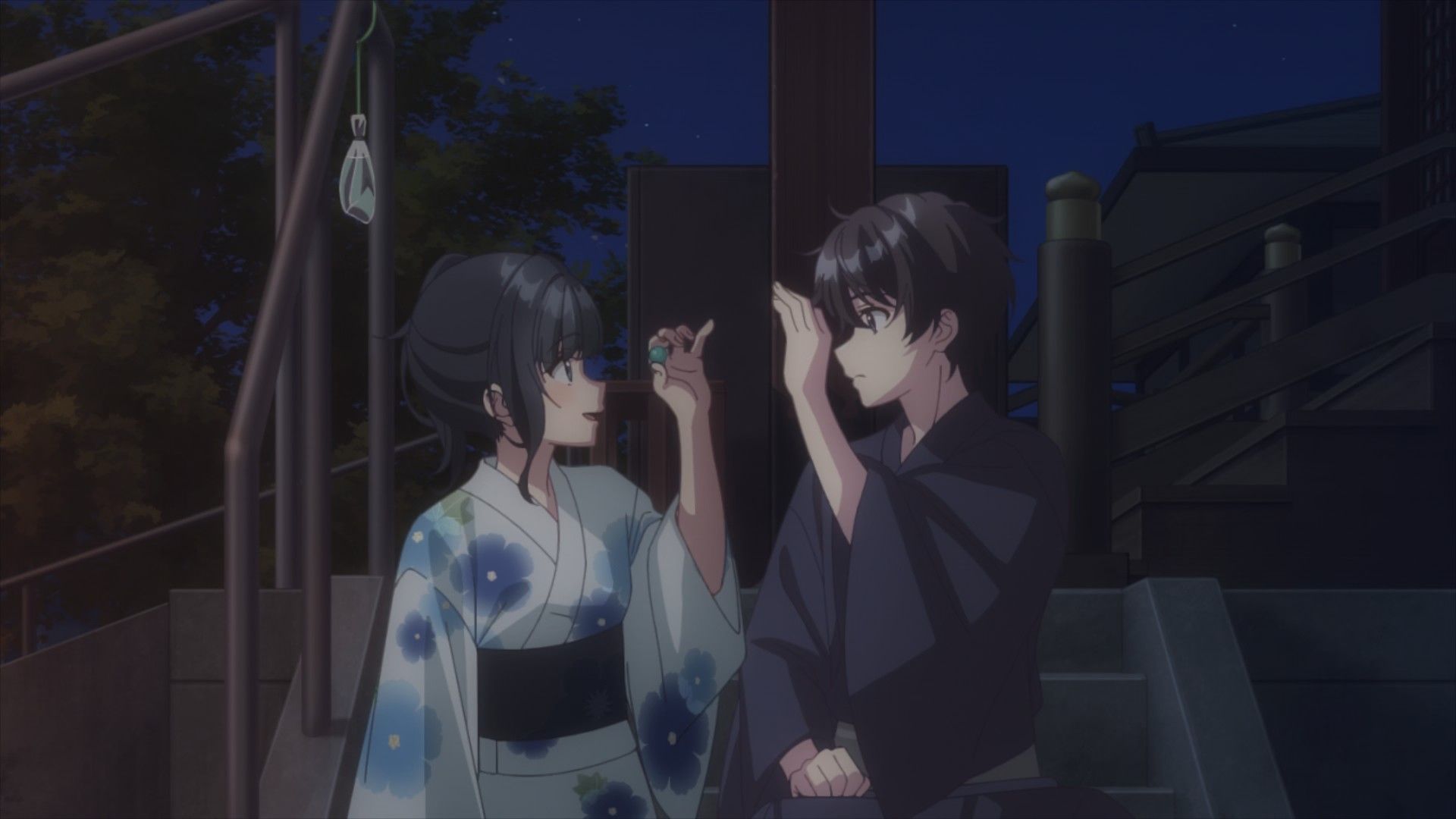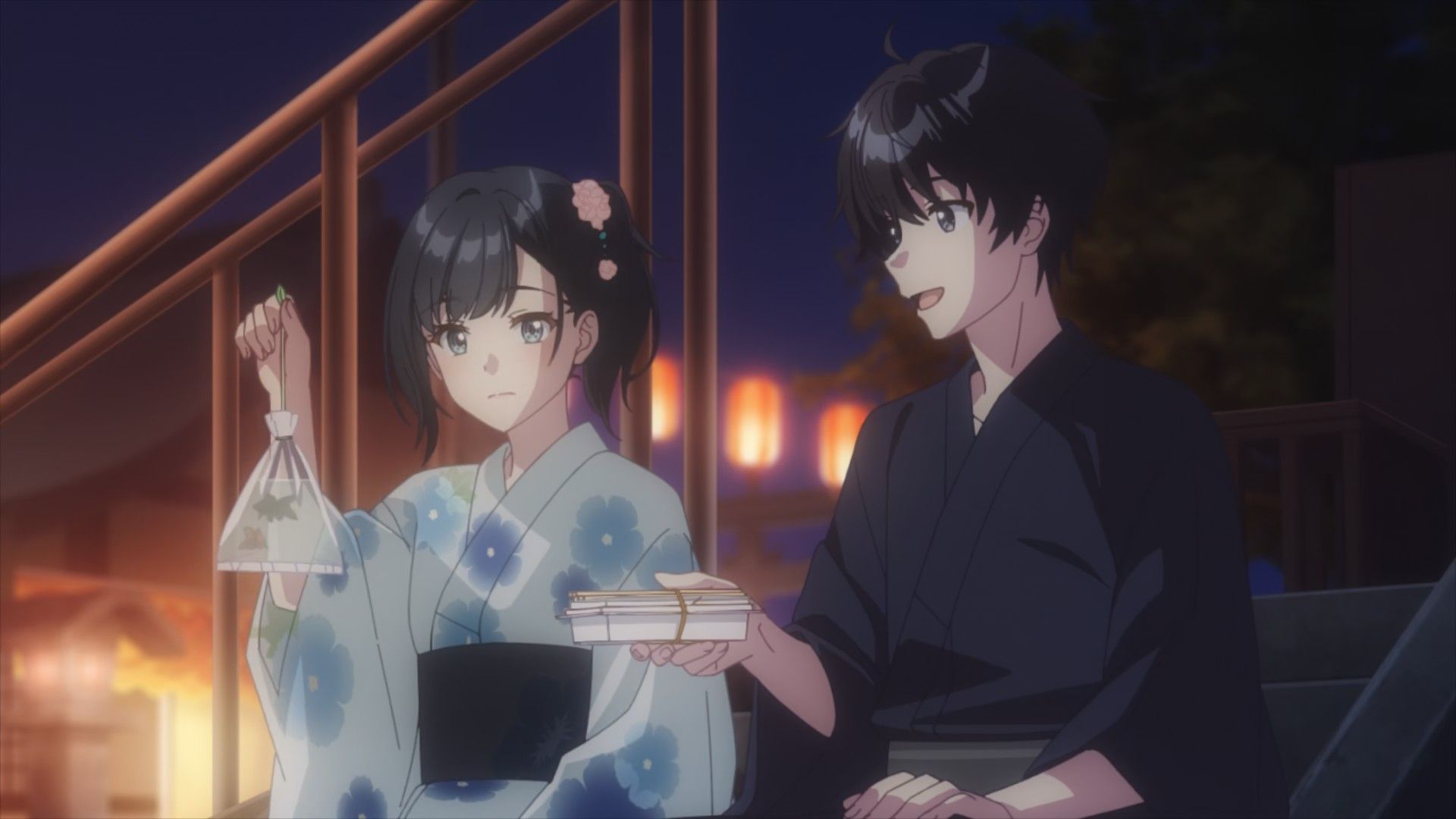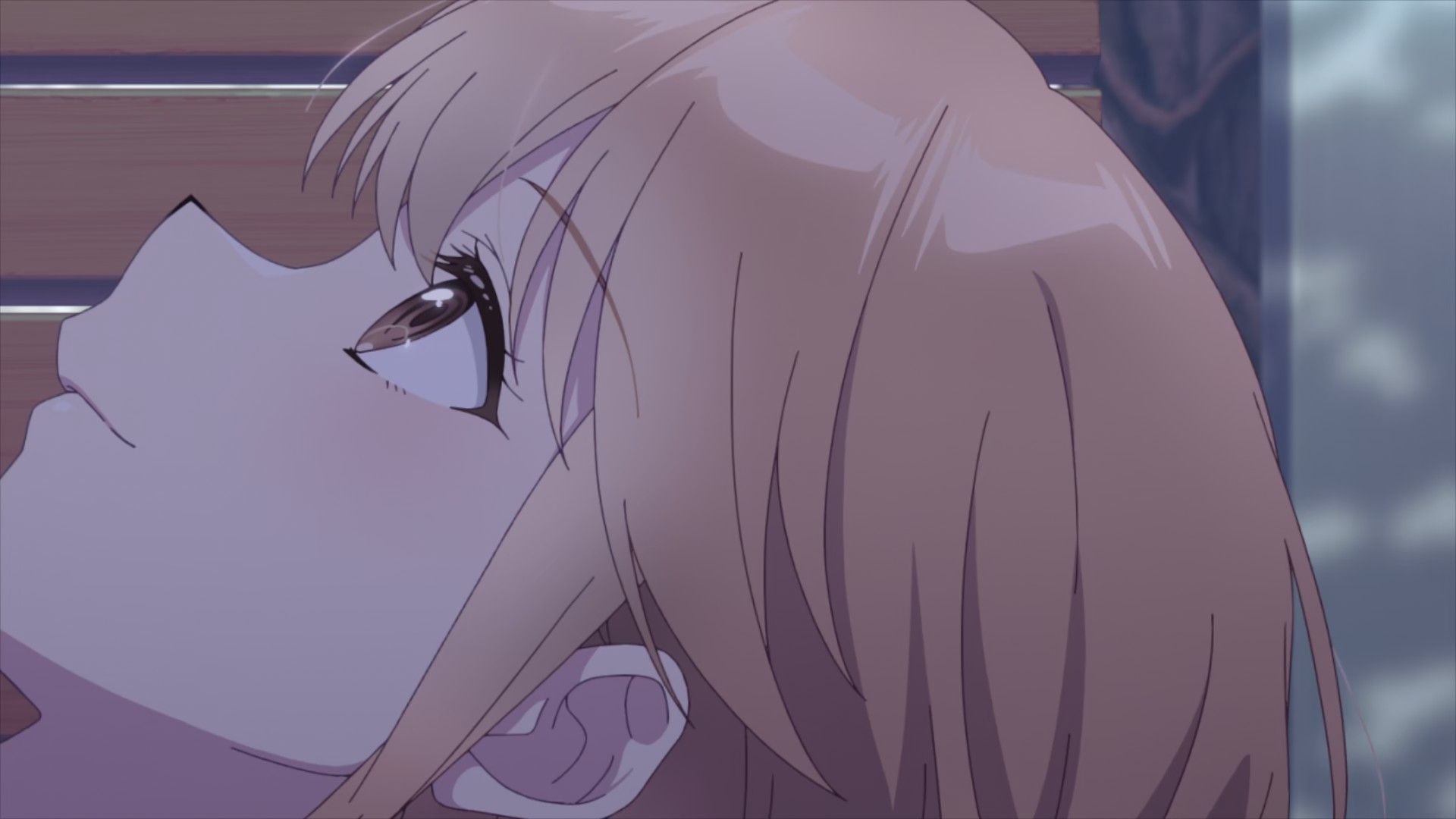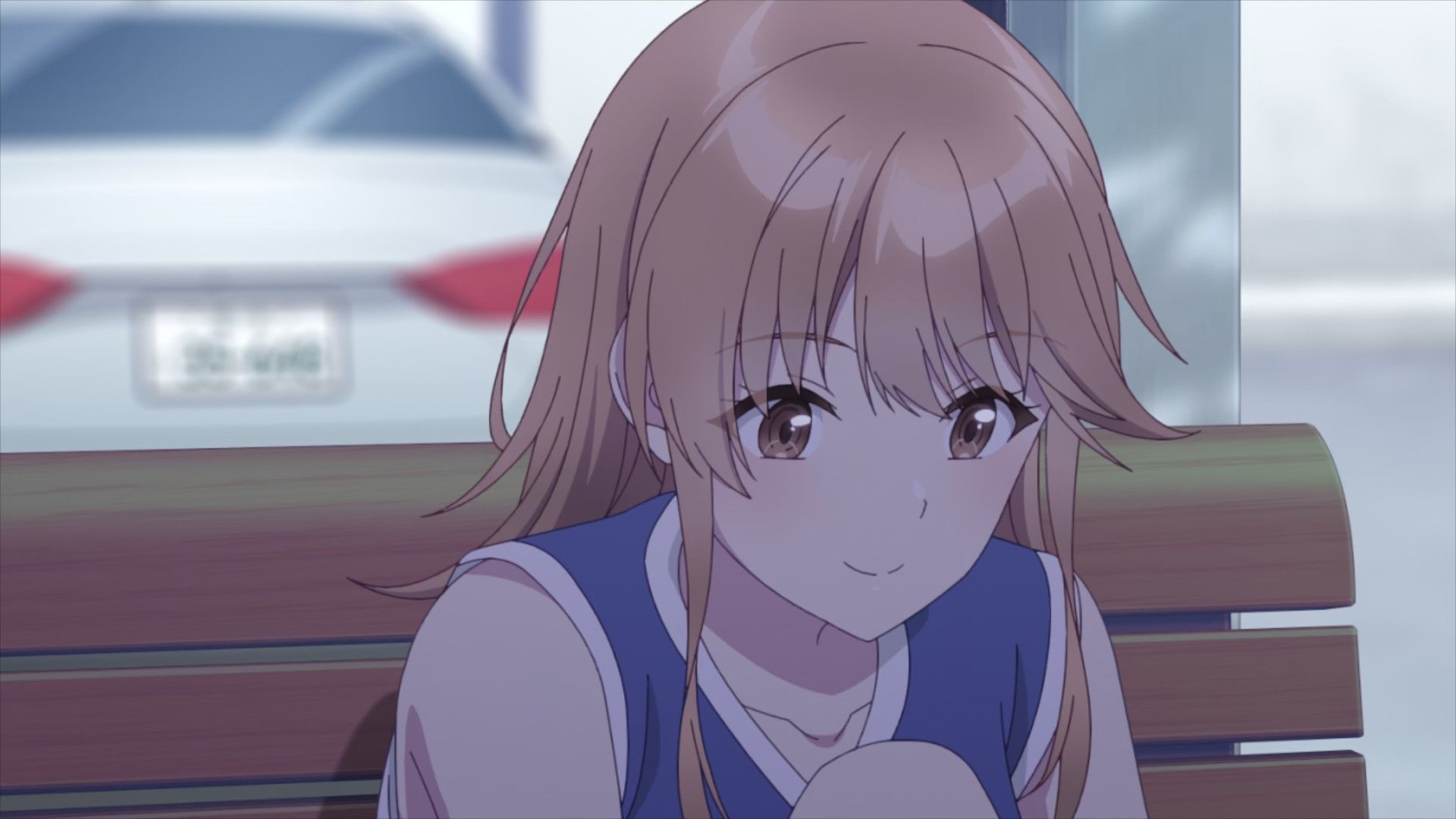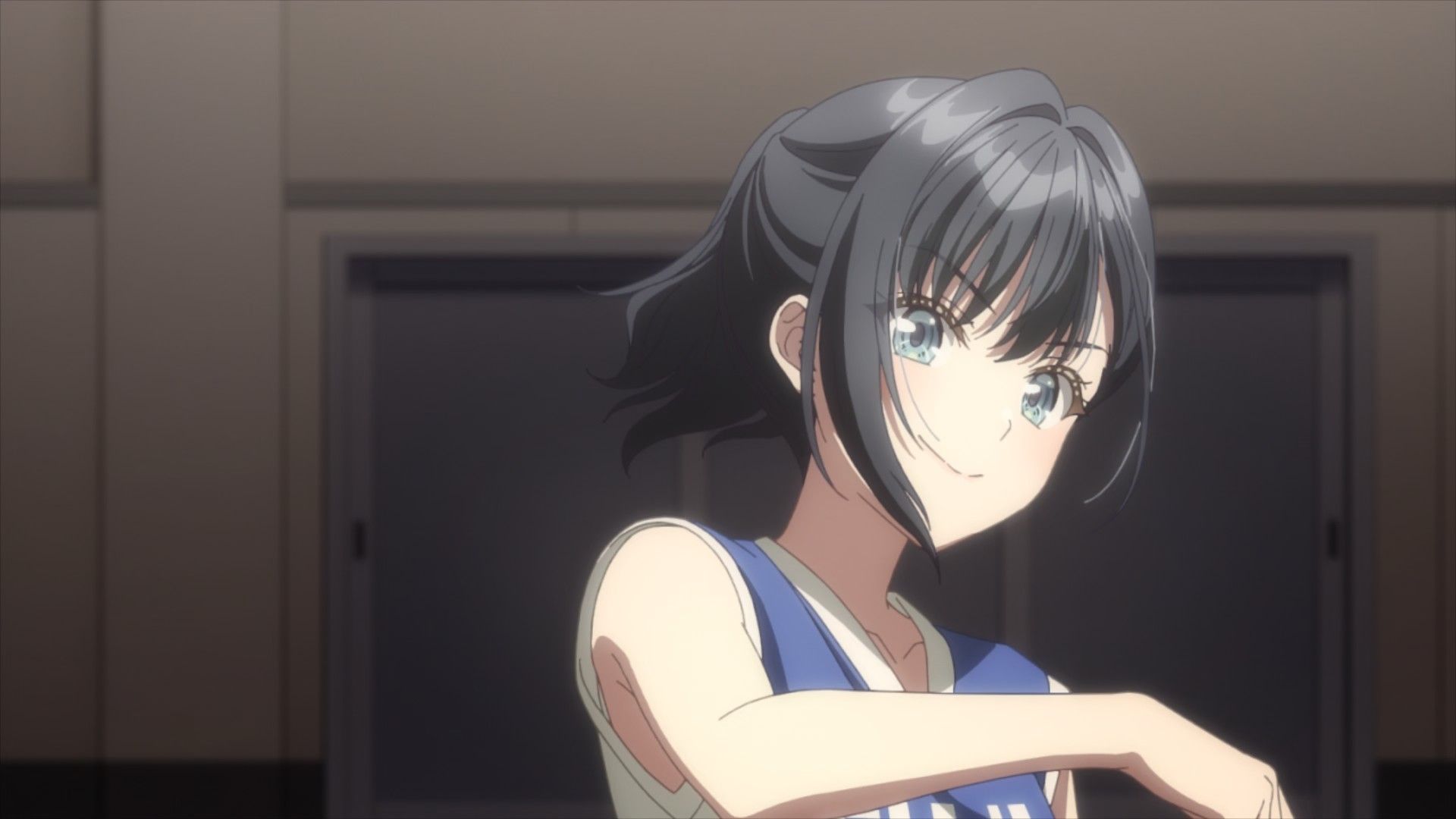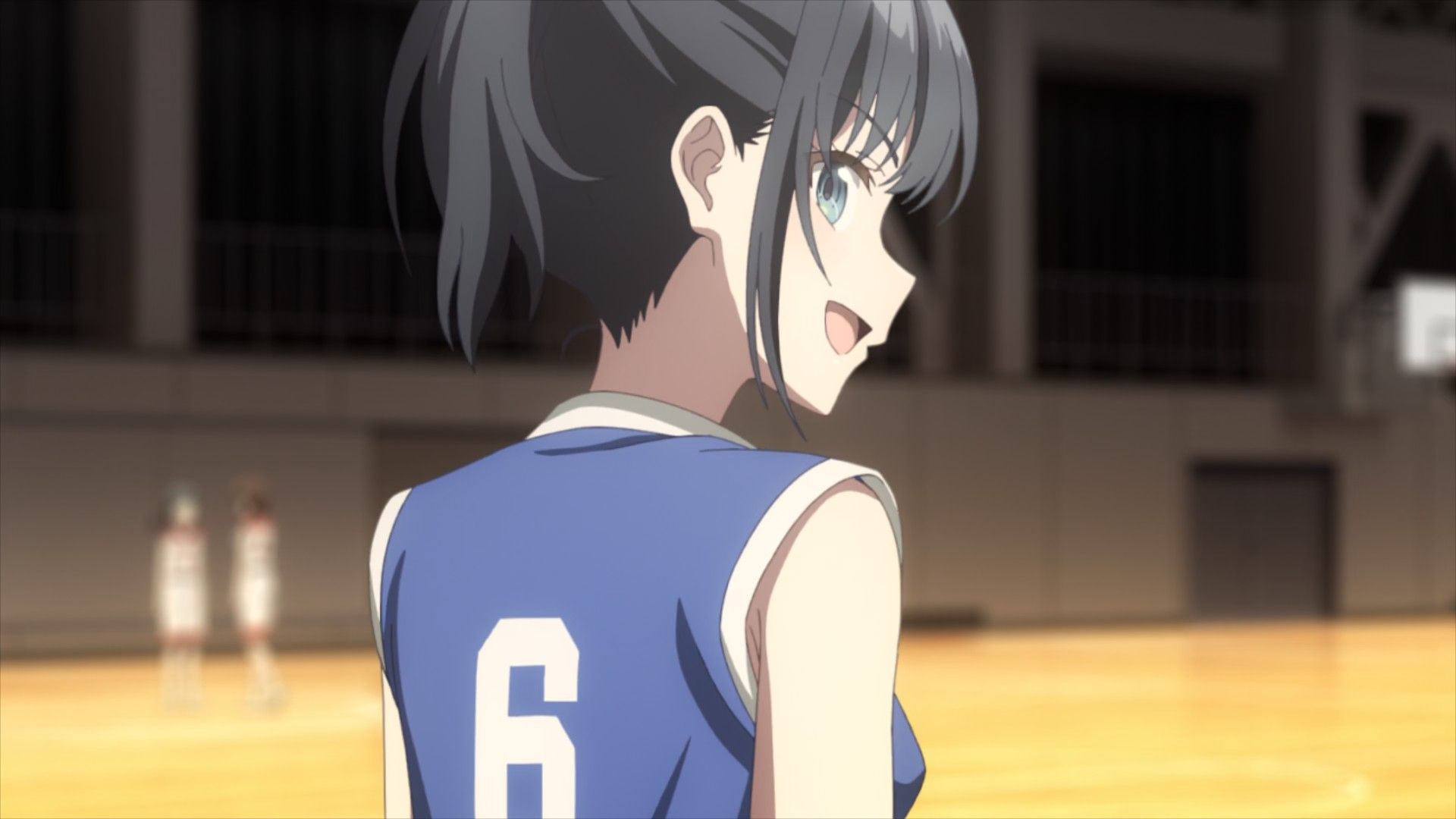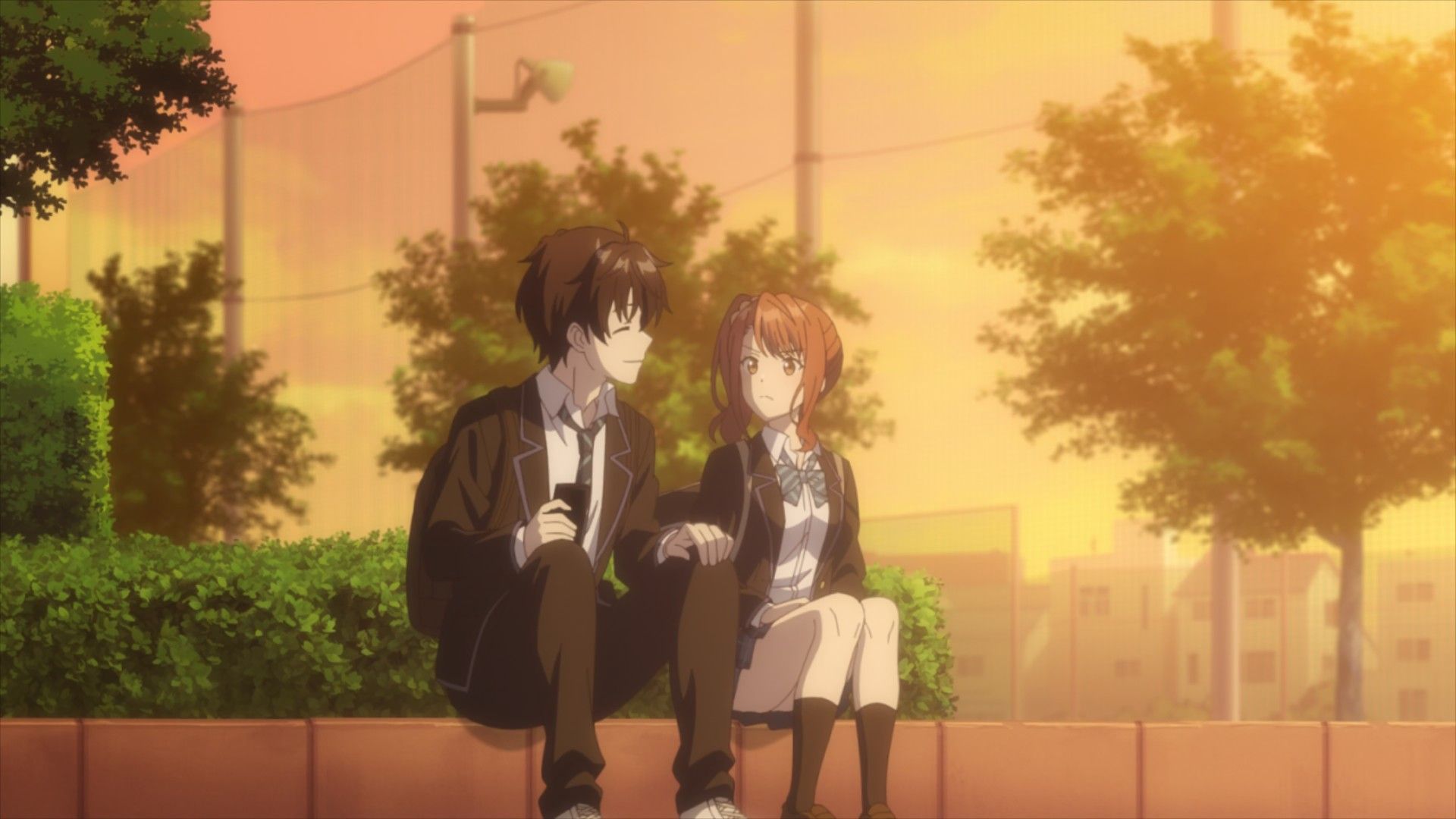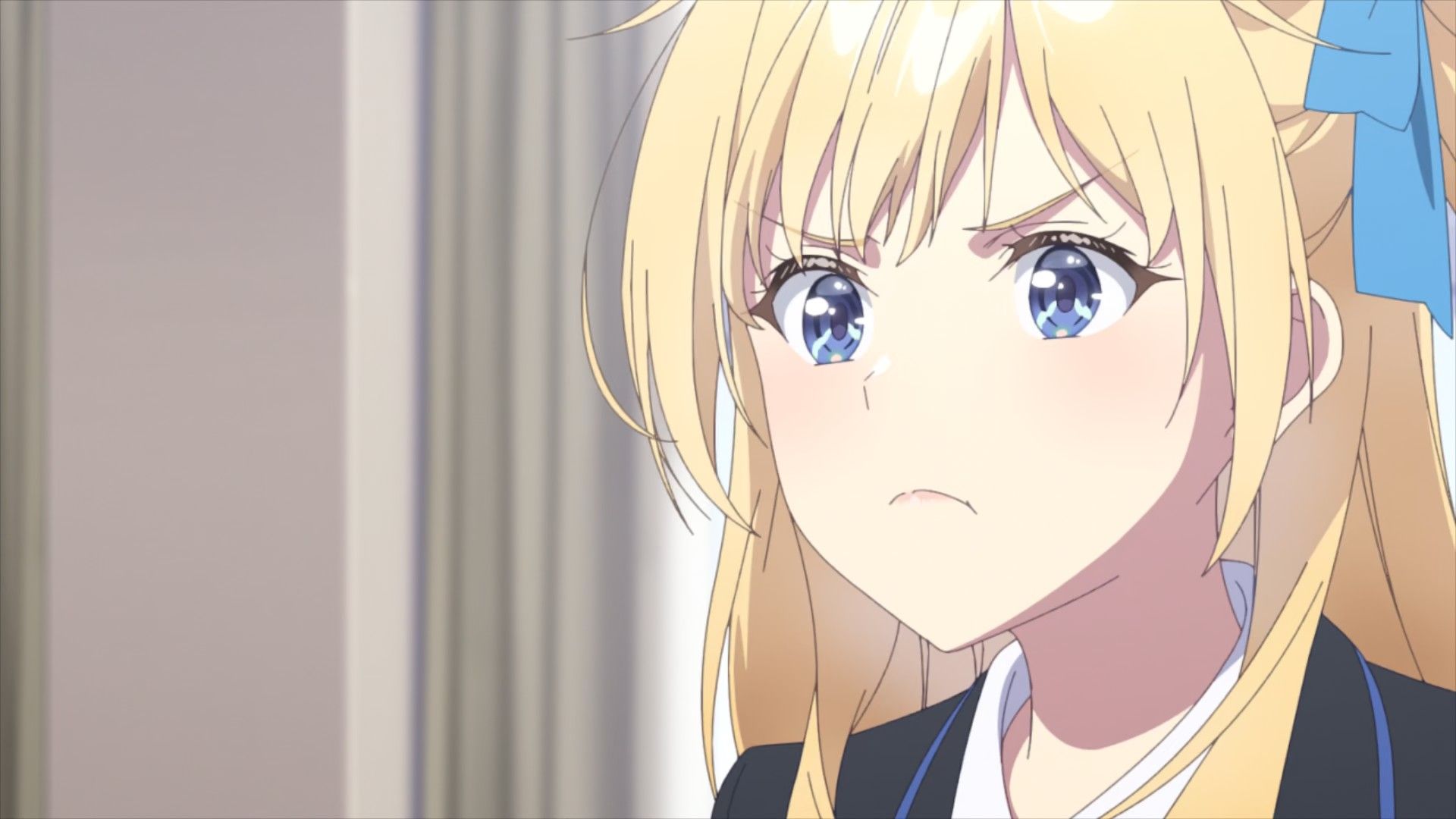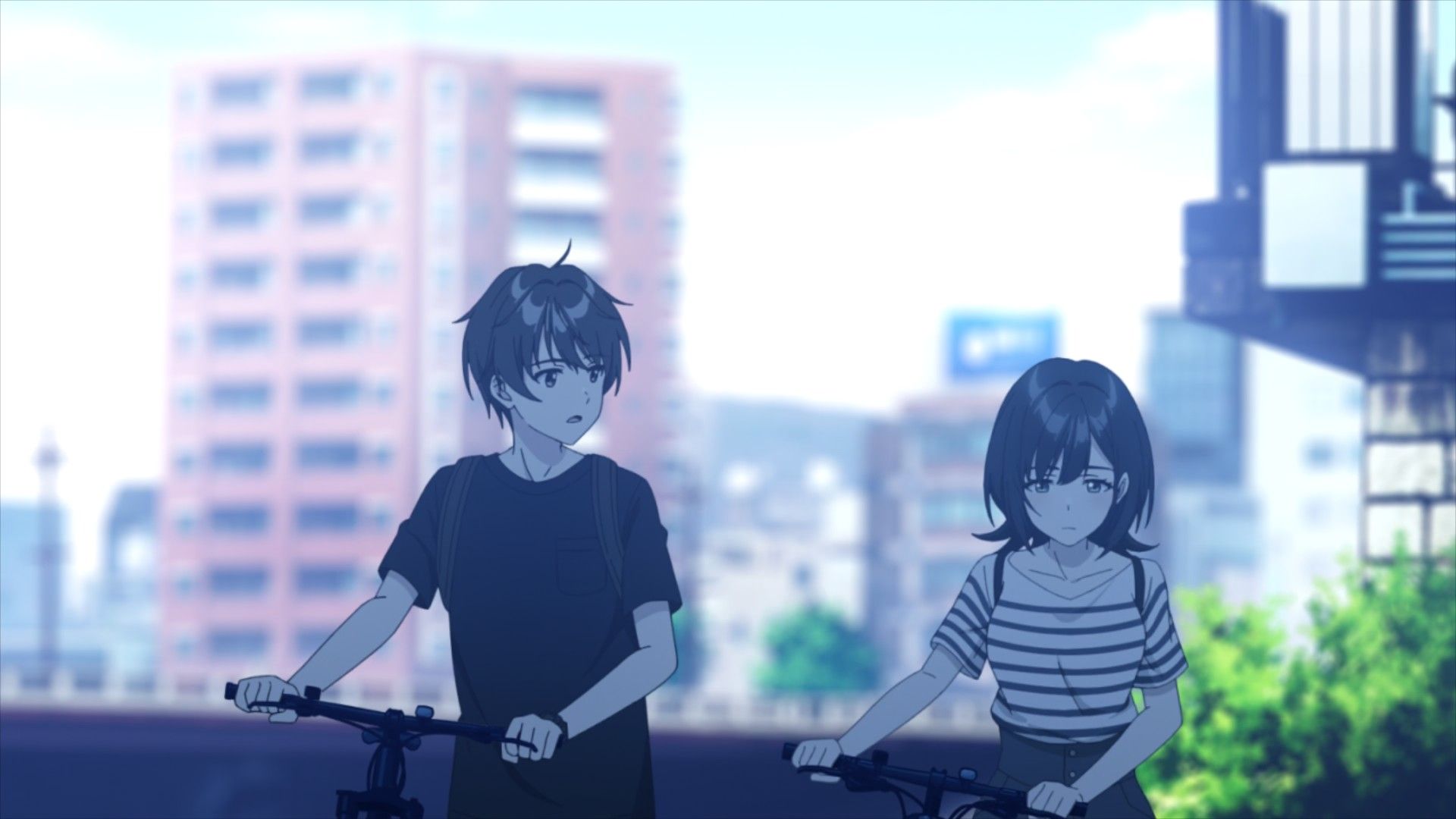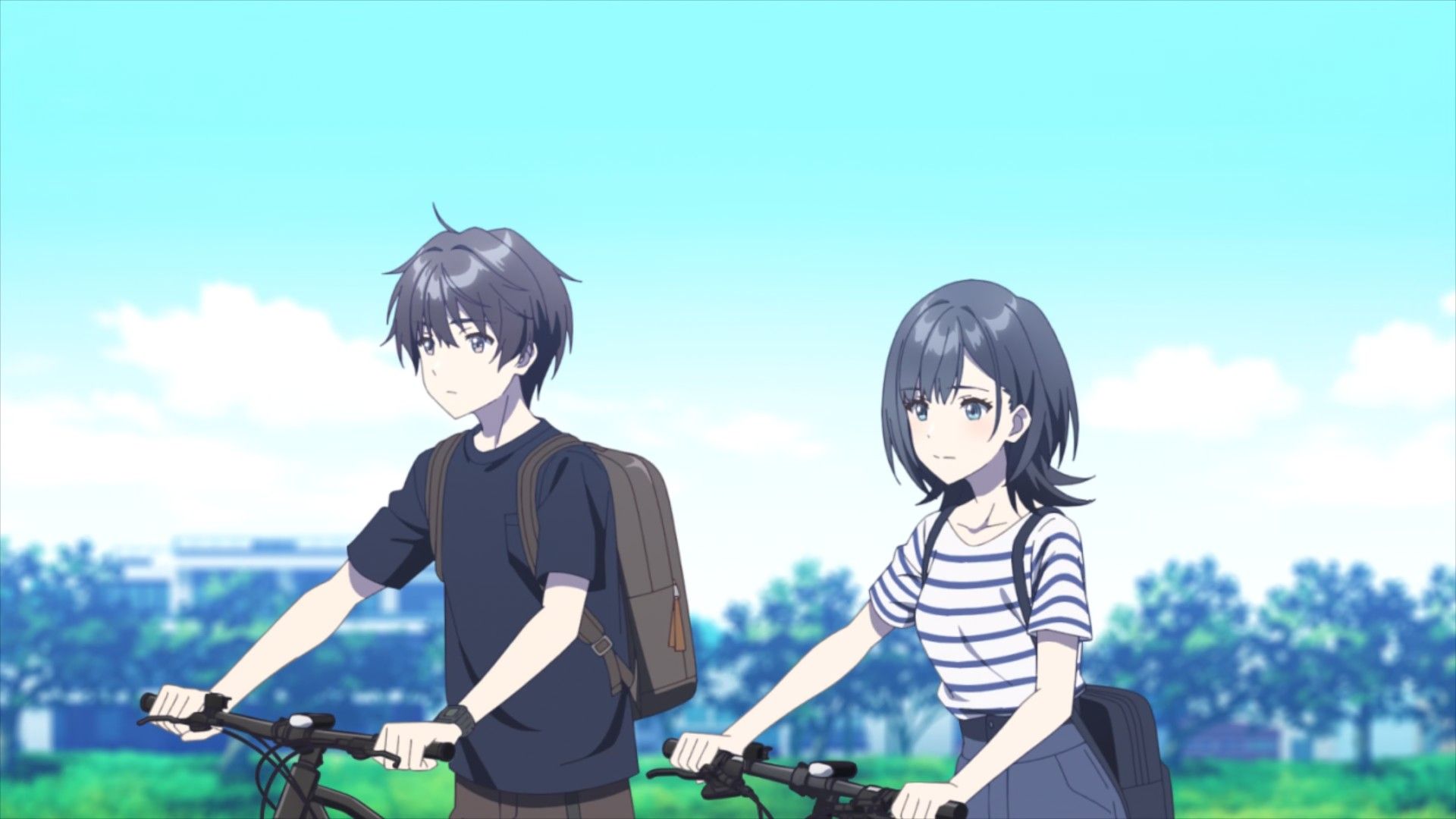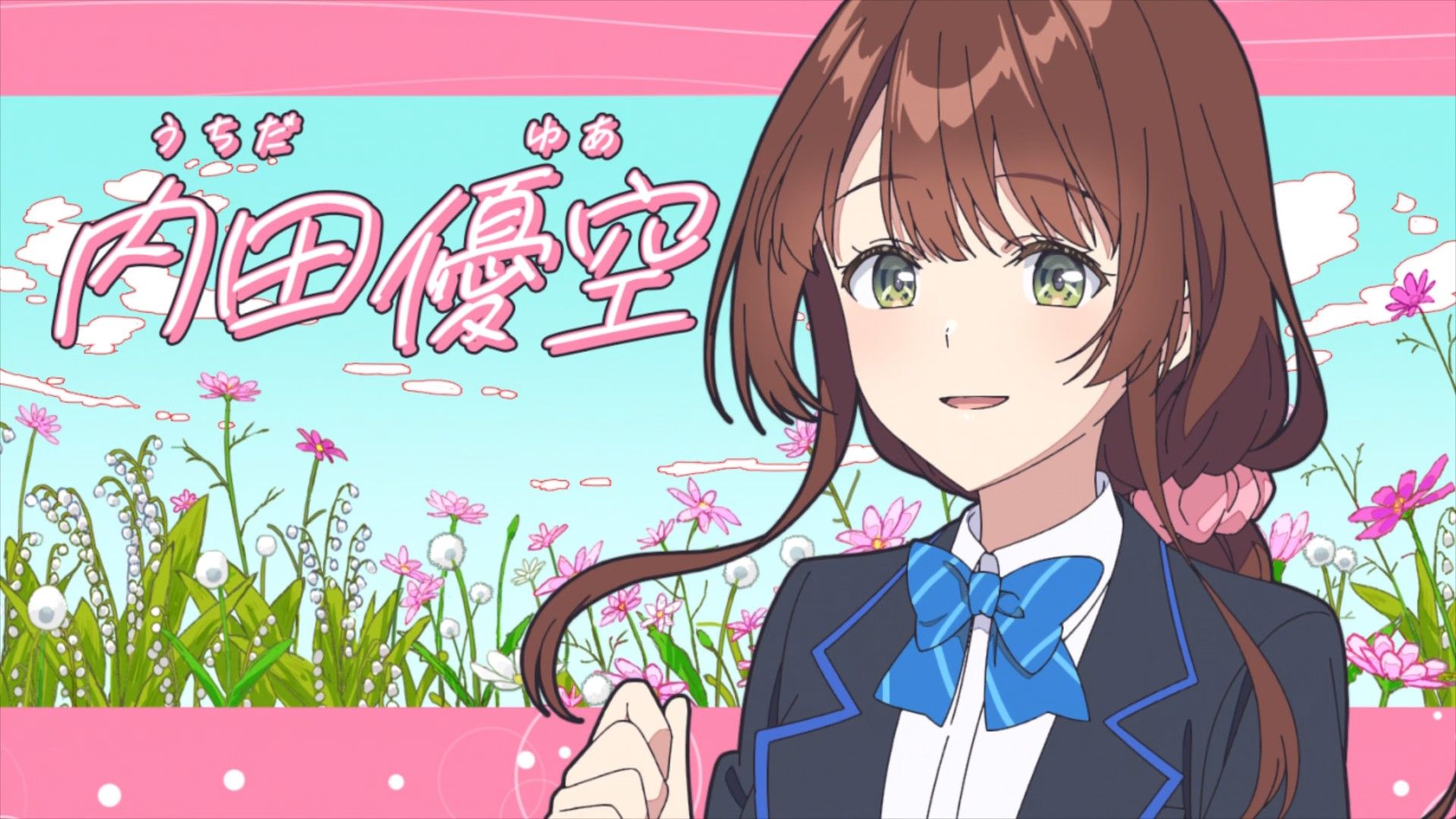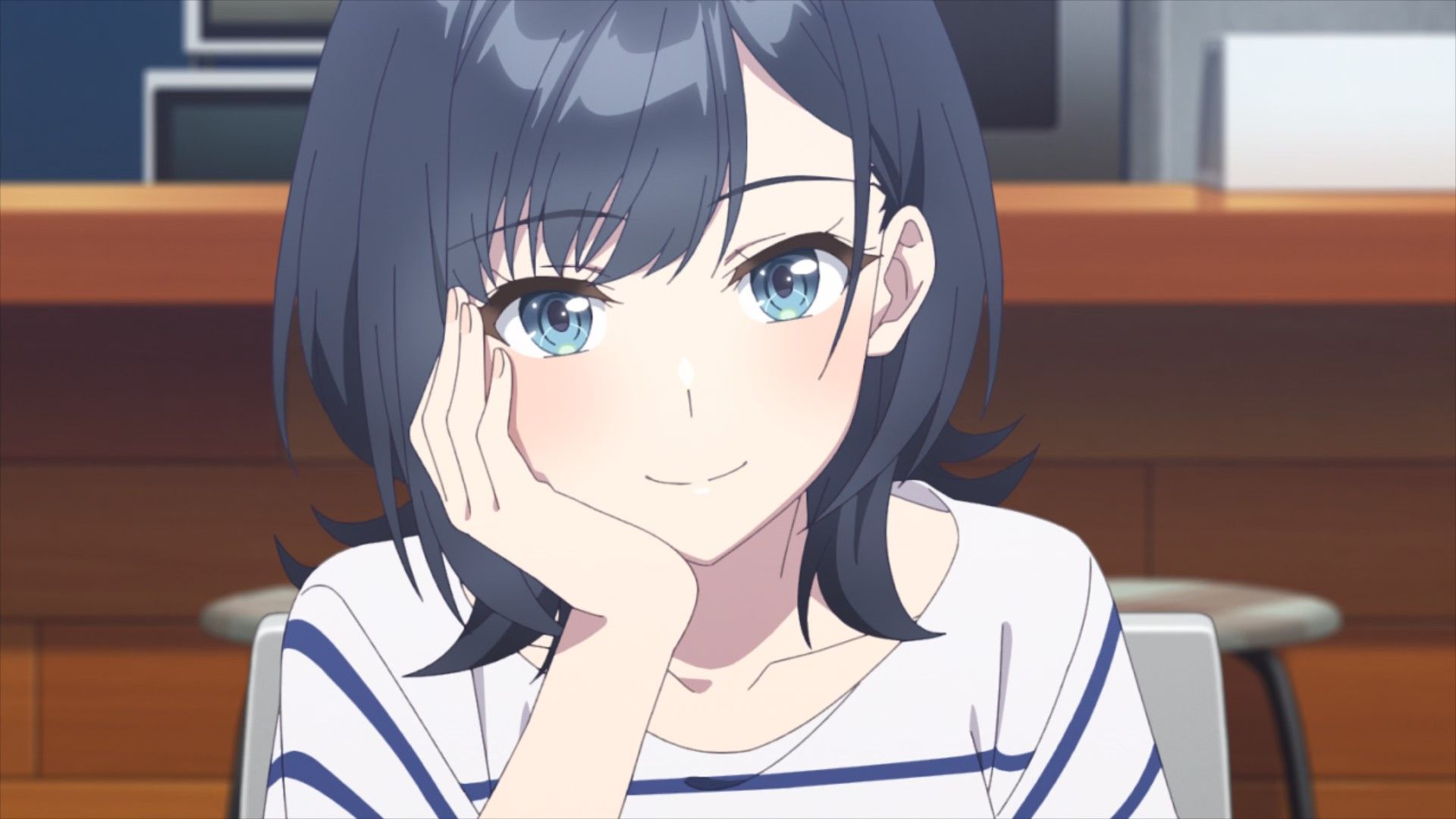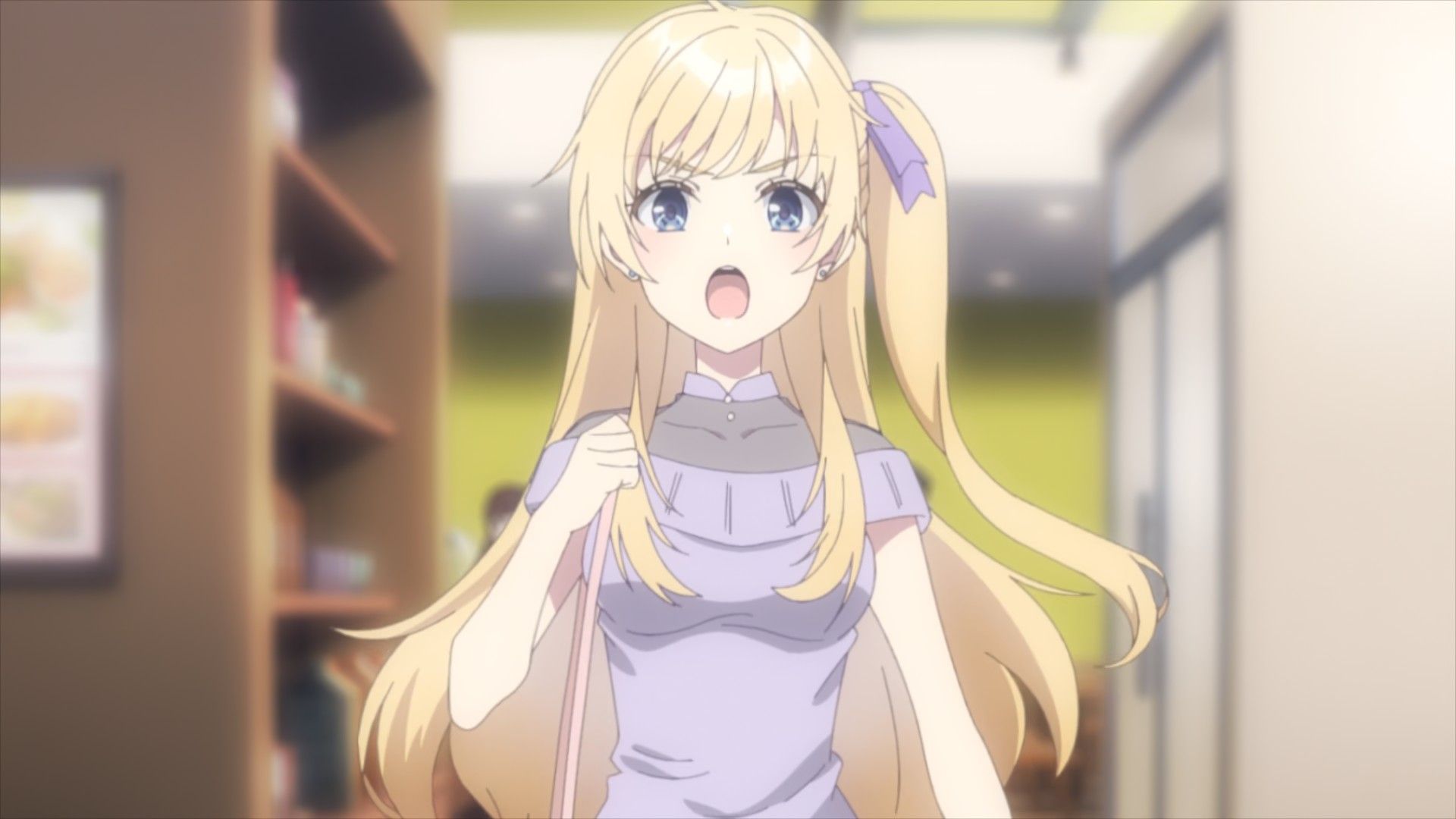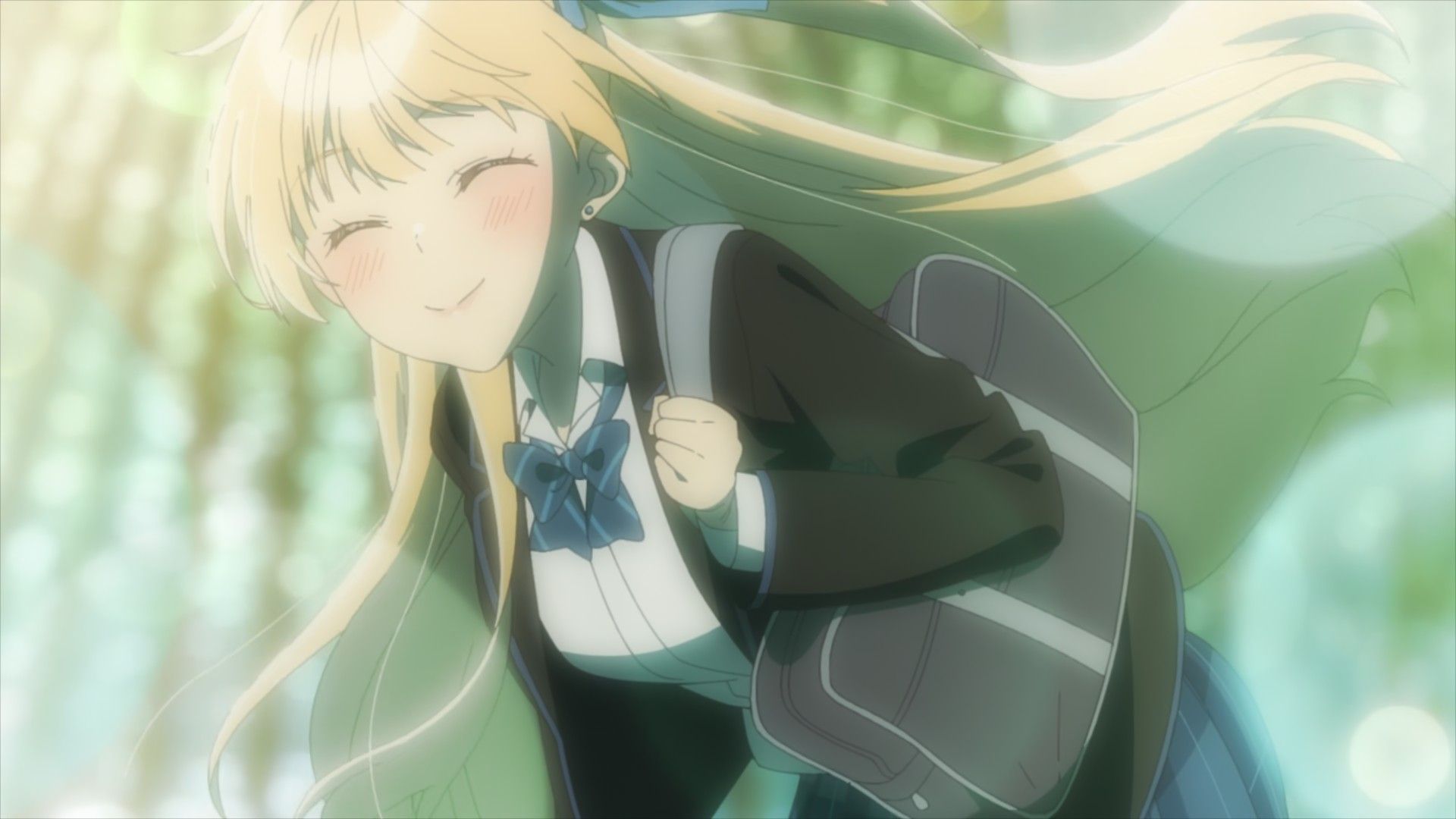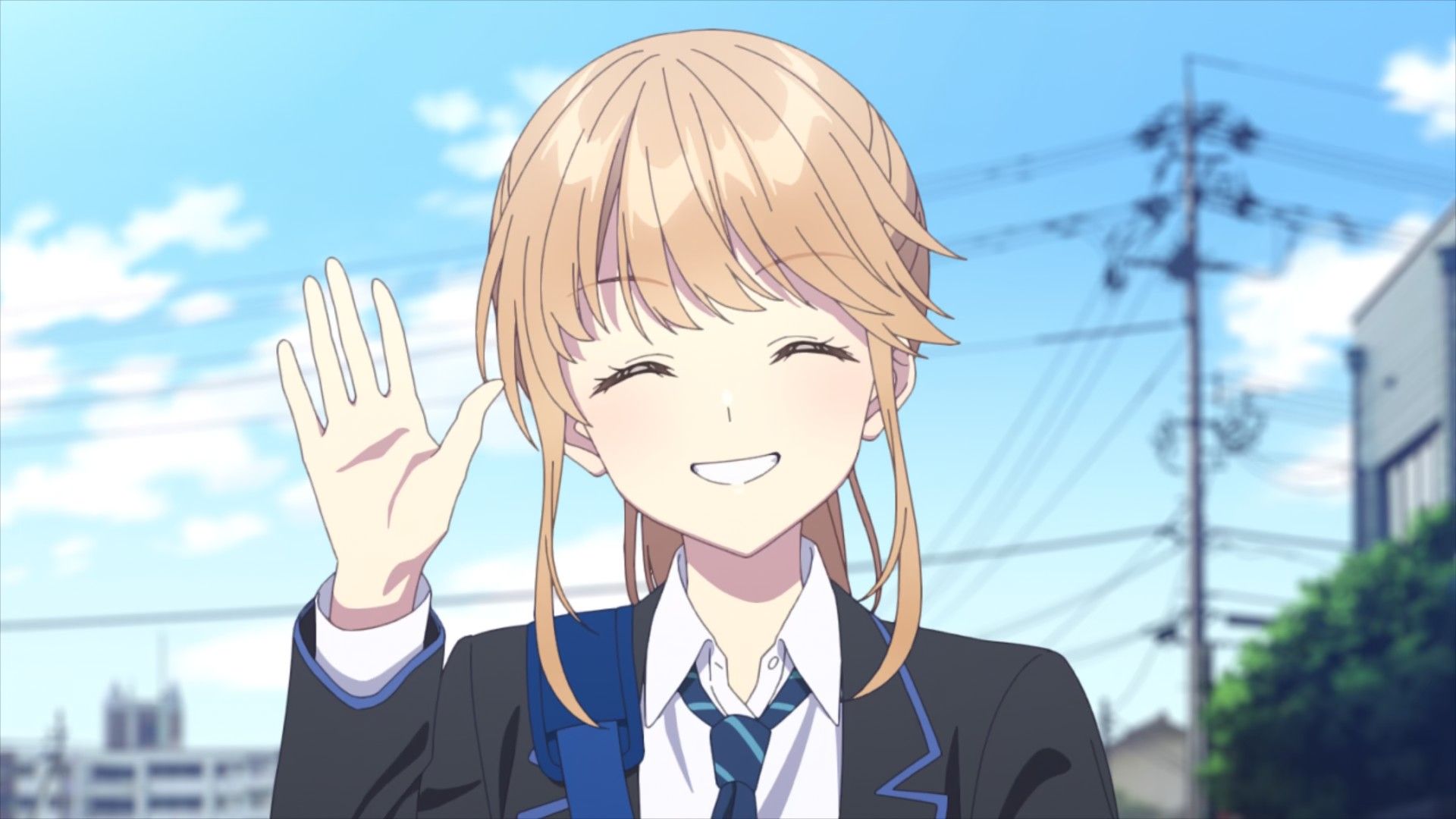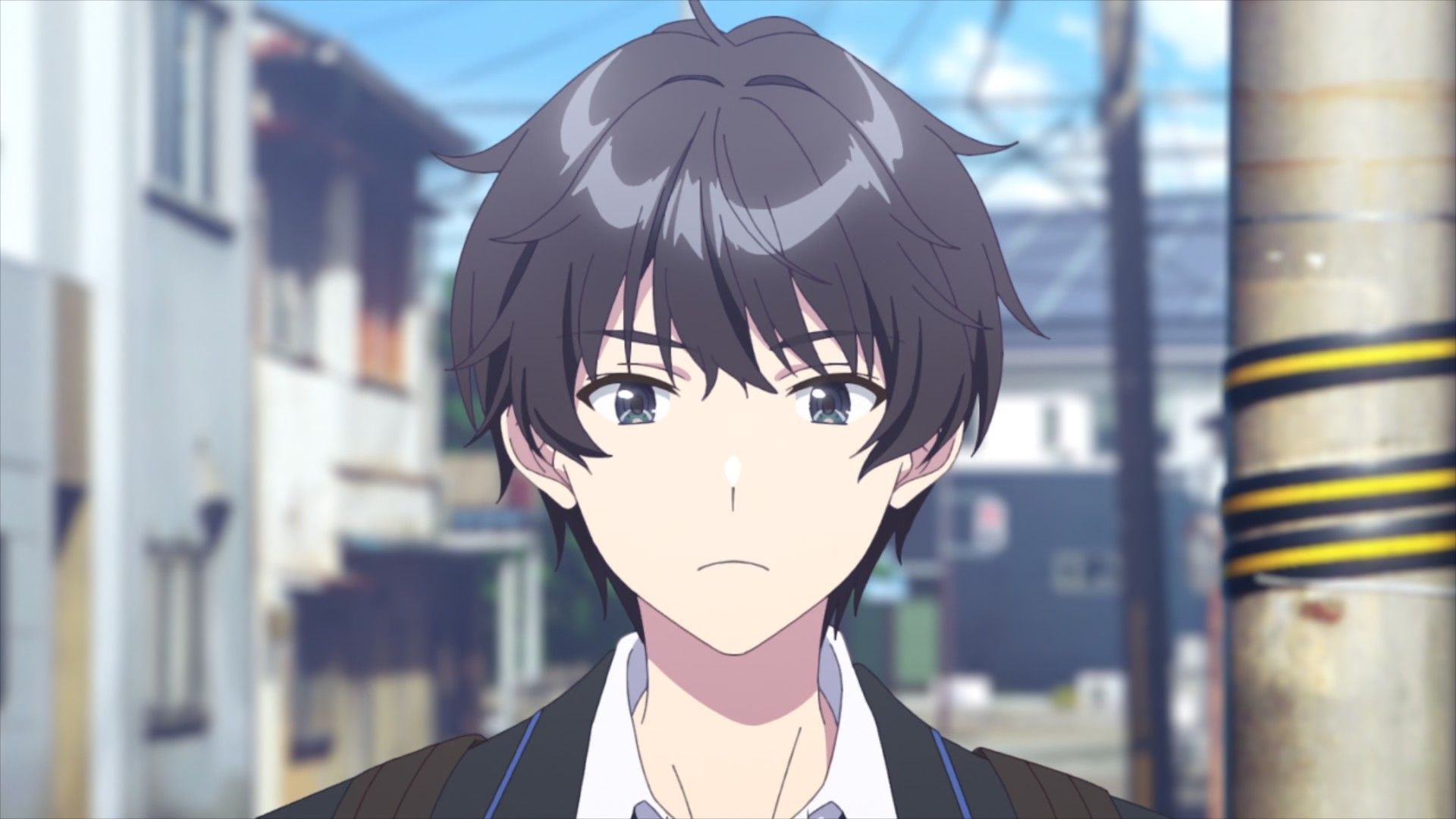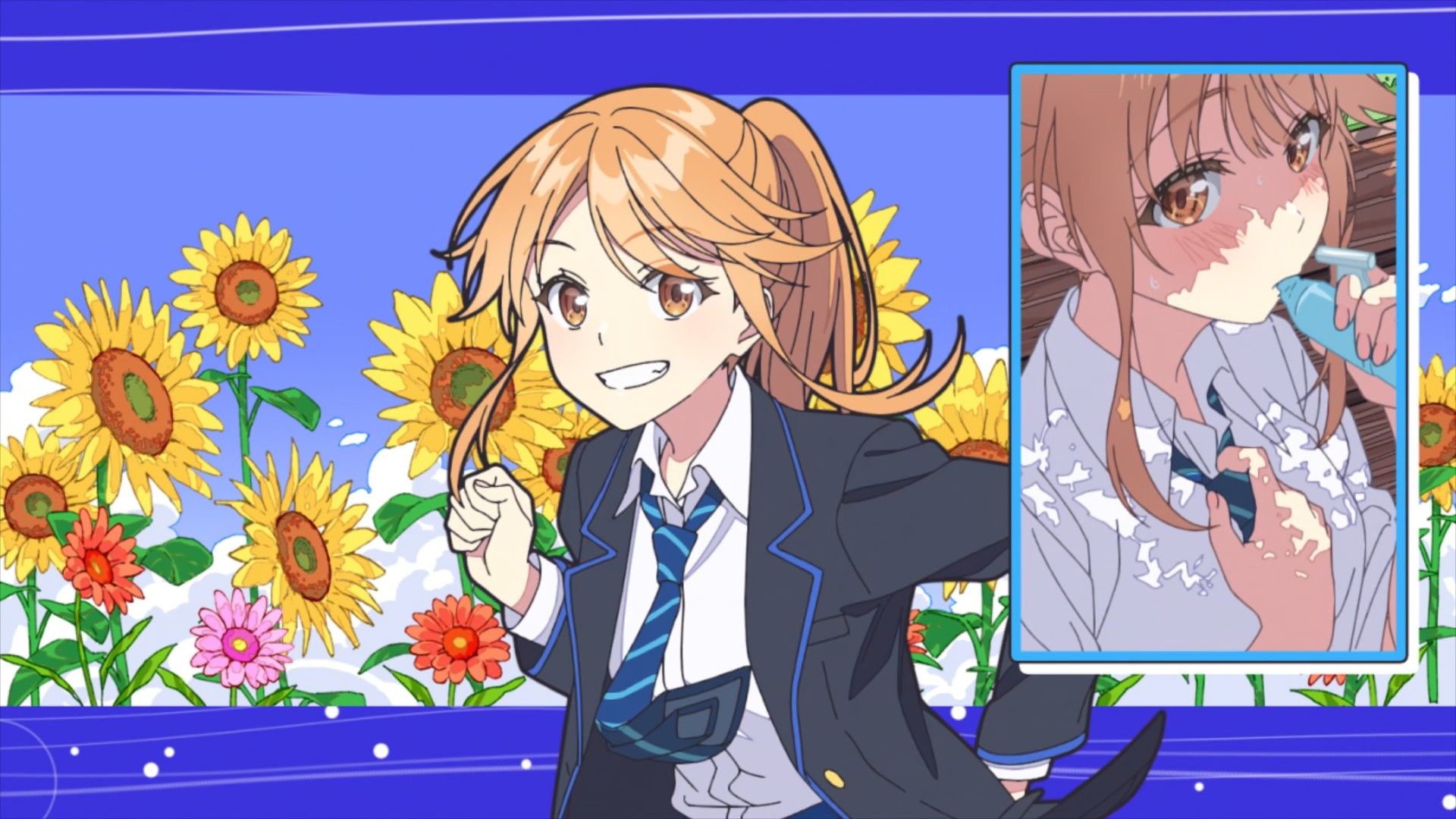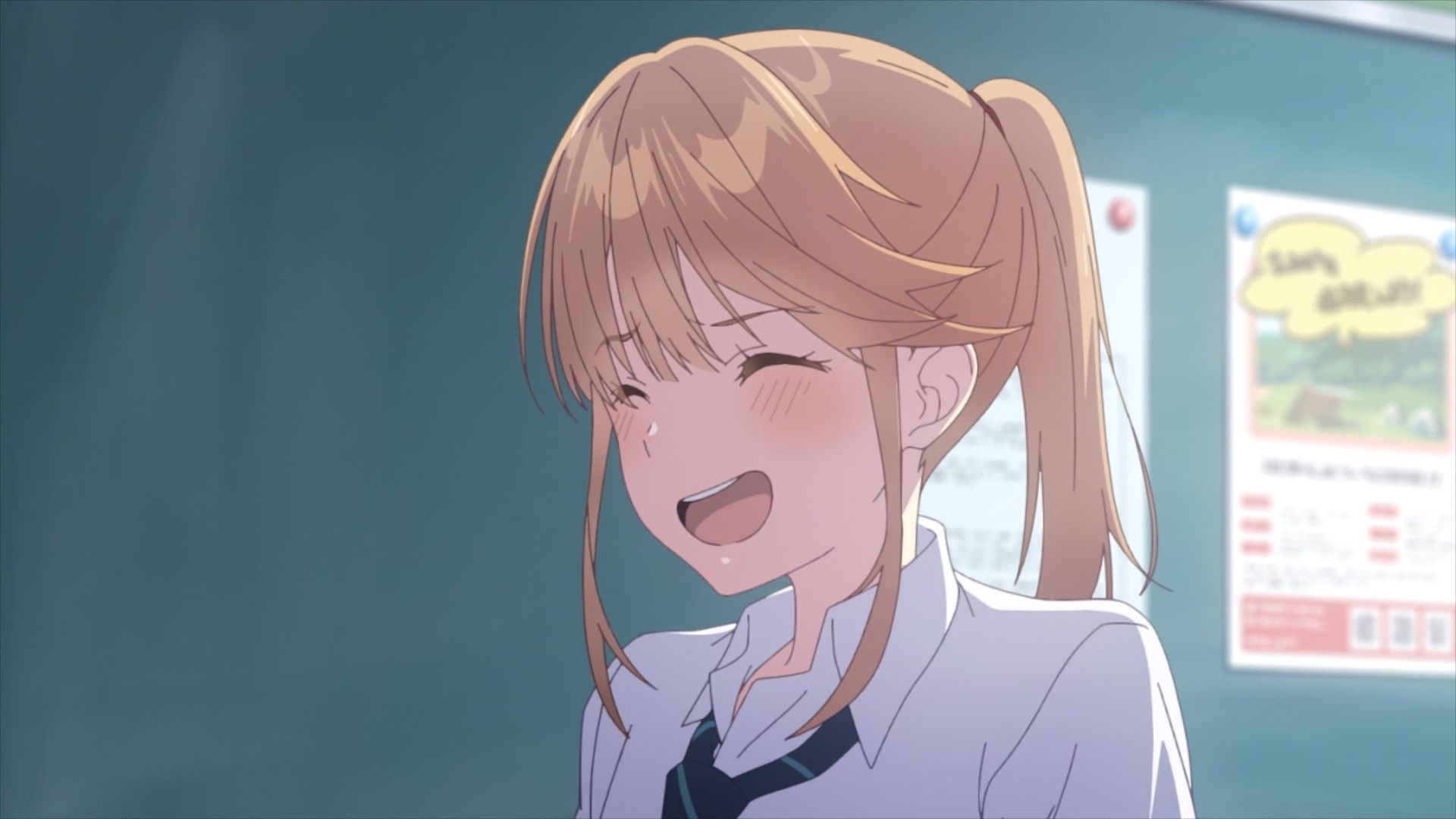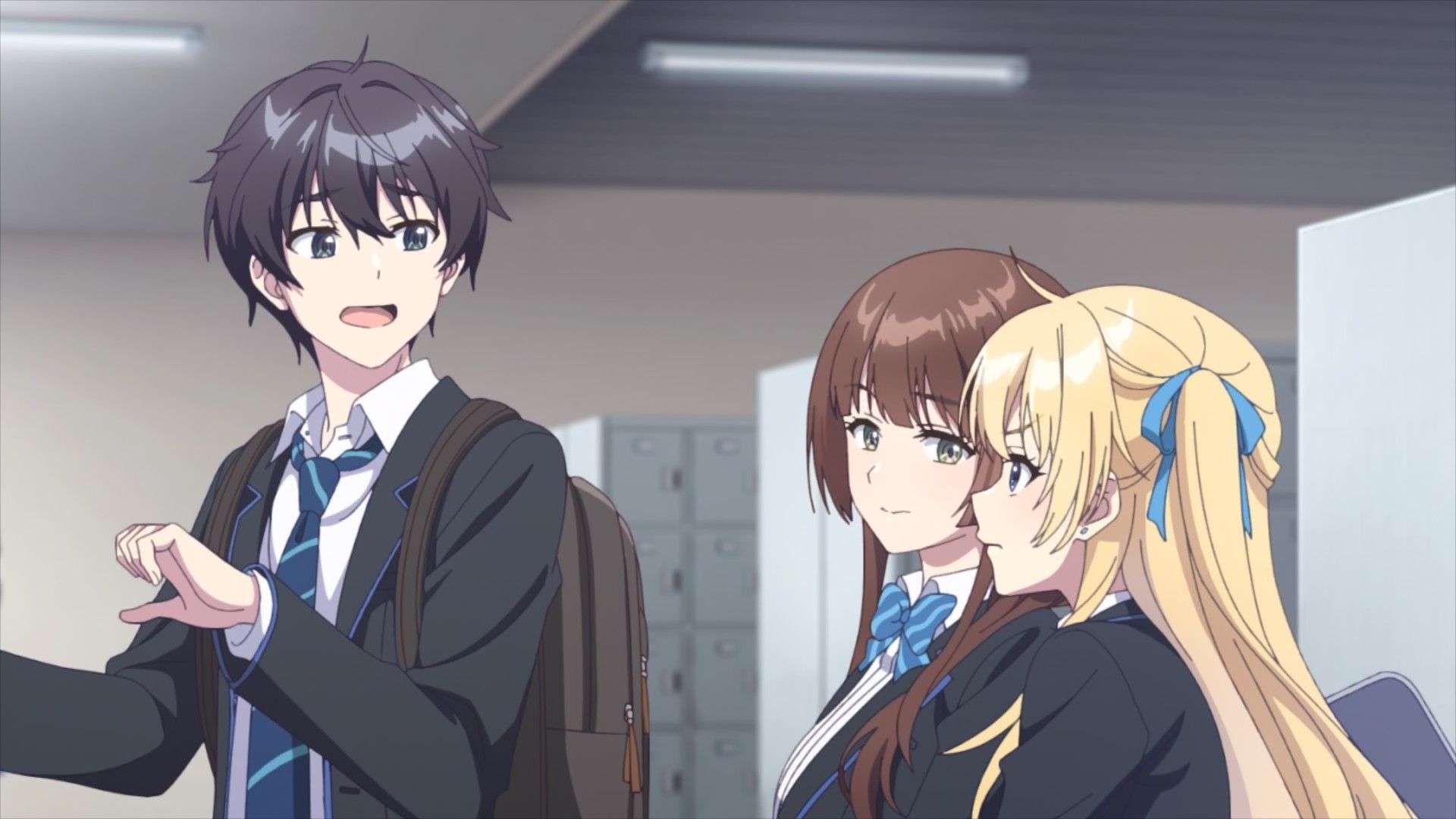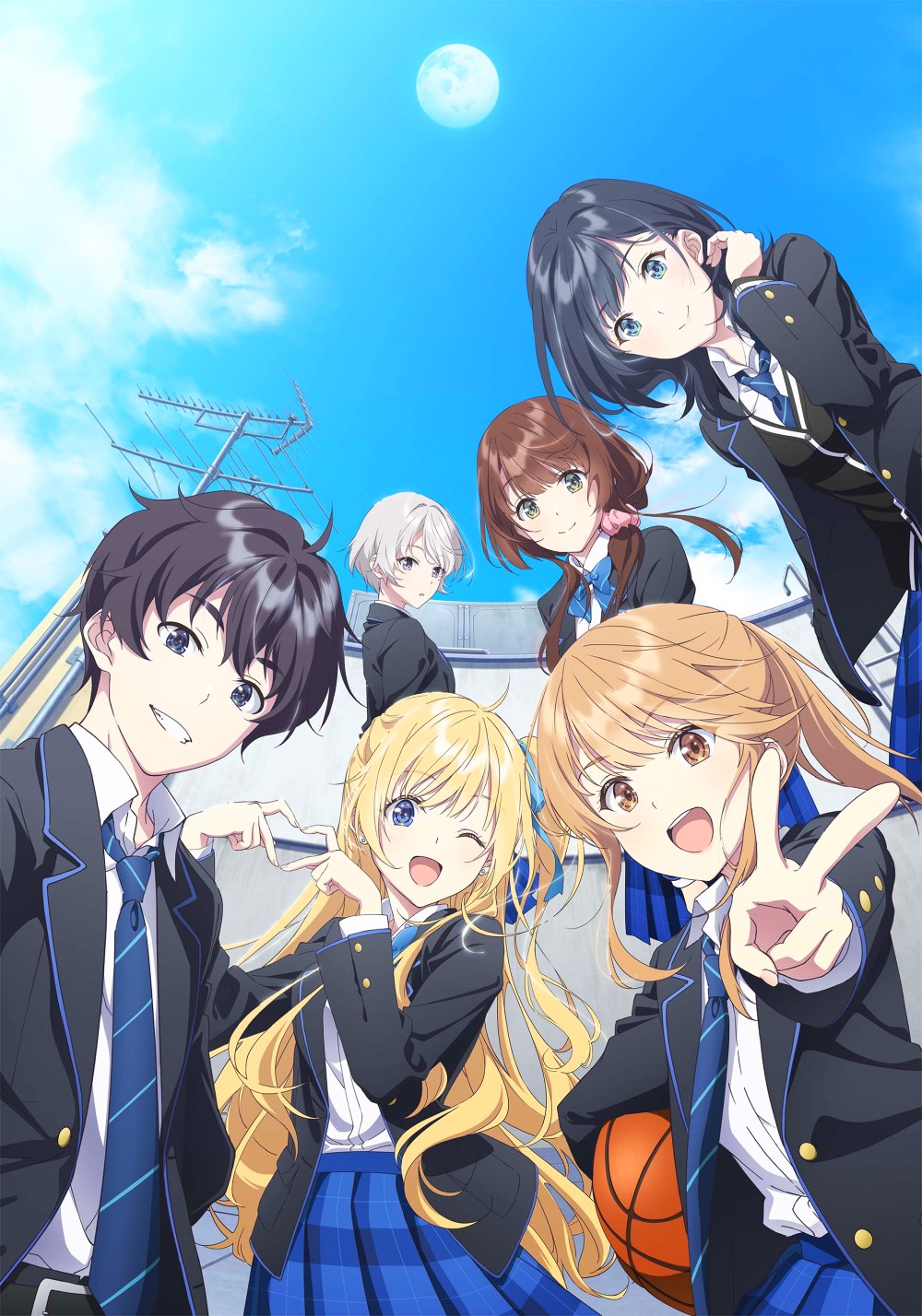
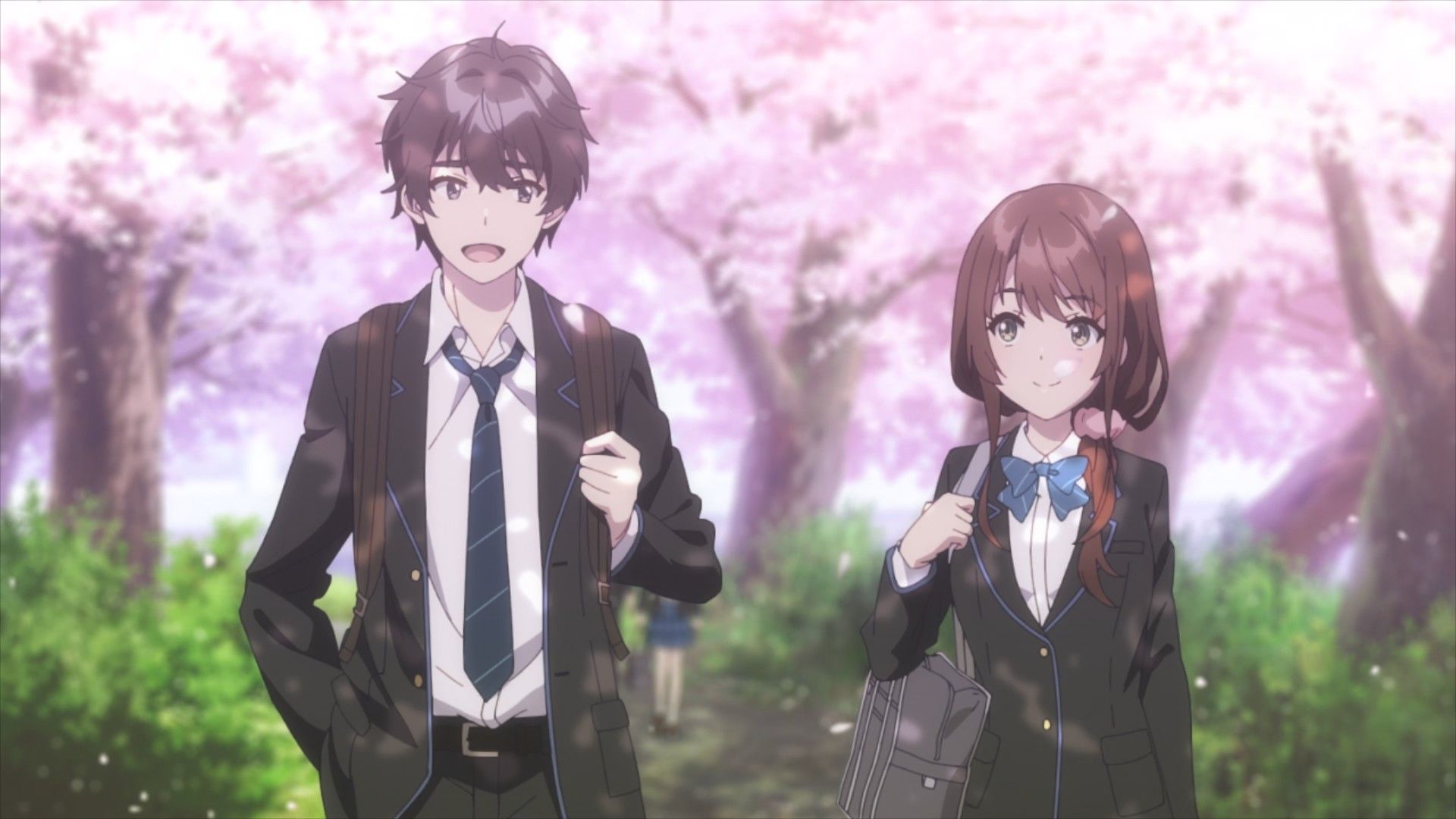
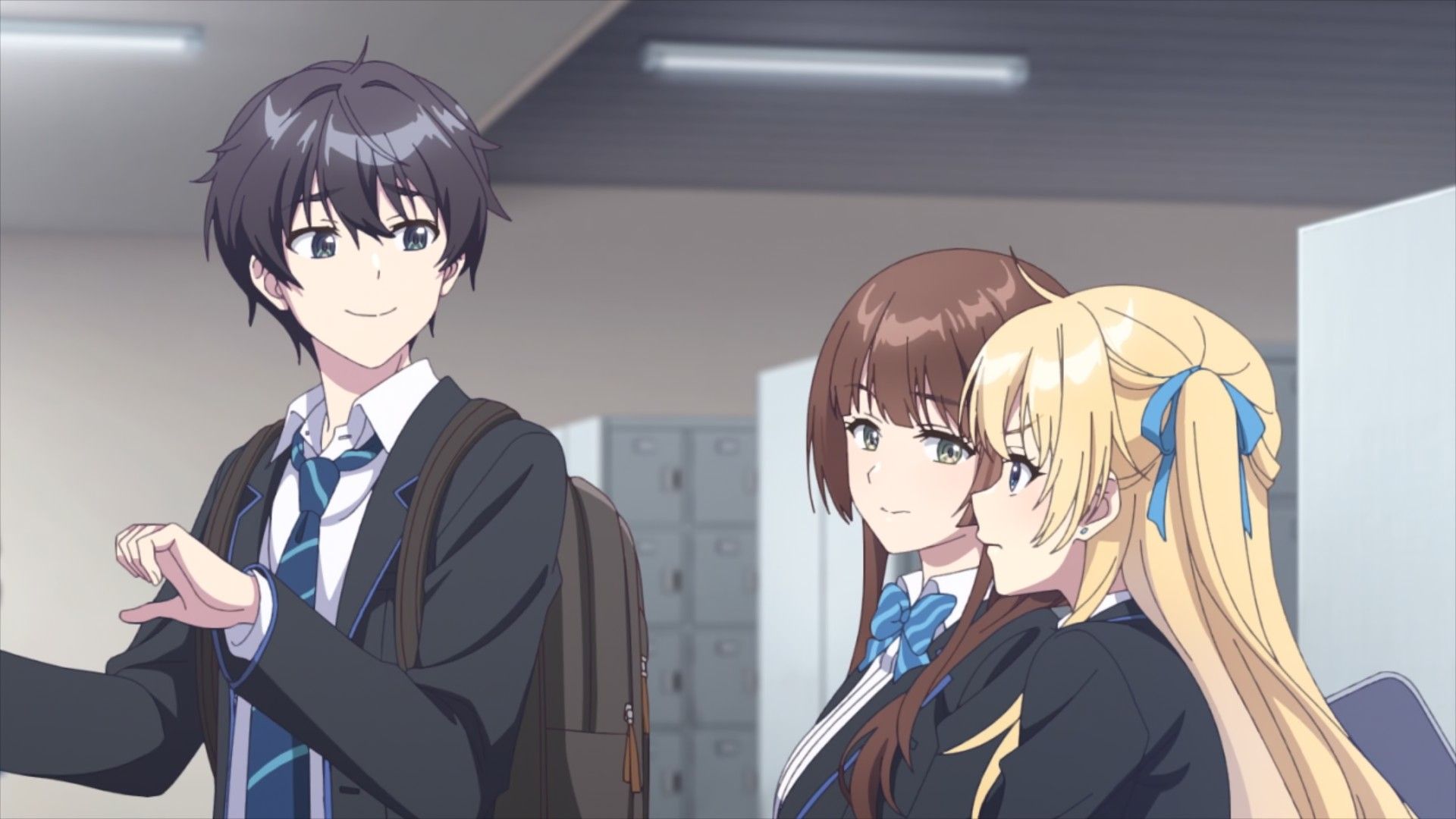
At the top of the high school hierarchy stands Chitose Saku—a guy who seems to have it all. Popular, athletic, and intelligent, he navigates school life wearing a carefully constructed persona of the perfect, approachable guy. He is surrounded by his elite inner circle: the radiant school idol Hiiragi Yuuko, the sharp Uchida Yua, and the calculating Nanase Yuzuki. Many envy him, while others despise him, labeling him a womanizer.
This seemingly flawless daily life is put to the test when his laid-back teacher assigns him the task of bringing Yamazaki Kenta back to school—a withdrawn classmate who hasn’t shown up for months.
Barricaded in his room, Kenta communicates only through insults, seeing Saku as a “shitty womanizer” and his female friends as a “harem of sluts.” Saku’s usual charm and conversational skills prove useless against Yamazaki’s deep-seated resentment toward the hated “popular clique.” When initial attempts to reach him through mutual acquaintances fail, Saku is forced to rethink his methods.
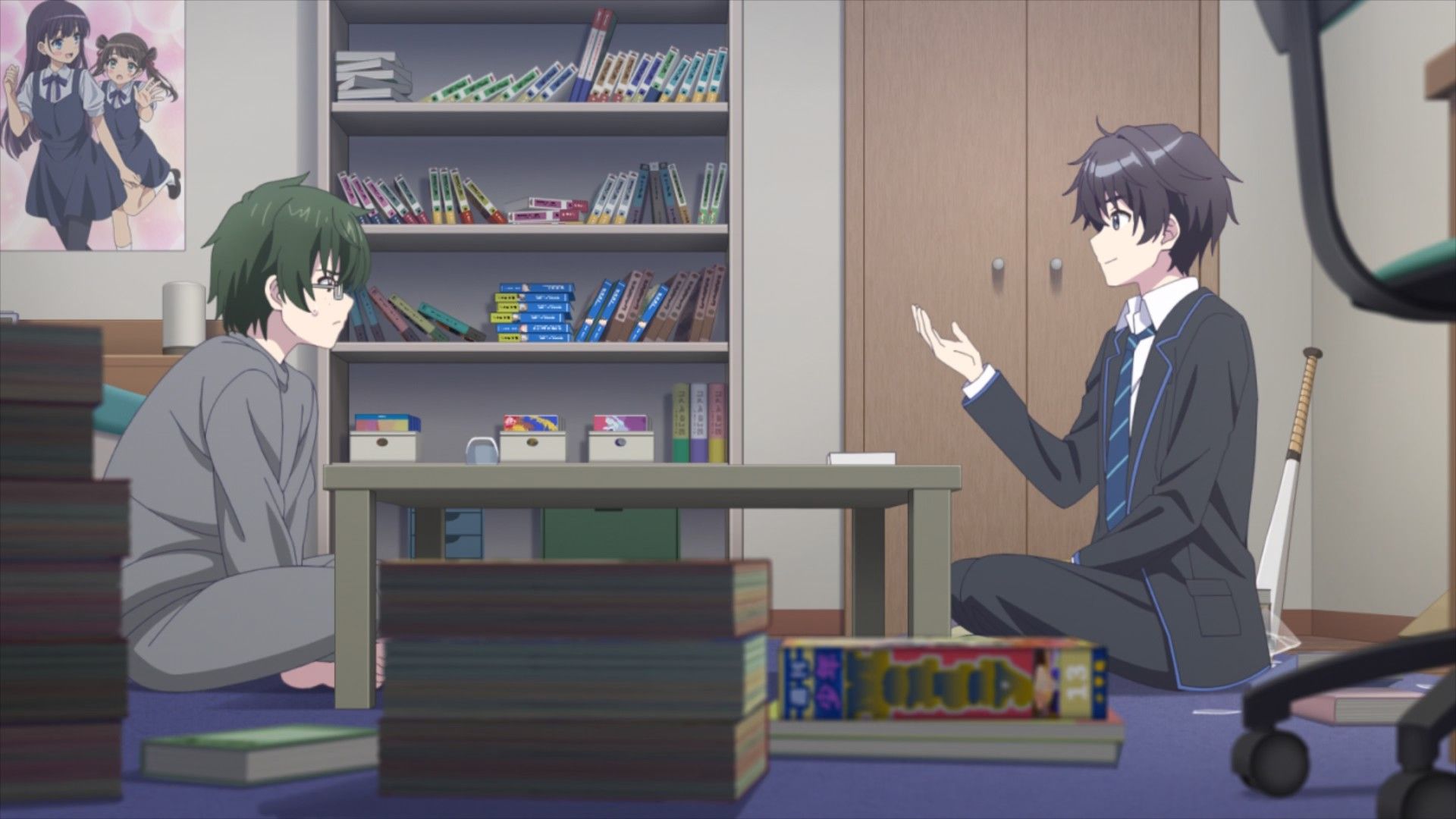
Saku realizes that polite conversation isn’t enough for someone so disconnected. He ditches the social games in favor of a much more direct approach, shattering the physical and metaphorical barriers between their worlds.
Oprawa audiowizualna Chitose-kun wa Ramune Bin no Naka (2025)
Video
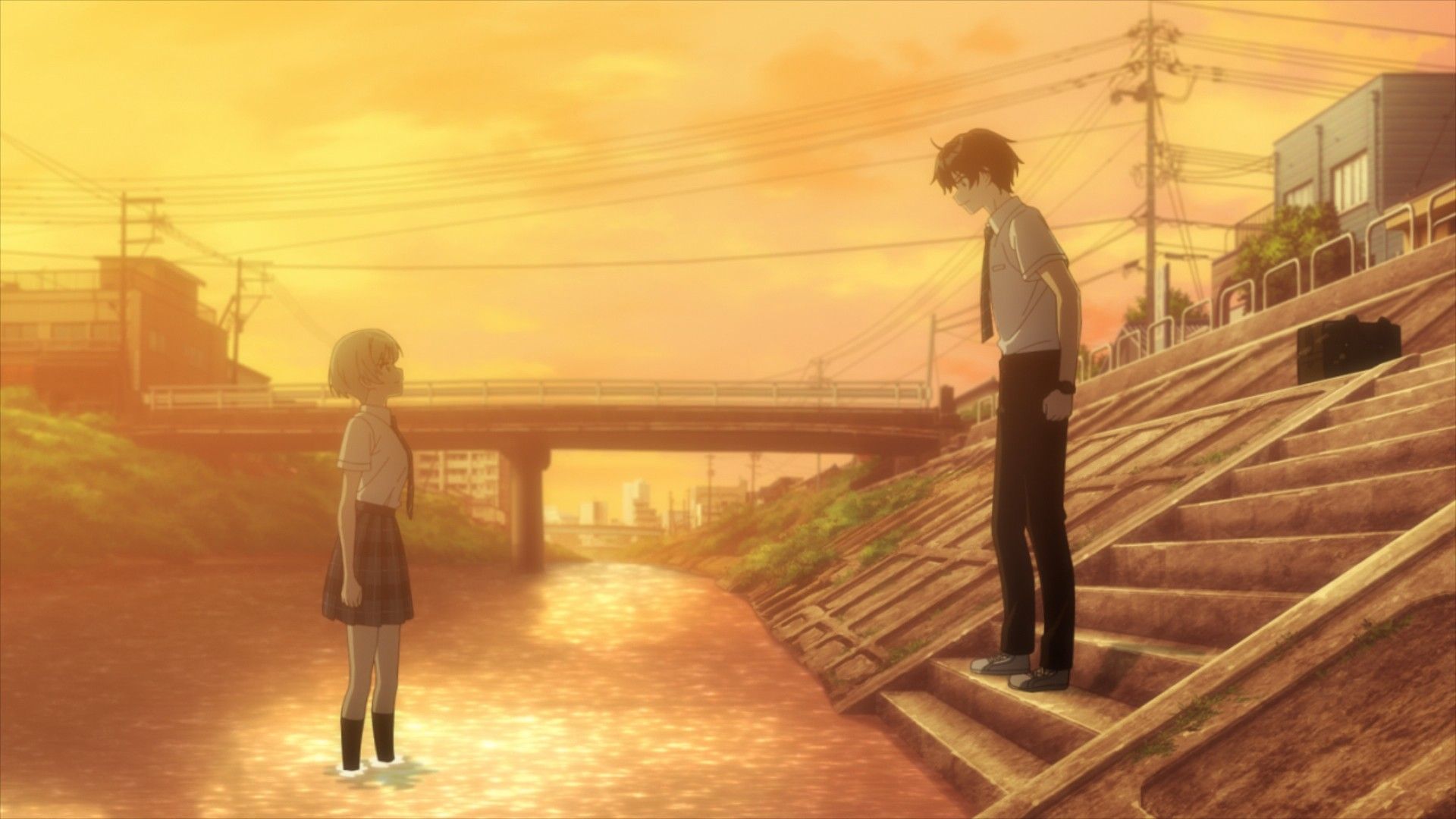
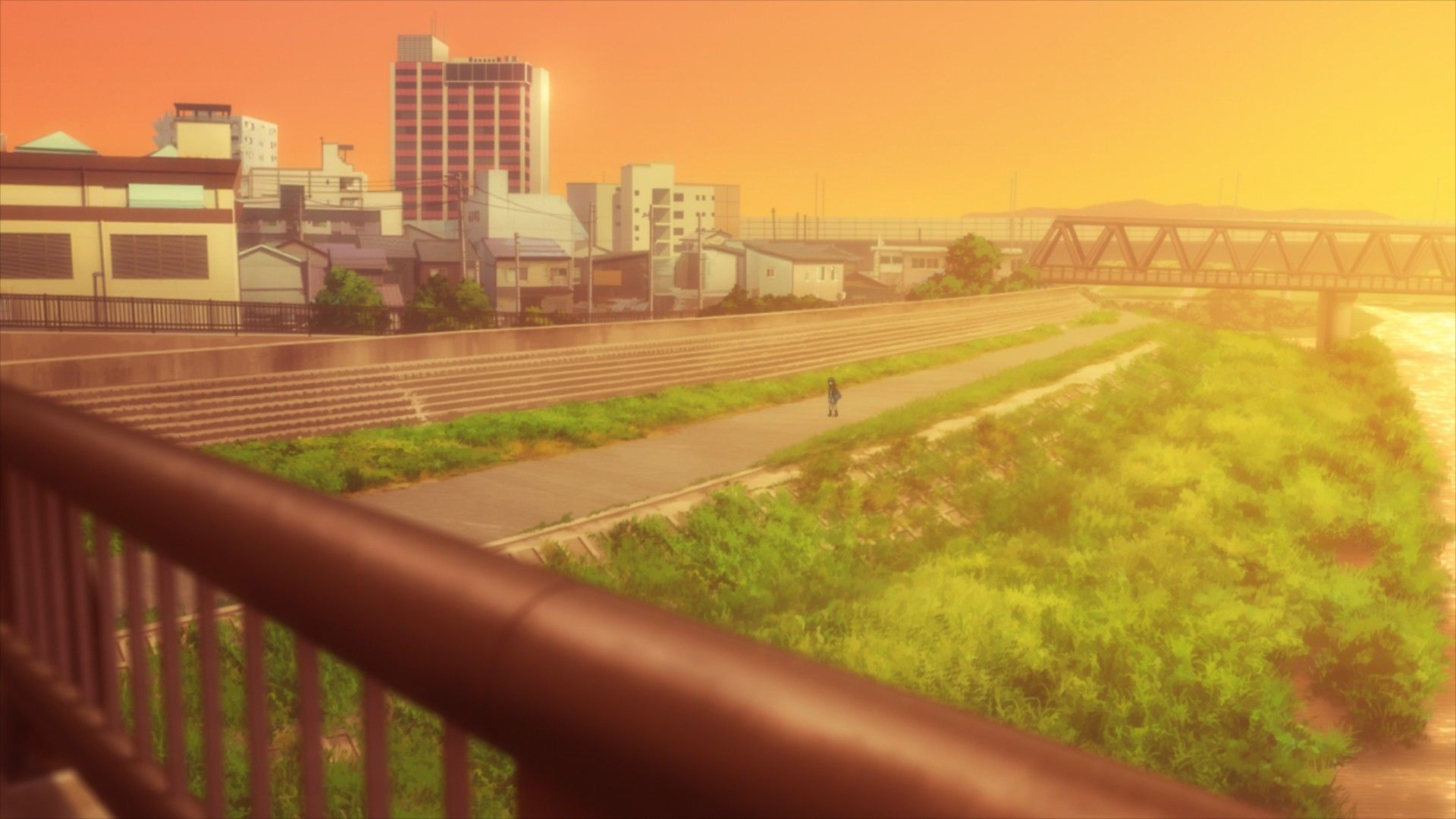
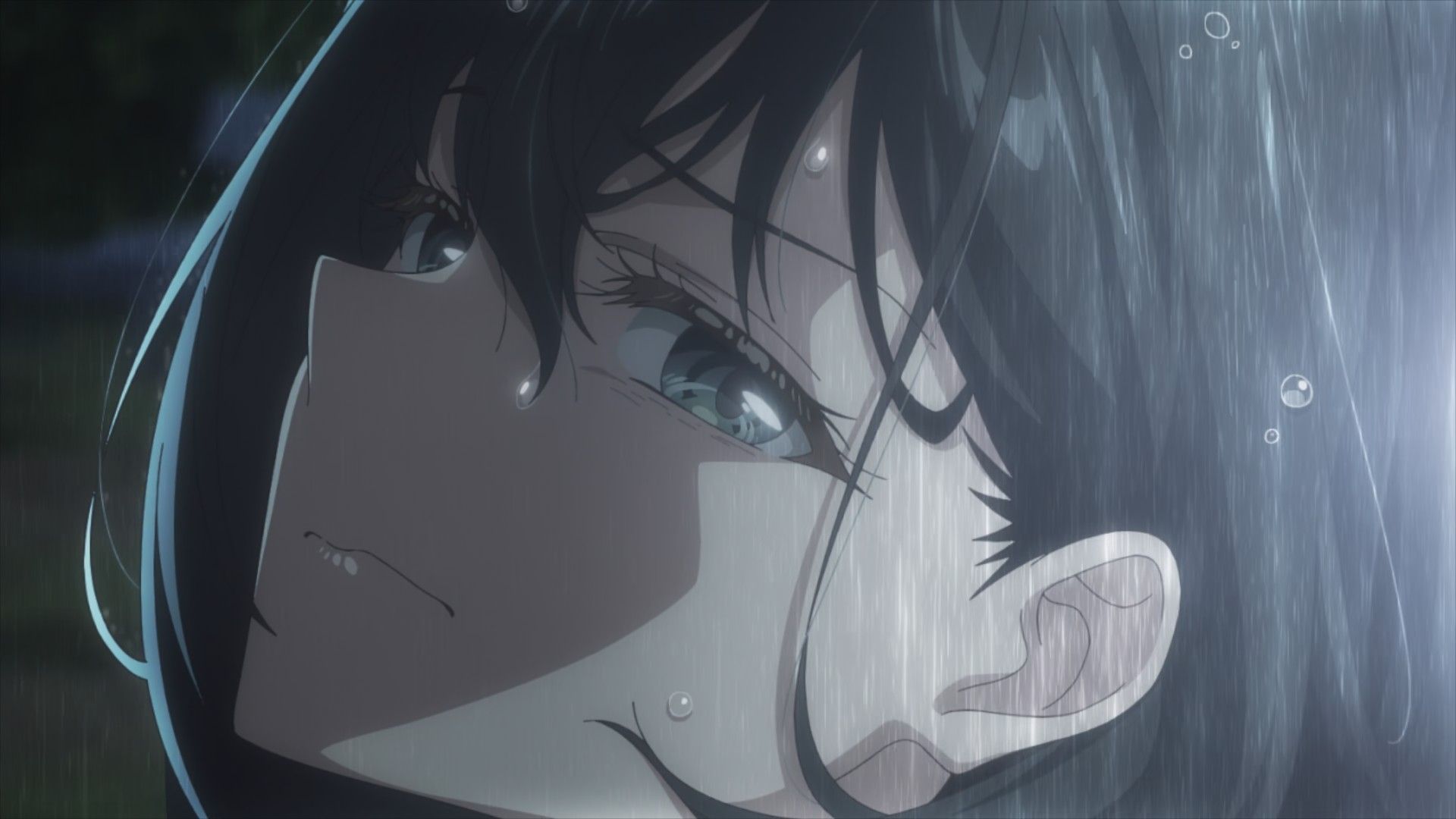
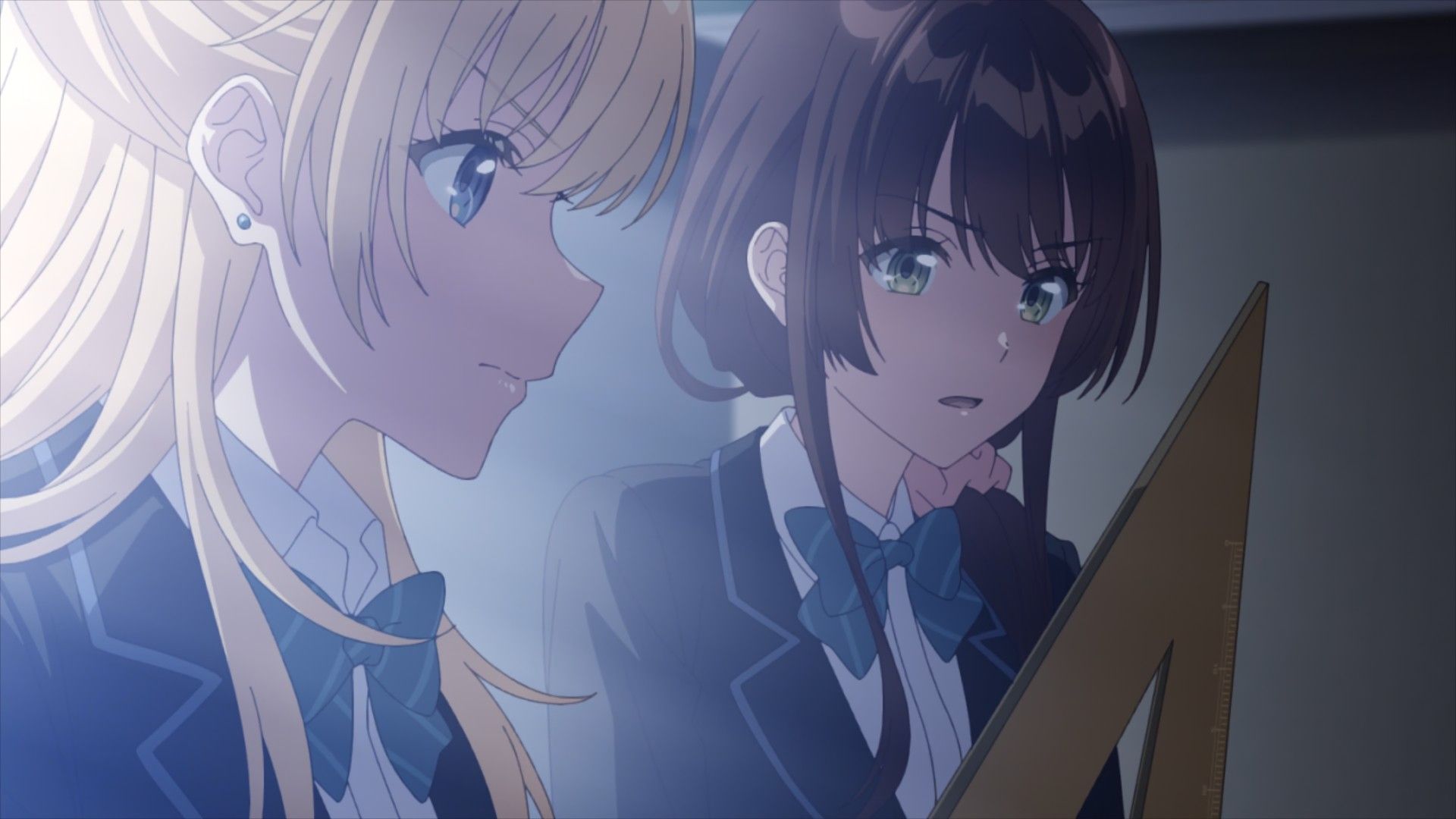
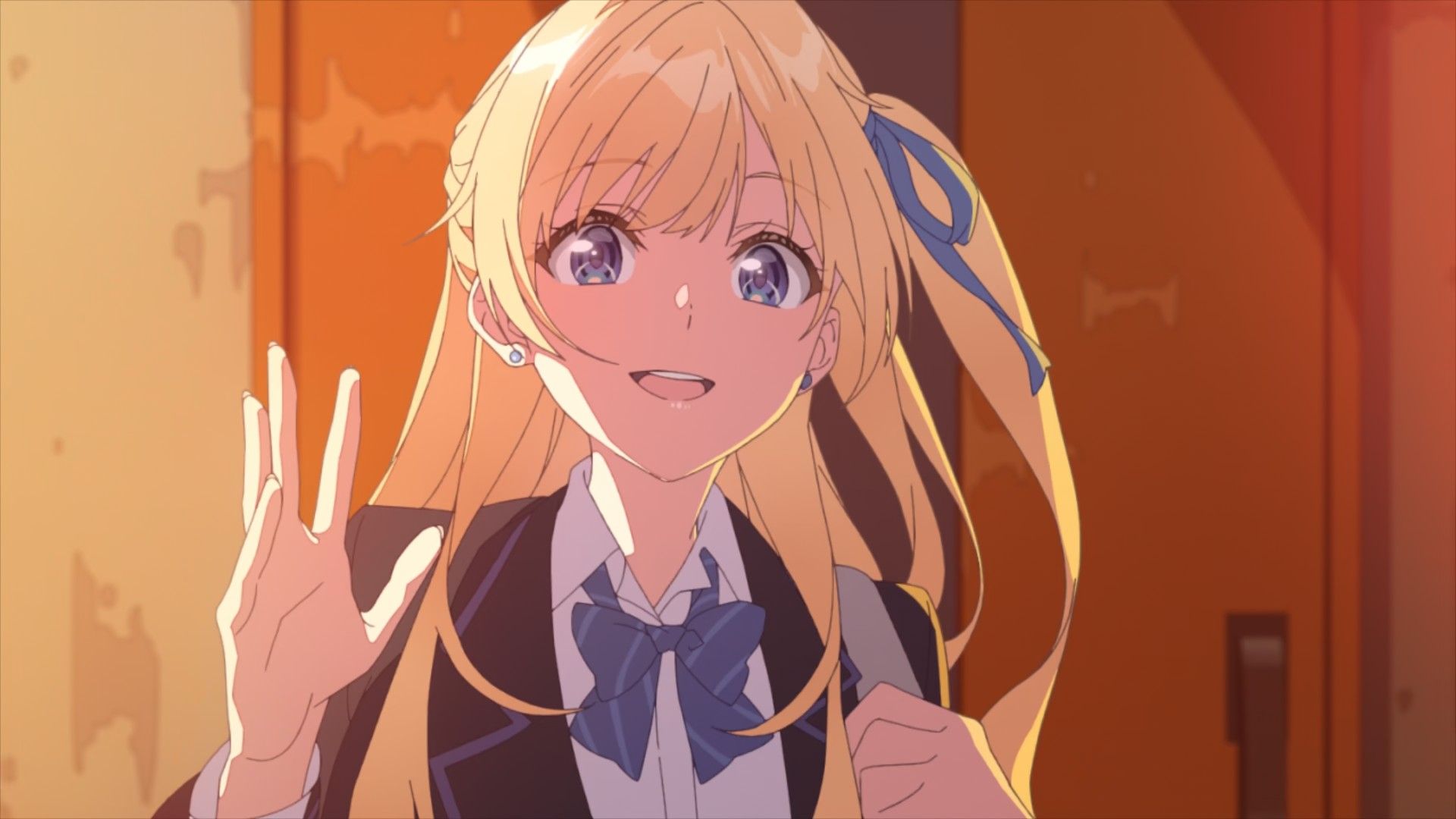
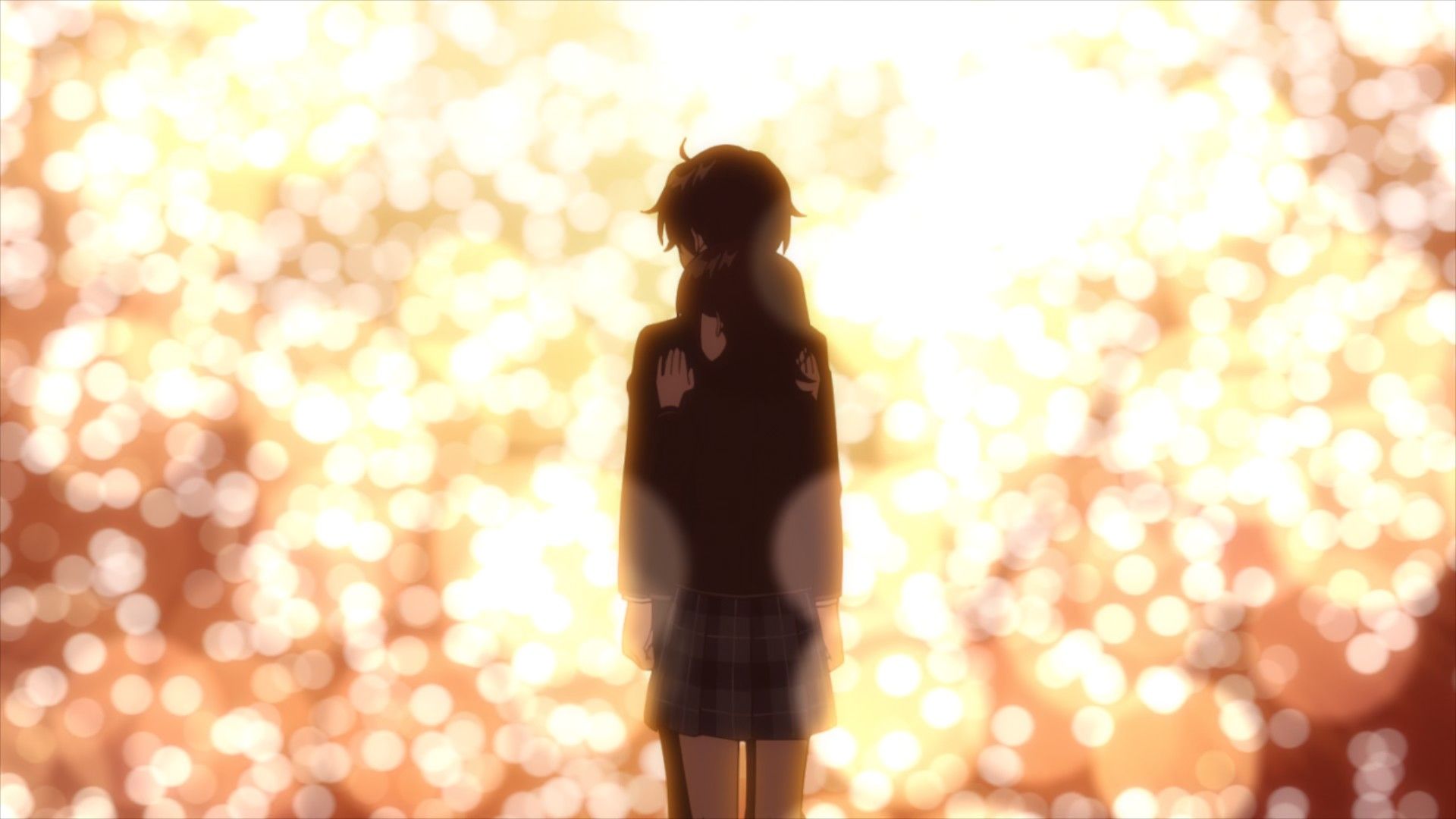
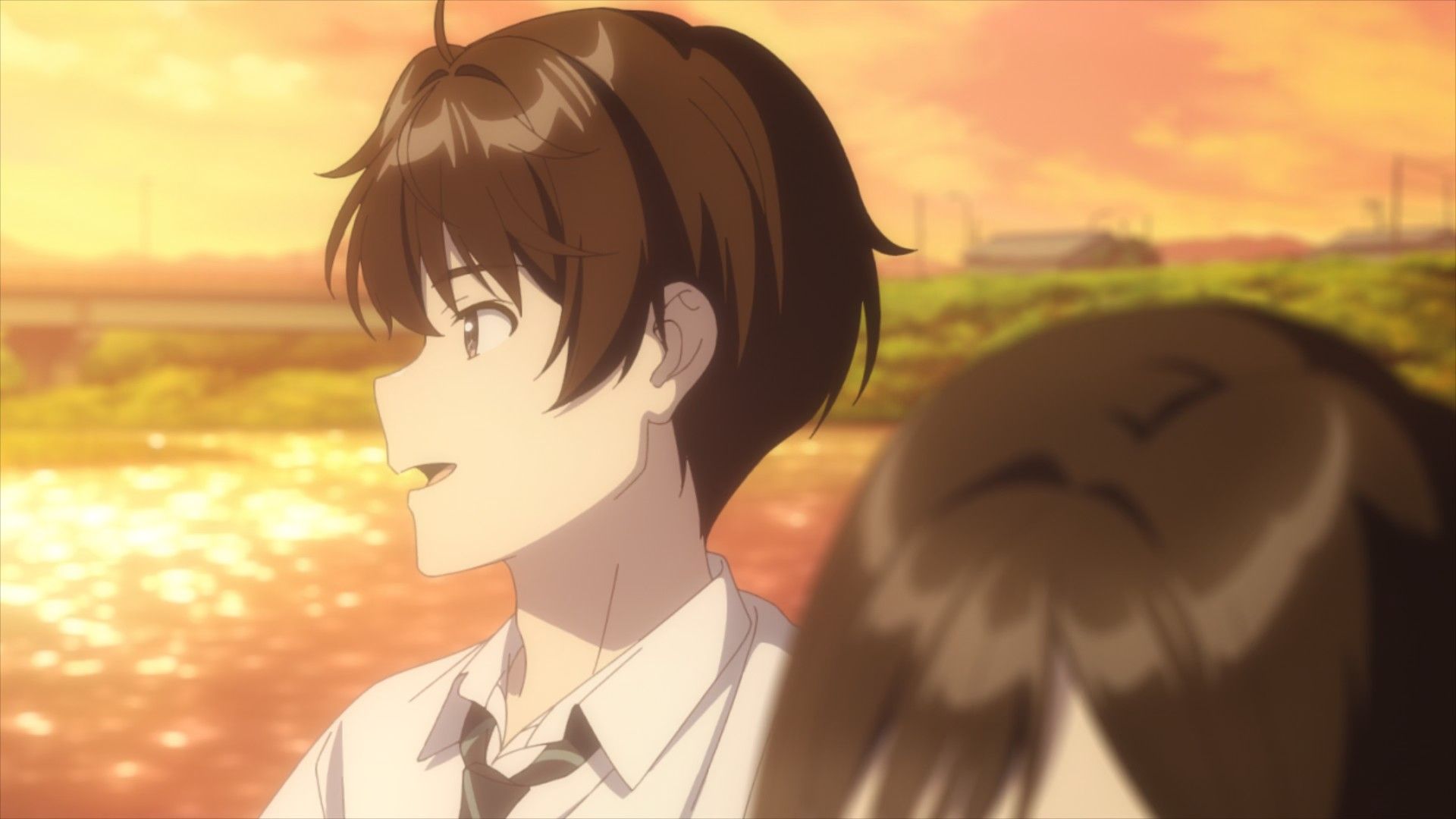
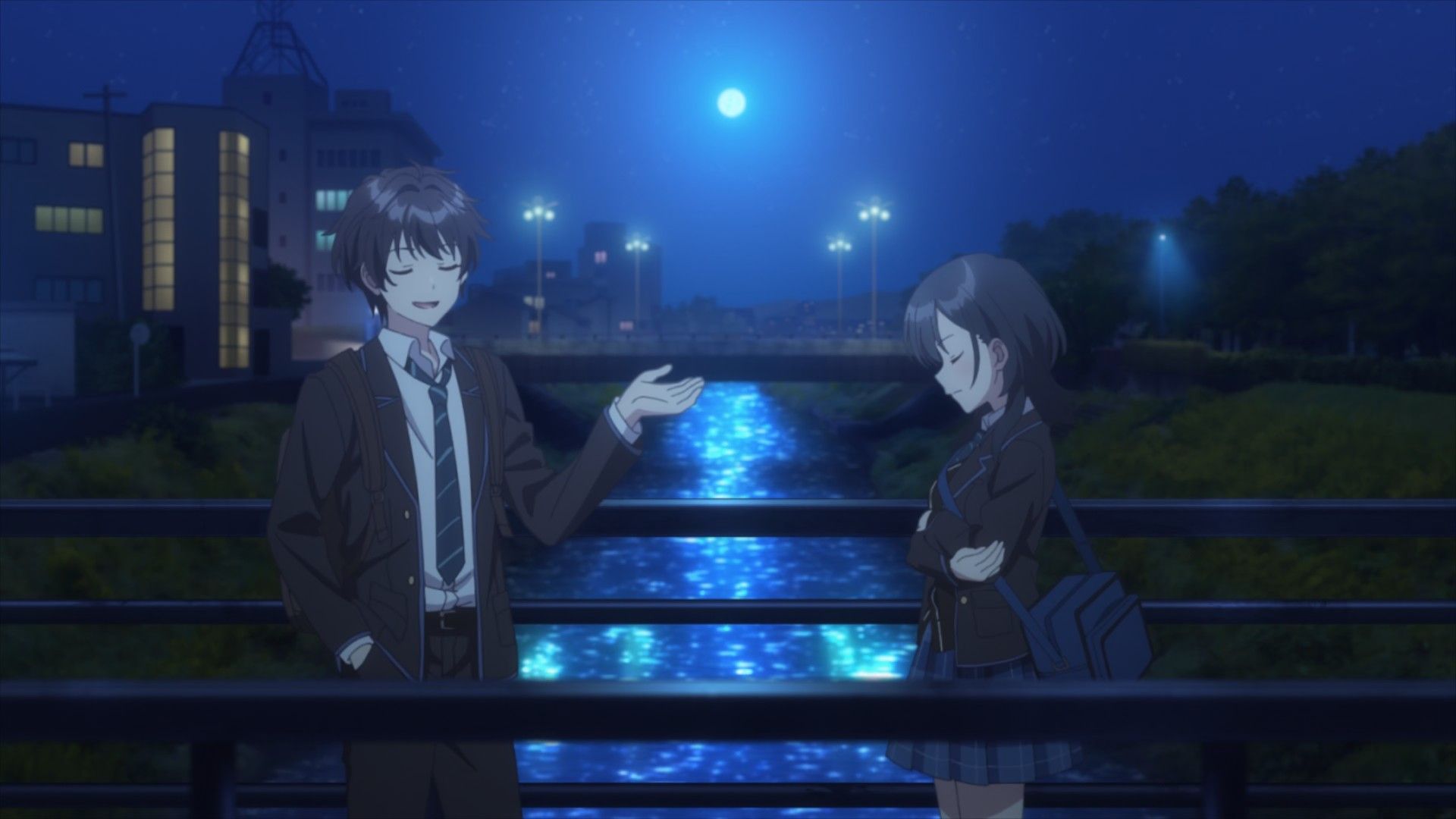
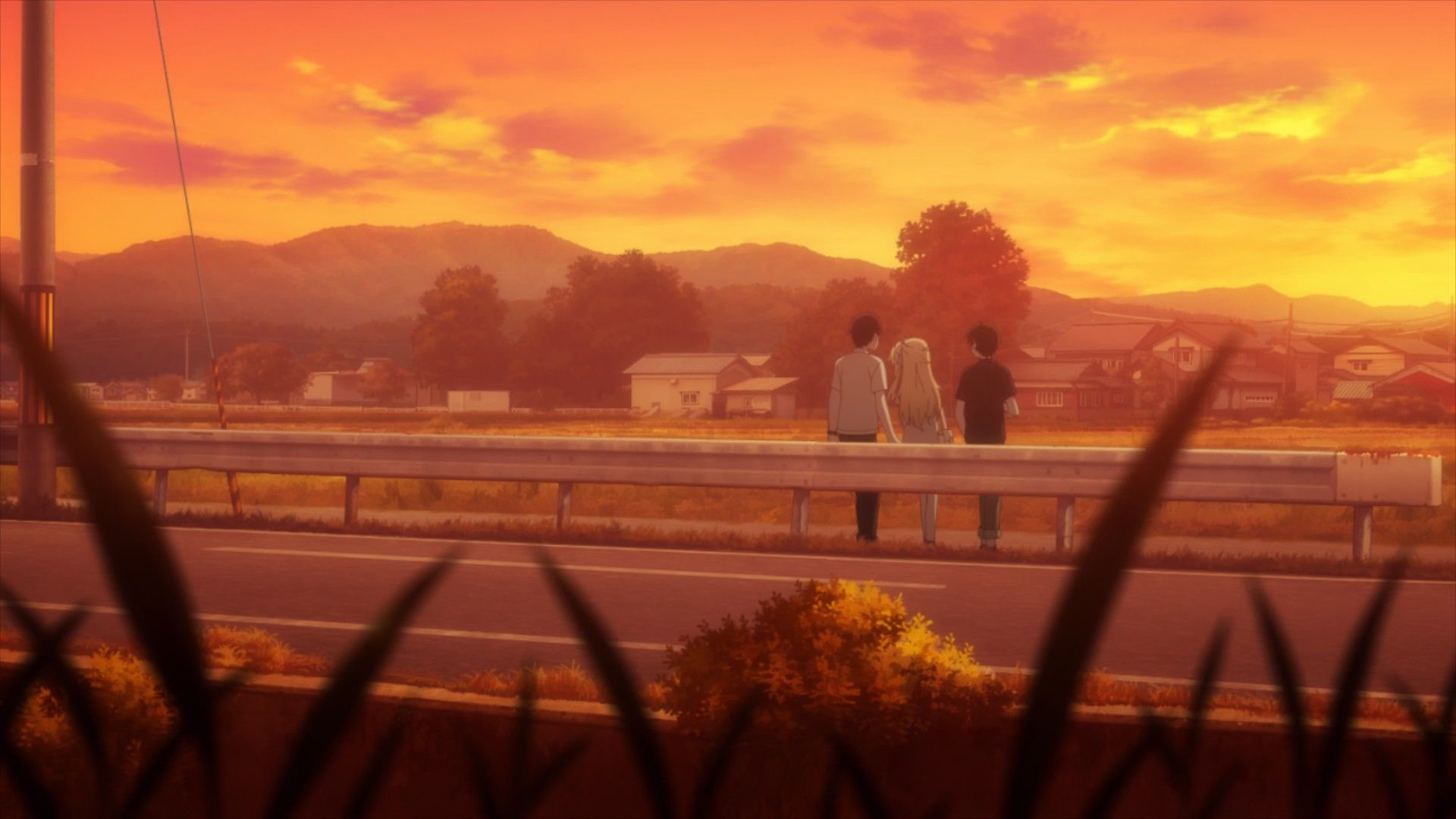
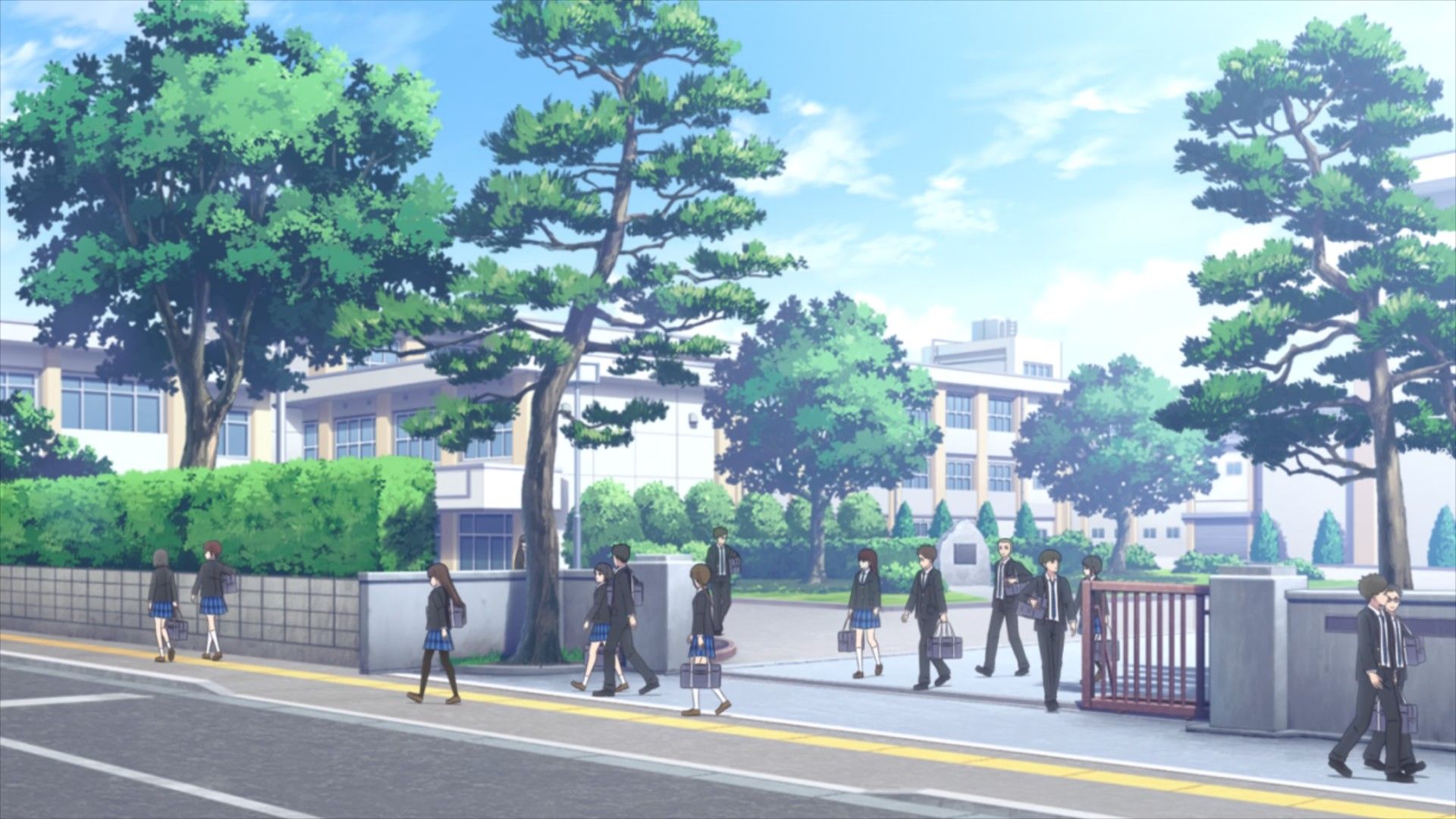
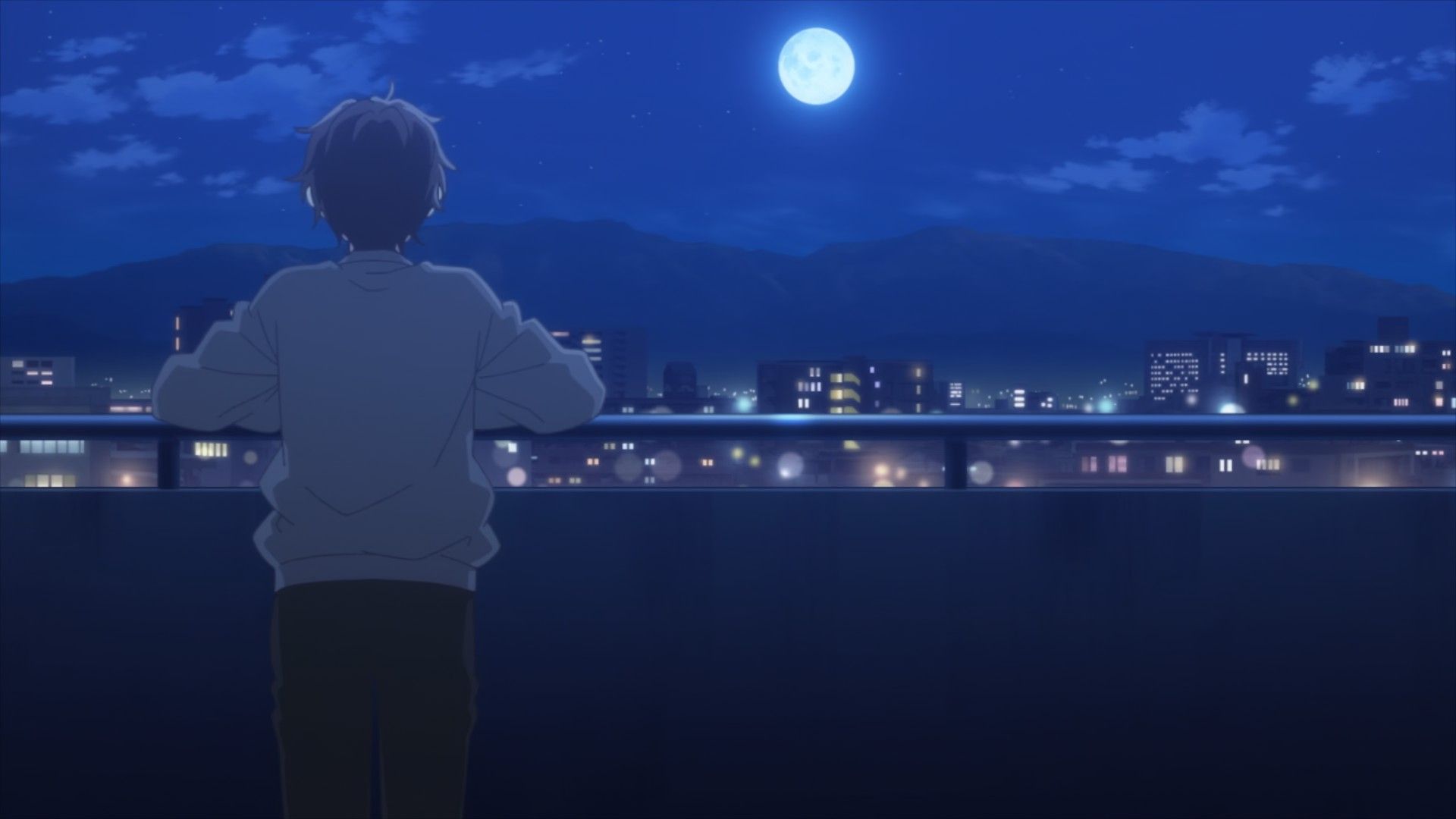
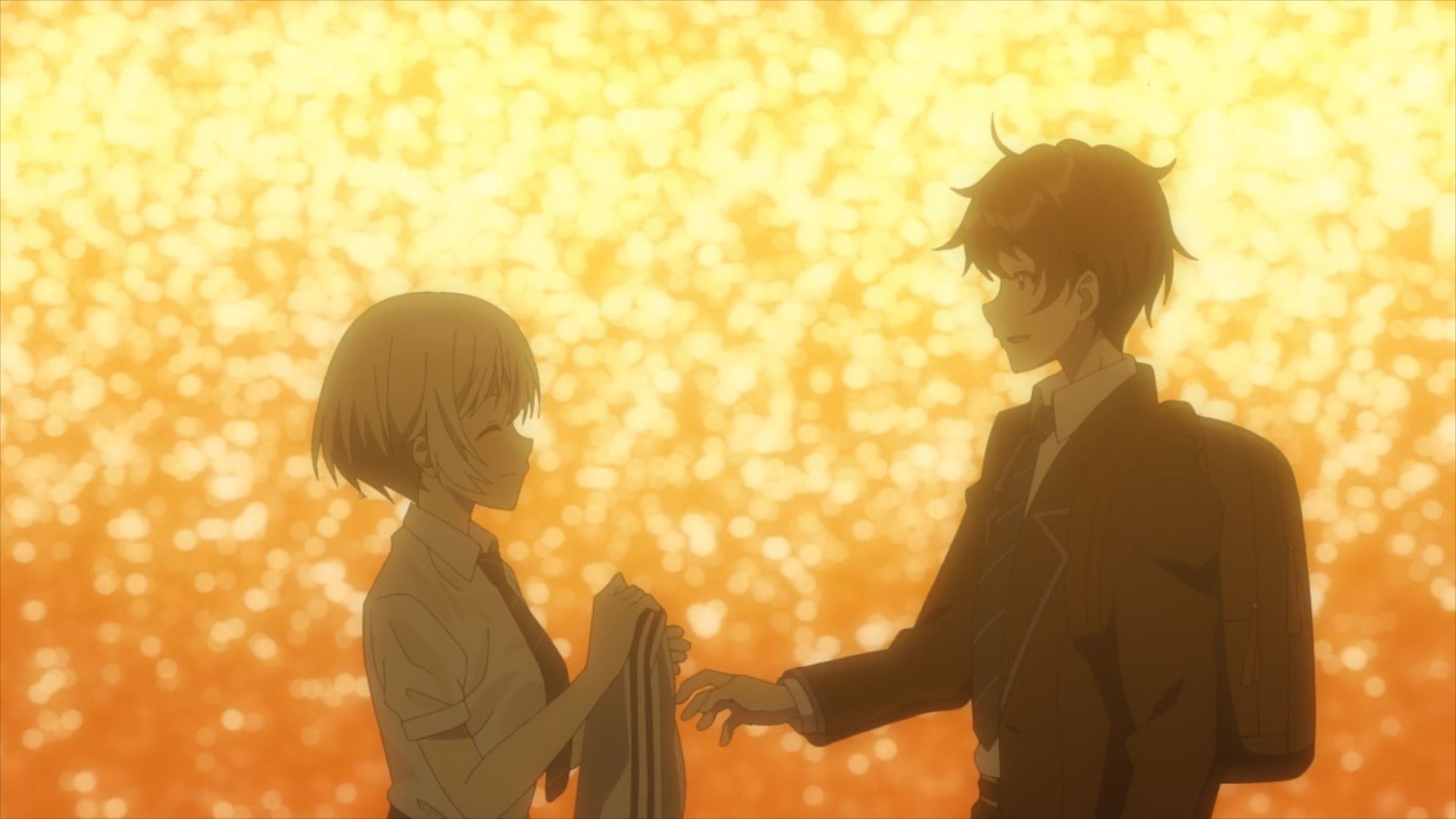
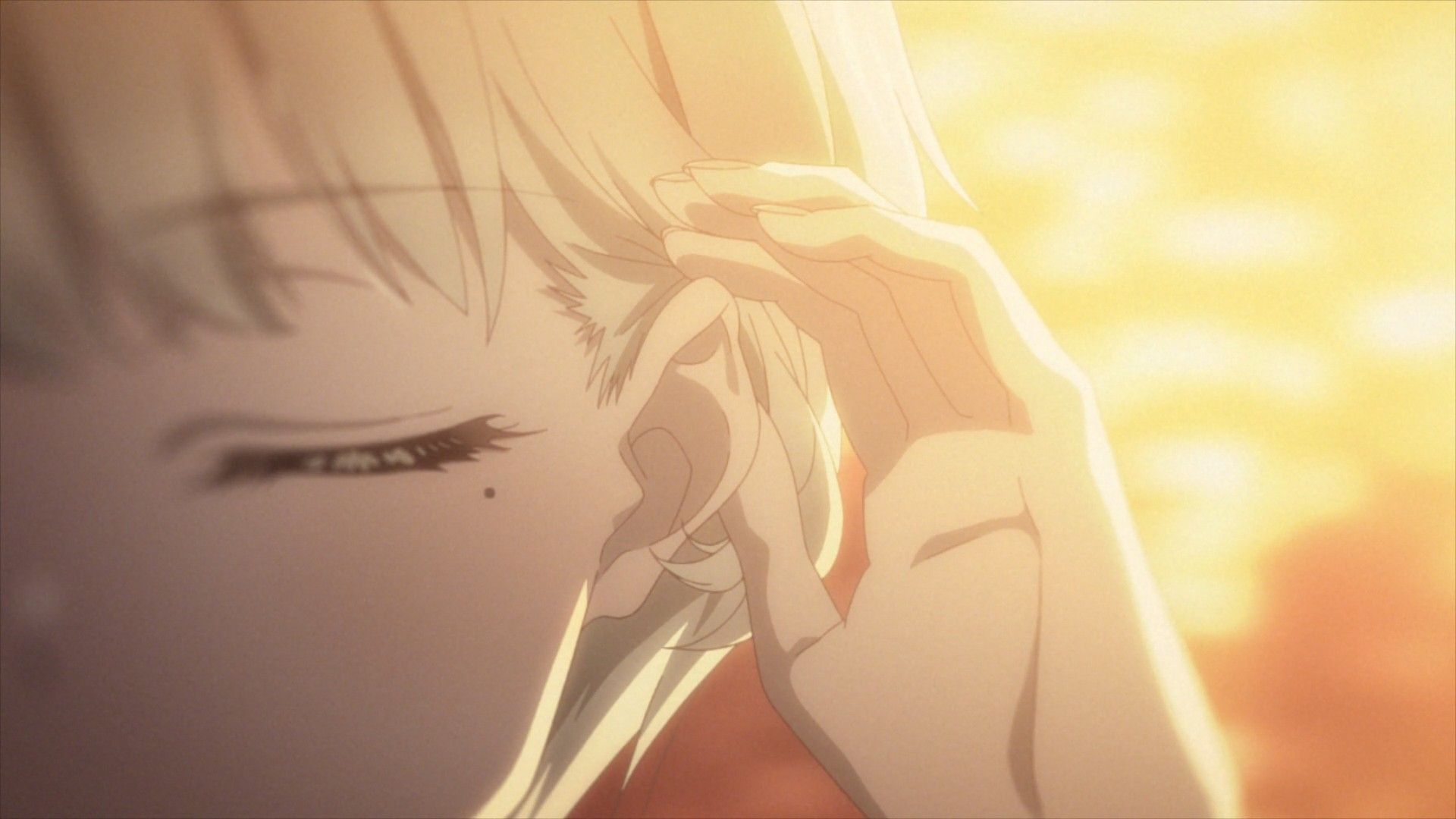
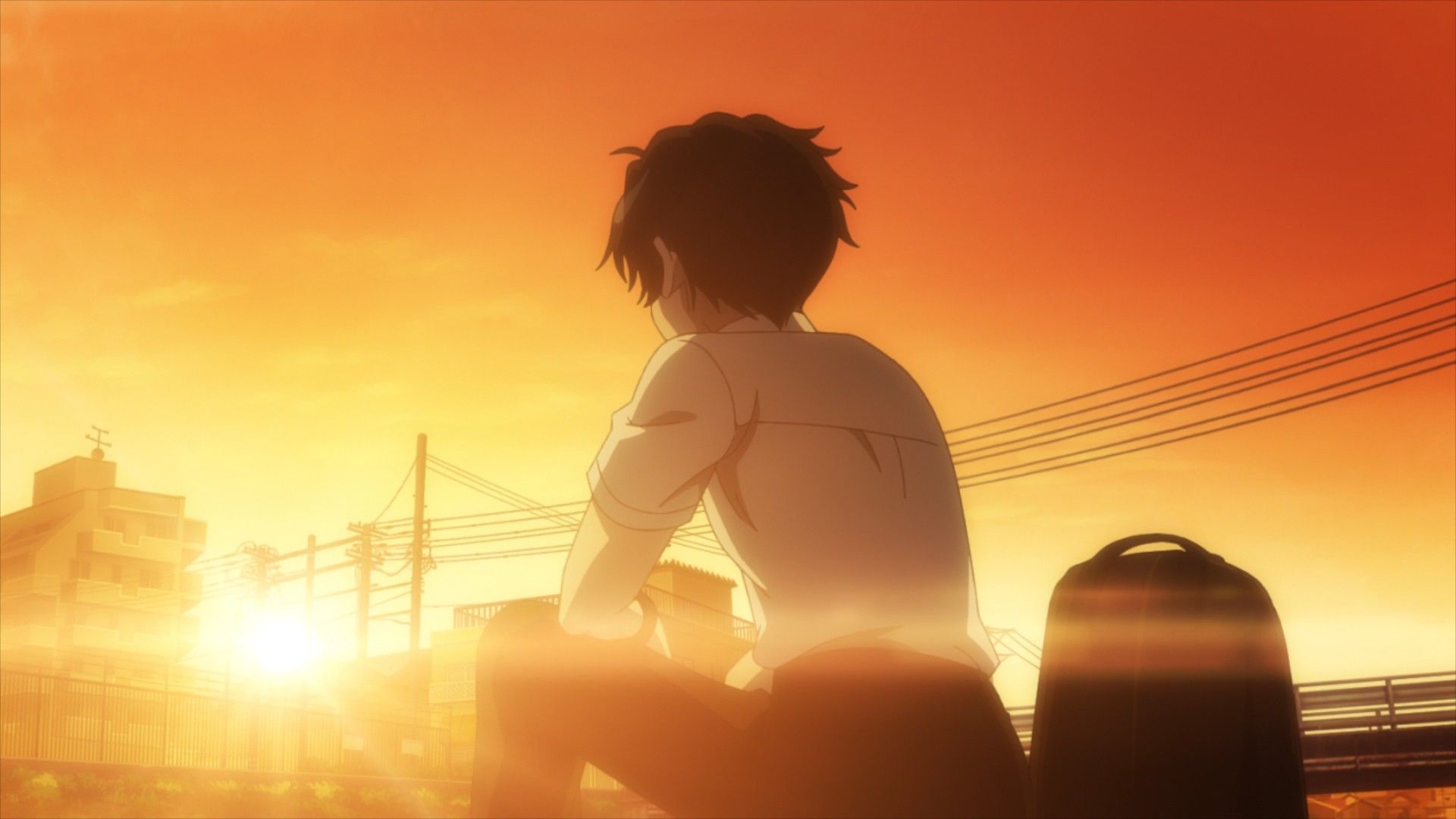
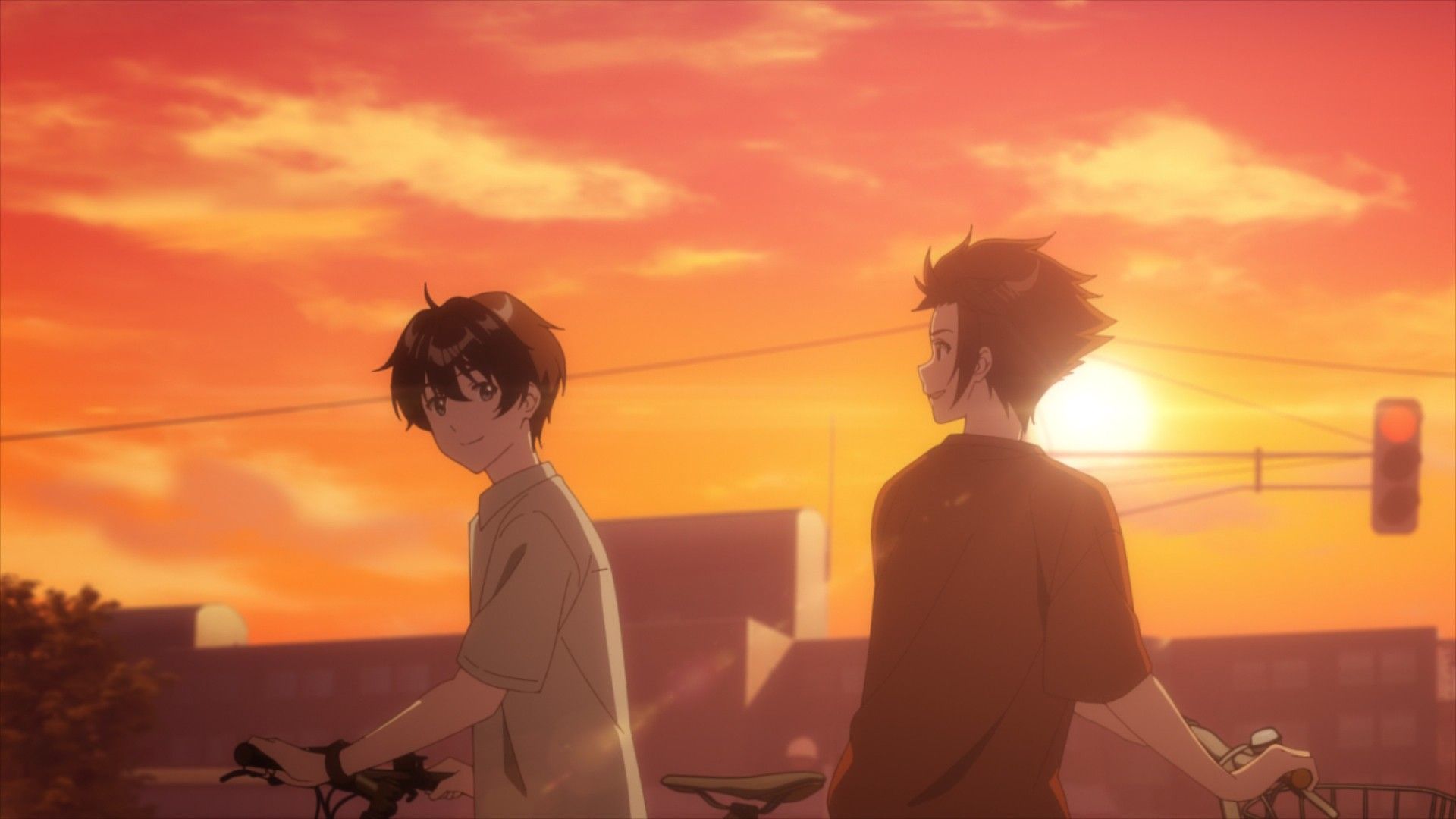
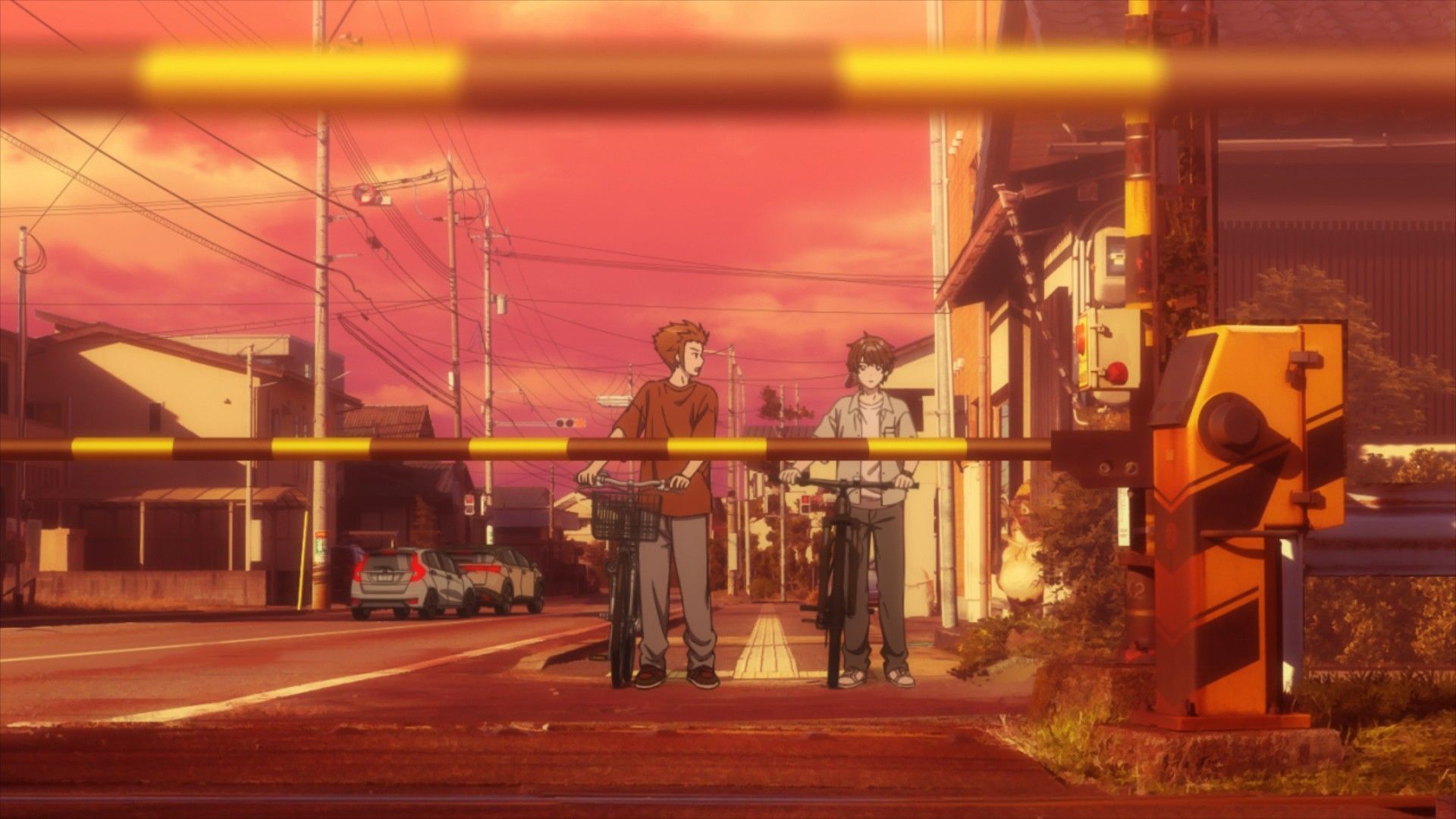
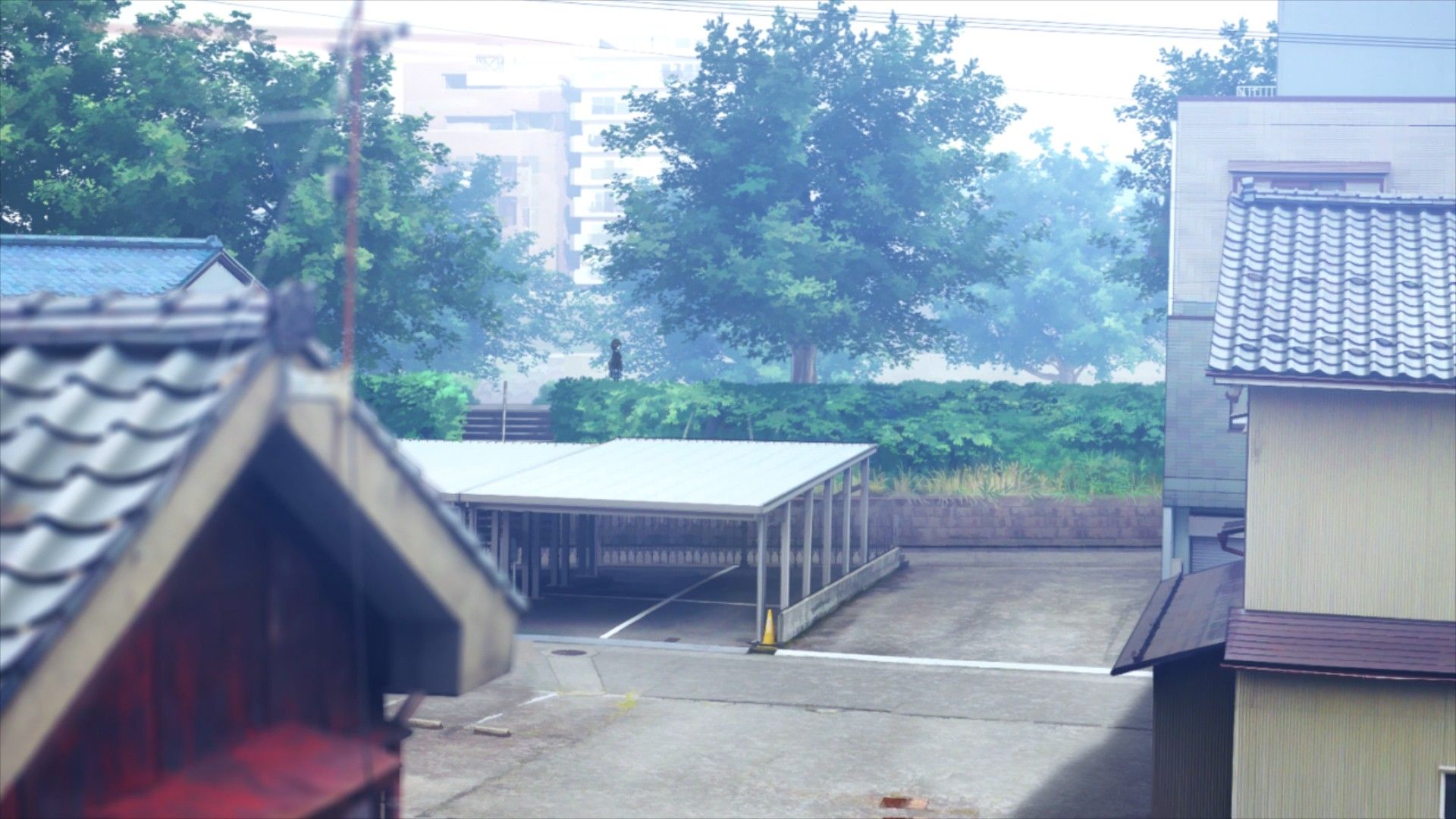
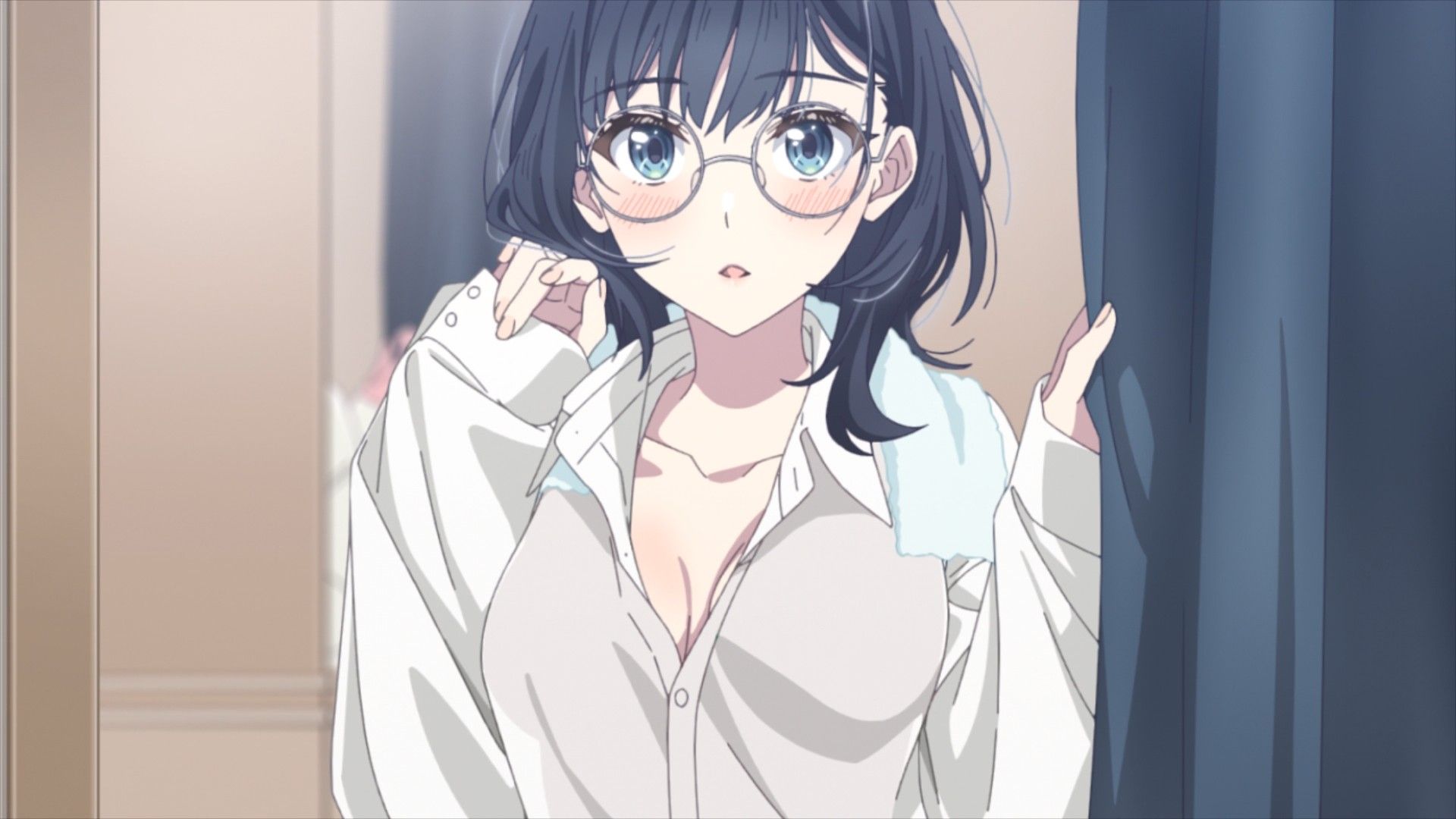
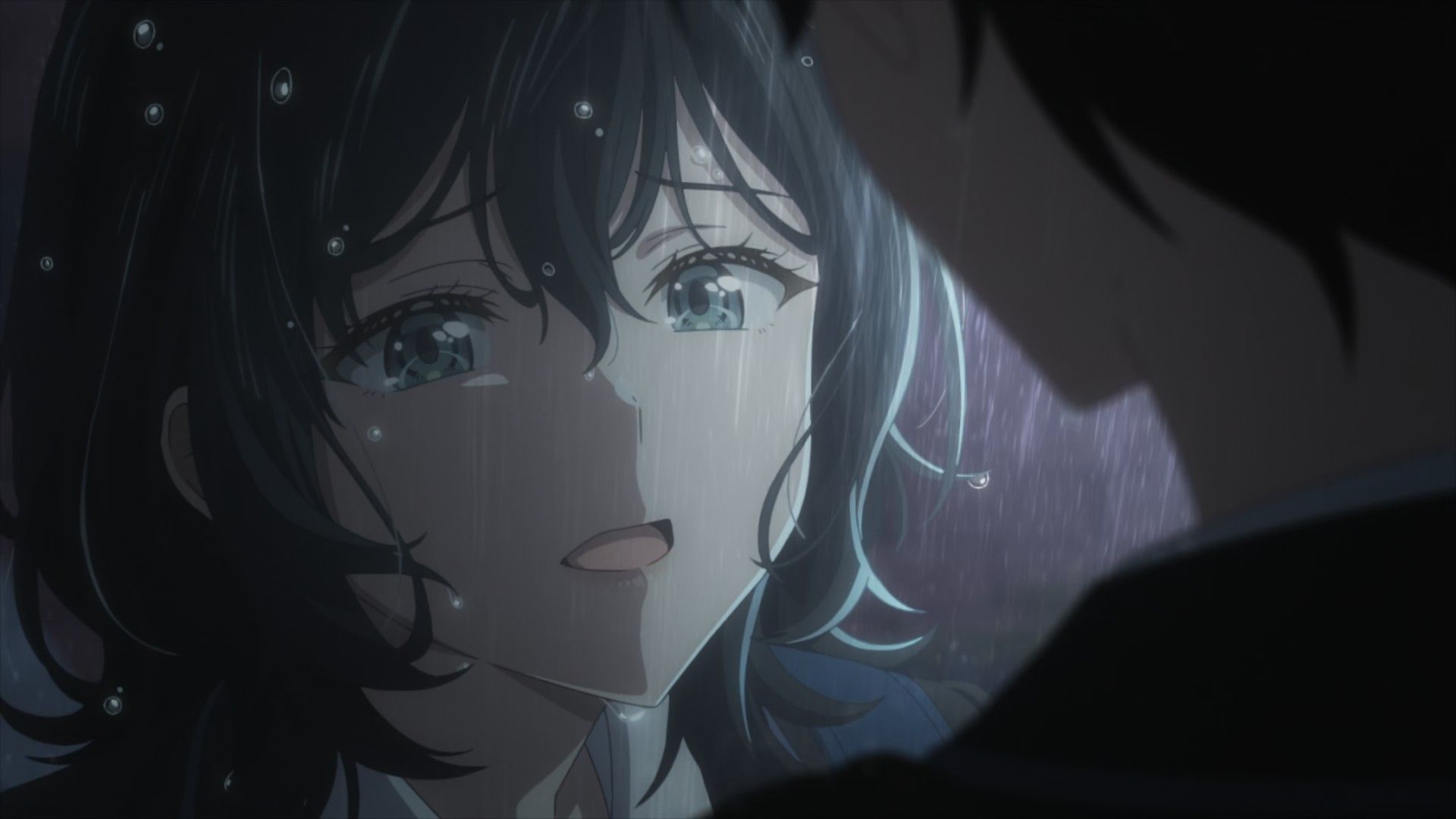
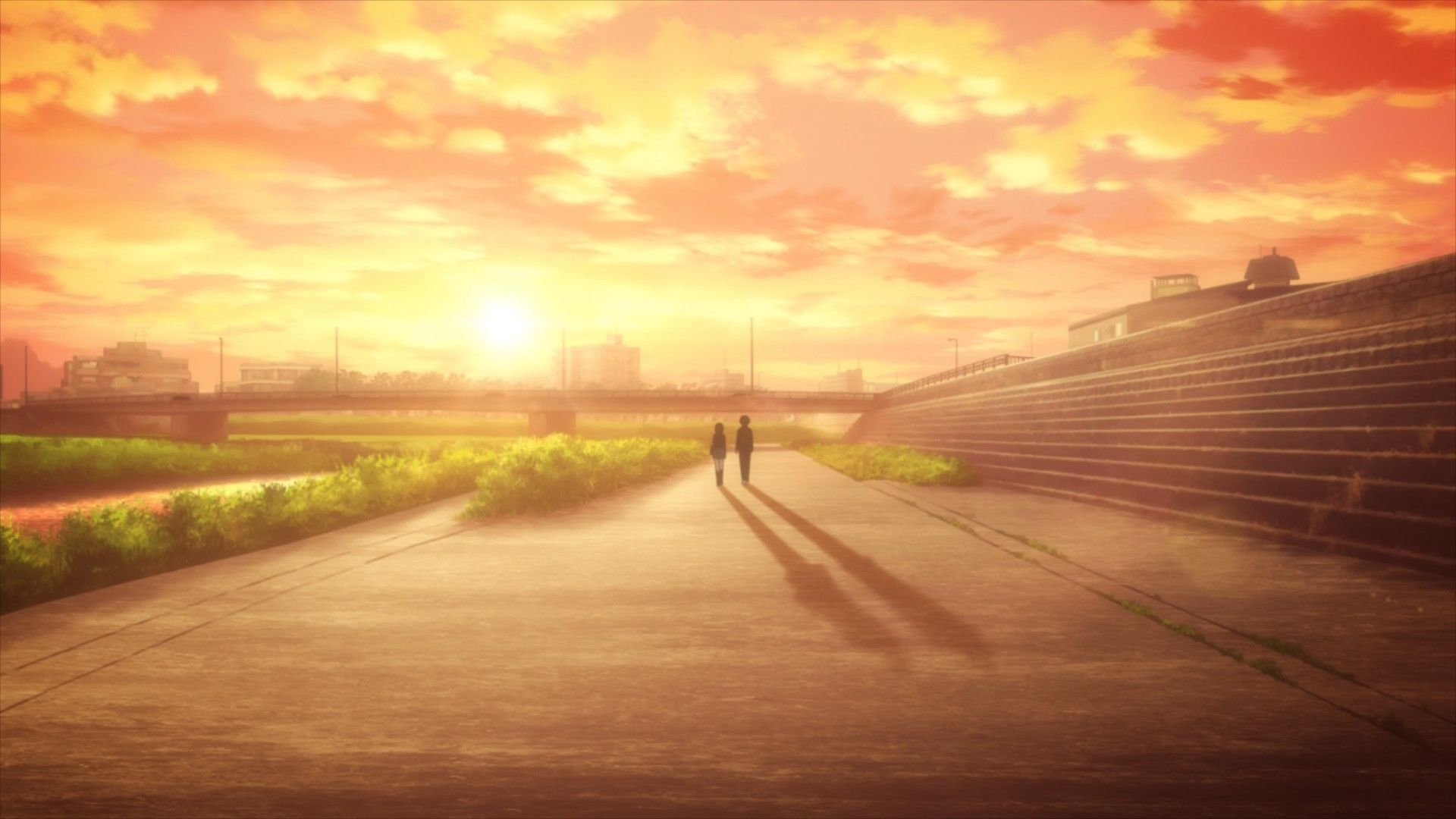
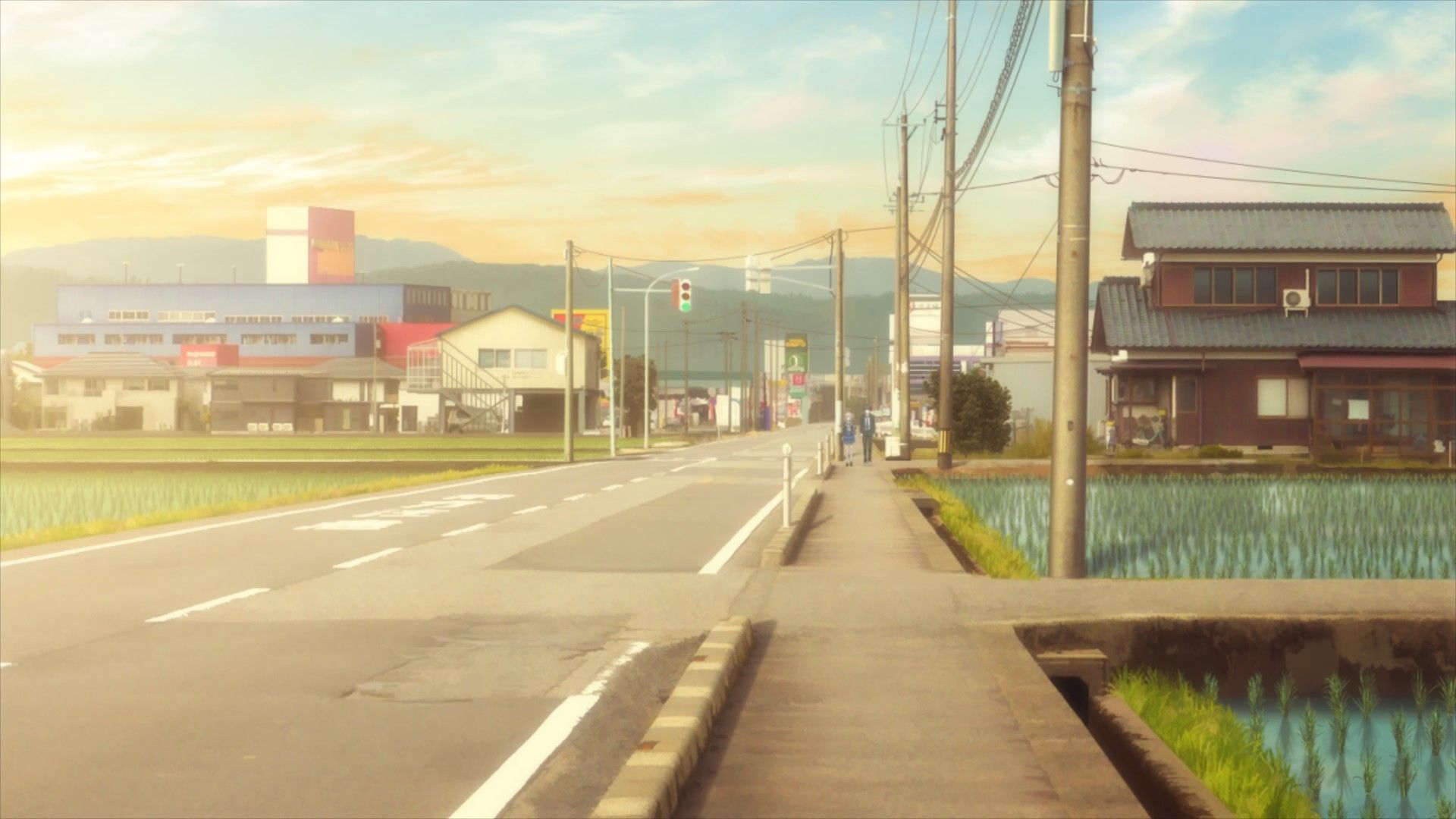
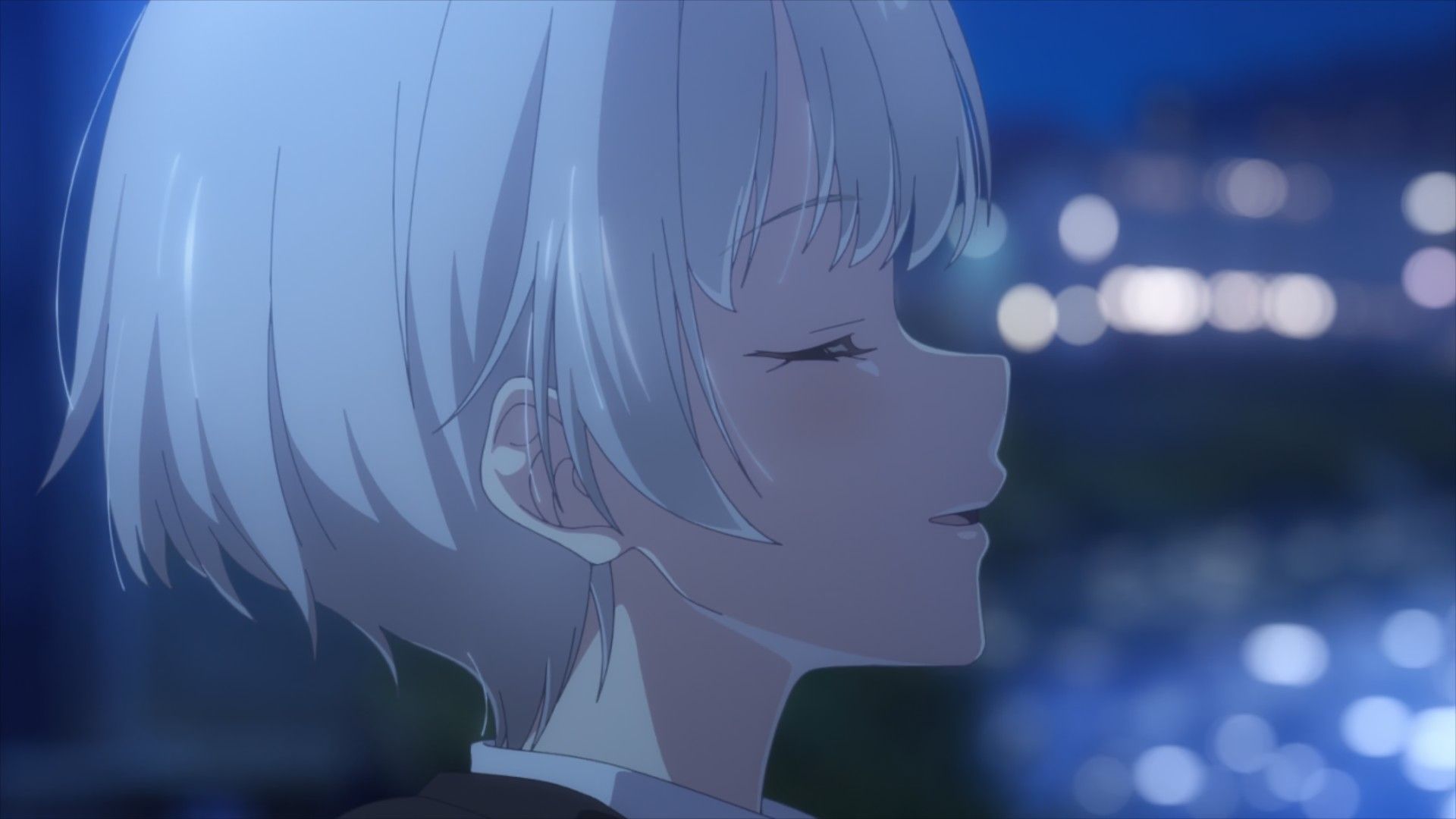
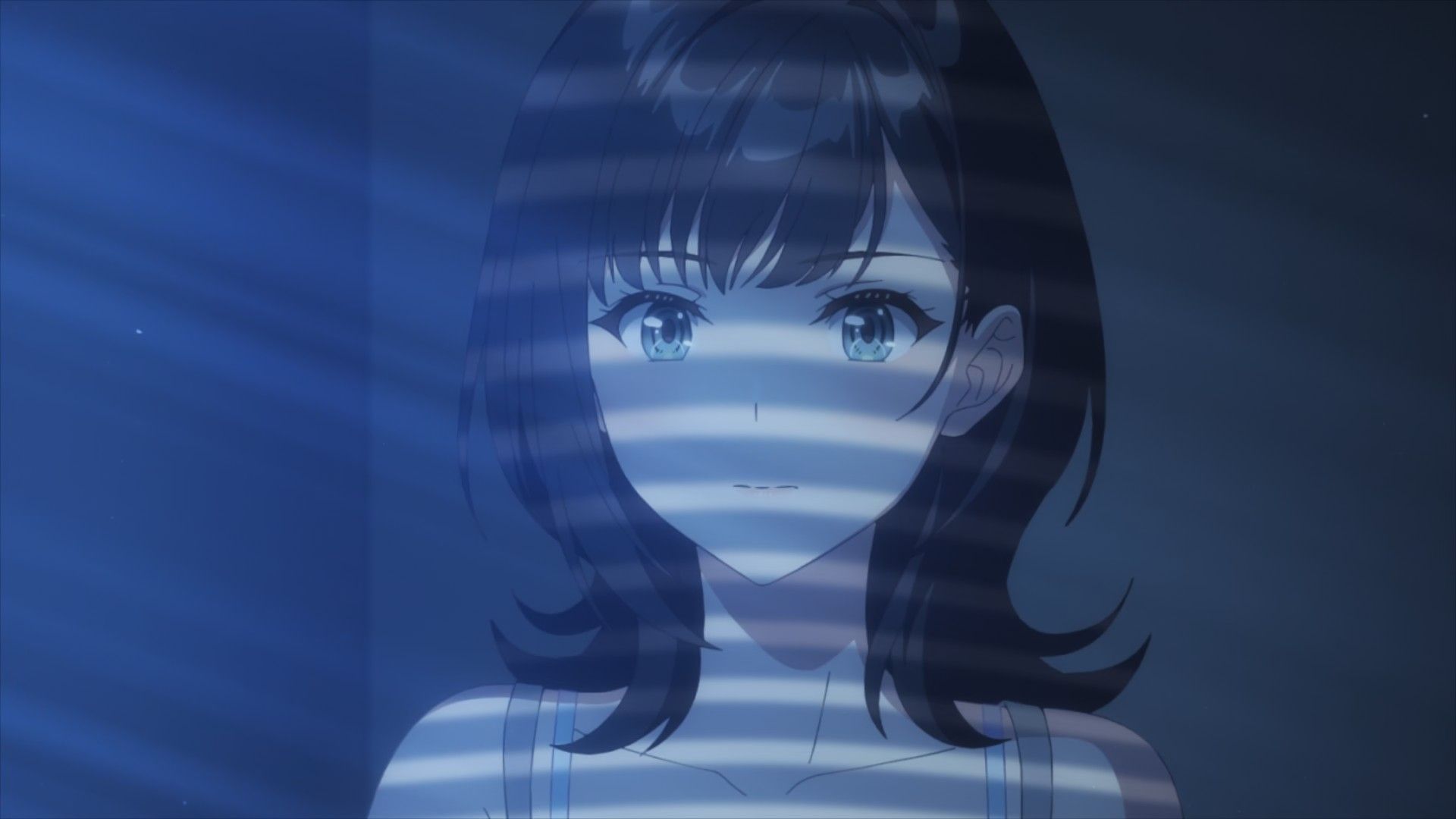
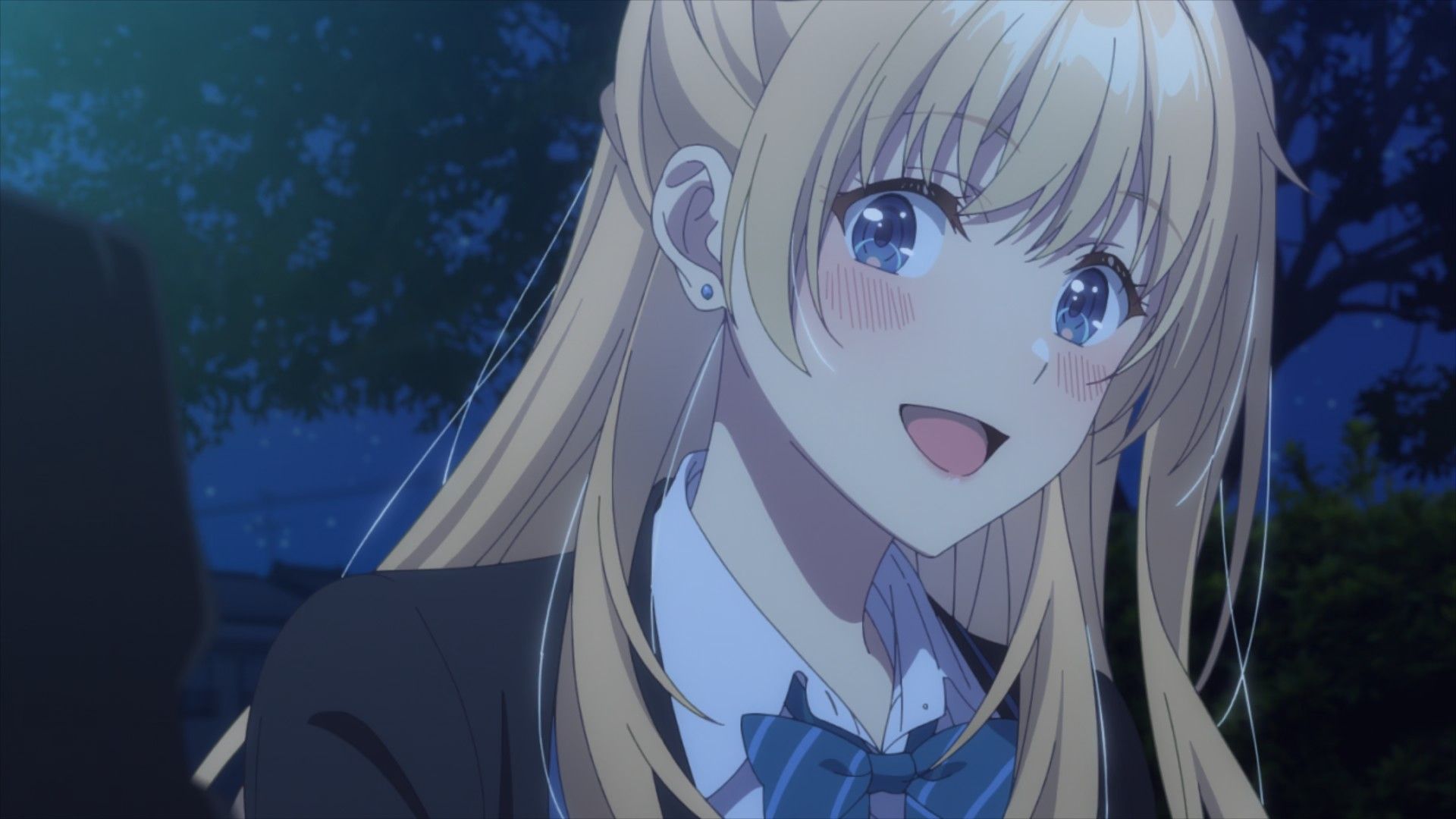
The cinematography in the series deserves the highest marks. The artistic direction set by director Tokuno Yuuji, combined with character designs by Kinoshita Sumie (based on the original illustrations by raemz), results in visuals with incredible depth. The play of light and shadow is particularly outstanding. The creators masterfully utilize the so-called “golden hour,” illuminating railroad crossings and street corners in a way that perfectly captures the nostalgic, fleeting atmosphere of growing up in the Japanese countryside of Fukui Prefecture. On the other hand, scenes with a heavier emotional weight—such as Nanase Yuzuki’s psychological breakdown amidst a torrential downpour—are saturated with melancholic, washed-out blues, heightening the sense of hopelessness and isolation.
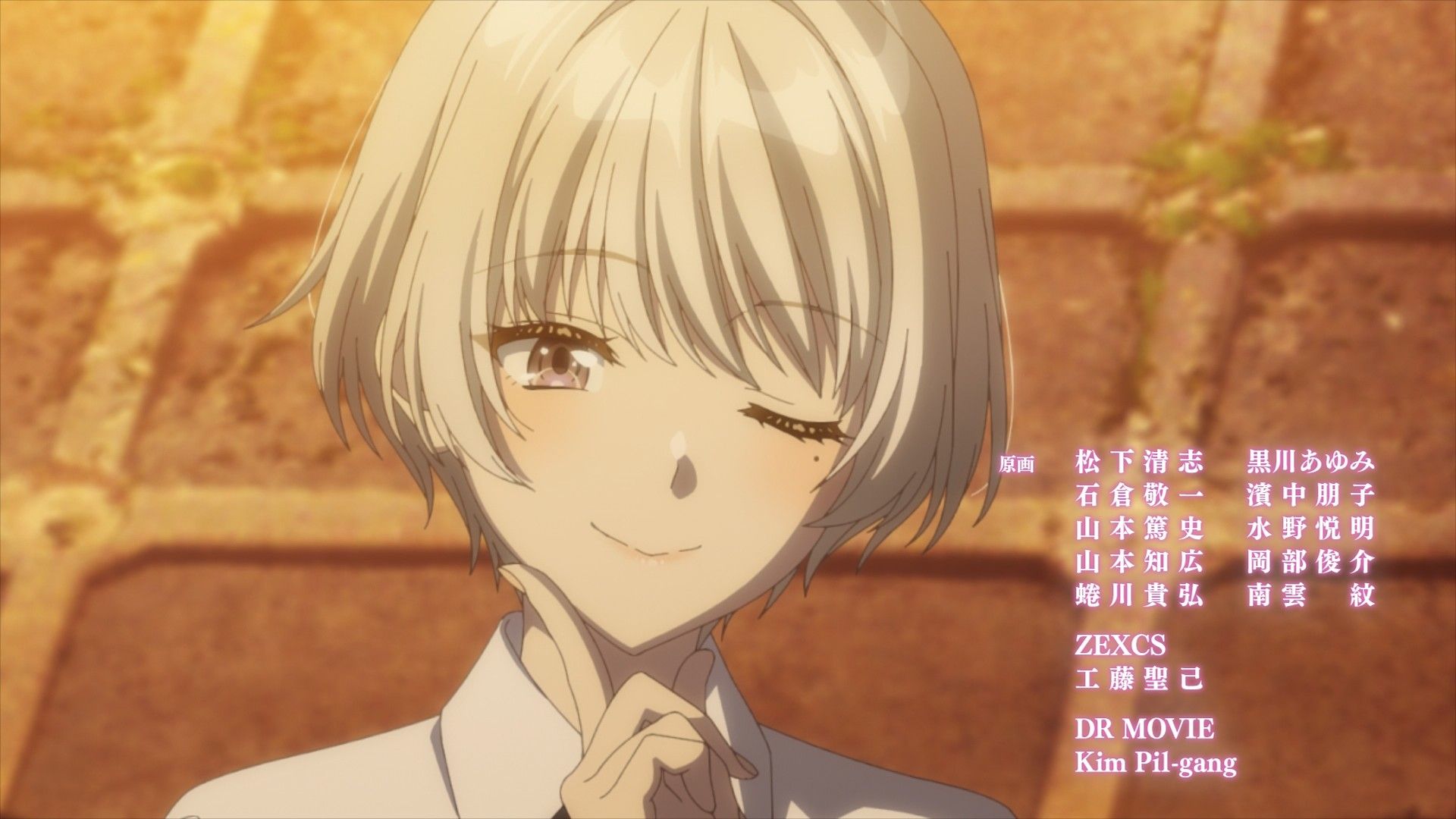
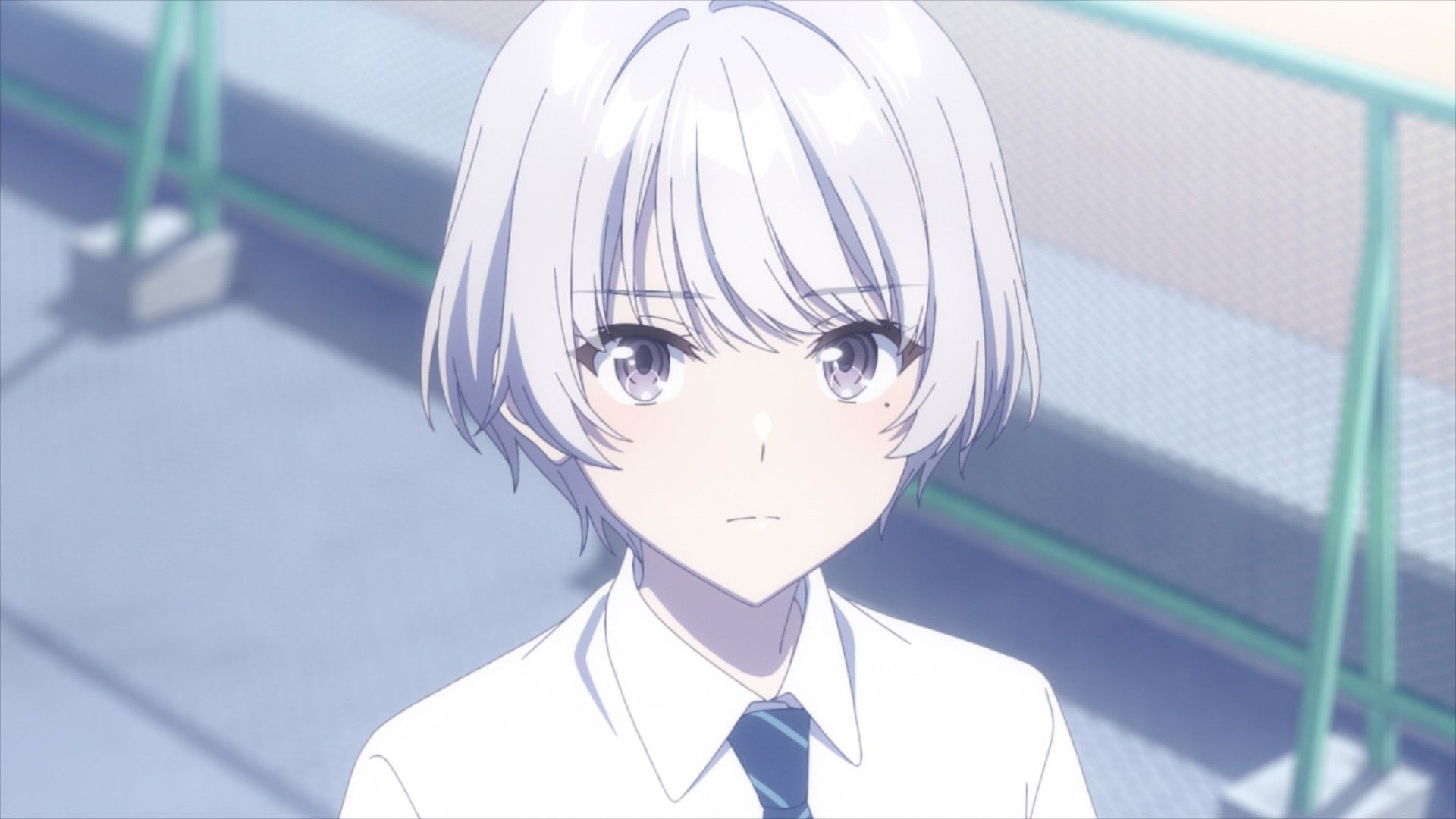
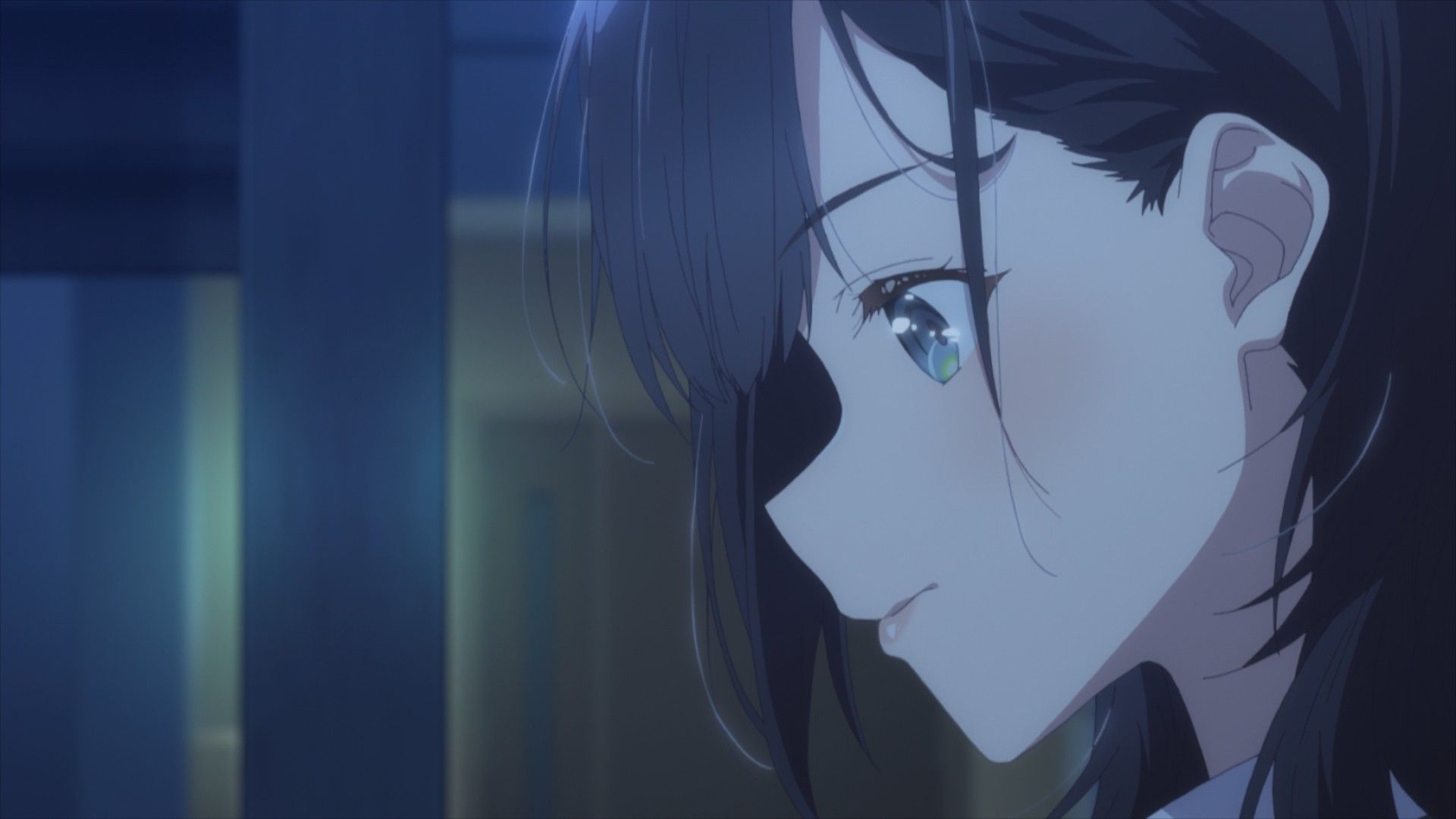
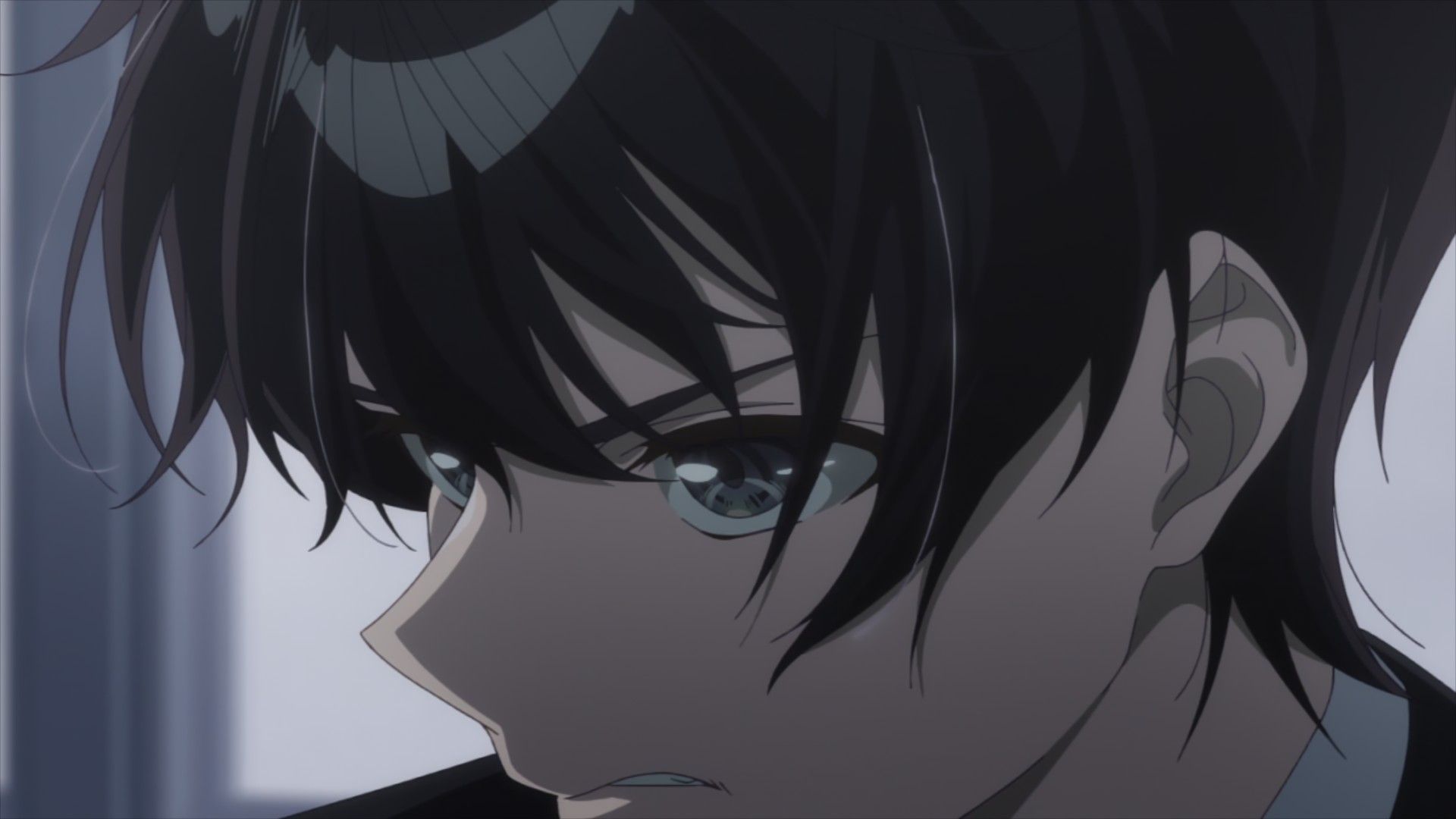
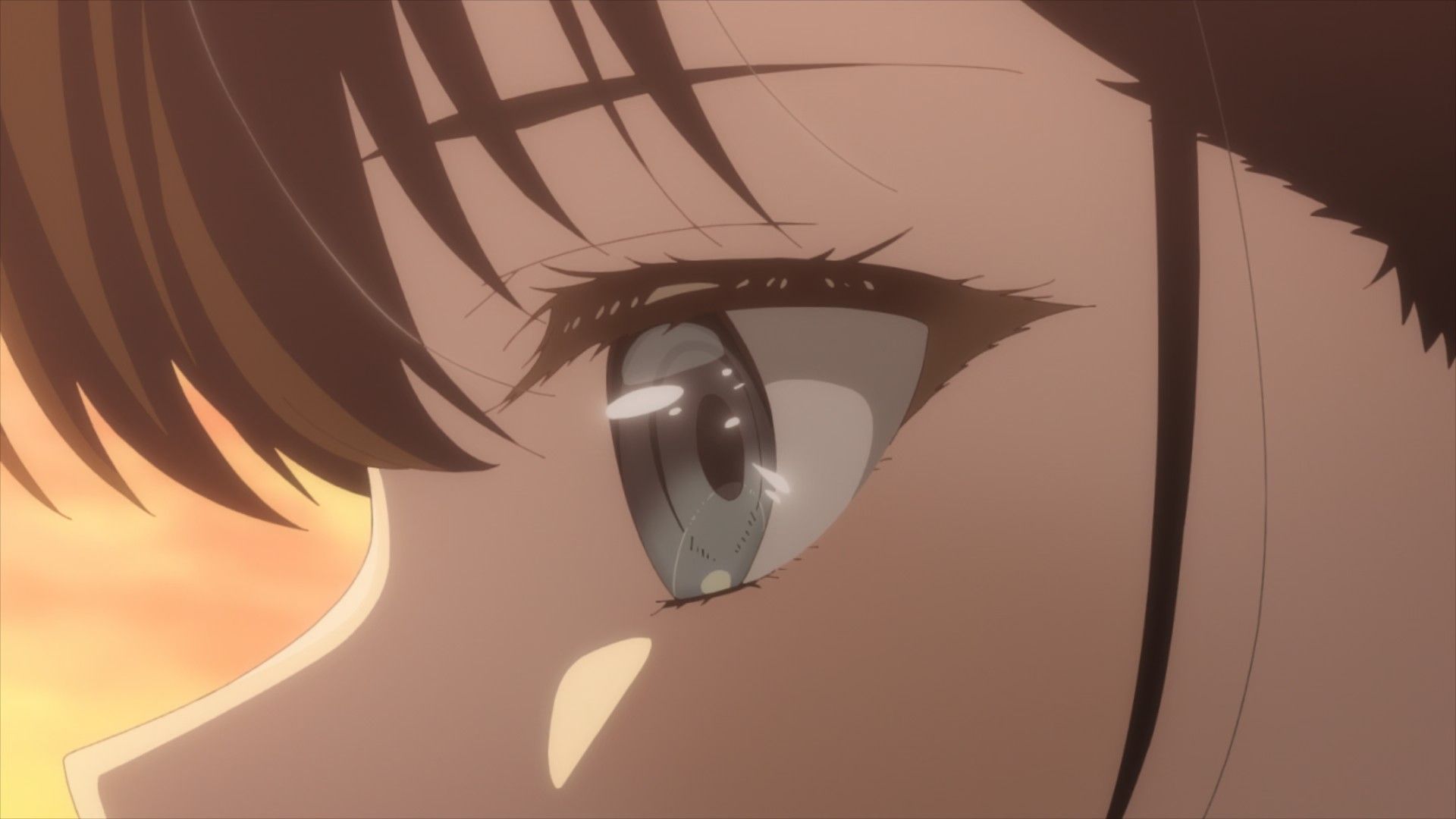
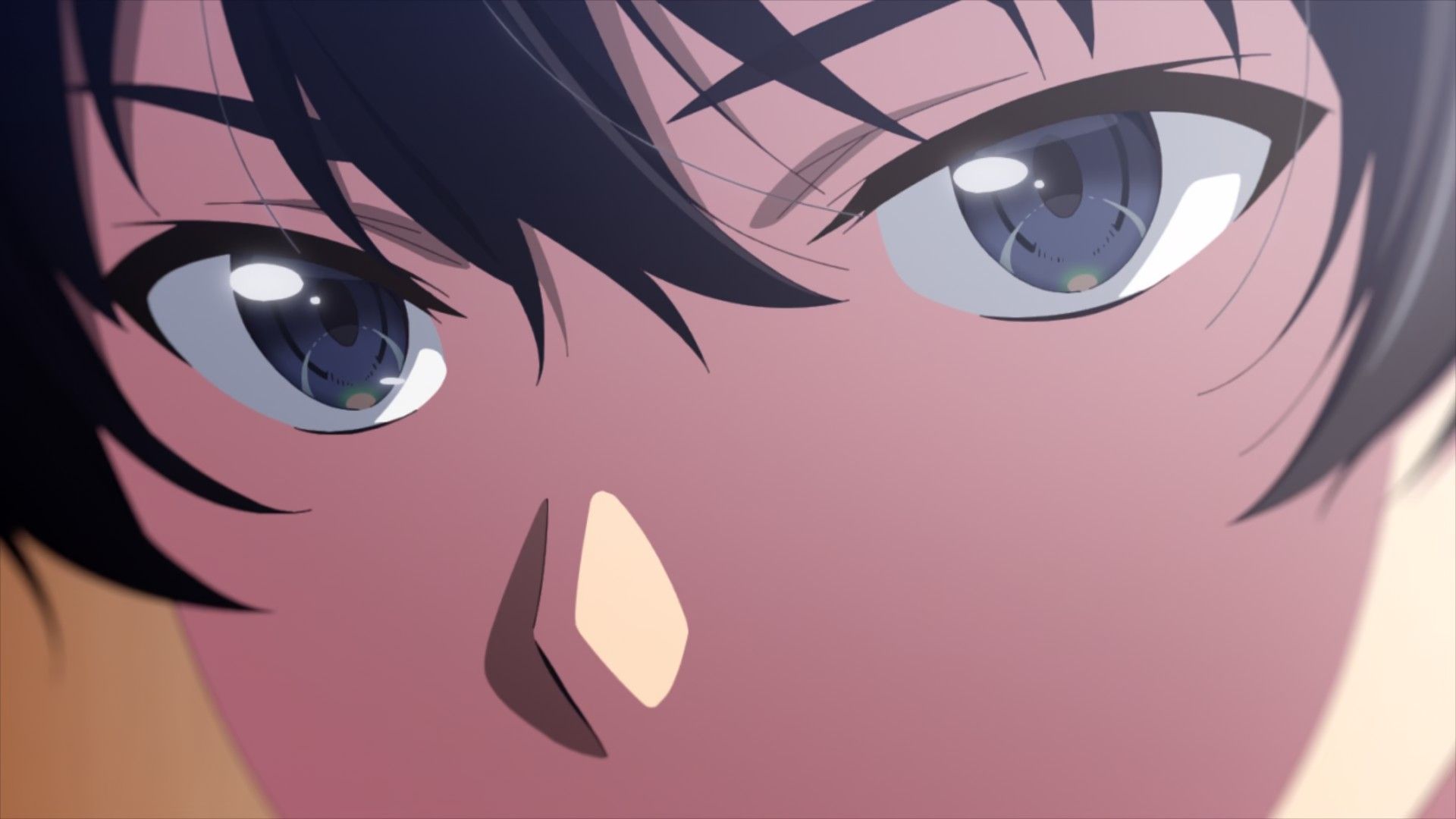
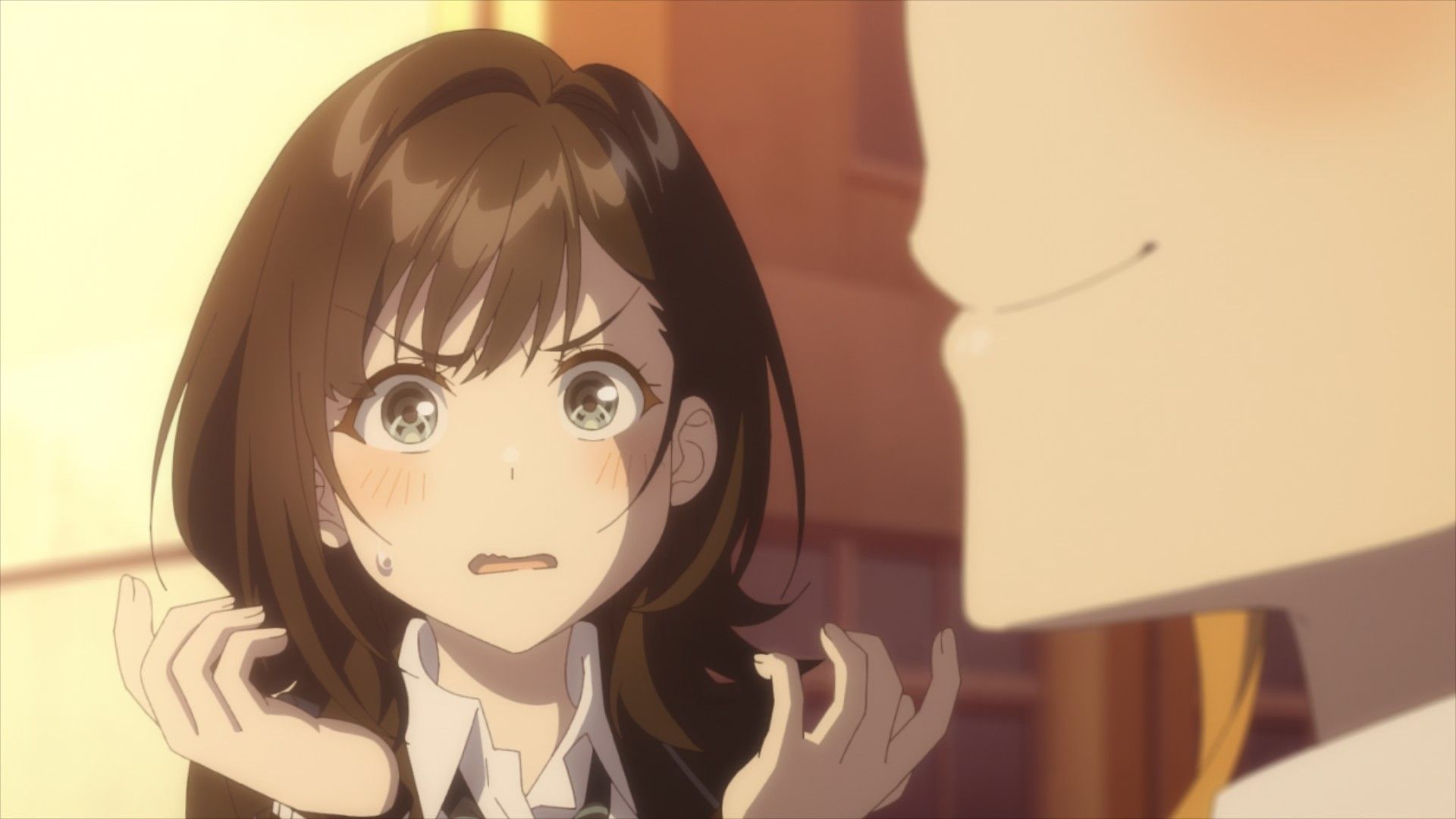
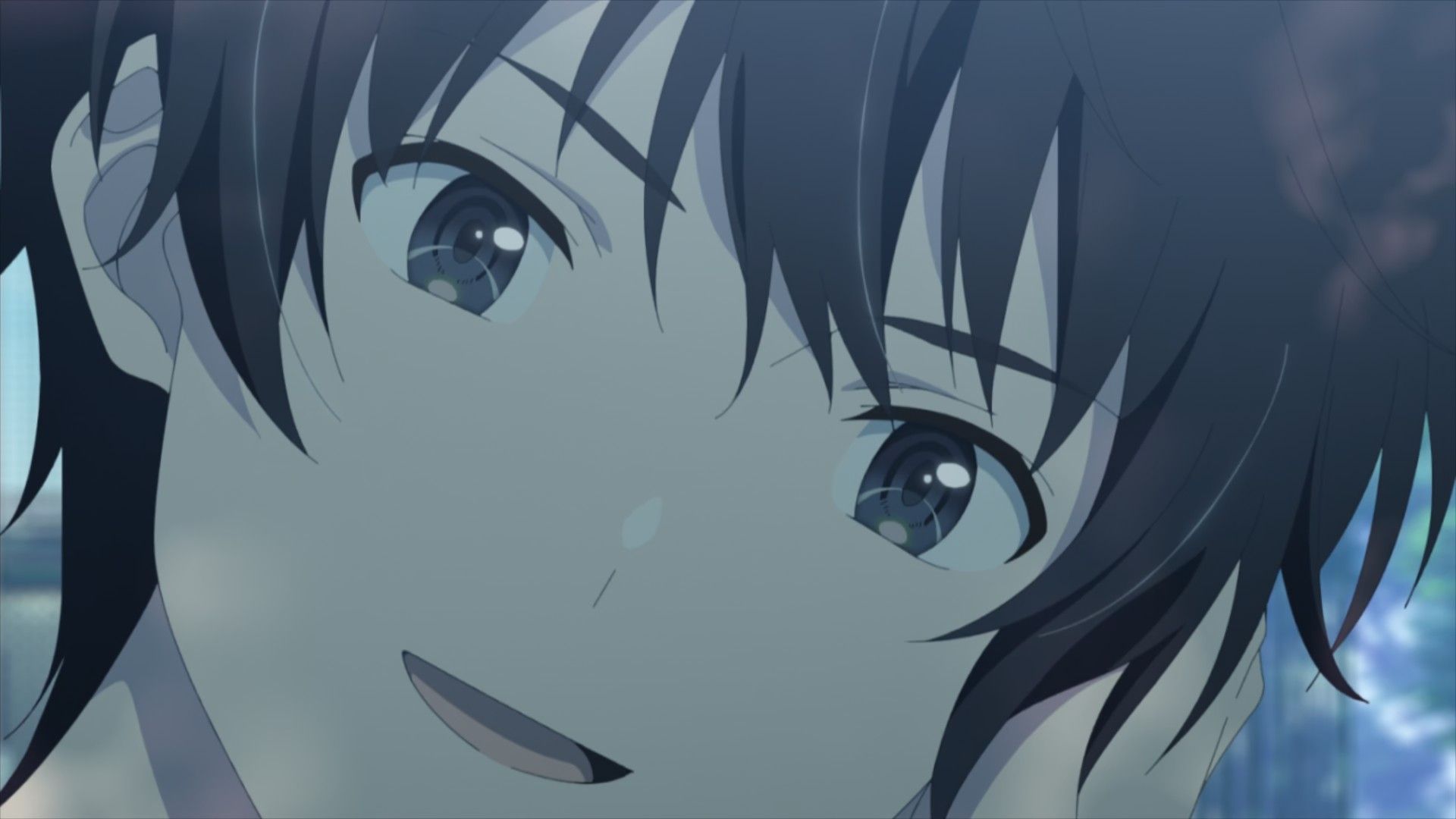
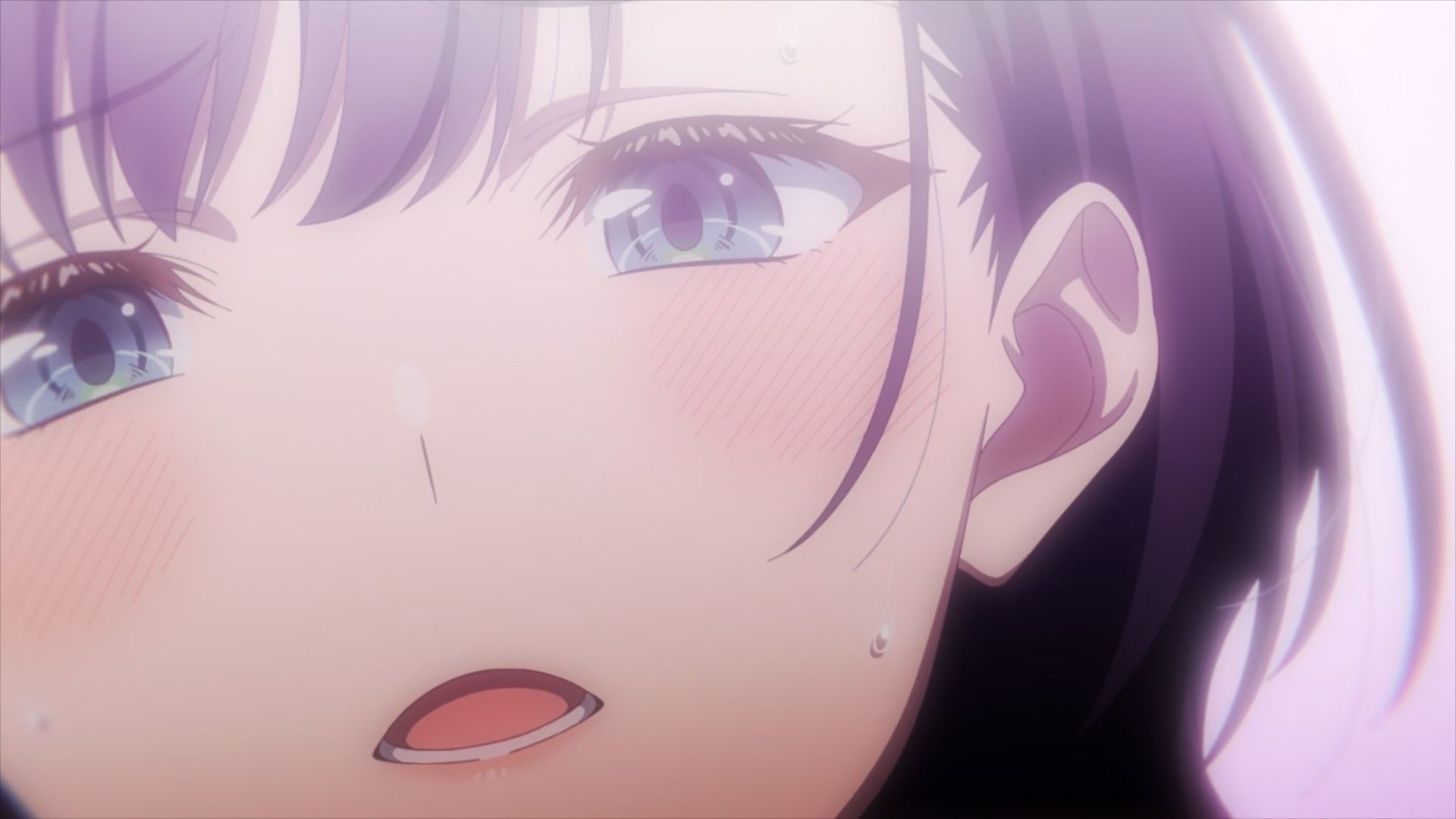
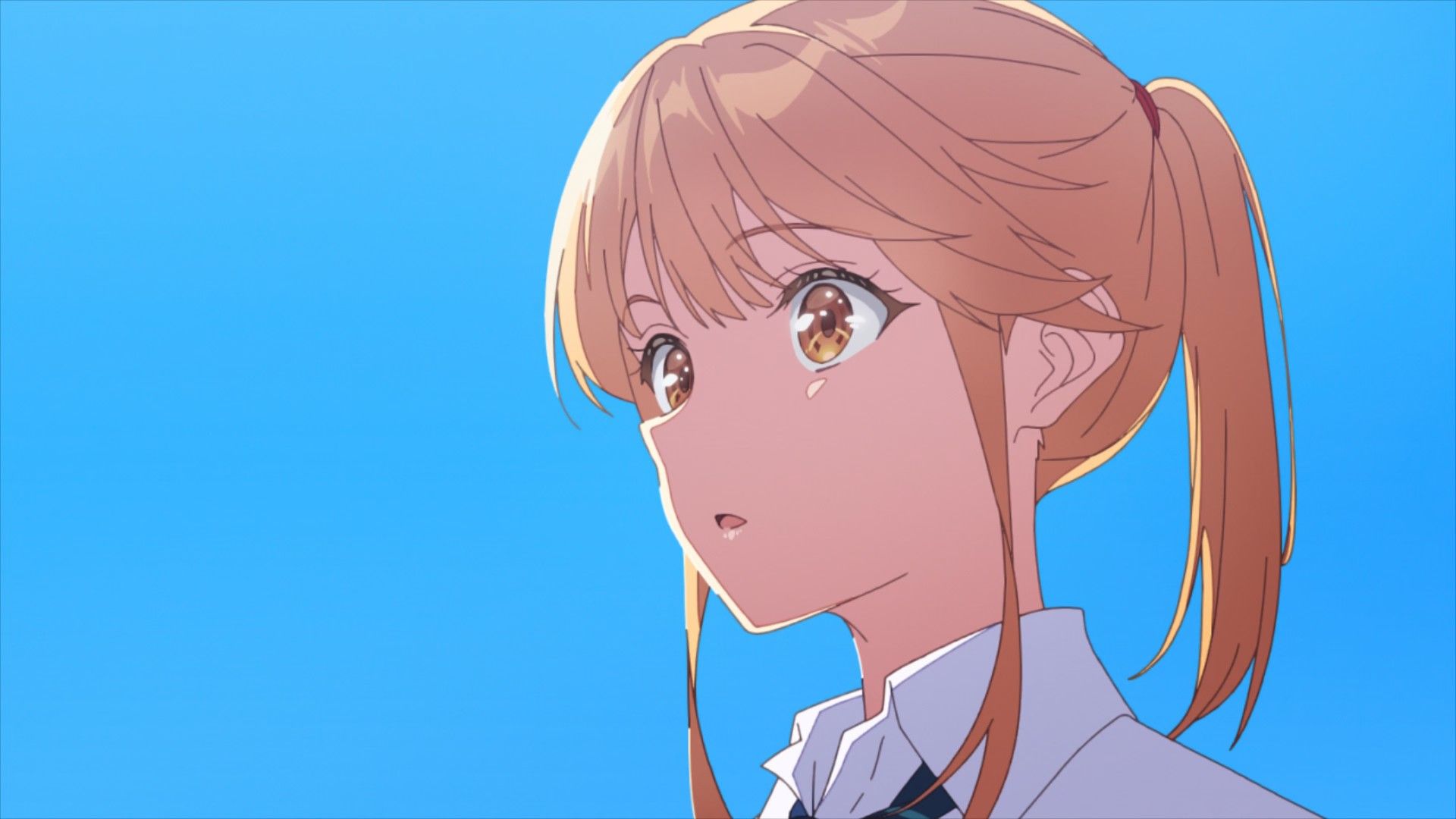
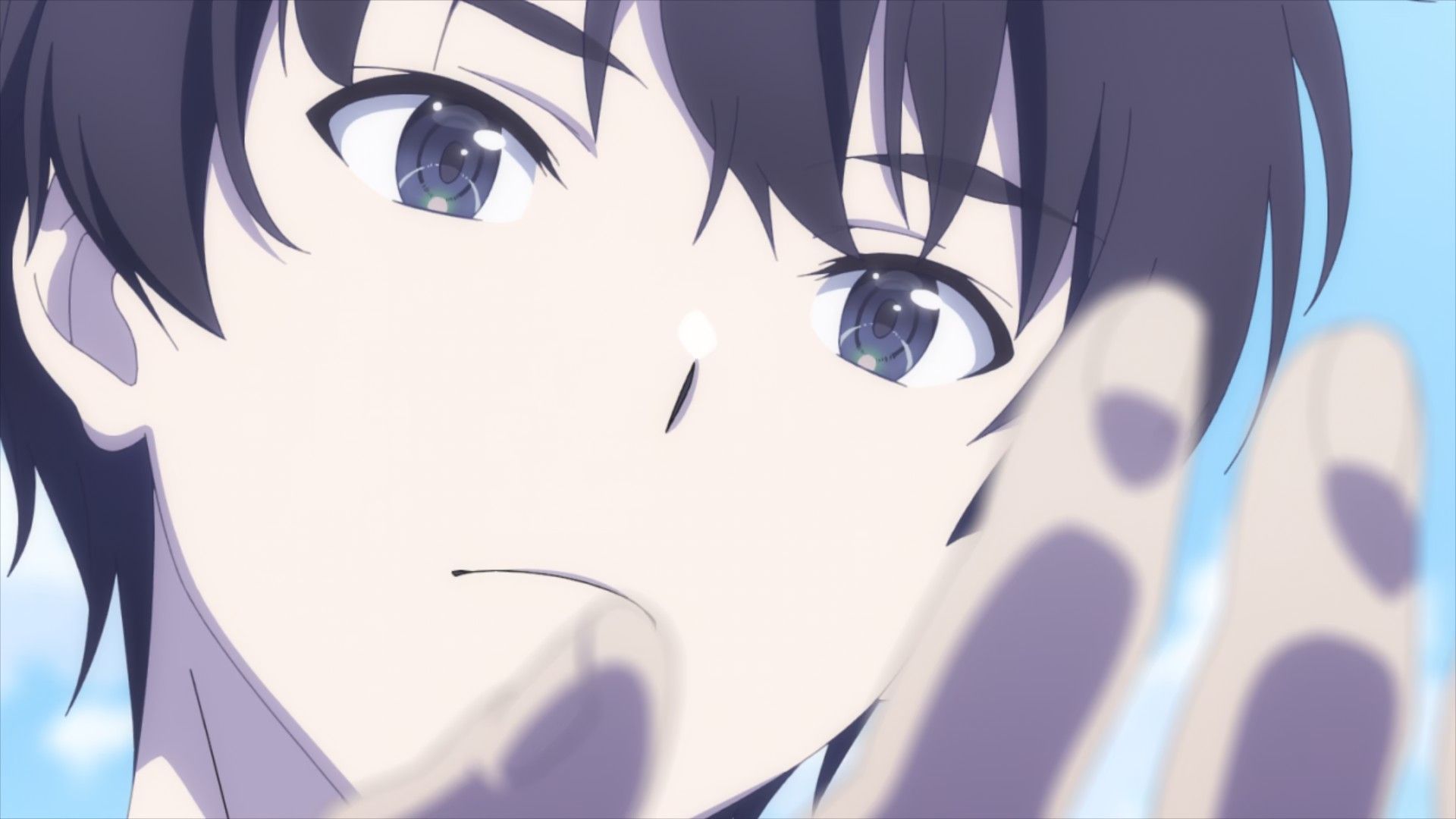
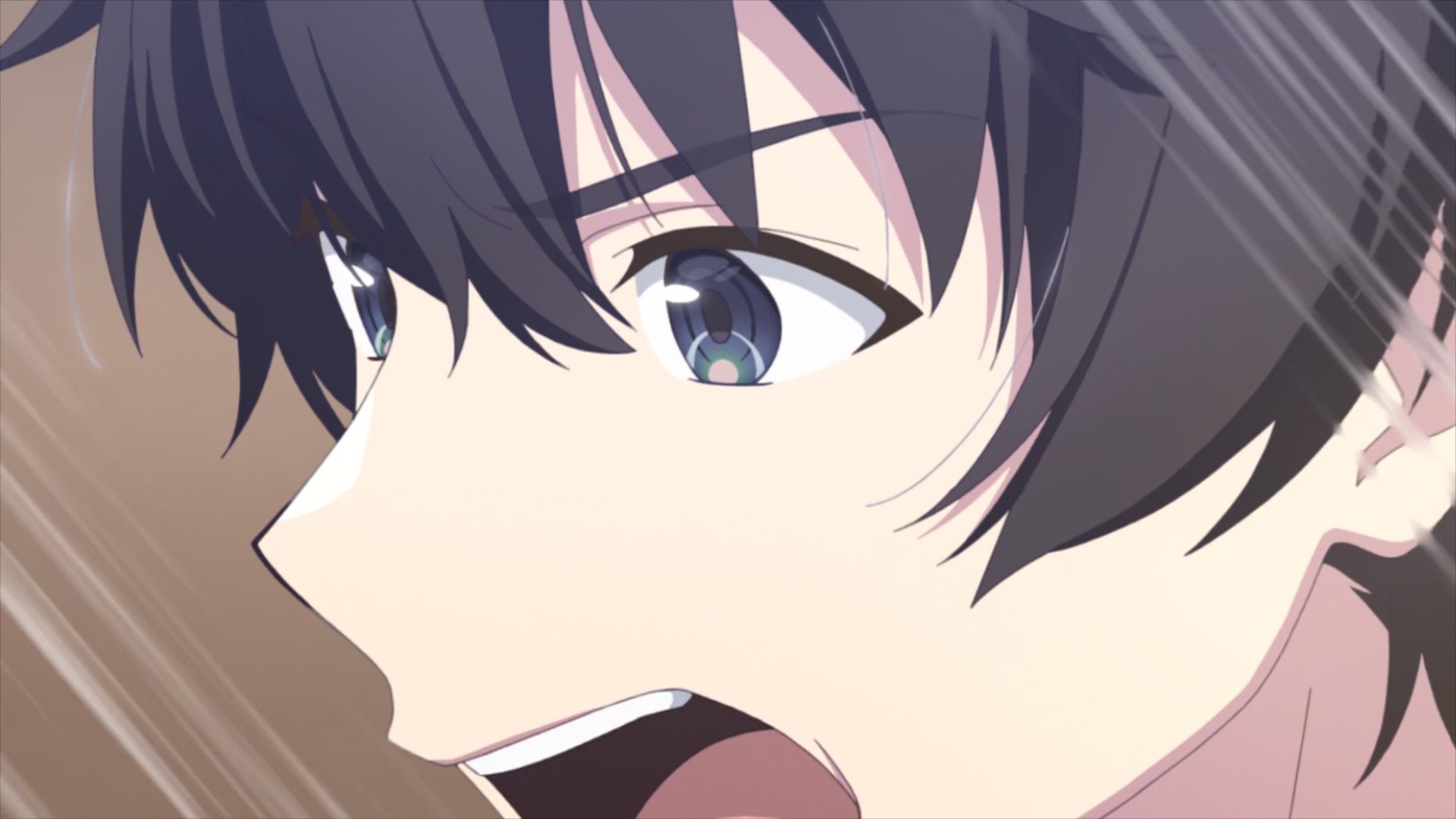
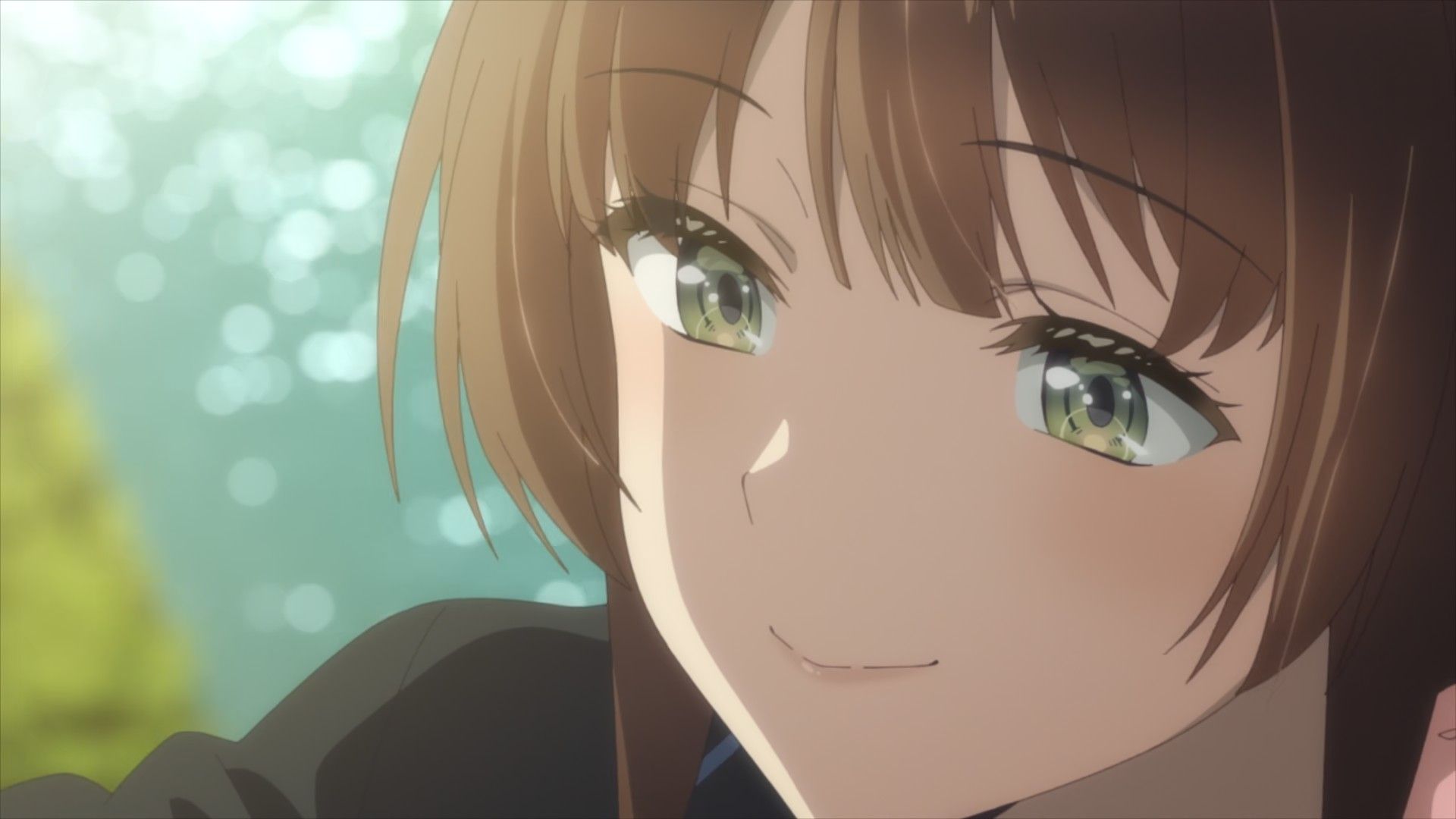
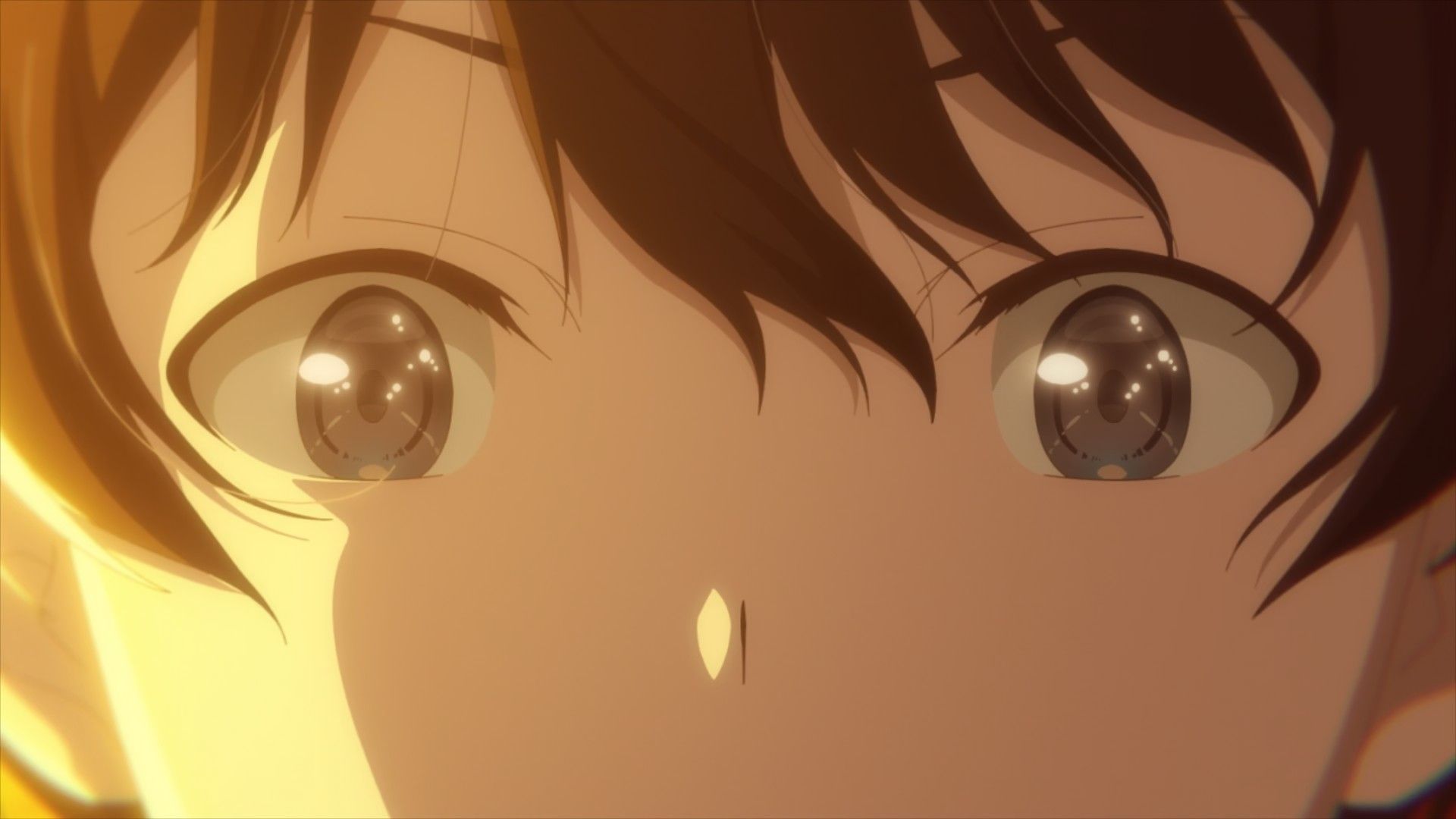
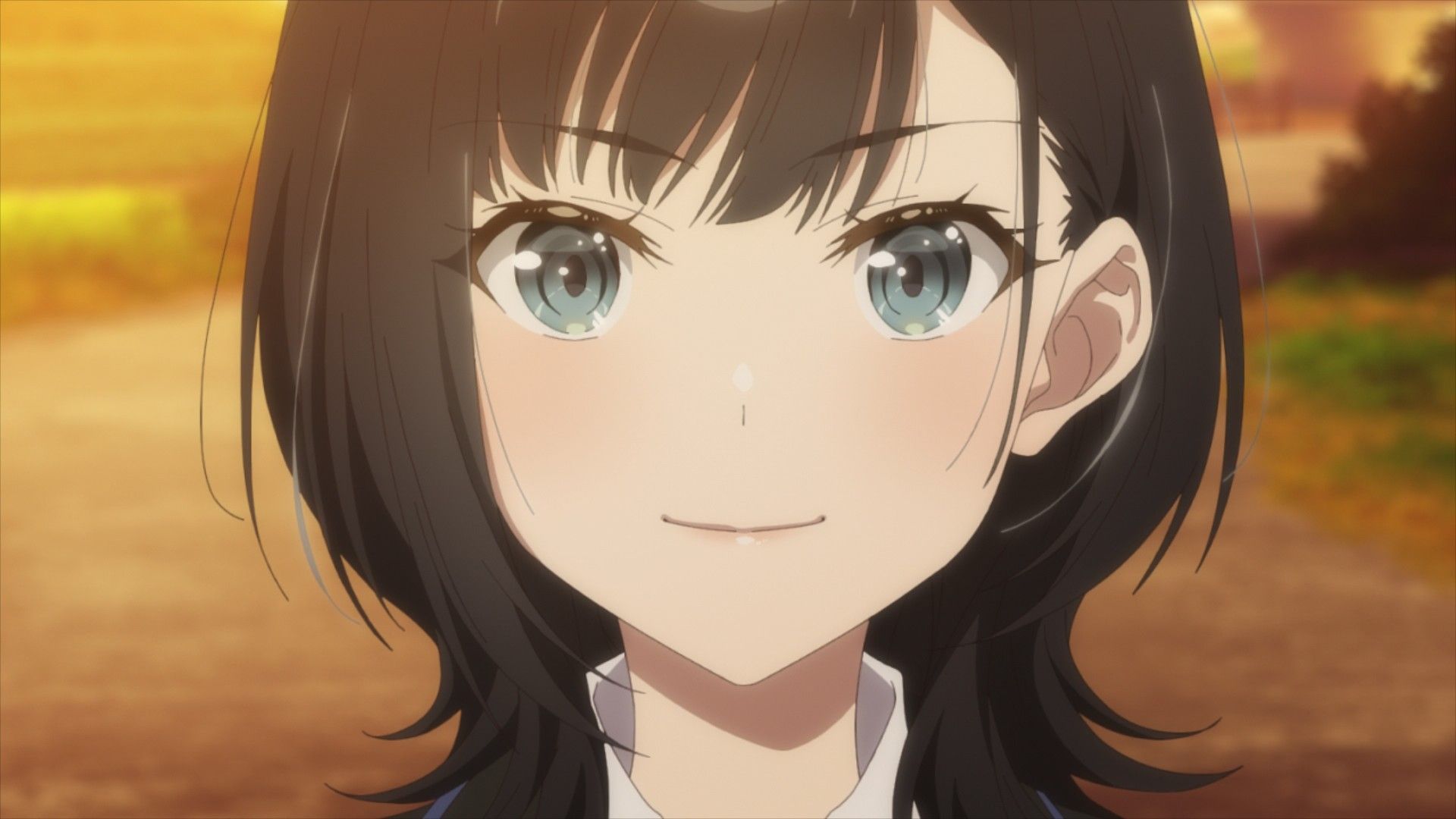
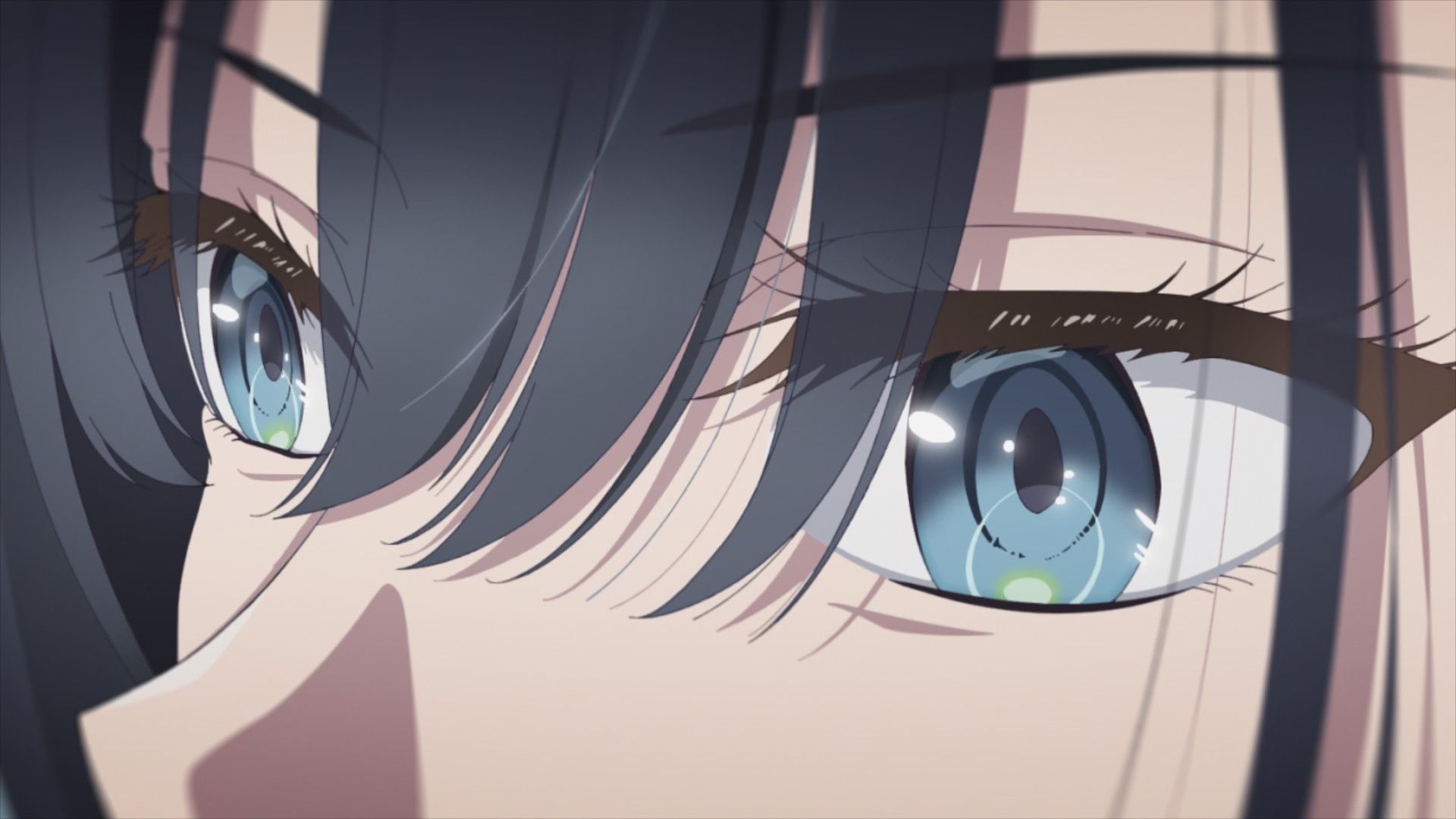
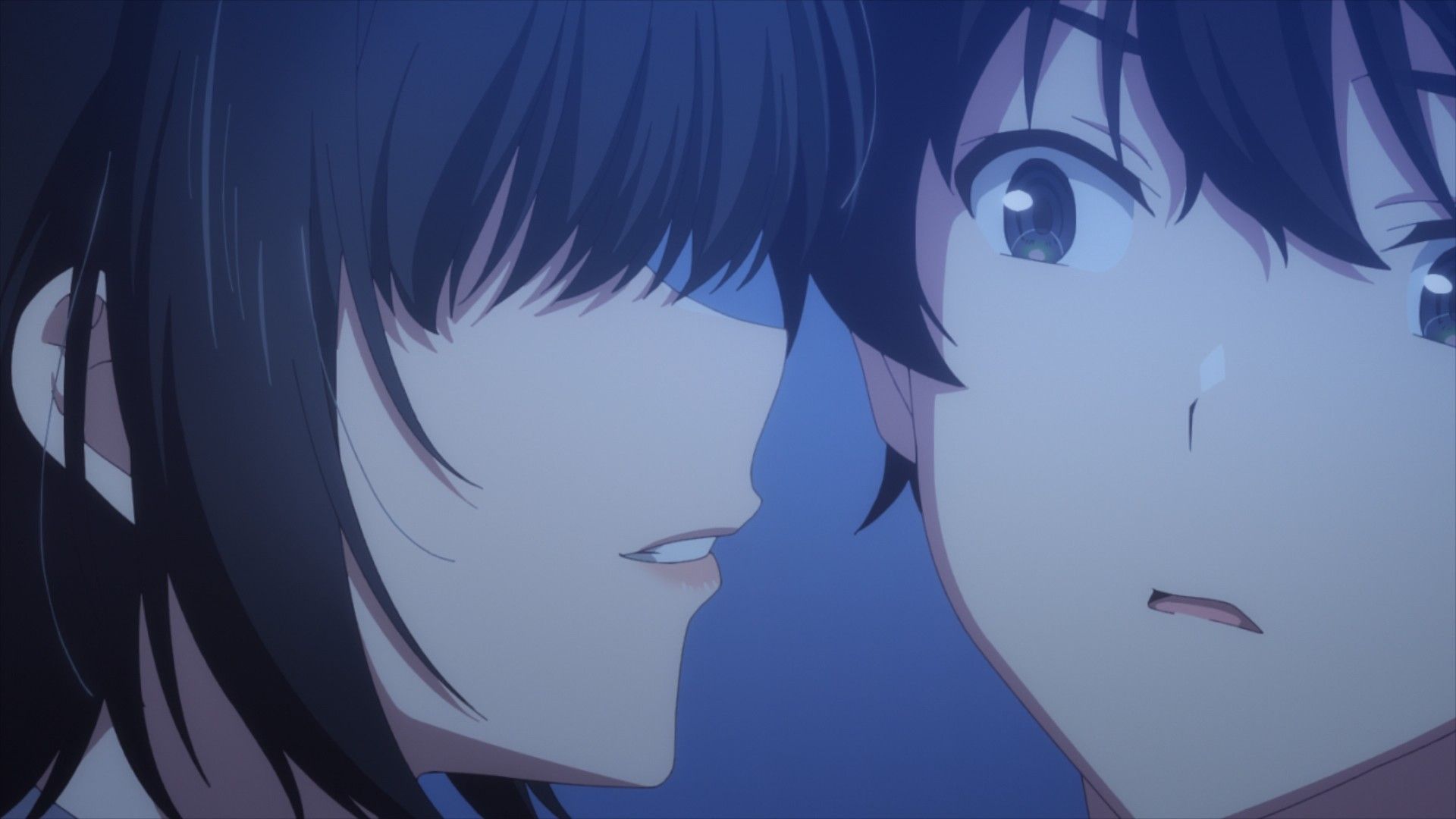
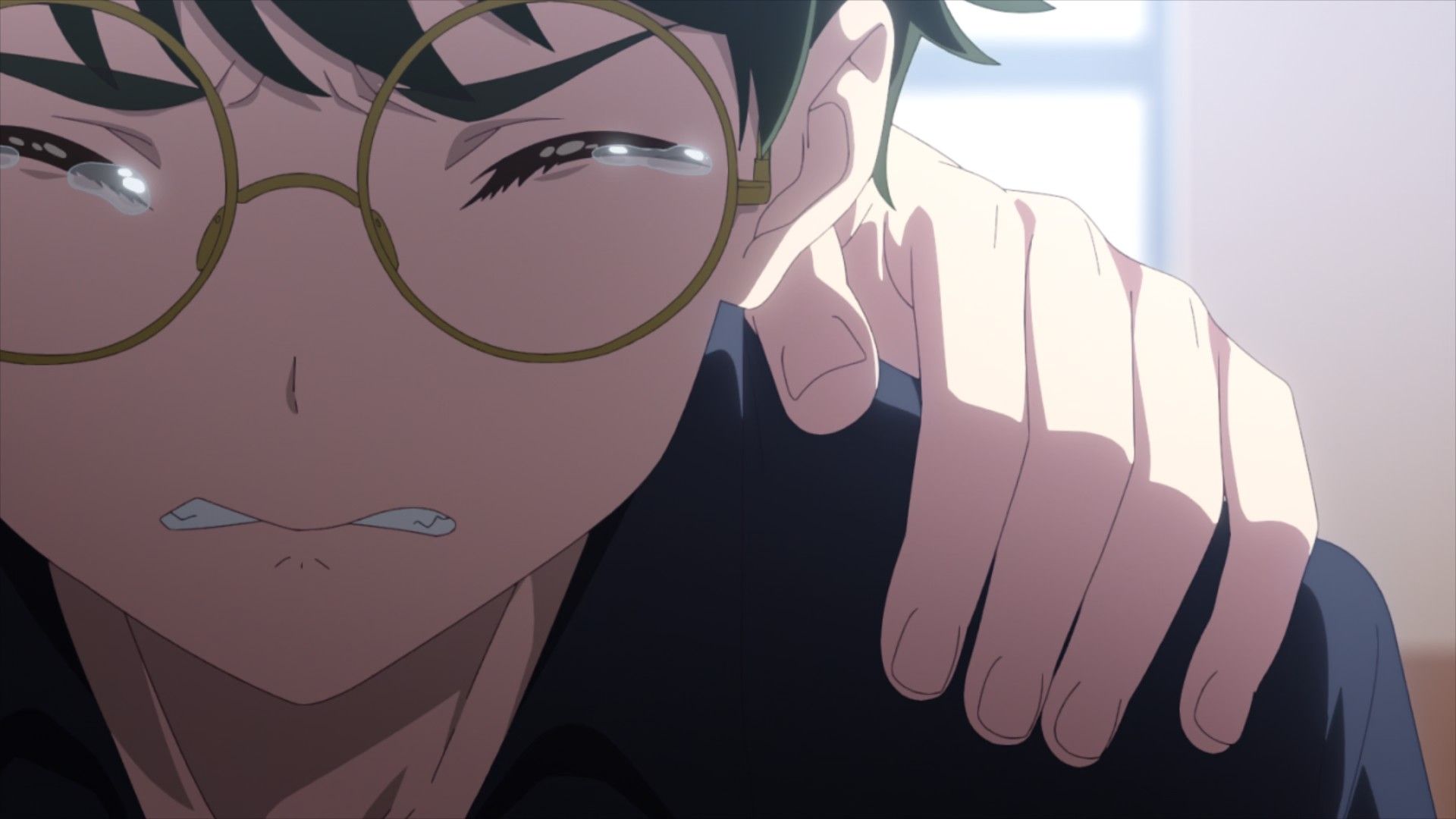
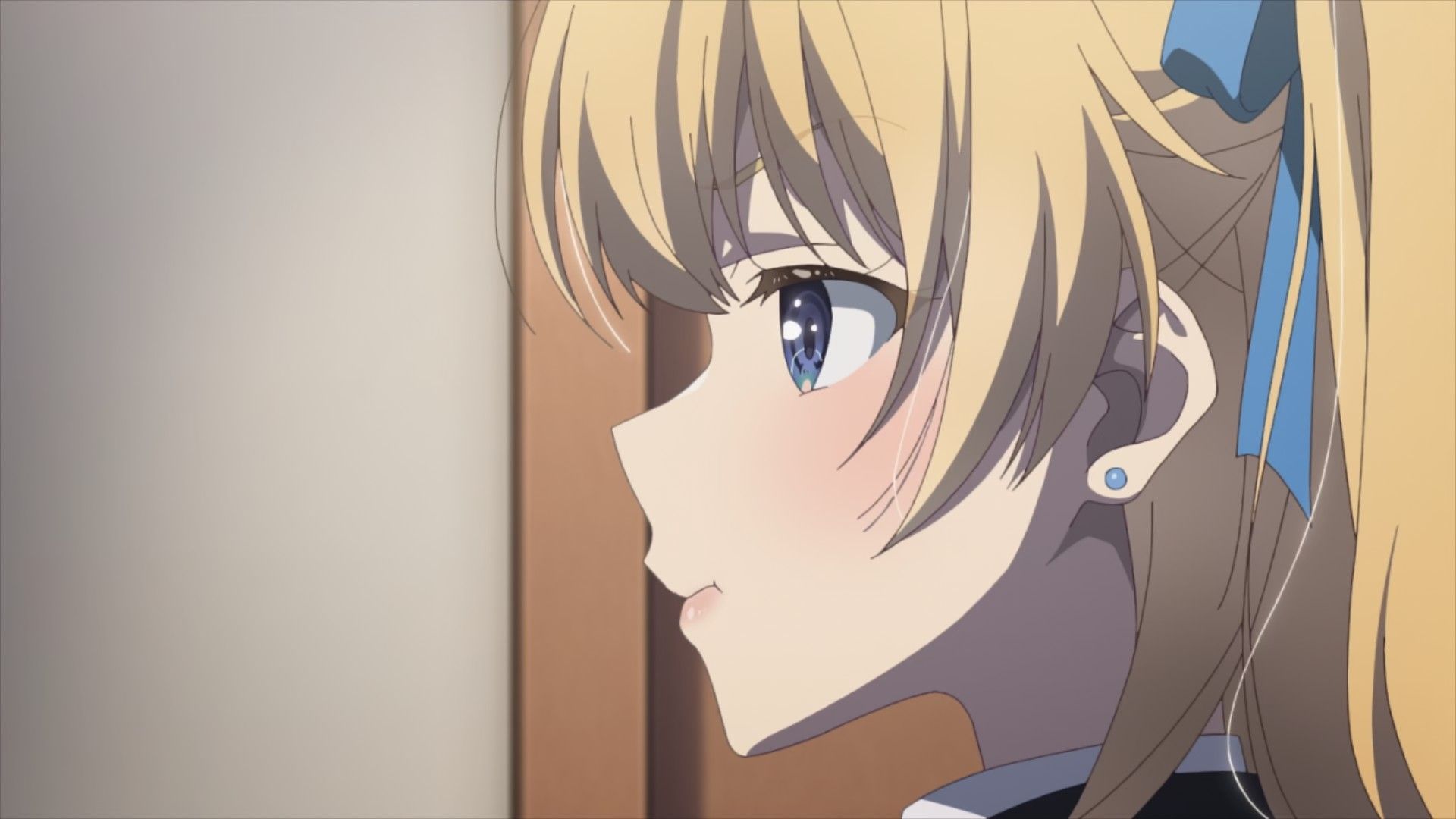
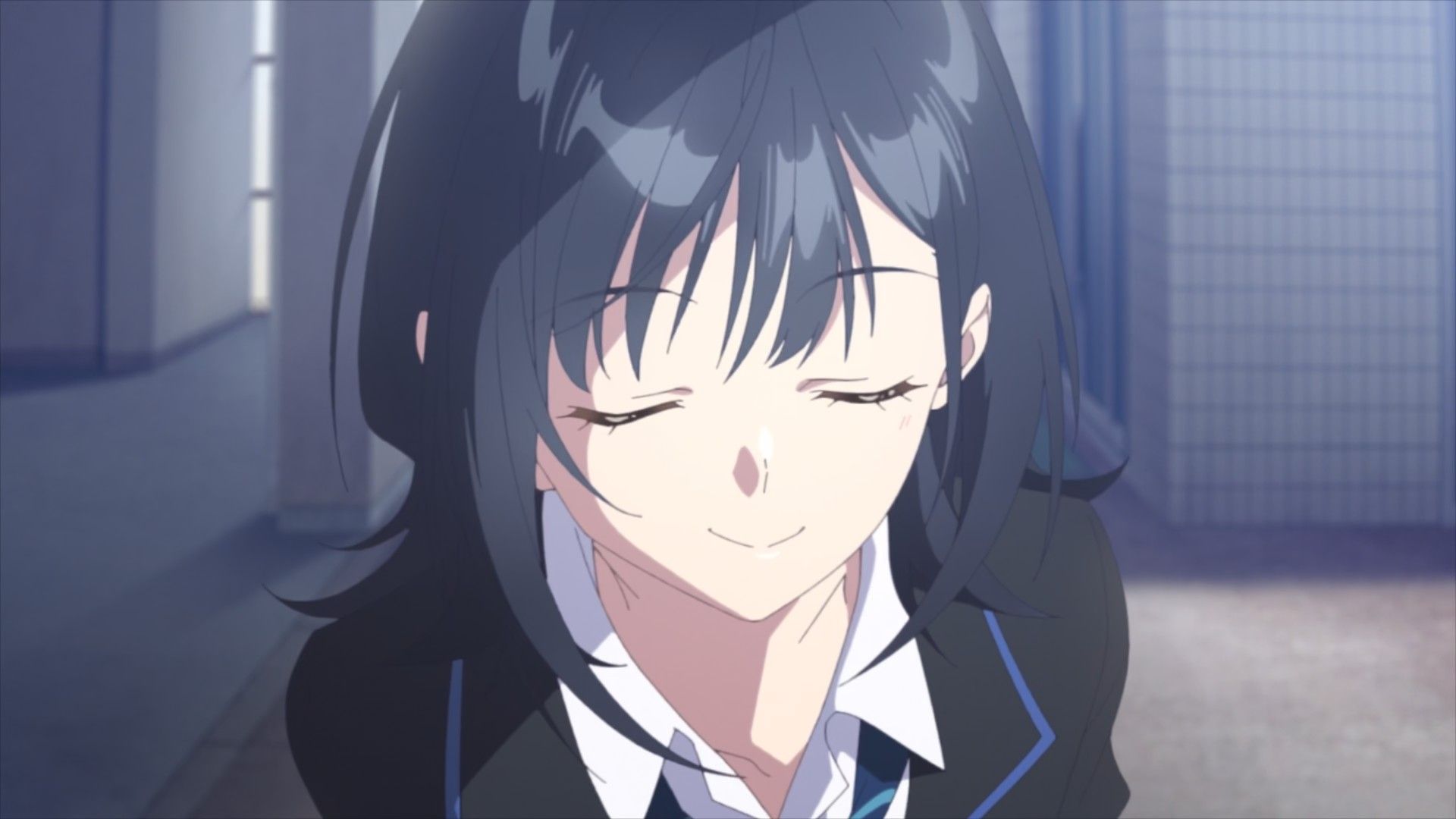
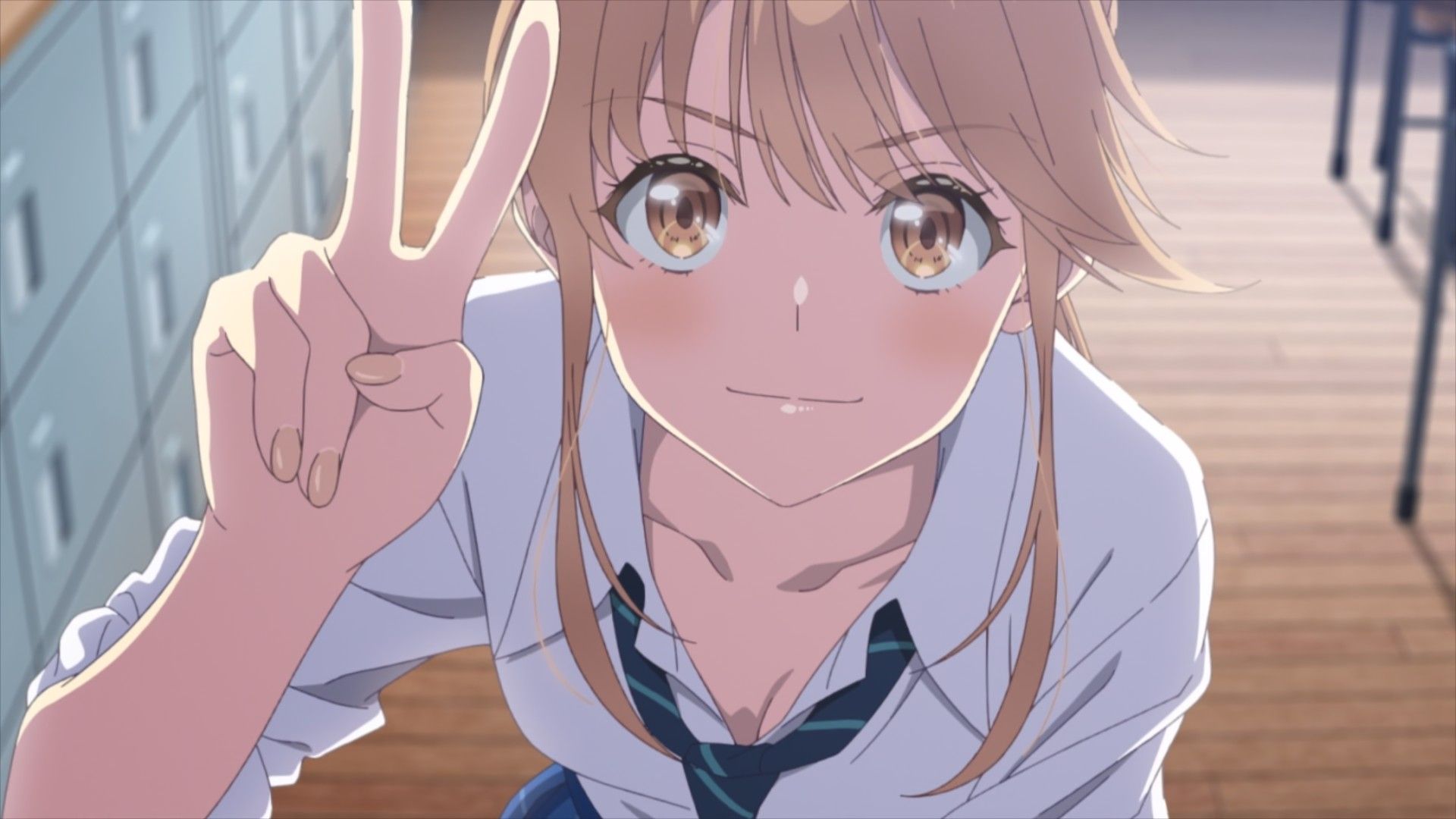
The quality of the art itself remains at the highest level throughout the first season. Close-ups of the characters’ faces, and their eyes in particular, are unbelievably rich in detail. Such directorial choices aren’t just empty displays of the animators’ skills; they serve as a narrative tool. They allow for the communication of complex emotions and moments where the characters’ social masks begin to subtly crack, all without the need for words. The animation is remarkably dynamic in action scenes, yet subtle during intimate conversations.
Audio
The sound design in Chitose-kun wa Ramune Bin no Naka is a perfect complement to the visuals. The opening theme, titled Liar and performed by Kucci, deserves a mention—it is one of my favorites from the Winter 2026 season.
However, the greatest asset of the audio is the voice acting. The seiyuu poured their entire souls into creating multi-dimensional characters, perfectly interpreting the director’s intentions. The characters’ emotions were captured masterfully. Special recognition goes to Sakata Shougo in the role of Chitose Saku, who had to balance the tone of a confident, arrogant leader with the voice of an internally broken teenager. An equally phenomenal performance was given by Hasegawa Ikumi as Nanase Yuzuki, whose transition from a cold, perfect student to a terrified, weeping victim of trauma in the rain genuinely sends chills down your spine.
Chitose-kun wa Ramune Bin no Naka (2025) – Plot and Characters
Introduction
As soon as I heard about the TV adaptation of this series while browsing the seasonal lineup, I knew I had to watch it. The promotional posters and the subsequently released PVs ensured this title automatically landed on my priority list.
The anime focuses on a protagonist at the very top of the social ladder. Chitose Saku is the king of the school hierarchy, the embodiment of an extrovert (youkya) and someone leading a satisfying, full social life (riajuu). However, the series doesn’t entirely discard the foundations upon which the school romance genre was built. On the contrary, it takes familiar motifs, meticulously polishes them, and uses them as a base to tell a deep, psychologically complex story about Japanese youth.
Currently, there is an absolutely disgusting trend on the Western internet to criticize everything through the lens of modern delusions. If you are among the oversensitive viewers who constantly complain about “problematic” things in fiction, force political correctness where it doesn’t belong, or get offended by classic Japanese rom-com tropes or a bit of natural fanservice—this series will filter you out right from the start. And thank goodness for that.
The creators of Chiramune do not bow to the pressure of leftist babble from Western activists to forcibly “sanitize” characters. Instead, they focus on what the series is truly about: young Japanese people, their brutally honest relationships, beauty, and pressure. It is a pure love letter to the school drama genre. I expected a very solid title, but what I ultimately received after watching all the episodes far exceeded my expectations.
A Brief Overview of the Chitose-kun wa Ramune Bin no Naka (2025) Plot
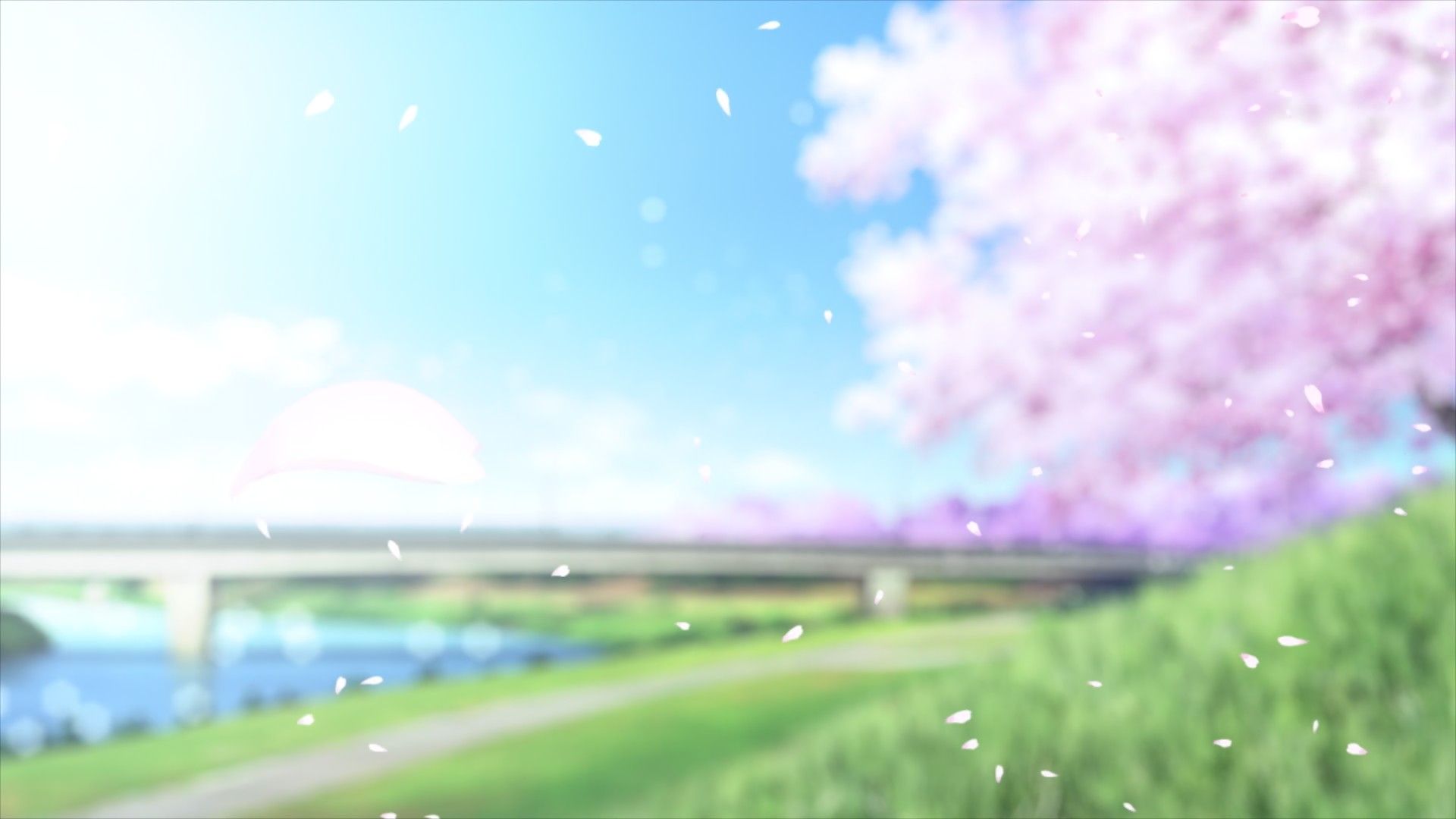
Akcja serialu rozpoczyna się w niezwykle urokliwej, wiosennej scenerii prefektury Fukui. Główny bohater, Chitose Saku, to uczeń cieszący się statusem niekwestionowanej gwiazdy w prestiżowej Szkole Średniej Fuji. Jego pozycja jest tak silna, że nawet złośliwe, anonimowe plotki krążące w przestrzeni internetowej, oskarżające go o bycie bezdusznym kobieciarzem, nie robią na nim absolutnie żadnego wrażenia. Saku utrzymuje perfekcyjną, pewną siebie postawę, obracając się wyłącznie w towarzystwie absolutnej elity szkoły.
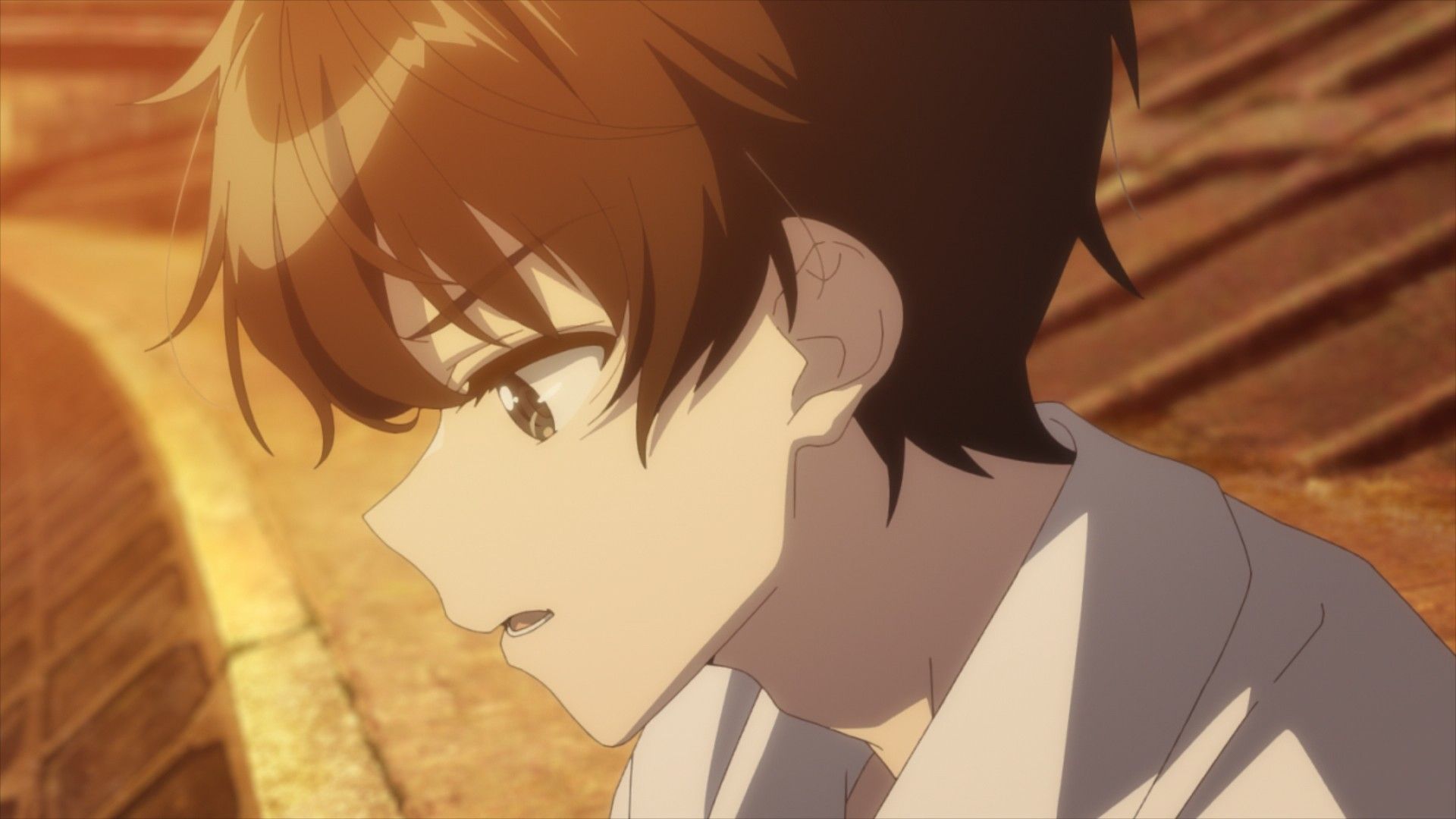
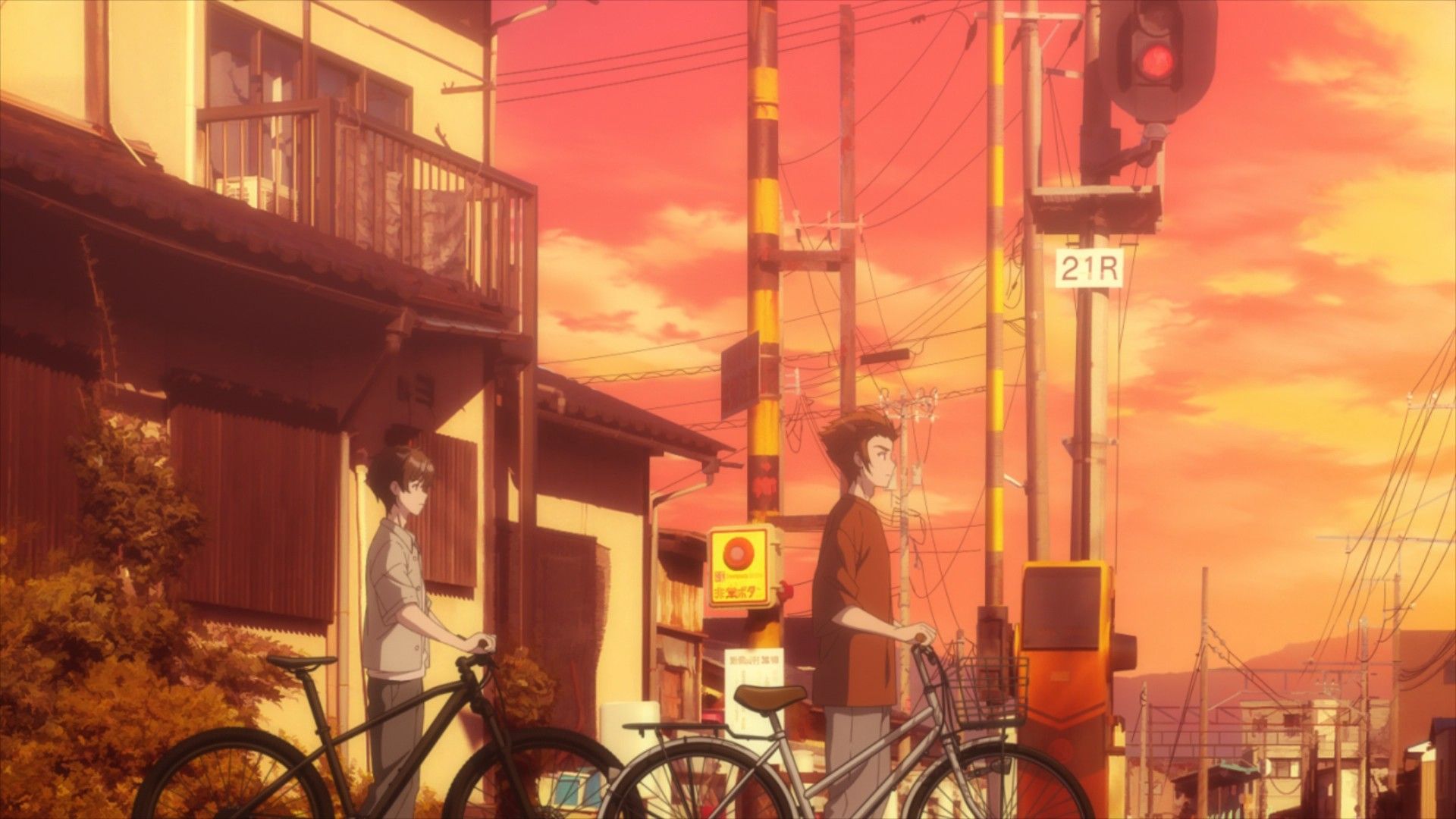
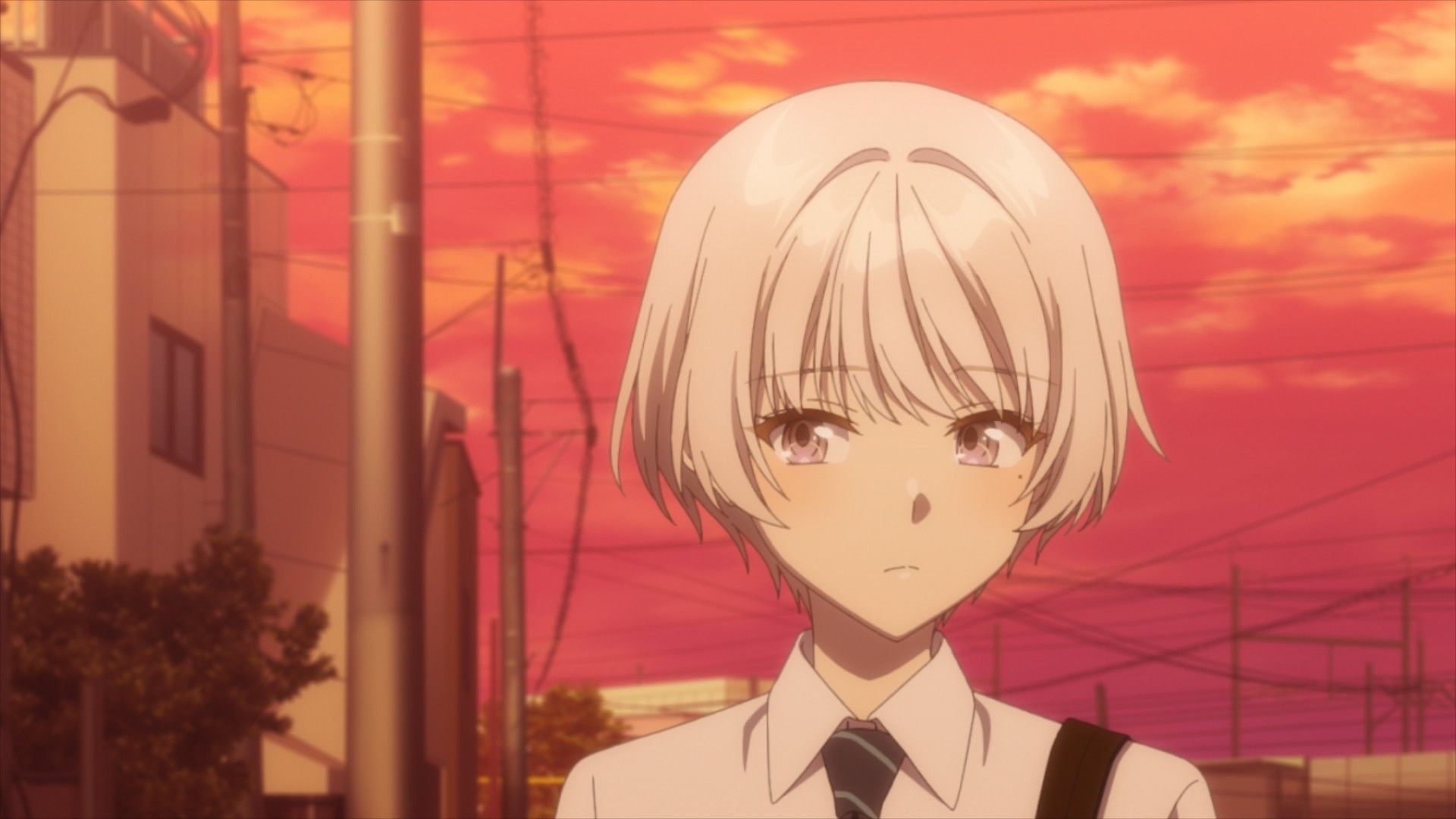
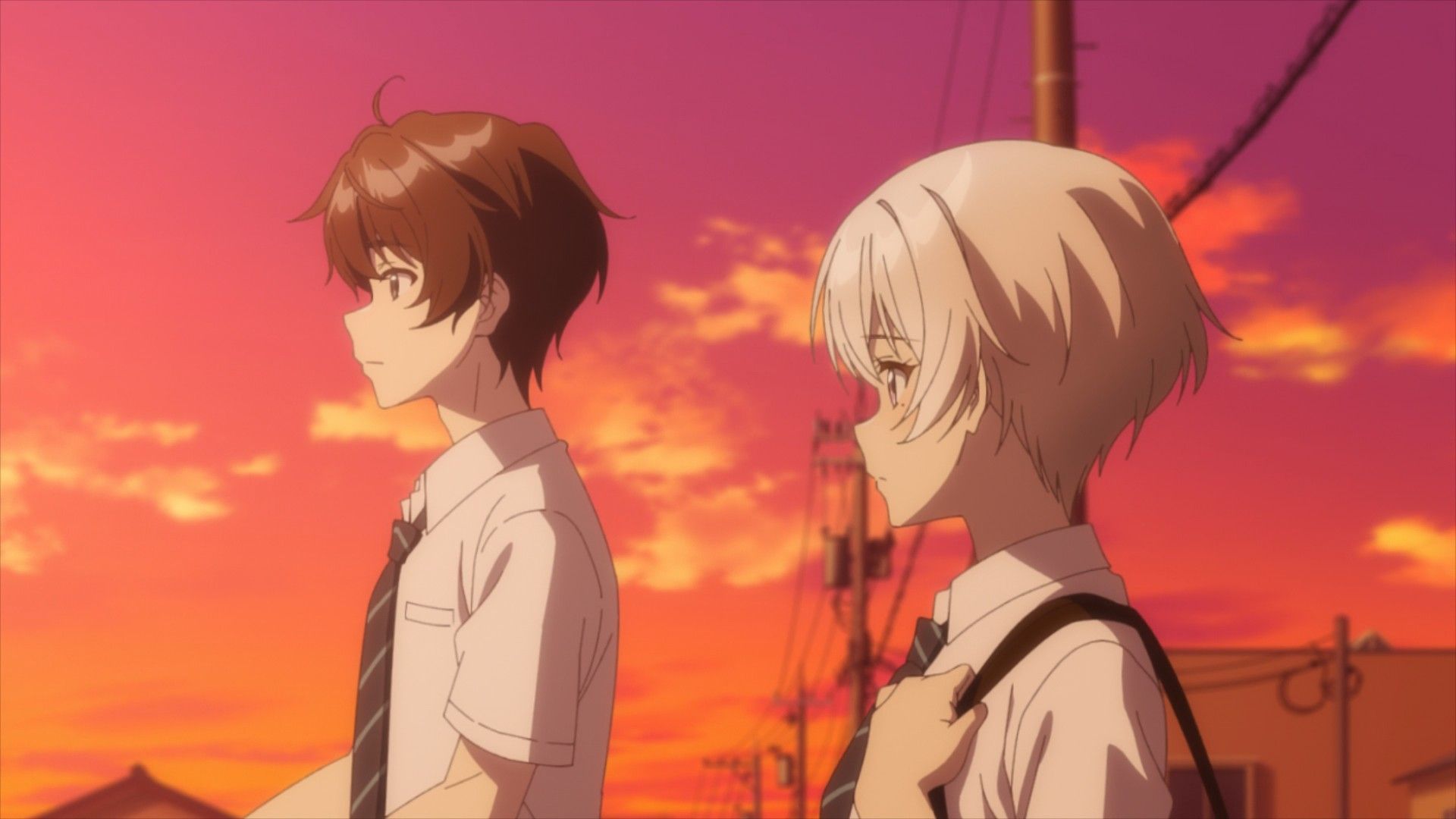
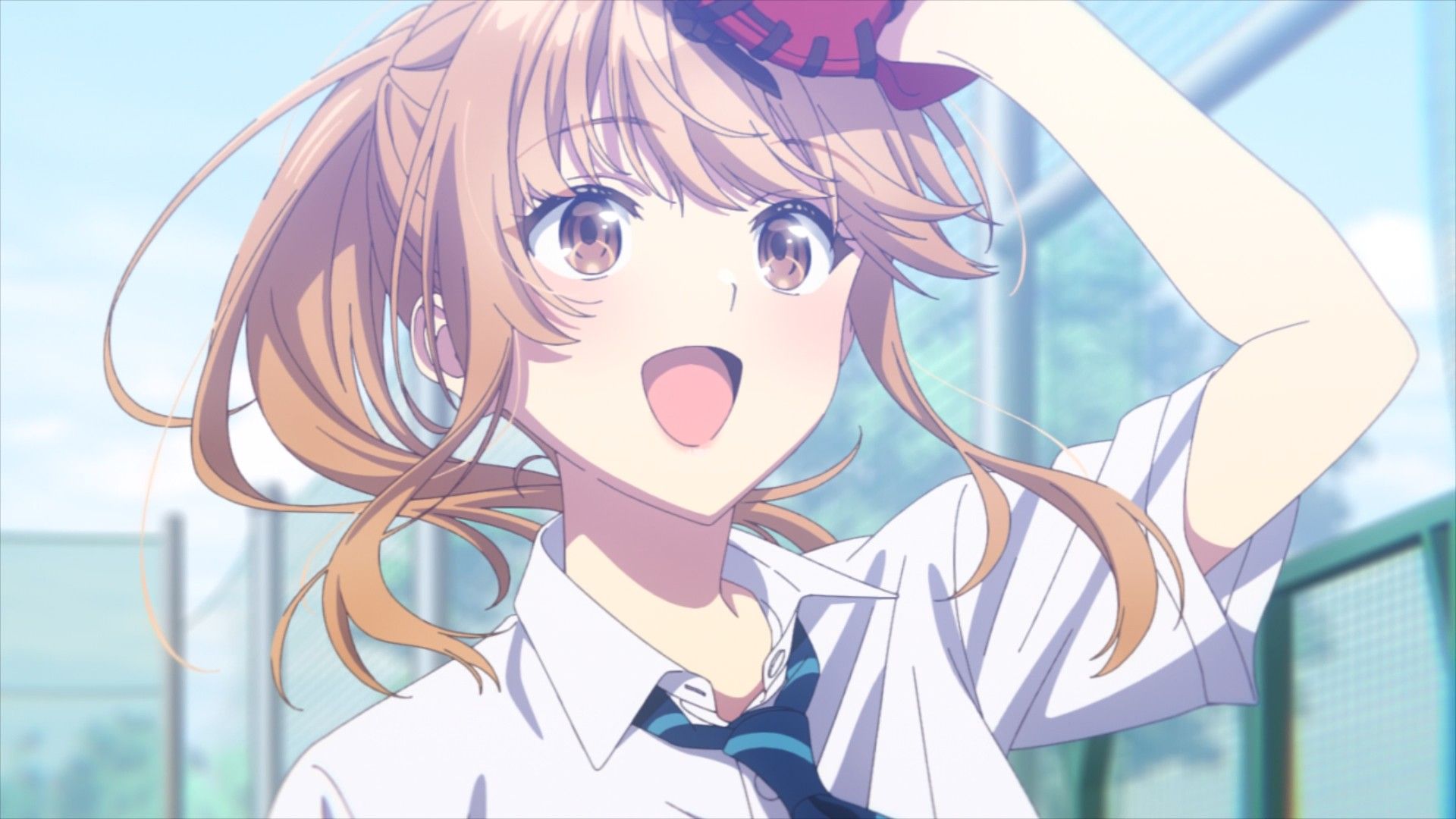
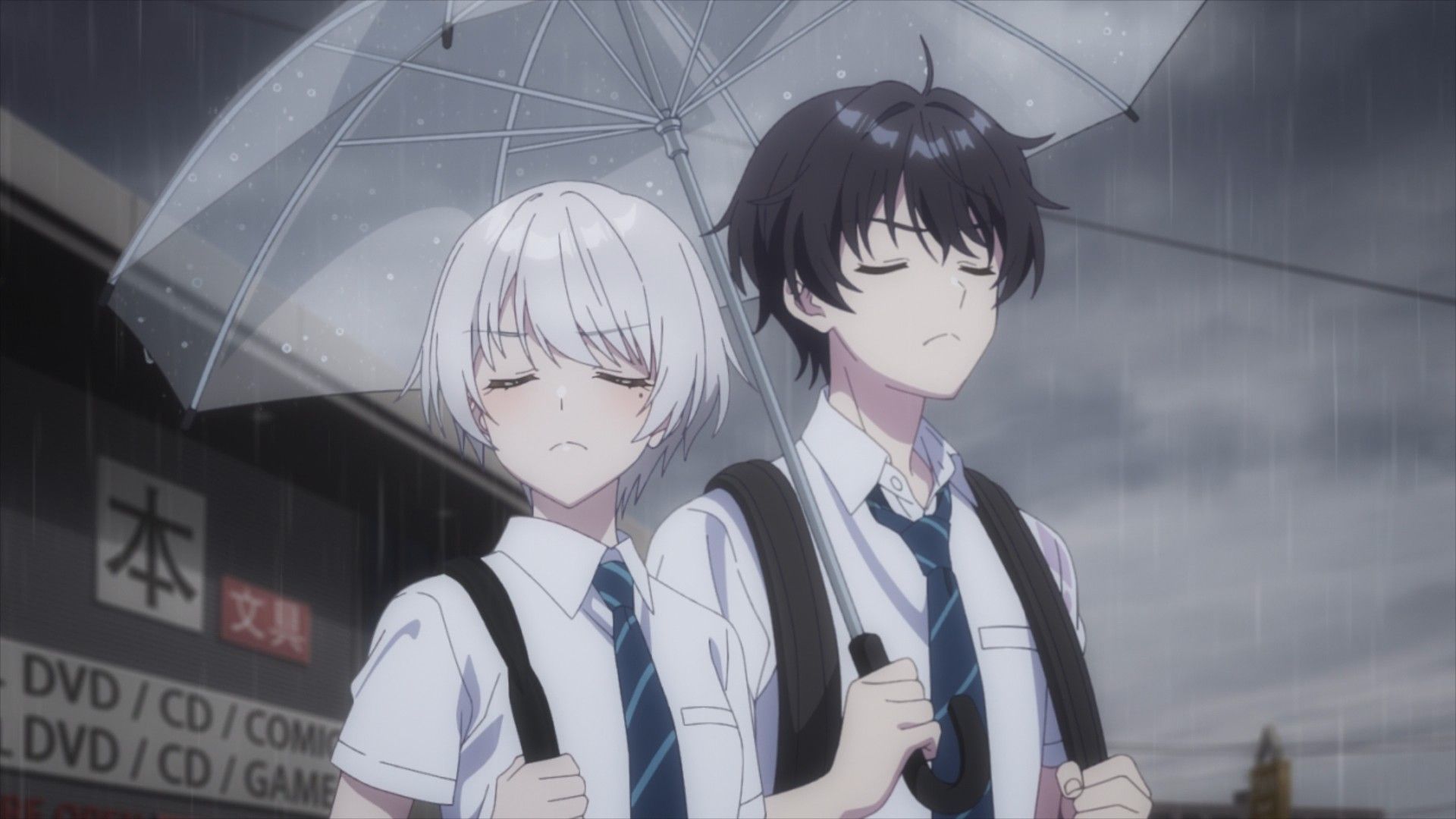
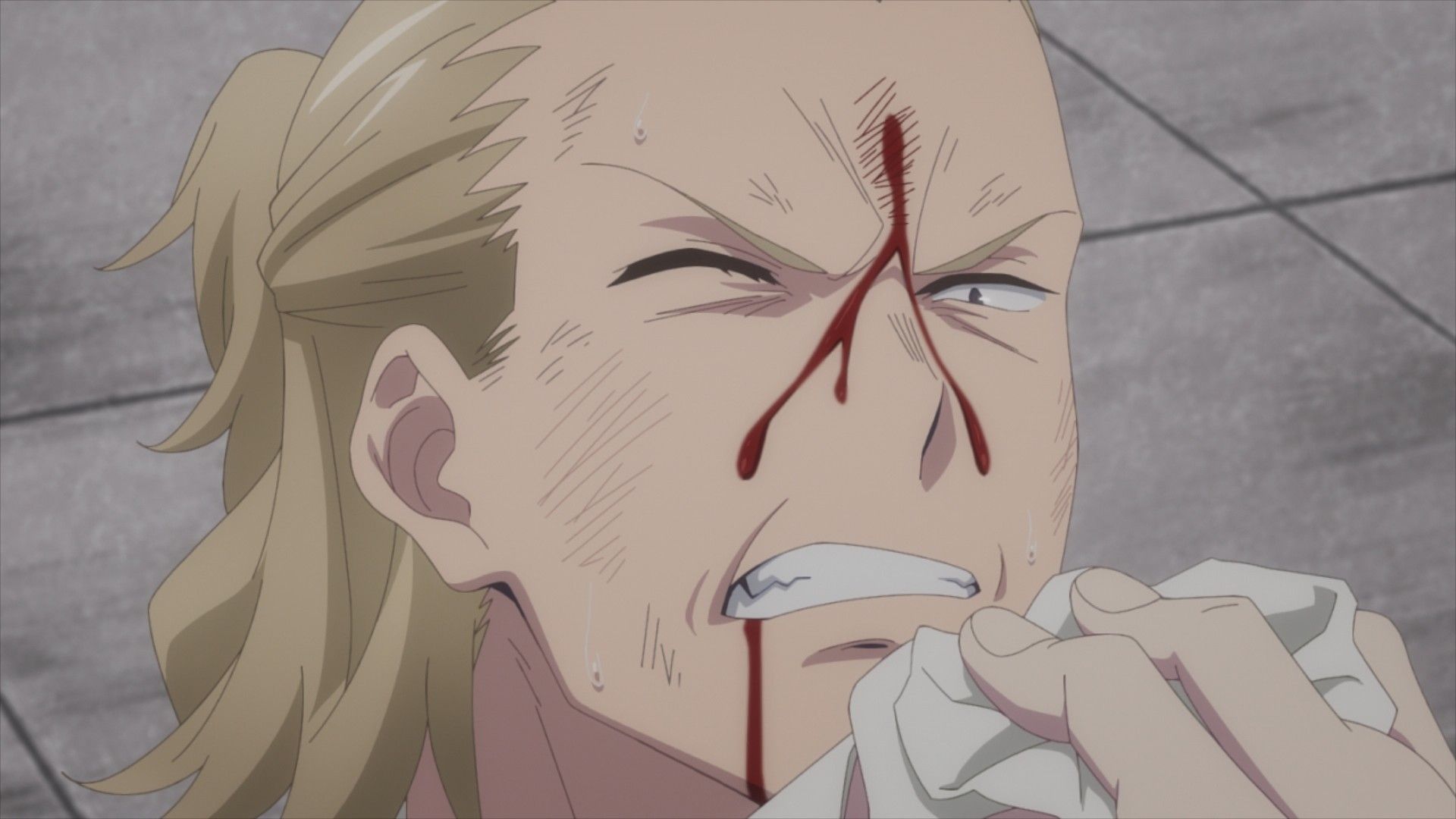
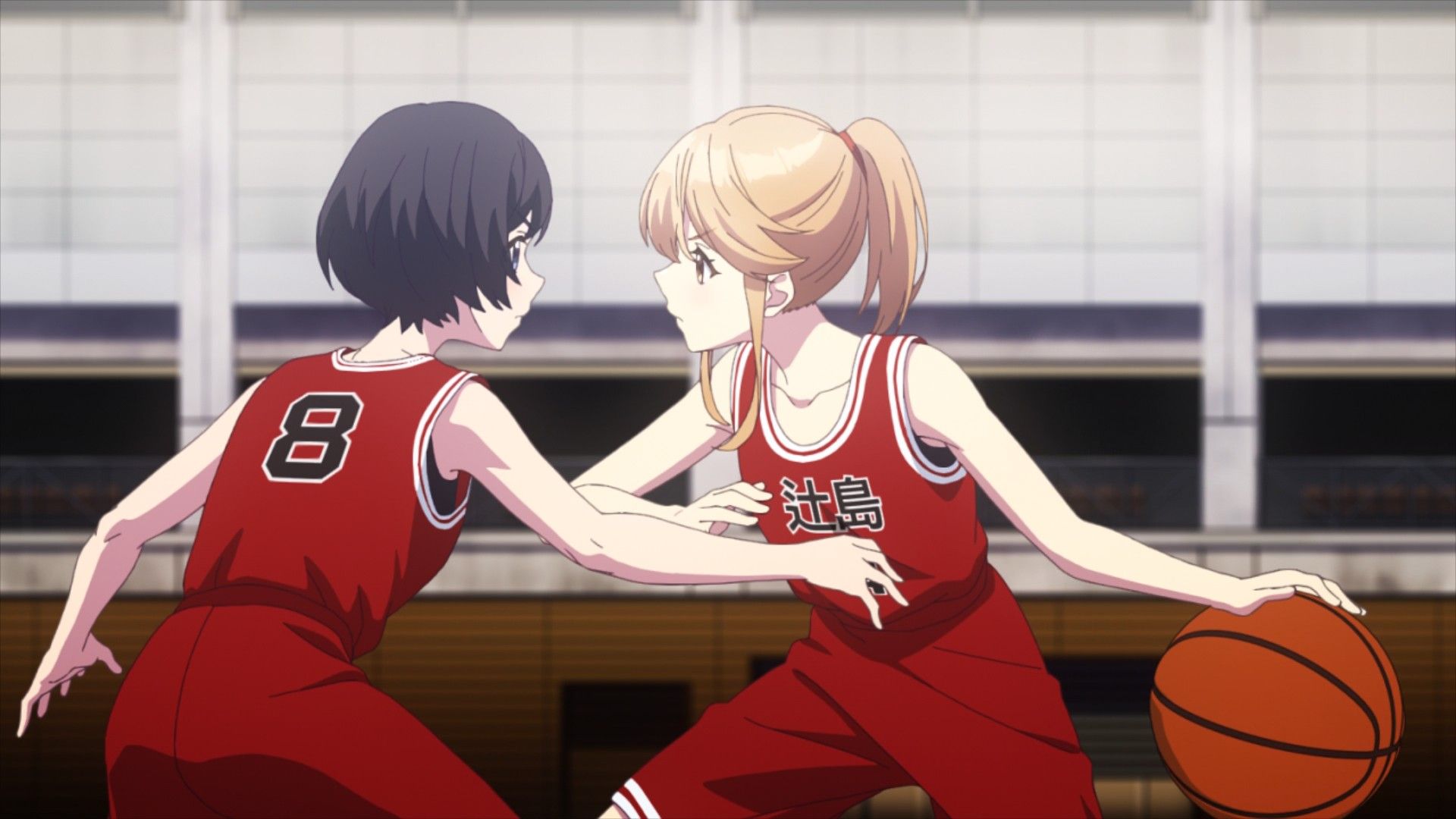
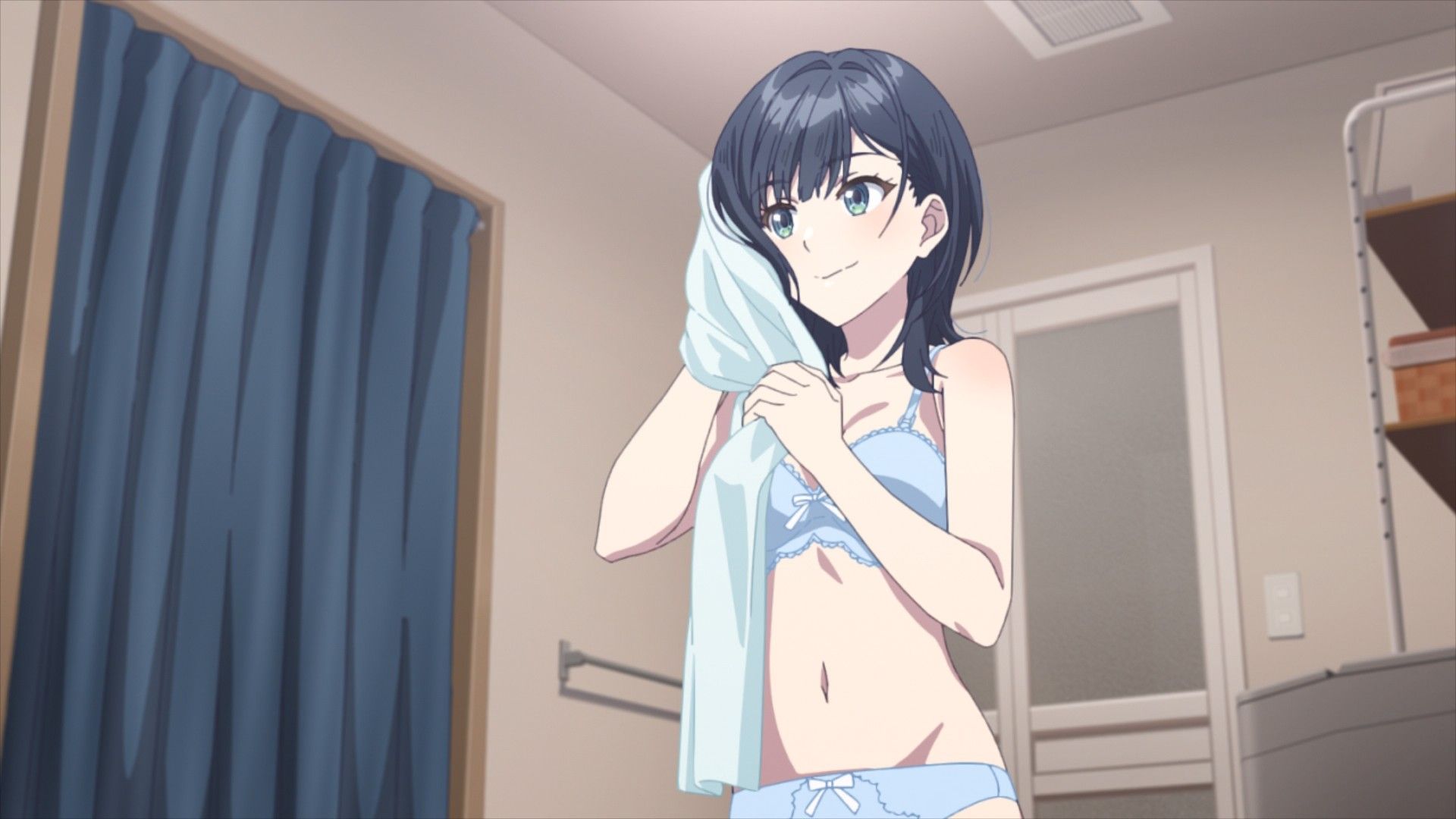
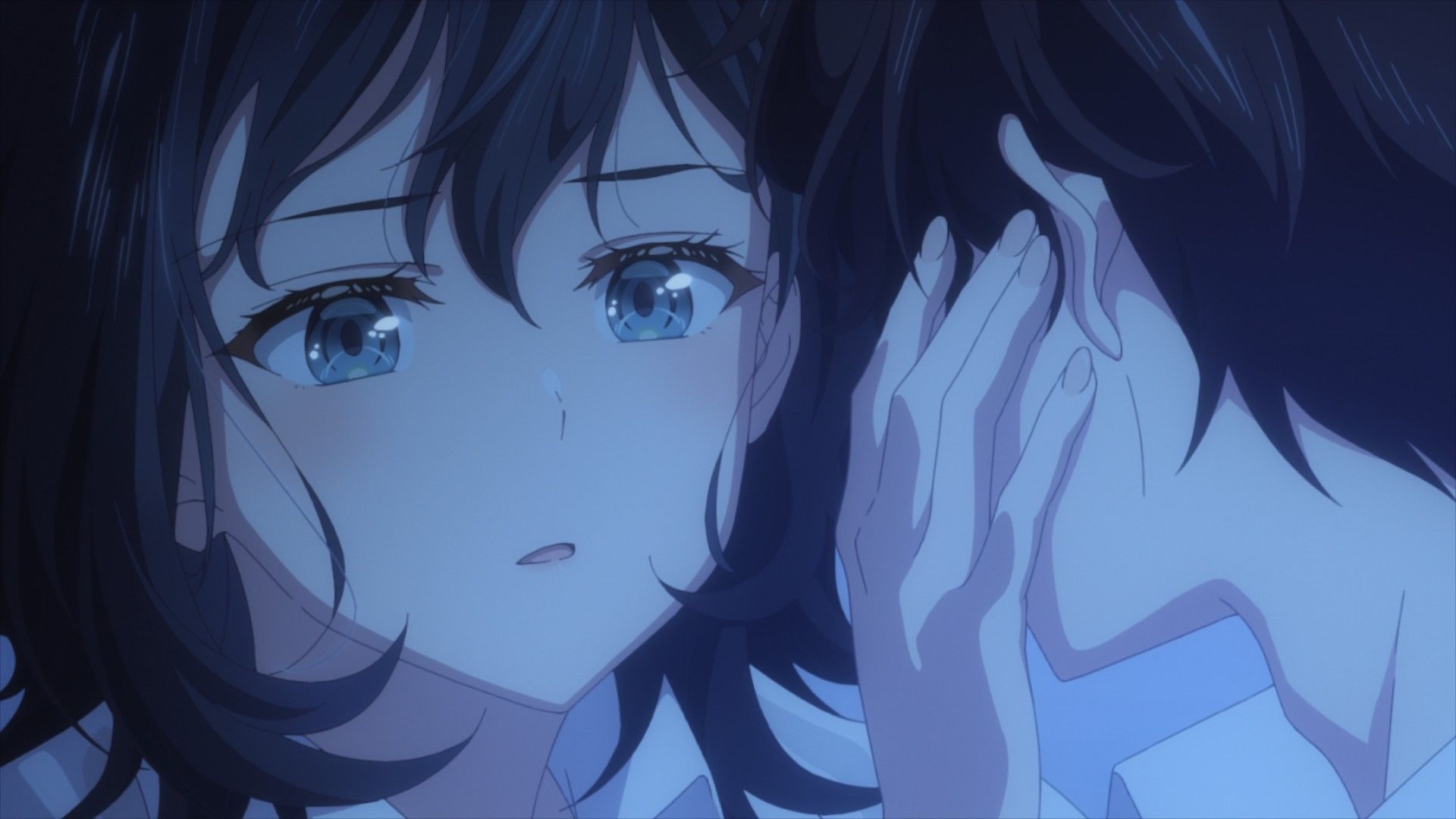
Jego najbliższy krąg przyjaciół to zbiór wybitnych jednostek. Należą do niego olśniewająca idolka Hiiragi Yuuko, niezwykle przenikliwa, emanująca opiekuńczością Uchida Yua, chłopczyca i liderka drużyny koszykarskiej Aomi Haru, uchodząca za nieskazitelną piękność Nanase Yuzuki a także dwóch wiernych towarzyszy – gorącokrwisty koszykarz Asano Kaito oraz kalkulujący na chłodno piłkarz Mizushino Kazuki. Ich codzienne, z pozoru beztroskie życie zostaje zakłócone, gdy wychowawca, Iwanami Kuranosuke, zleca Saku trudne zadanie. Nauczyciel wymusza na protagoniście podjęcie się rehabilitacji ucznia, który całkowicie odciął się od społeczeństwa i odmawia uczęszczania na zajęcia – Yamazaki Kenty.
Saku, związany swoim własnym, wewnętrznym kodeksem estetycznym, nakazującym mu zawsze odgrywać rolę bohatera, podejmuje rękawicę, co staje się początkiem wielowarstwowej opowieści.
What is the series about
This section contains spoilers. They are not critical and do not reveal the entire plot, but they contain significant information regarding character development and the outline of events. If you do not want anything accidentally spoiled, please skip this section.
Deconstruction of the Outcast Archetype
The first four episodes focus on the clash of two extreme worlds: the school elite and alienated introverts. Yamazaki Kenta represents the inkya archetype—a loner with a strong victim complex. Kenta harbors open hatred for Saku and his kind, believing they won the genetic lottery and that society is fundamentally unfair. Chitose mercilessly deconstructs this worldview. He discovers that the cause of Kenta’s alienation was a brutal rejection and mockery by a girl named Miki.
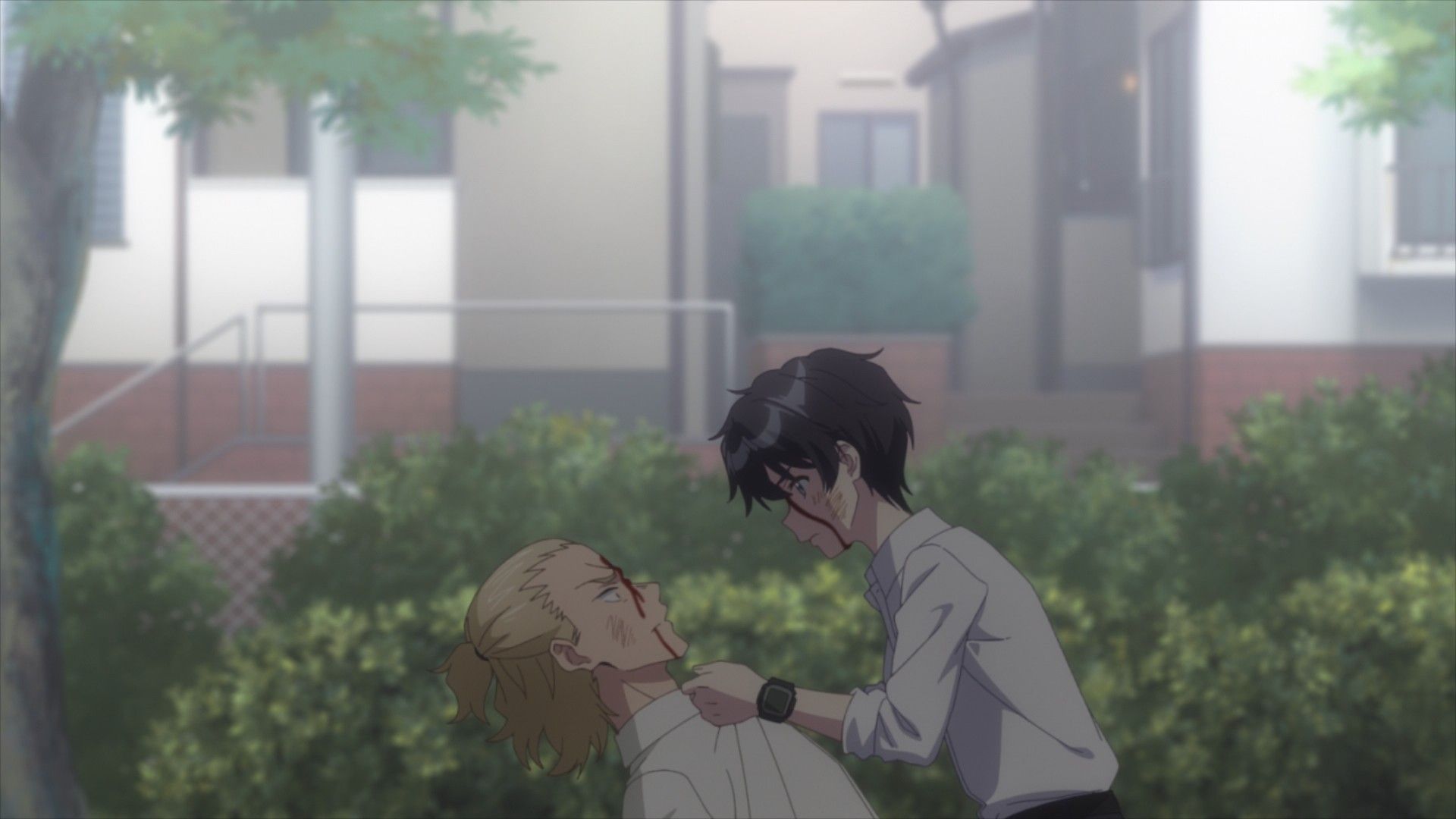
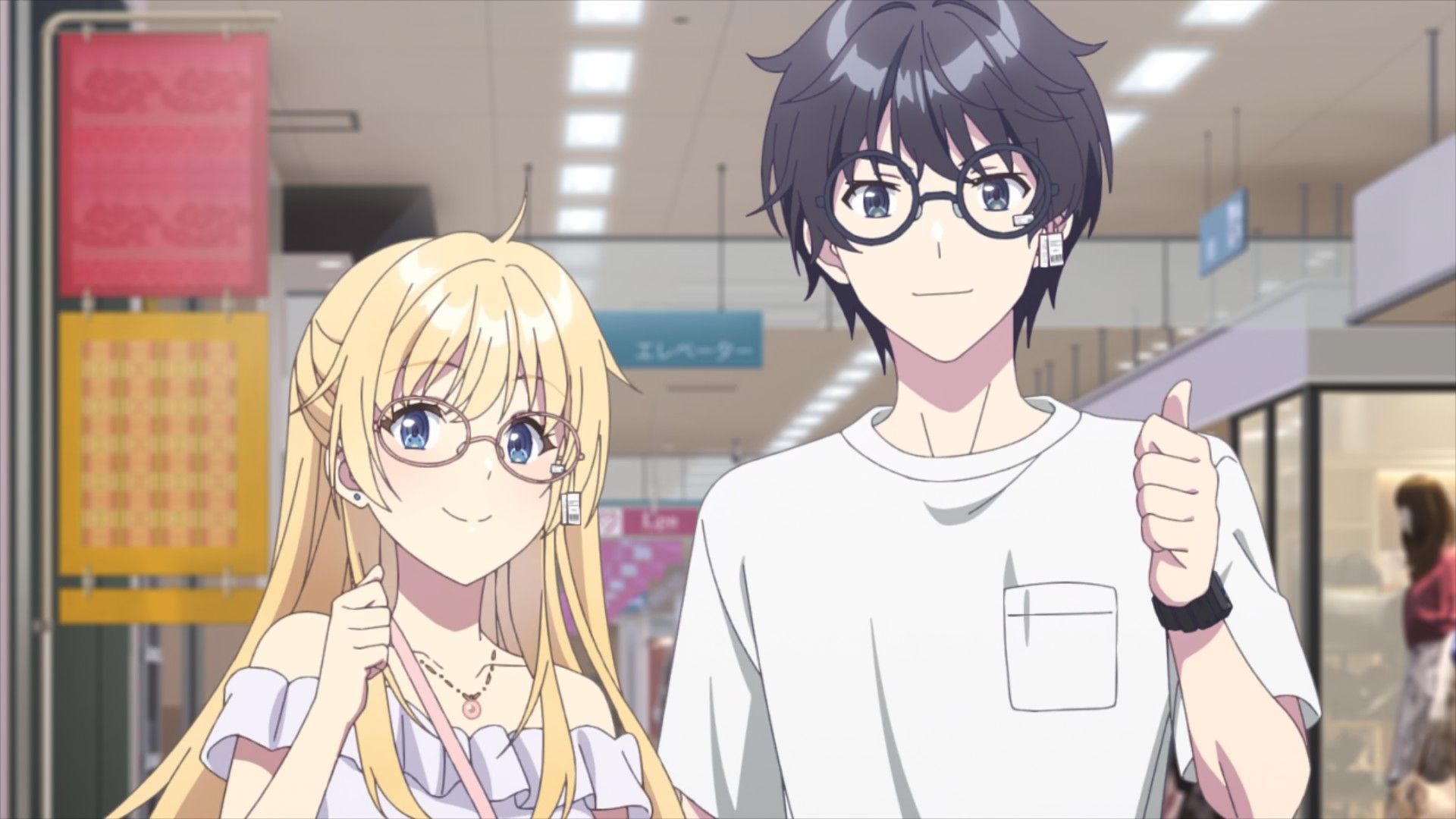
Instead of offering cheap platitudes of comfort, Saku imposes a rigorous, three-week “training camp” on Kenta. He proves to him that being popular requires murderous effort. The rehabilitation process includes a drastic diet, a change in skincare habits, and learning the elementary basics of social communication. Tension reaches its peak during PE class when Kenta is publicly humiliated by Saku’s old rival, Uemura Atomu. In a fit of frustration, Kenta accuses Saku of using him solely to boost his own ego. However, Saku shows immense determination. He doesn’t give up. He takes Kenta to a shopping mall, oversees his total visual transformation, and organizes a final confrontation with the boy’s toxic former acquaintances. In a stirring speech, Saku crushes the hypocrisy of those who mock others’ efforts while remaining in a state of lethargy themselves. In doing so, he ends their teacher-student relationship, recognizing the rehabilitated Kenta as a full-fledged friend.
The Mask of Perfection and the Weight of Fear
The next phase of the story reveals a much darker side of being at the top of the social ladder. The plot revolves around Nanase Yuzuki, who asks Saku to pretend to be her boyfriend. This decision is driven by the fact that she is being aggressively harassed by a stalker from another school. She chooses Saku specifically, realizing that his cold calculation and rigorous aesthetics will prevent him from actually falling in love with her.
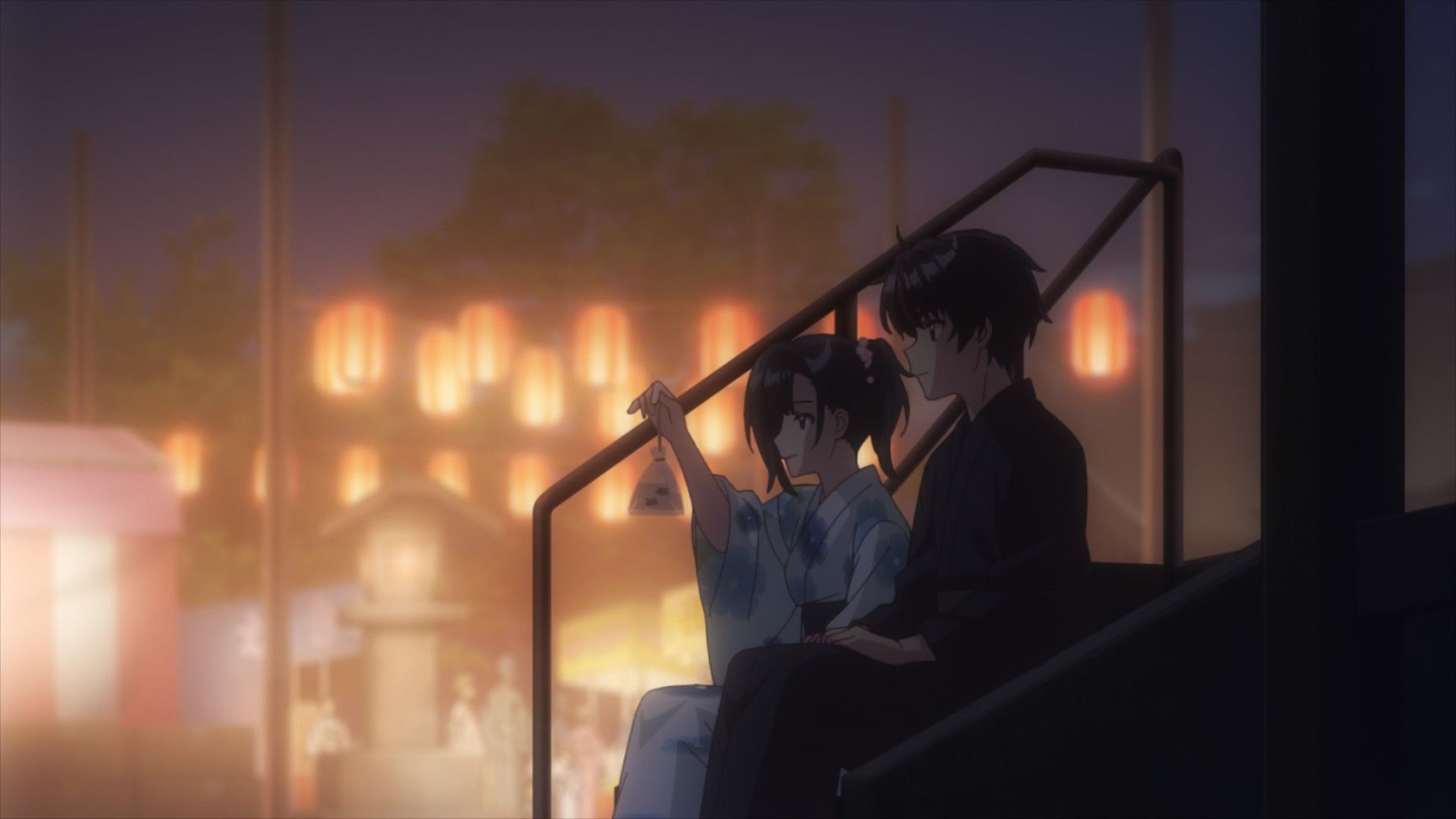
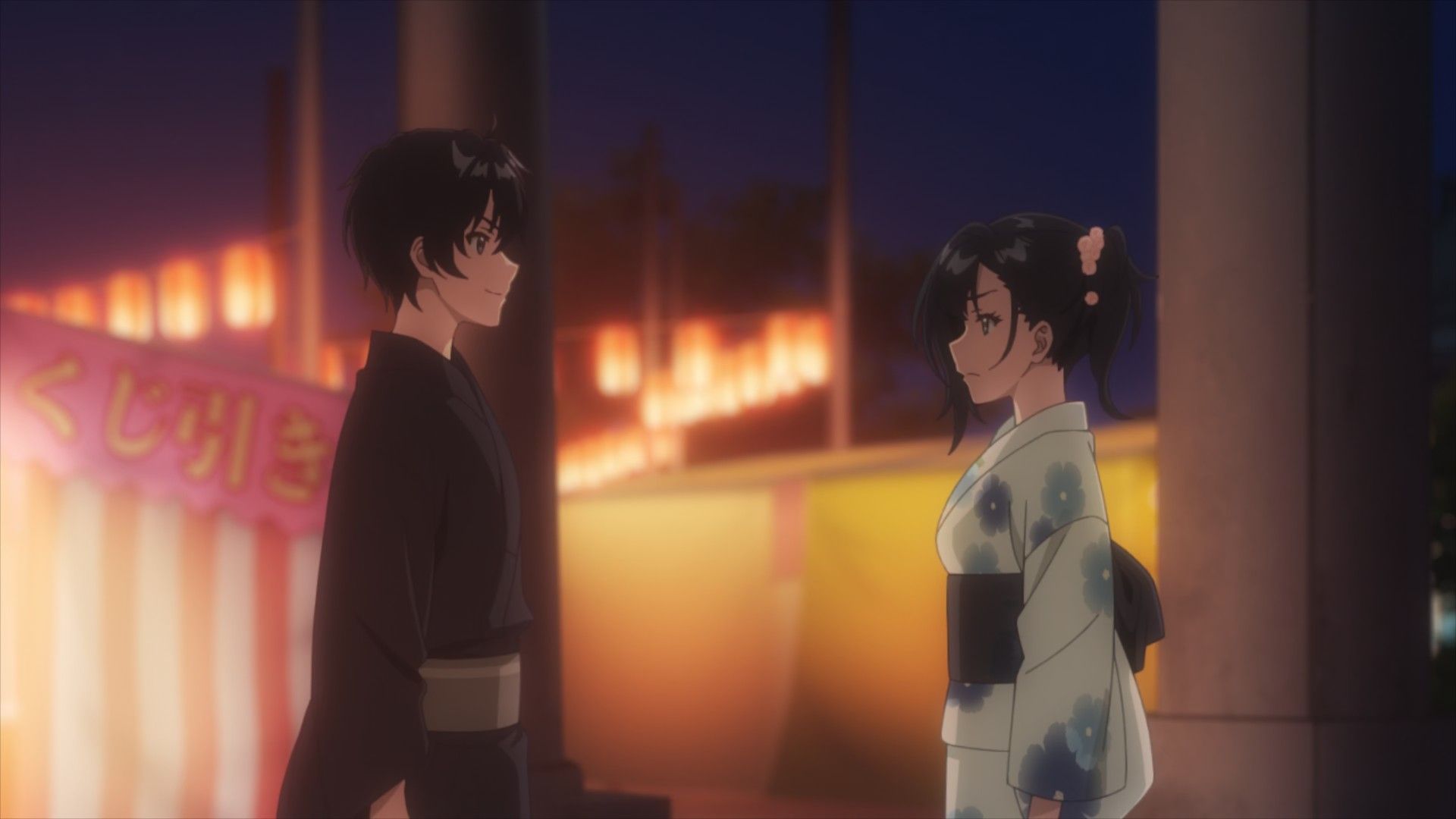
This relationship, initiated as a pure transaction, soon exposes the brutal truth about psychological helplessness in the face of physical threats. The dark aura thickens as the harassment escalates. Yuzuki receives anonymous photos from her past, and her sports equipment is stolen before an important match. The climax of this arc occurs at a summer festival. When the stalker, Yanashita, corners Yuzuki, Saku commits an act that completely subverts shounen romance tropes. Instead of getting into a fight and playing the tough guy, he deliberately discards his “cool guy” mask. He starts acting like a pathetic coward, screaming and begging people to call the police. In this way, he safely scares off the attacker using the gathered crowd, protecting Yuzuki’s reputation from scandal at the cost of his own pride.
This event leads to the girl’s emotional breakdown. In the pouring rain, her mask as a “perfect actress” completely falls away, and Saku accepts her vulnerability in his apartment.
The Collision of Dreams and Adult Reality
The final episodes of the first half of the season focus on Saku’s senpai, Nishino Asuka. The background involves school career counseling and the dilemmas of future planning. Asuka is the girl who previously saved a psychologically broken Saku after he quit baseball and stood at a crossroads. Her greatest desire is to move to Tokyo and work as a literary editor. Unfortunately, her authoritarian father stands in the way of her dreams, imposing cold logic and demanding that his daughter remain in provincial Fukui to take a stable, safe job as a civil servant.
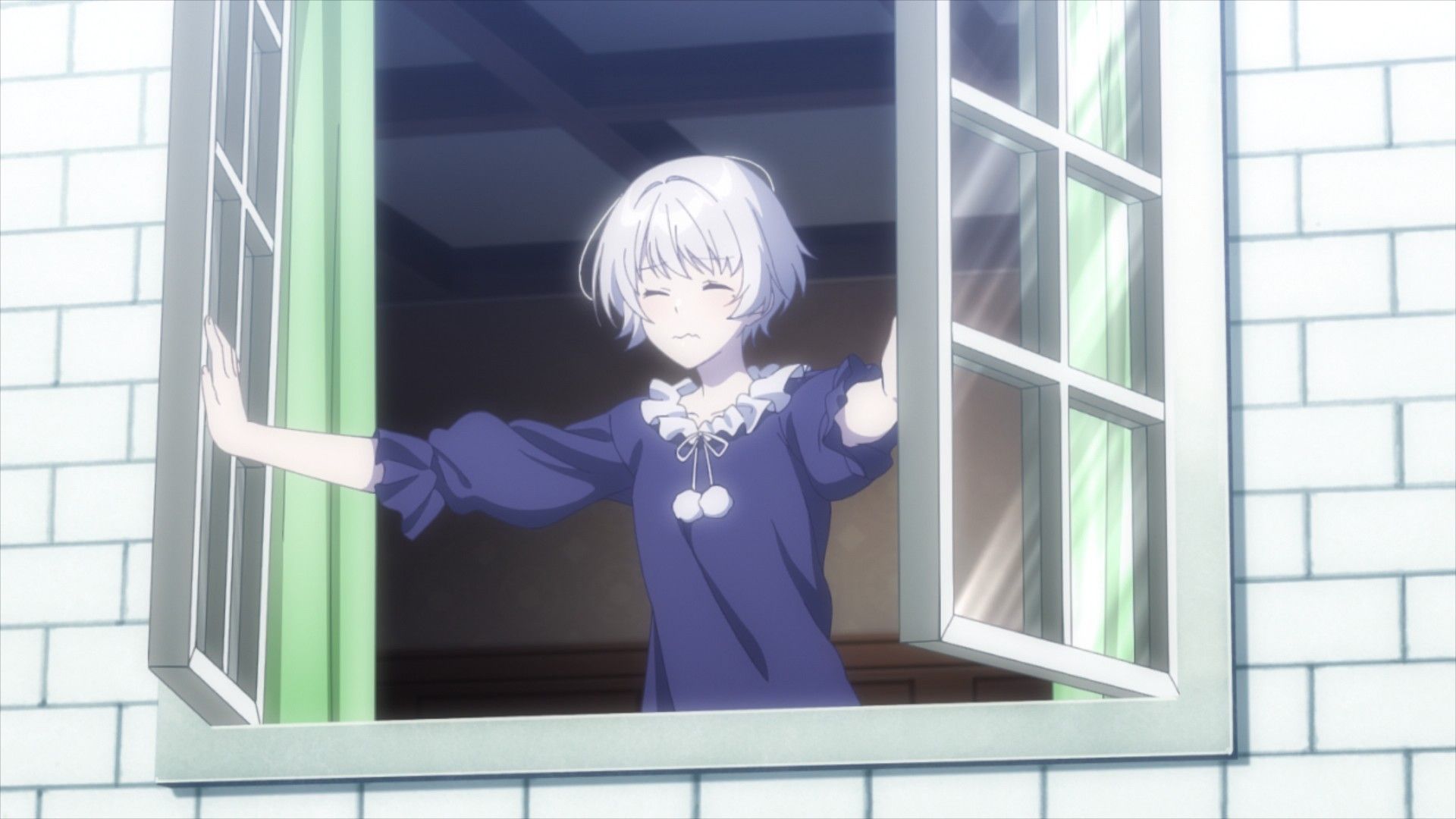
During a nostalgic date in school uniforms at a manga cafe and over a pool table, Asuka announces her surrender to Saku, thanking him for everything and accepting a boring, risk-free fate. When Saku confronts Asuka’s father, he experiences a painful defeat. Youthful idealism is brutally suppressed by undeniable statistics and the realities of the adult job market. However, it is precisely then that Saku decides to ignore rational arguments. The next morning, he appears outside Asuka’s window. Utilizing a mutually established promise—to be signaled by touching the left ear—he whisks her away from home, forcing her to rebel and giving her the courage to leave for the capital.
Characters
Introduction
The driving force of Chitose-kun wa Ramune Bin no Naka lies in its absolutely flawless character creation. A psychological analysis of the protagonists proves that we are dealing with a remarkably well-thought-out work. Every character struggles with unique, deeply human problems.
As a viewer, I quickly developed an immense fondness for all the primary female characters. Attempting to construct an objective ranking of my favorite female characters is an incredibly difficult—if not impossible—task. This problem stems primarily from the fact that screen time was not distributed evenly, as half the season focused mainly on Yuzuki and Asuka.
Chitose Saku
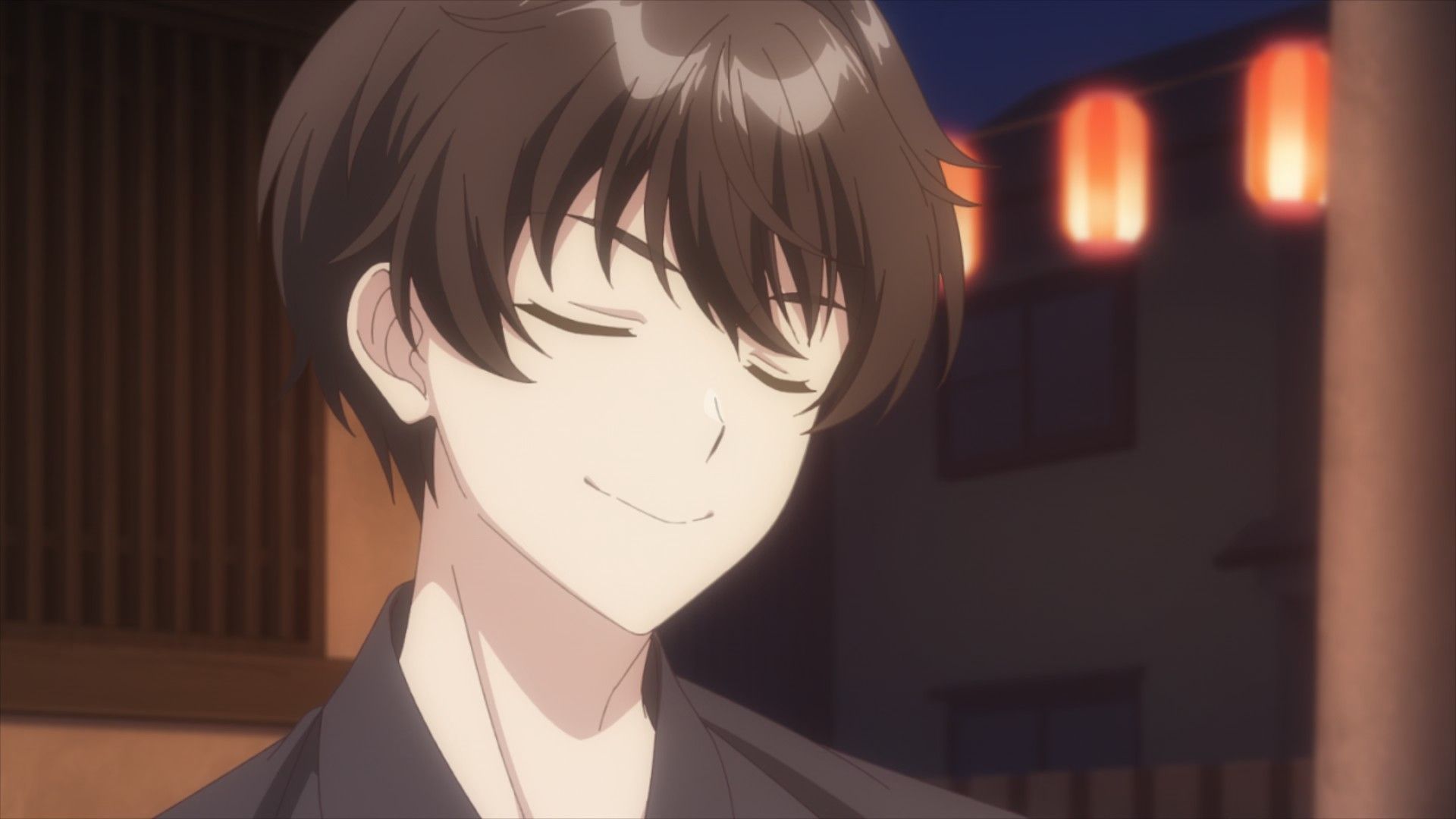
From a superficial perspective, Chitose Saku looks like a cliché, average playboy coasting through life on “easy mode.” Someone judging the book by its cover might easily dismiss the series, wrongly assuming they are dealing with an annoying protagonist. In reality, however, this image is a perfectly constructed facade. Saku is a character marked by deep trauma, a former baseball star who broke down under the weight of pressure. He hides his powerful internal pain behind a rigorous, almost theatrical aesthetic code, summarized in the maxim: “If I cannot live beautifully, I might as well be dead.”
What is phenomenal about his characterization is how he plays his roles while being a terribly lonely hero. He is willing to ruin his own image in the eyes of society if it serves to protect his friends. Nevertheless, in the presence of the girl he cares for in a special way (Nishino Asuka), his flawless youkya mask irretrievably falls away. He becomes noticeably shy and careful with his words. This doesn’t happen in a pathetic way, though; his embarrassment doesn’t turn him into a “loser” who stutters during eye contact. His shyness is characterized by a huge dose of genuine, quiet respect and seriousness.
Hiiragi Yuuko
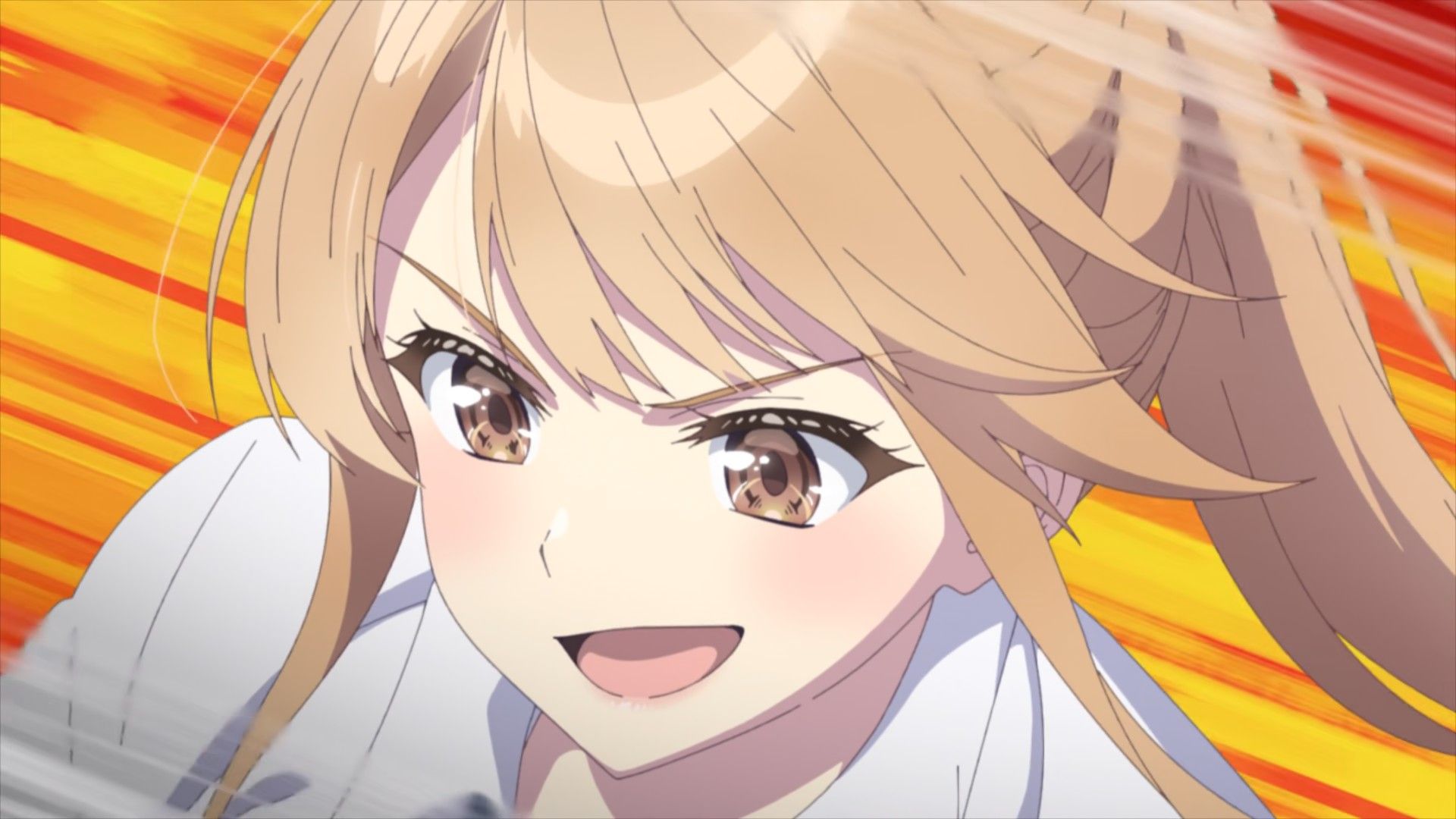
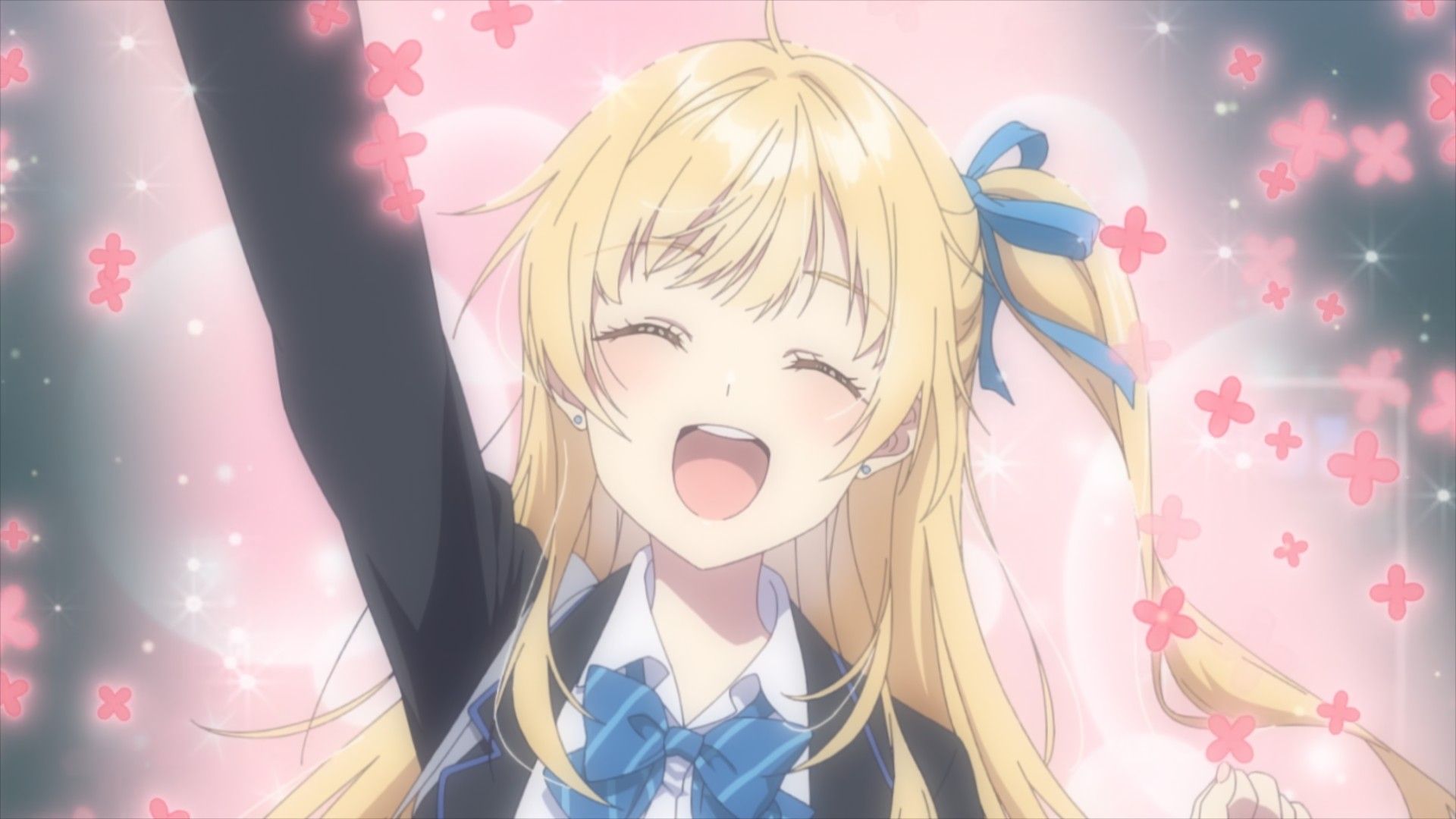
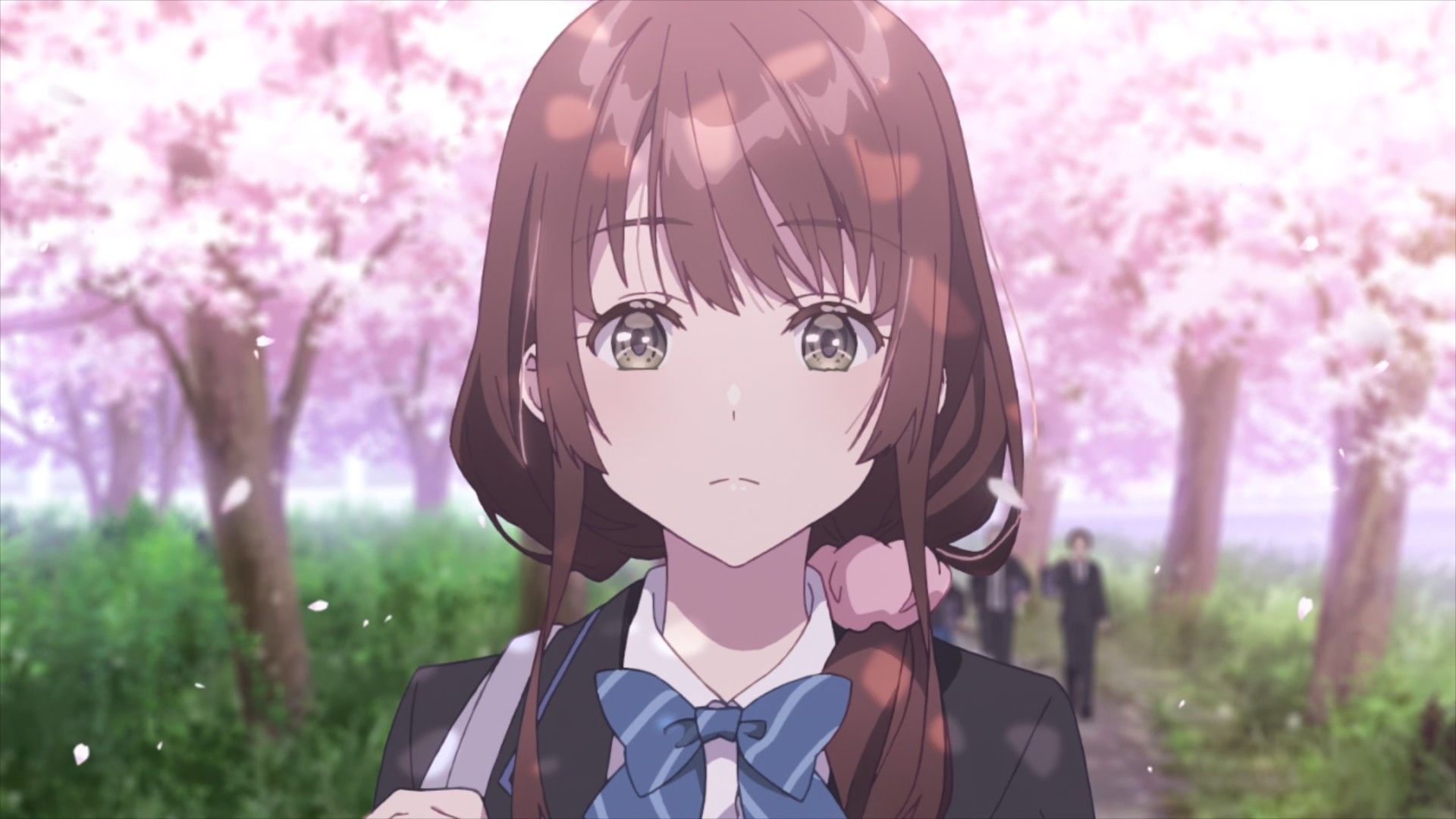
Yuuko is the absolute embodiment of a school idol. She radiates powerful positive energy, and every frame she appears in literally seems to sparkle. Her flawless appearance, however, is not a given. It requires grueling early mornings and hundreds of hours spent on beauty maintenance. Yuuko possesses a beautiful, dazzling personality and extraordinary emotional intelligence. She knows what she wants, openly claiming her right to be the number one person in Saku’s life. She often visits his apartment under the pretext of wife training, which serves as her weapon against rivals.
Uchida Yua (Ucchi)
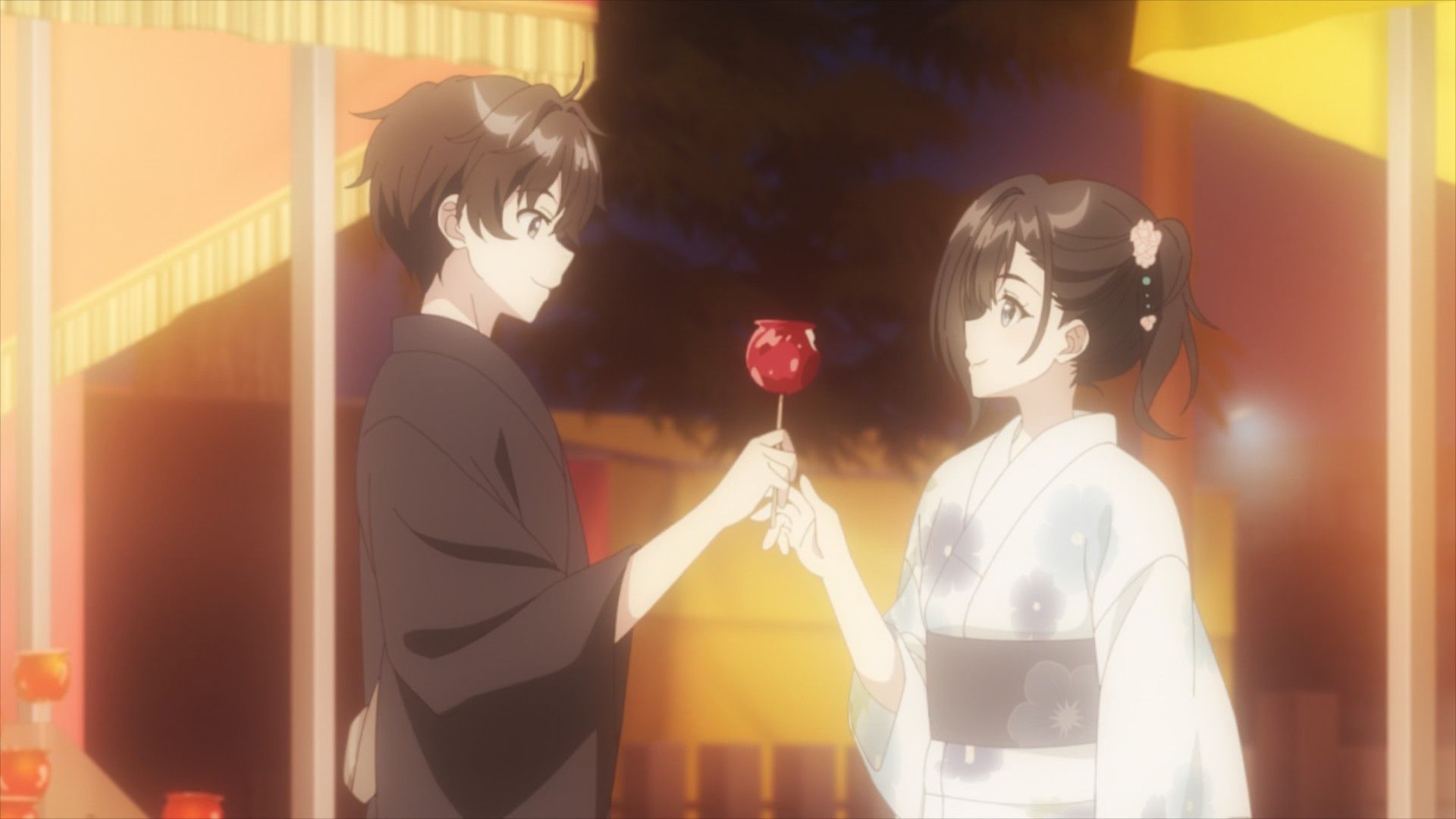
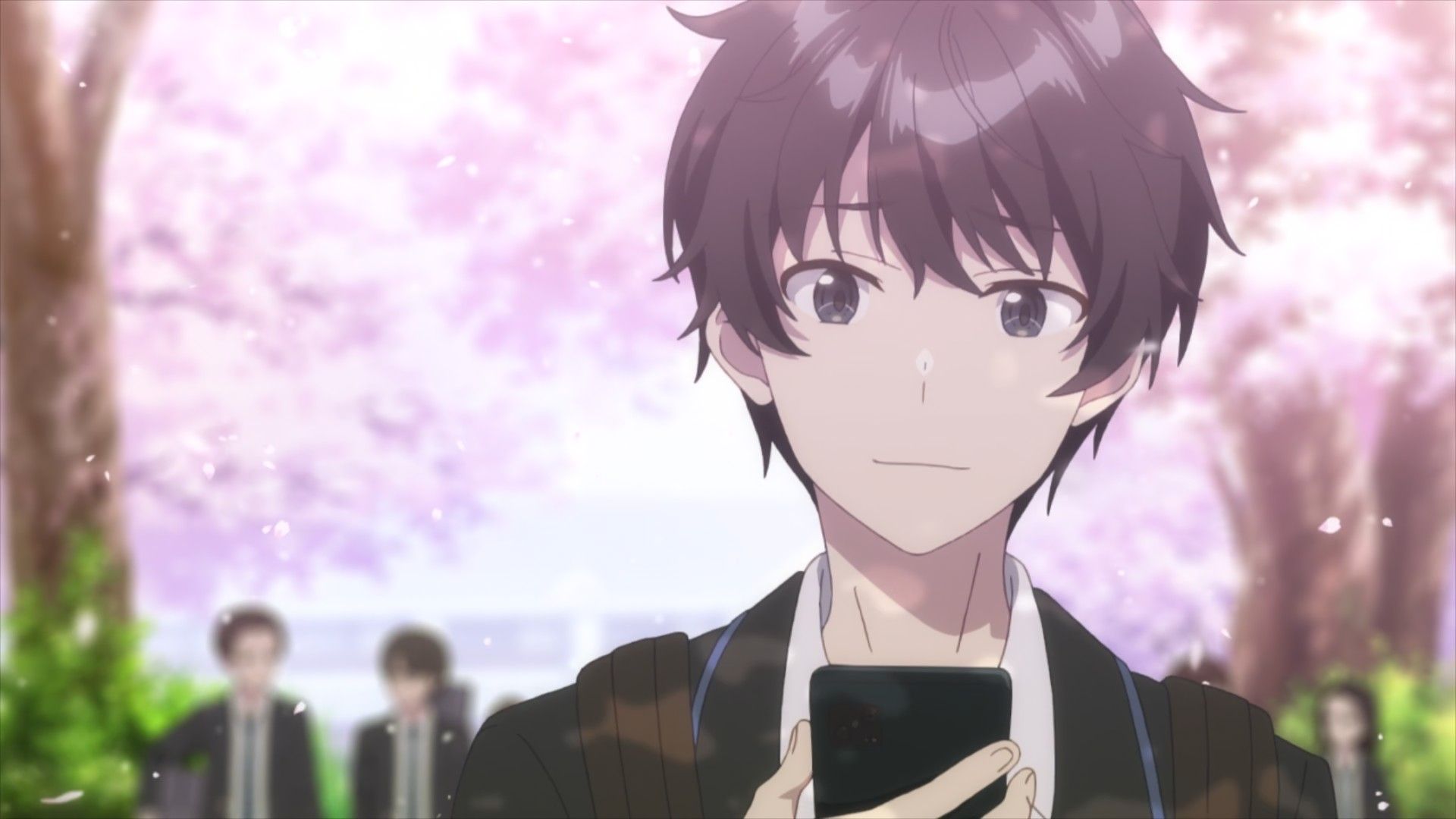
Yua represents the archetype of a grounded, sensible oasis of peace. Due to Saku’s broken and overworked family life, she is the one who takes the initiative, regularly cooking nutritious meals for him in his own home. She emanates a warm aura, reminiscent of a rightful wife attitude. She provides a safe harbor where the exhausted protagonist can drop all his masks.
Both Yuuko and Yua were treated too much like secondary characters in this stage of the adaptation. They served mainly as narrative support for the conflicts with Kenta or Yuzuki, which leaves a significant sense of dissatisfaction. They possess such rich personalities that pushing them to the background is disappointing, and I hope more attention is devoted to them in the already announced sequel.
Nanase Yuzuki
Considered a flawless beauty, she is actually playing the sophisticated role of an actress. Her icy distance toward the opposite sex is a defense mechanism triggered by massive trauma from junior high, when she realized her social status meant nothing in the face of male physical brutality. Watching her evolution—from a cold manipulator to a broken victim seeking shelter, and finally to a girl ready to fight for true feelings—is truly satisfying.
Aomi Haru
She provides a contrast to the heavy, dramatic subplots. As a typical tomboy (bokukko), she treats Saku like a teammate. Understanding his pain after quitting baseball, she discreetly plays catch with him without forcing him to pick up a bat. However, she hides an incredibly sensitive, feminine side that emerges when Saku sincerely compliments her femininity.
Nishino Asuka (Asu-nee)
The kuudere archetype, the protagonist’s senpai, and his symbolic “Moon.” She saved Saku from depression through literature, which caused him to place her on the highest pedestal. Her cool confidence, however, is a mask for her paralyzing fear of her rigorous father. Her relationship with Saku demonstrates the power of breaking false ideals to mutually motivate each other to fulfill seemingly unrealistic dreams.
Supporting Characters and Antagonists
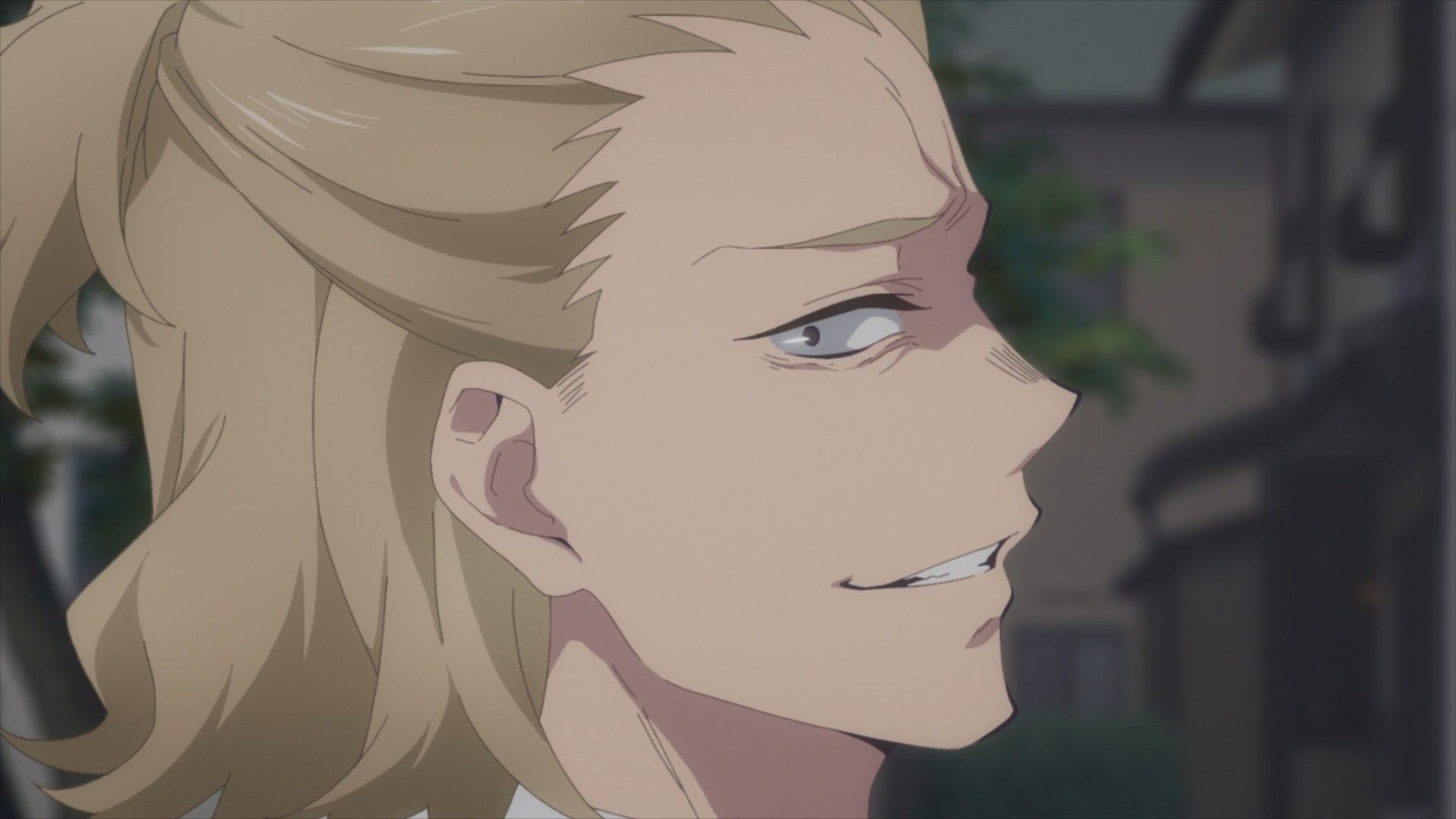
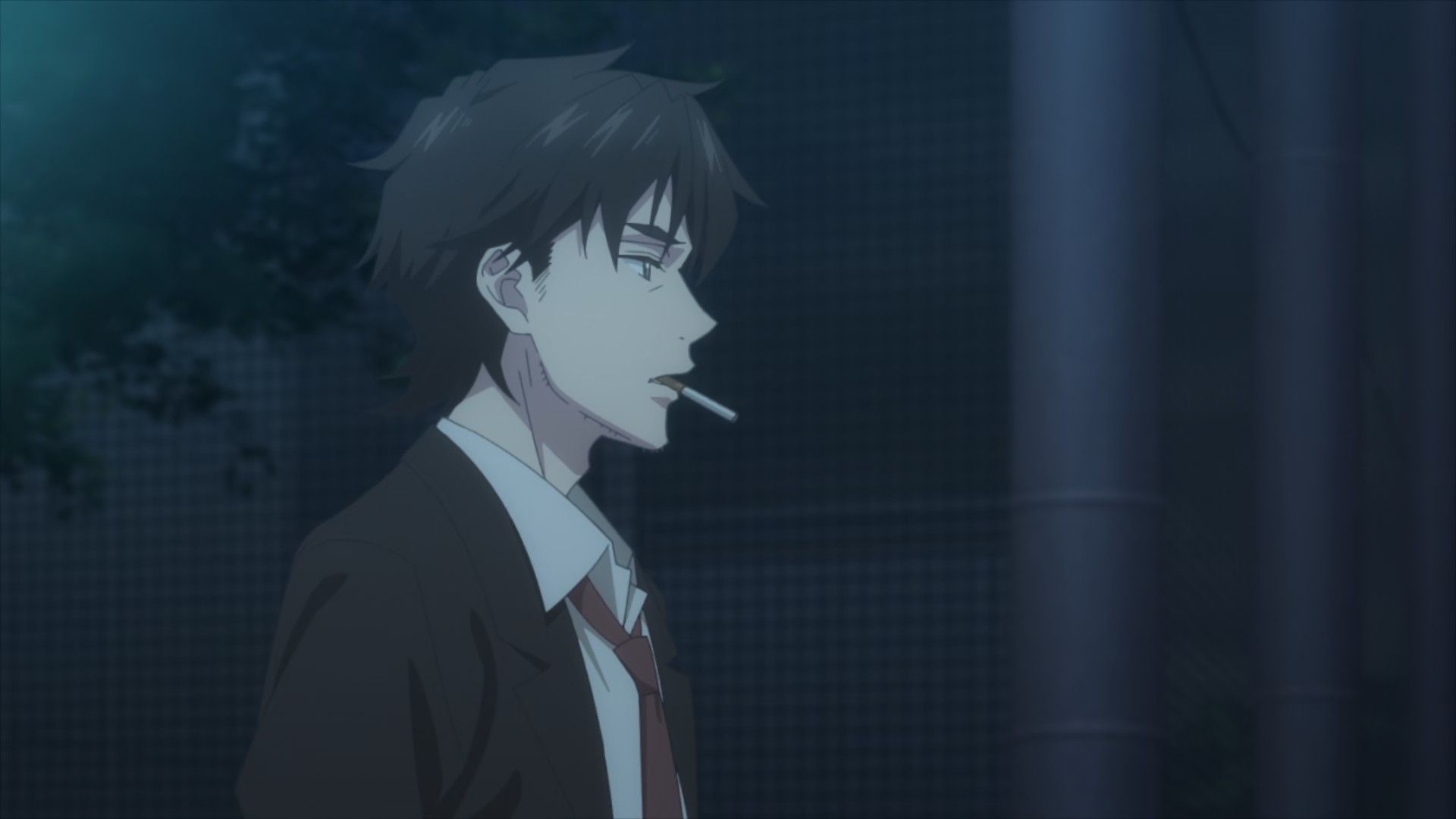
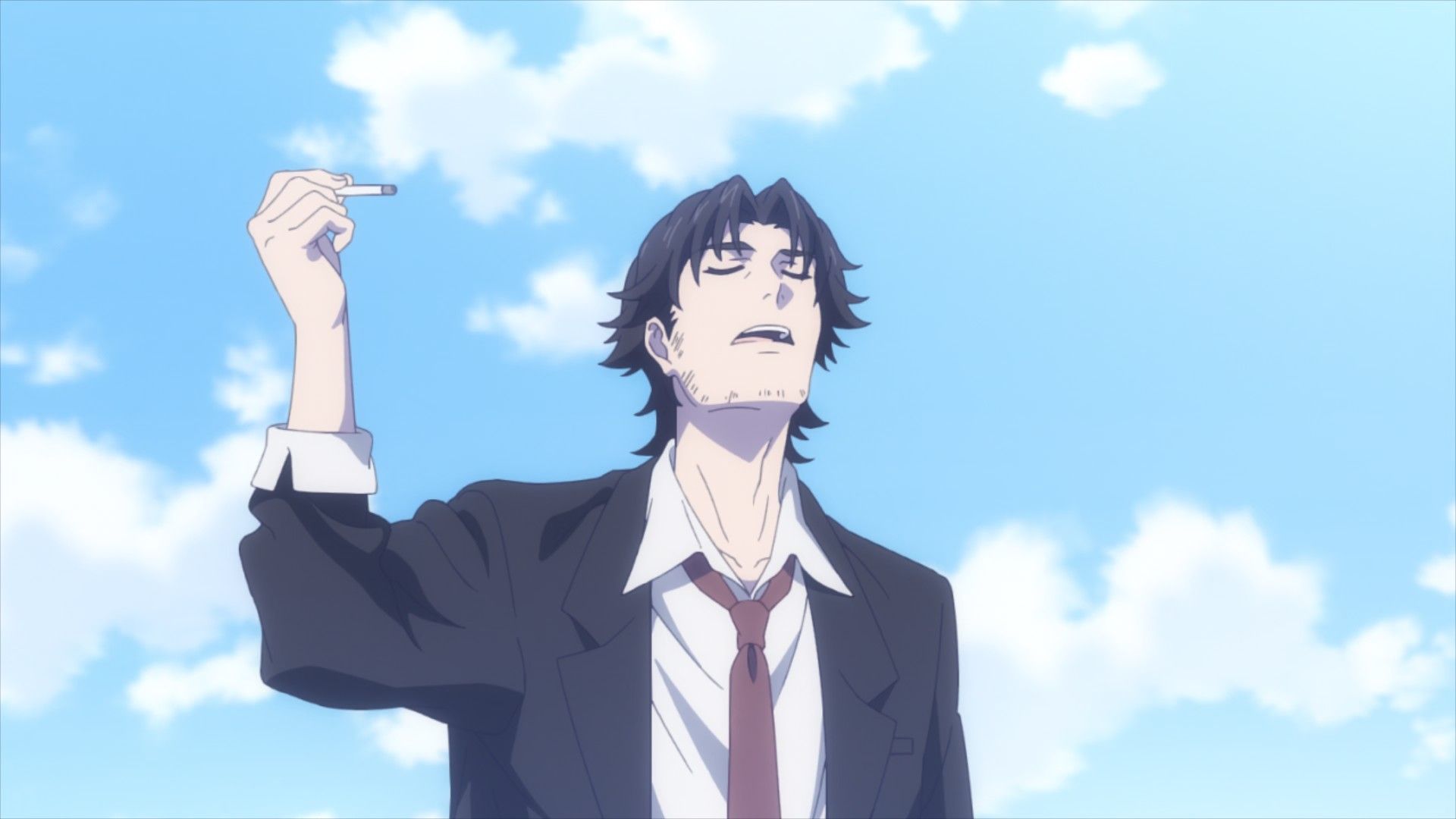
Yamazaki Kenta – A textbook example of the inkya archetype who, thanks to Saku’s intervention, sheds his entitlement mentality and learns to take full responsibility for his life. His character is a slap in the face to those who believe social success simply falls from the sky. Yanashita – A typical, aggressive hooligan who believes only in physical violence. The confrontation with him serves to prove that years of discipline and hard work will always triumph over the blunt aggression of a thug. Ayase Nazuna – A blunt tsundere who, despite her aggressive vocabulary, proves that honesty always ranks higher than cowardly calculation. Iwanami Kuranosuke (Kura-sen) – An unconventional teacher and smoker who, despite his lazy aura, provides solid psychological and physical support for his students. Asuka’s Father – The voice of brutal adult realism, operating with logic that teenagers cannot easily refute, embodying the fears surrounding an artistic career path.
Symbolism and Core Motifs
This work is steeped in phenomenal symbolism and references to Japanese traditions, which will undoubtedly be met with massive appreciation from genre enthusiasts and veterans of the medium.
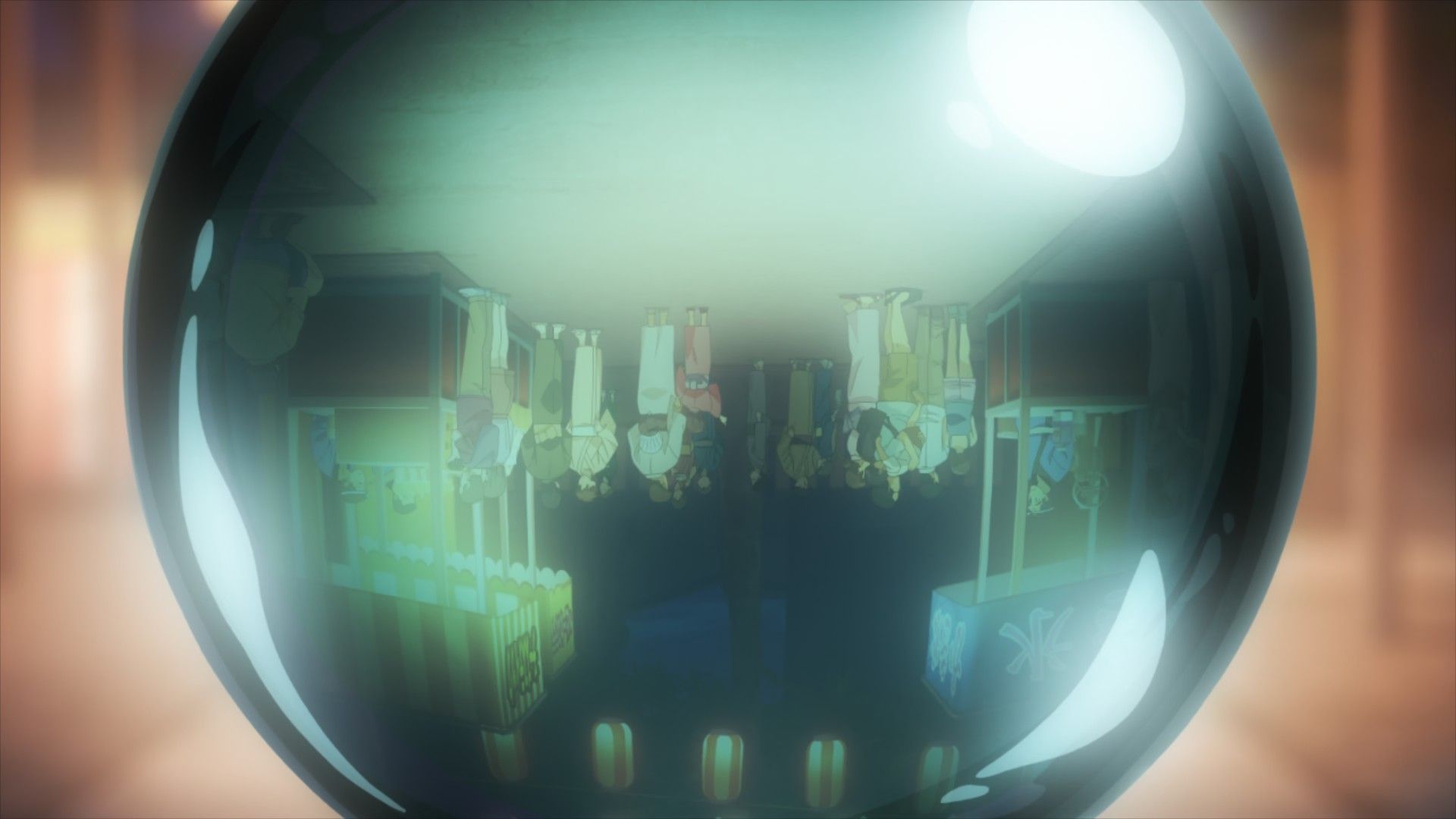
The fundamental metaphor, embedded in the title itself, is the Ramune bottle. The traditional vessel used in Japan is sealed from the inside by a characteristic glass marble (biidoro). When the marble is pushed inside, it releases the refreshing carbonation but remains trapped forever in the neck of the bottle, rattling with every sip. Saku, Yuzuki, and Asuka embody this very glass marble. They appear dazzling and shine in the eyes of everyone, yet deep down, they feel a powerful sense of isolation and loneliness. They are fundamentally trapped by walls built from their own aesthetic rigor, societal pressures, and painful experiences.
The use of the celestial body motif is also excellent. Both Asuka and Saku are regularly compared to the Moon. They reside high above, are beautiful in their perfection, and often serve as a beacon in the dark for lost souls. However, they have a certain flaw—they emanate reflected light. They reflect the hopes, pressures, and imaginations of those around them. Their natural opposite is the Sun, personified directly by Aomi Haru—radiating her own direct warmth, devoid of calculation.
Chitose-kun wa Ramune Bin no Naka (2025) – Evaluation and Summary
The creators focus exclusively on the natural difficulties of adolescence, promoting the idea of taking direct responsibility for one’s own fate and polishing one’s character through sweat, tears, and hard work. Kenta’s struggle with alienation or Yuzuki’s terrifyingly real fear of male physical strength does not serve to moralize—they are excellent plot devices through which the characters forge their iron-clad principles.
One cannot overlook the titanic effort of the production team at studio feel. It is obvious they struggled with organizational issues, evidenced by the massive, nearly three-month delays for the final episodes. Despite initial doubts that the series would ever see a worthy finale, the creators delivered not only a superb adaptation that far exceeded my expectations but also announced a second season. The phenomenal visual quality shines in every frame, adding extra color to the story. The opening theme builds a brilliant, melancholic atmosphere, while the direction—headlined by the stellar performances of the voice actors—elevates the emotional experience to an incredibly high level.
This title has unimaginable potential to permanently etch itself into the canon of the best psychological school melodramas. I eagerly await the continuation.
Finalny werdykt
Final evaluation

Which translation do I recommend to watch Chitose-kun wa Ramune Bin no Naka?
Unfortunately, I cannot recommend any. The official one from CR is simply awful. The dialogue is unbearably distorted, it changes character personalities, and it’s filled with excessive Gen-Z slang—it was simply unwatchable. After the first episode, I turned the subtitles off completely. If anyone knows of an alternative, I invite you to join the discussion in the comments.
Gallery